Beyond Degrees and Distinctions
Academic records can tell us about degrees earned, years completed, and positions held, but they cannot fully capture the lived essence of those formative years. Beyond lecture halls, hospital wards, and clinical responsibilities lay countless quiet, joyful, intriguing, heartfelt, and often astonishing moments that unfolded the true nature of Bapu’s personality. These moments, witnessed by classmates, colleagues, patients, and students, brought into view the qualities that would later touch millions: extraordinary medical acumen, unwavering calm under pressure, compassionate listening, deep emotional connection, and an instinctive readiness to shoulder responsibility.
Those who studied with him or worked alongside him often recall that Bapu’s very presence brought clarity amid confusion and steadiness in moments of crisis. Long before the world came to know him as Sadguru Aniruddha Bapu, there were unmistakable glimpses of the same protective instinct and precise guidance that Shraddhavans experience today.
Through the eyes of a classmate!
Among those who had the privilege of witnessing Bapu during his medical student days was his close friend and colleague, Dr. Keshav Narsikar, who studied alongside him at Nair Hospital. Dr. Narsikar recalls that even in those early years, no one could fail to notice Bapu’s radiant smile and unusual maturity. There was a natural dignity about him, majestic yet approachable. During breaks, whether in the canteen, common room, or college porch, it was rare to see Bapu alone. His presence was magnetic, and students of all backgrounds were naturally drawn to him.
His professors, too, recognized something exceptional in him. Both Dr. Shanbhag and the distinguished Dr. V. R. Joshi deeply admired Bapu’s disciplined lifestyle and his innate commitment to service.
Classmates from his postgraduate years recall that this spirit of dedication only intensified as he pursued his M.D. (Medicine). At a time when he studied nearly eighteen hours a day, Bapu displayed an extraordinary commitment to learning. For each subject, where most students struggled to master a single textbook, Bapu thoroughly studied every prescribed reference, integrating them with remarkable clarity and cross-referencing. His exceptional diagnostic ability was the natural outcome of relentless study and disciplined effort.
Equally memorable was his affectionate relationship with the nursing and administrative staff. Nurses such as Sister Purohit and Sister Pandji continue to recall how his presence brought calm, order, and reassurance to the ward. Everyone felt a sense of confidence when Bapu was on duty.
Dr. Narsikar also highlights another remarkable aspect of Bapu’s personality. Even after completing his M.D. in Medicine, Bapu went on to study Ayurveda, seeking additional ways to serve humanity. Such a decision, Dr. Narsikar observes, could arise only from a heart genuinely concerned with the welfare of all.
Even in the light-hearted environment of college life, filled with humour and youthful camaraderie, Bapu maintained an unwavering standard of dignity. He laughed freely, participated wholeheartedly, and enjoyed the company of friends, yet never allowed the boundaries of decency to be crossed. If conversations drifted toward disrespect or triviality, he would gently redirect them; when necessary, he expressed his disapproval firmly. Long before he formally articulated the principles of Maryadamarga, Bapu was quietly living and upholding them in his everyday conduct.
This rare combination of warmth and firmness, camaraderie and purity, earned him an extraordinary respect even among his peers.
Dr. Narsikar concludes with a simple yet profound observation:
“Bapu was the refuge then, just as He is today.”
A compelling storyteller
Dr. Keshav Narsikar also recalls another striking dimension of Bapu’s personality, one that is instantly familiar to every Shraddhavan today. During their MBBS years at Topiwala National Medical College & BYL Nair Hospital, the college’s Marathi Literature Club regularly organised literary and cultural programmes. Bapu was not merely a participant; he was one of the most vibrant and enthusiastic contributors, taking part in storytelling and other literary activities with effortless ease.
Those who attend Bapu’s discourses today recognise that same natural command—effortless, unforced, and magnetic.
The healing touch of compassion
Even after earning his M.D. (Medicine) and becoming a highly respected rheumatologist, Dr. Aniruddha Dhairyadhar Joshi remained the same affectionate and approachable “friend” to those who knew him closely.
For the Parab family, he was far more than a physician who prescribed medicines; he was a reassuring and dependable presence.
In that hour of grief, Bapu became their sole support.
This was not an extraordinary gesture performed out of obligation. It was a natural expression of who he truly was. For him, a doctor’s responsibility did not end with diagnosis or discharge; it extended into the most vulnerable moments of human life, offering compassion, and unwavering support.
Ward In-Charge Damayanti Pawar recalls that Dr. Aniruddha Joshi’s arrival in the wards of Topiwala National Medical College & BYL Nair Hospital transformed the atmosphere. Dressed in a crisp white shirt and black trousers, with a gentle smile on his face, Bapu visited every bed and personally enquired about each patient. There was no distinction in his compassion; patients from every social and economic background received the same attention and care.
‘Strict Disciplinarian but Affectionate Leader’
Sister Damayanti Pawar further recalls that Bapu affectionately addressed everyone as “Raja” (dear)-whether ward boy, conservancy worker, nurse or patient. That single word created an immediate sense of belonging.
At the same time, he maintained uncompromising standards of honesty and discipline. Negligence and carelessness were never tolerated, regardless of a person’s position. Whether it was a conservancy worker or a highly placed official, the same standards applied to all. He never lost his temper, yet he never condoned wrongdoing.
Sister-in-Charge Manisha Kambli remembers a janitor known for his rude and hot-tempered behaviour becoming noticeably calm in Bapu’s presence. The man himself admitted that merely seeing Bapu made him feel relaxed.
Describing this tall, well-built, ever-smiling doctor with a simple and approachable demeanour, Sister Kambli recalls the warmth with which Bapu taught junior doctors. He answered every question with remarkable clarity, and students often felt they could listen to him endlessly. They frequently remarked, “This lecturer is one among us.”
Whenever difficulties arose in the ward, the staff instinctively turned to Bapu first. He guided them patiently until every issue was resolved to perfection.
If a painful injection was necessary, Bapu personally explained to the patient why it was required. If surgery was advised, he calmly described the procedure and dispelled the fears of both patients and their families.
According to Sister Kambli, Dr. Aniruddha emphasized three pillars of healing:
- Cleanliness
- Proper nourishment
- Compassion
As he would often say:
“Medicines do cure, but compassion cures half the ailment.”
Many would say with affection and confidence:
“He is my doctor, and he takes good care of me.”
A Teacher Who Shaped Lives
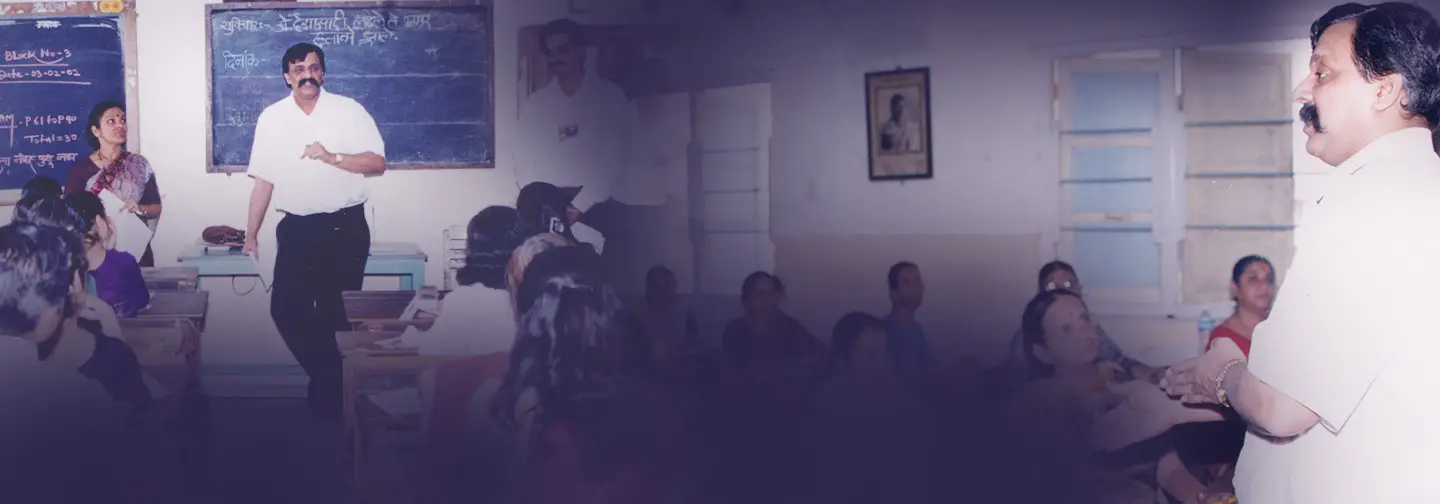
Even after completing his MBBS and M.D. and serving in the Rheumatology Department at Nair Hospital, Dr. Aniruddha maintained an astonishing commitment to teaching.
Dr. Anant Kore, one of his students, recalls the profound impact of Dr. Aniruddha’s lectures on final-year MBBS students. His notes were widely sought after, and even the formidable Harrison's Principles of Internal Medicine became approachable when explained by Bapu.
His classes were consistently overcrowded because they were immensely practical and highly valued by students.
Students were struck by his extraordinary intellect, immense physical stamina, and exceptional powers of observation. Over time, their respect deepened into complete trust. Many began seeking his guidance not only in medicine but also in important decisions in their personal lives.
Clinical Mastery and Early Technological Foresight
During his tenure at Nair Hospital, Dr. Aniruddha’s clinical expertise was widely recognized.
He was among the early medical professionals in India who got an opportunity to work on computers into medical practice, at a time when digital technology was still in its infancy. This willingness to embrace emerging tools revealed a forward-looking mindset that combined classical clinical rigour with scientific innovation.
A Mentor Beyond Medicine
Dr. Hemant Vadeyar recalls how he and a few classmates were searching for an experienced and knowledgeable teacher to guide them in General Medicine. Dr. Aniruddha Joshi began teaching them every Saturday afternoon.
What started as academic instruction soon evolved into a relationship of profound mentorship. On his own initiative, Bapu guided Dr. Vadeyar in choosing his postgraduate specialization—an act of thoughtful guidance that remains rare in academic life.
For Dr. Vadeyar, Bapu became far more than a teacher. He became a friend, philosopher, guide, mentor—and ultimately, the Sadguru.
The years at Topiwala National Medical College & BYL Nair Hospital were not merely a chapter in Dr. Aniruddha Dhairyadhar Joshi's professional life; they reflected His deep commitment to medical excellence and compassionate patient care.
Every ward round, every diagnosis, every lecture, every comforting word spoken to a patient, and every act of selfless service reflected the same boundless compassion that millions of Shraddhavans experience today in Sadguru Aniruddha Bapu. His medical career revealed not only an extraordinary physician and teacher but also a heart that instinctively lived for others.