The Upasana of the Shree Sai Gayatri Mantra
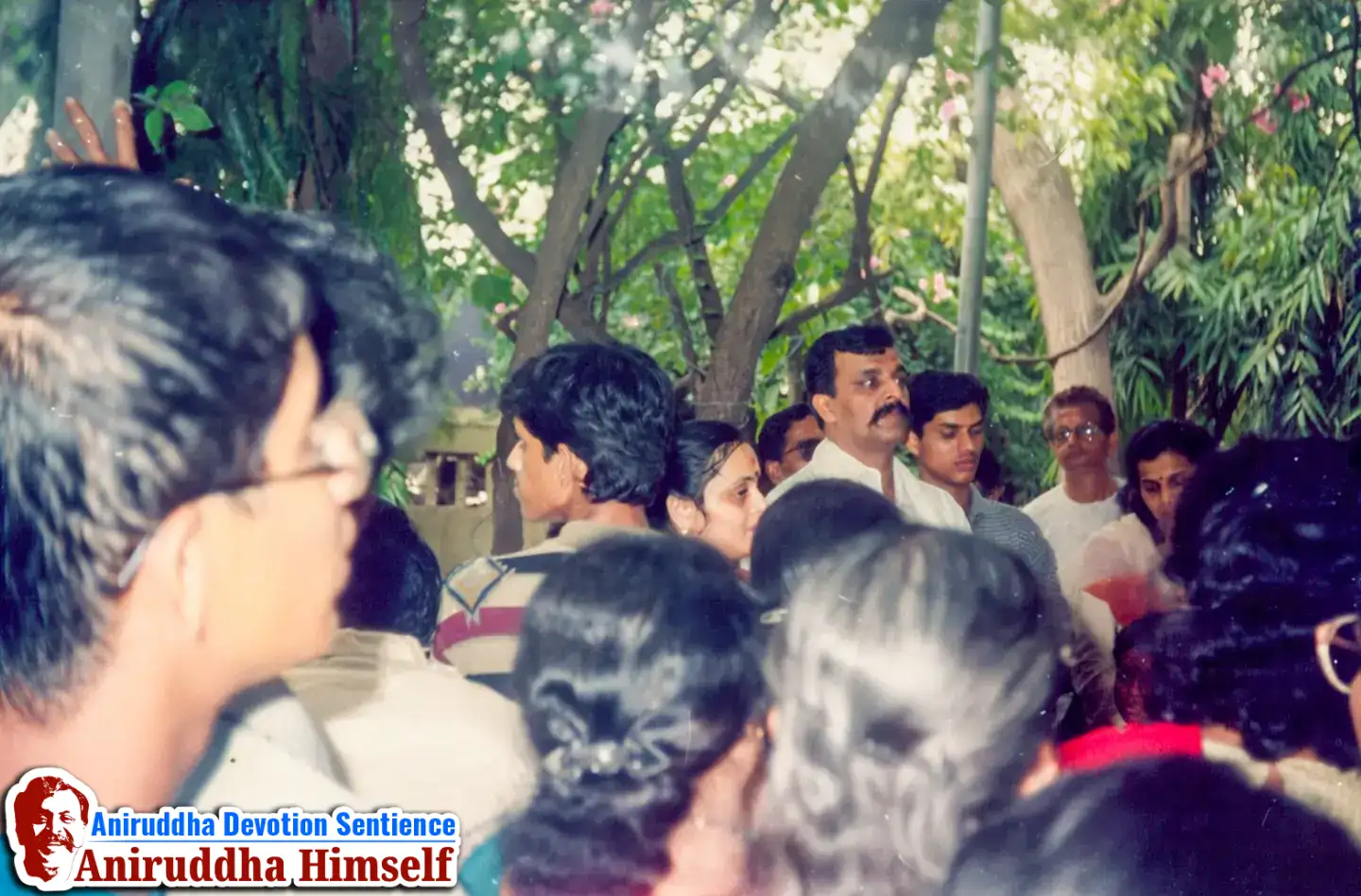
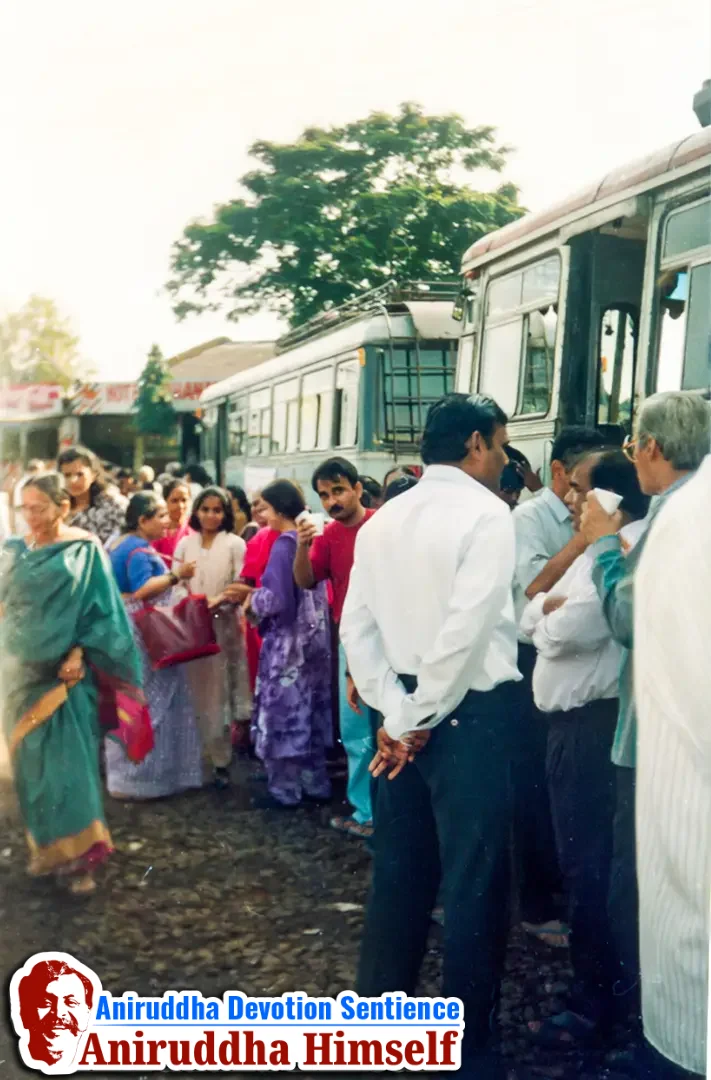
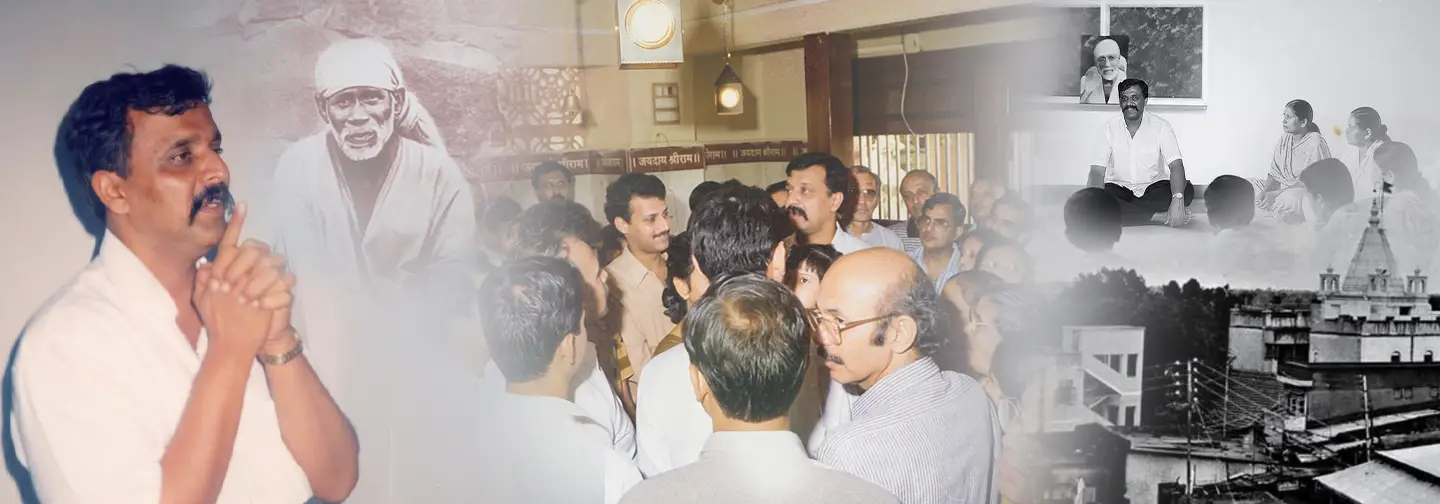
On 22nd September, when the Shraddhavans arrived at Shirdi, Sadguru Shree Aniruddha Himself stood waiting to welcome them. After lunch, all the Shraddhavans gathered in a hall as instructed by Bapu. He then explained the spiritual significance of that day.
Bapu said:
"It was on this very day that the Devas and the Danavas began the Samudra Manthan (the Churning of the Ocean of Milk). Since the Devas sought the assistance of the Danavas in this endeavour, along with the Amrita (the nectar of immortality) the deadly poison Halahala too emerged from the churning. Bhagwan Shiva consumed and assimilated this deadly poison to safeguard all of creation. In reverence to Him, the Devas chanted the Shiva Gayatri Mantra. It is this very day that we have chosen for our Shirdi Rasayatra. In the same way, the heart of every devotee must undergo a churning from which the nectar of Bhakti may emerge. Shree Sainath is ever capable of bringing about this inner churning and blessing every devotee with the bliss of that Bhakti Ras."
Thus, this Amrit Manthan began with the collective chanting of the Shree Sai Gayatri Mantra:
ॐ भूर्भुव: स्व: | ॐ साईनाथाय विद्महे| पूर्णपुरुषाय धीमहि| तन्नो सद्गुरु: प्रचोदयात्॥
Om Bhurbhuvah Swaha | Om Sainathaya Vidmahe | Purnapurushaya Dhimahi | Tanno Sadguru Prachodayat ||
This Shree Sai Gayatri Mantra is widely revered among Sai devotees. Sadguru Shree Aniruddha led all the Shraddhavans present in chanting the mantra.
Following this, every Shraddhavan was given a ball of clay brought from the banks of the Yamuna River, placed on a banana leaf. Bapu instructed everyone to mould the clay into a symbolic pair of Shree Sainath's Padukas. He lovingly said,
"No matter how imperfect or uneven the Padukas you make may appear, have complete faith that Shree Sainath will wear them."
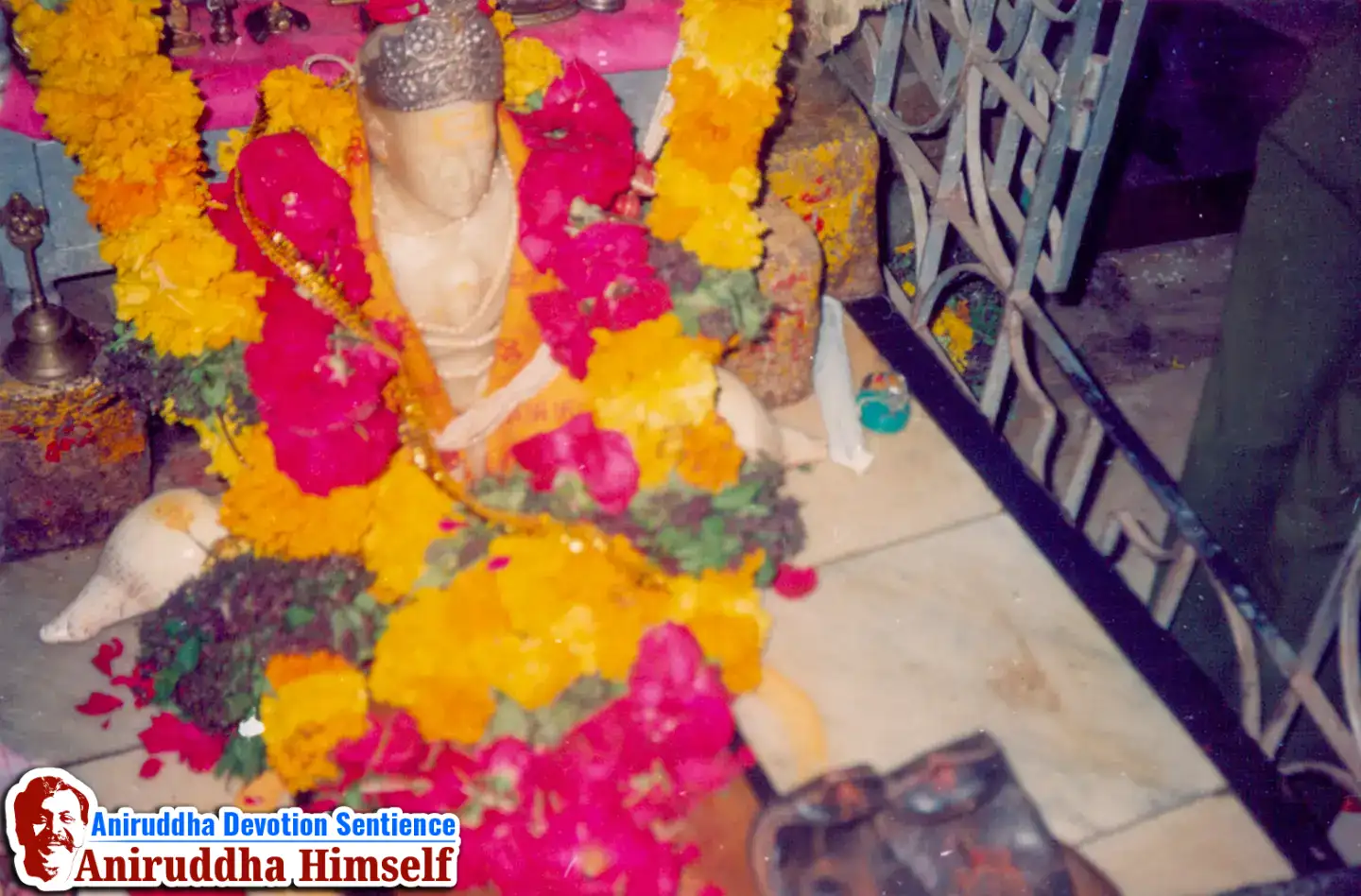
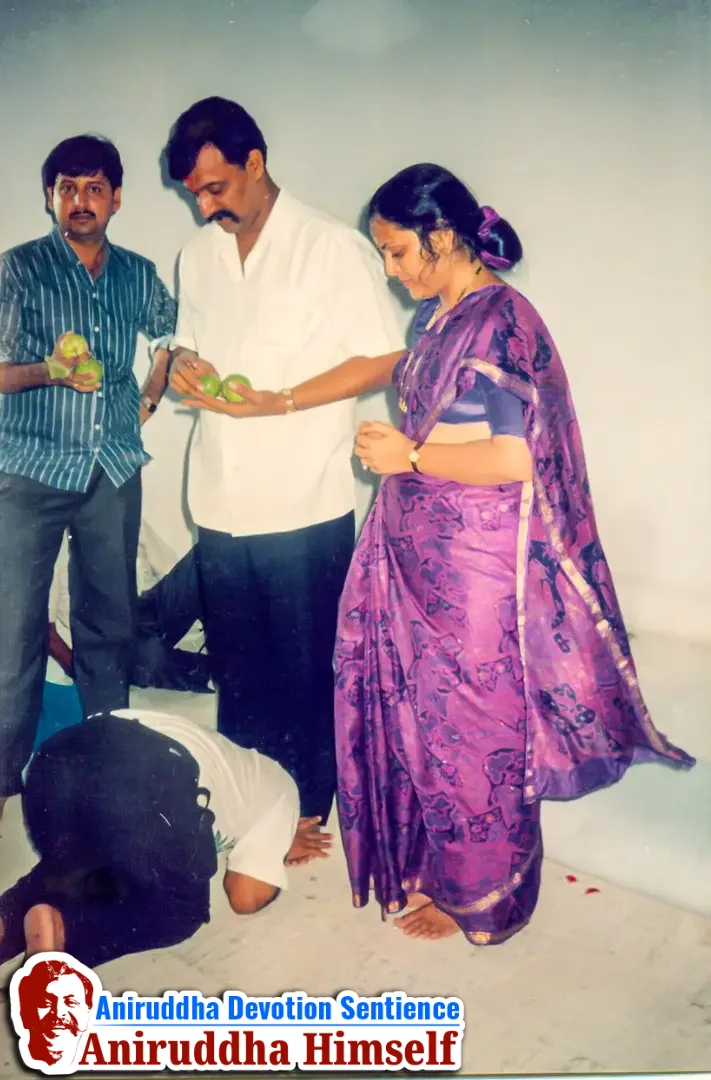
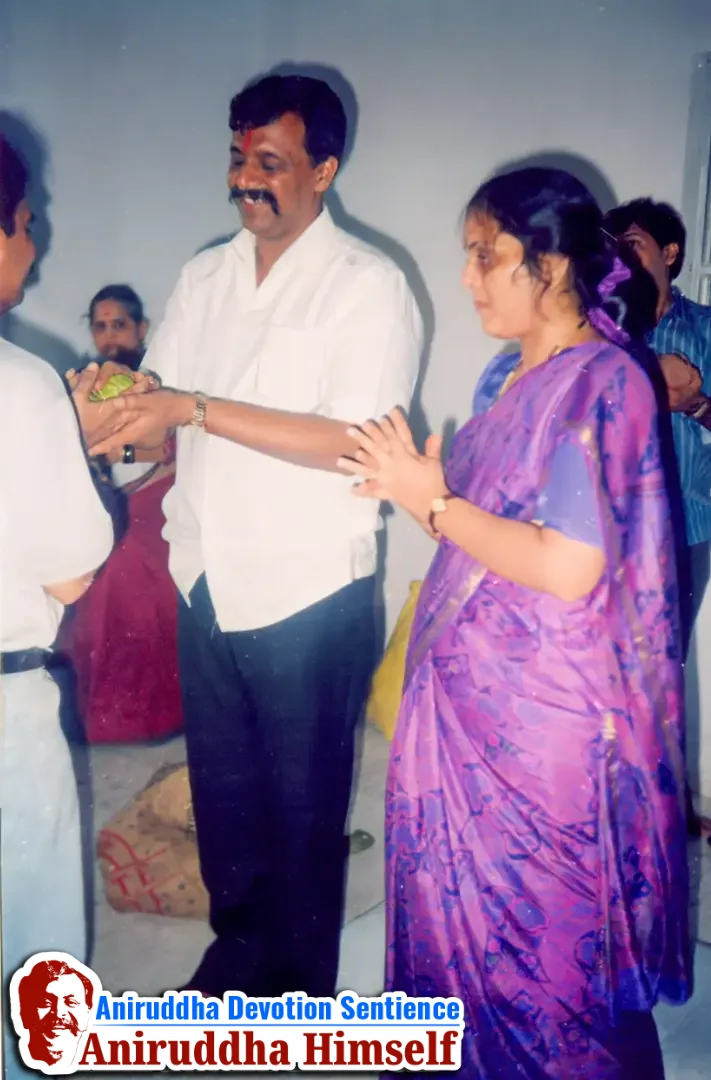
At the same time, symbolic Navaneet (pure white butter) Padukas of Shree Sainath were lovingly prepared under the guidance of Sadguru Shree Aniruddha by the venerable devotee couple, Appasaheb Dabholkar, grandson of Hemadpant, the author of the Shree Sai Satcharita, and his wife Meenavahini Dabholkar, Hemadpant's granddaughter-in-law. Pure white butter (Navaneet) symbolises pure Bhakti; hence, these sacred Padukas embodied Sadguru Bhakti itself, and were offered with heartfelt devotion at the holy feet of Shree Sainath.
Thereafter, each Shraddhavan placed the symbolic clay Padukas they had lovingly moulded with their own hands around the Navaneet Padukas, and offered Kasturi Gandha as an Archana unto them.
On the following day, all these Padukas were ceremonially immersed in the sacred waters of the River Godavari, revered as the Dakshin Ganga — the Ganga of the South.
The Upasana of the Shree Shiva Gayatri Mantra
"The Upasana of the Shree Shiva Gayatri Mantra symbolised the Amrit Manthan Upasana — the spiritual churning that leads to the attainment of the nectar of immortality. During the cosmic battle between the Devas and the Danavas, the Devas sought the cooperation of the Danavas to churn the Ocean of Milk. Spiritually, this signifies that even our noble tendencies must, at times, confront and transform our negative tendencies in order to progress.
Before the Amrit (nectar of immortality) could emerge, the deadly poison Halahala surfaced. For the nectar to be attained, this poison first had to be consumed and assimilated — and only Paramashiva possessed the strength to bear it. Moved by the earnest prayers of all the Devas, Bhagwan Shiva drank the Halahala, thereby enabling them to attain the nectar of immortality.
This sacred Upasana was held at 7:00 p.m. on the first day of the Shirdi Rasayatra
On this occasion, the revered devotee couple, Shri Appasaheb Dabholkar and Meenavahini Dabholkar, prepared a Shivalinga under the guidance of Sadguru Shree Aniruddha. During its worship, Sadguru Shree Aniruddha led all the Shraddhavans in chanting the Shree Shiva Gayatri Mantra 108 times:
’ॐ भूर्भुव: स्व: | ॐ तत्पुरुषाय विद्महे | महादेवाय धीमहि | तन्नो रुद्र: प्रचोदयात् ||’
Om Bhurbhuvah Swaha | Om Tatpurushaya Vidmahe | Mahadevaya Dhimahi | Tanno Rudrah Prachodayat ||
The Upasana concluded with the performance of the Aarti.
After the Aarti, Bapu led all the Shraddhavans in a Gajar composed by Him, lovingly remembering the foremost devotees of Shree Sainath who had immersed themselves completely in His Bhakti. In perfect rhythm and unison, everyone sang:
‘दिक्षीत, शामा, हेमाड, बायजाबाई, नाना, गणु, मेघश्याम |
यांची वाट पुसता पुसता मिळेल आम्हां साईराम ॥Dixit, Shama, Hemad, Bayajabai, Nana, Ganu, Meghshyam |
Yanchi vaat pusata pusata milel amha Sairam ||
As the Gajar echoed through the gathering, every Shraddhavan became immersed in devotion. Hearts overflowing with love for Shree Sainath, they joyfully danced in a state of spiritual ecstasy.
The Gajar concluded with the chanting of the mantra:
‘ॐ कृपासिंधु श्री साईनाथाय नम:|’
Om Kripasindhu Shree Sainathaya Namah |
Thereafter, all the Shraddhavans partook of the evening meal, with Bapu Himself sitting and dining alongside everyone. Following dinner, all were blessed with the rare and unforgettable opportunity to participate in a soulful Satsang in the company of Sadguru Shree Aniruddha.
After the Satsang, many Shraddhavans retired for the night, while only a handful remained in Bapu's company. As He continued conversing informally with them, at around 3:30 a.m., Bapu began speaking in a deeply profound manner. The gravity of His voice, its serene authority, and the spiritual vibrations it carried remain etched in the hearts of those few Shraddhavans even today.
Bapu said:
"Whoever I am, I am 'I'. The bond between my Guru and me spans countless ages. Yesterday I was Aniruddha, today I am Aniruddha, and tomorrow too I shall remain Aniruddha. Every one of my children seated before me is my God, and serving this God is my Dharma. It is for the fulfilment of this Dharma that I exist."
Shirdi Rasayatra – Day Two
The second day of the Shirdi Rasayatra was devoted to visiting the most sacred places in Shreekshetra Shirdi in the company of Sadguru Shree Aniruddha. As the Shraddhavans visited these holy sites, they had the rare privilege of learning their spiritual significance directly from Bapu.
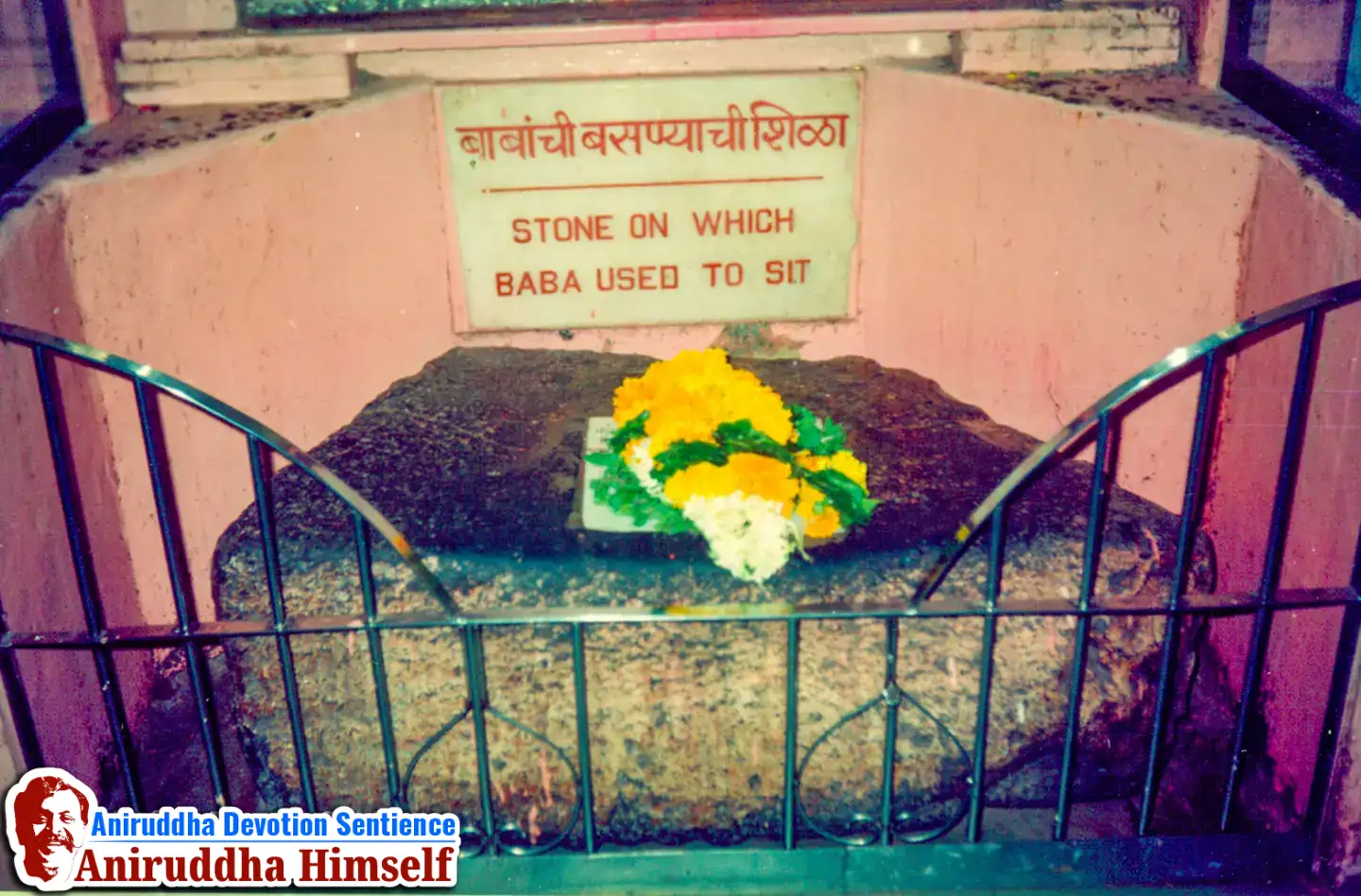
Bapu explained that many devotees come to Shirdi, have Darshan of Shree Sainath's Samadhi in the Samadhi Mandir, and then return. However, Shirdi is home to several other sacred places where Shree Sainath lived, moved about, and carried out His divine work during His lifetime. It is also the resting place of many of His blessed devotees who were fortunate to receive His close companionship. Bapu lovingly guided the Shraddhavans to these sacred places and explained their profound significance.
Among these, one of the foremost was Dwarkamai.
Thus, under the loving guidance of Sadguru Shree Aniruddha, the Shraddhavans had the blessed opportunity to visit and understand the significance of these sacred places associated with the life and divine work of Shree Sainath.
Highlights of the Shirdi Rasayatra
-
A deeper understanding of Shree Sainath's life and His devotees strengthened the Bhakti of every Shraddhavan - By visiting the sacred places of Shreekshetra Shirdi and learning their significance directly from Sadguru Shree Aniruddha, the Shraddhavans developed a deeper bond with Shree Sainath. Bapu explained the profound spiritual lessons behind the many incidents associated with Dwarkamai and the lives of Baba's devotees—Mhalsapati's spirit of selfless servitude, Madhavrao Deshpande's untiring service, Tatya Kote Patil's steadfast devotion, Kakasaheb Dixit's unwavering obedience to the Sadguru, Hemadpant's complete surrender, Das Ganu's absolute faith in the Sadguru's word, Nanasaheb Chandorkar's total dedication, Bayajabai's motherly love for Baba, Lakshmibai's spirit of service, and even the deep love that Shyamsundar, Baba's horse, expressed towards Him despite being born in the animal kingdom. By revealing the deeper spiritual meaning behind these lives and incidents, Bapu showed the Shraddhavans how to imbibe the nectar of Bhakti and allow it to flow through their own lives.
-
A rare opportunity to perform Upasana, participate in Satsang, and sing Gajars in the company of the Sadguru - Throughout the Rasayatra, the Shraddhavans were blessed with the rare privilege of performing various Upasanas, participating in harmonious Satsangs, and joyfully singing devotional Gajars in the presence of Sadguru Shree Aniruddha.
-
The privilege of learning about Shree Sainath directly from Sadguru Shree Aniruddha in Shirdi itself - Receiving the life and teachings of Shree Sainath from the lips of the Sadguru while standing at the very places sanctified by Baba's presence made the entire pilgrimage a deeply transformative spiritual experience.
-
A pilgrimage that strengthened the foundation of faith - Every Shraddhavan returned with the heartfelt conviction that the Shirdi Rasayatra had become a beautiful journey of Bhakti and love in the company of the Sadguru. They felt that Sadguru Shree Aniruddha had firmly driven the peg of Shraddha (faith) deep into their hearts, making the foundation of their spiritual lives stronger and more steadfast than ever before.