Mandodari - first recipient of Namasparsha
This is the touch of the sacred Ramnama. The very first recipient of Namasparsha was Mandodari, the wife of Ravaṇ. In Lanka, no one was permitted to utter the name of Ram; there was a complete ban on chanting ‘Ramnama’. Hence, Mandodari resorted to Namasparsha instead.
One day, while performing Namasparsha, she felt the touch of the lotus feet of Prabhu Ram. When she opened her eyes, she saw only His bow. Since Prabhu Ram is committed with mind and body only to His wife alone, it would not have been appropriate for Him to grant Mandodari direct darshan while she was alone in her palace. Therefore, He revealed Himself symbolically through His bow.
This Namasparsha made Mandodari’s austerity more pure and more exalted than that of Ravan. Namasparsha is nothing but the touch of Ram Himself—the touch of His lotus feet, the touch of His sacred hands.
Namasparsha can be practised in three ways
As explained by Sadguru Shree Aniruddha Bapu in his discourse, Namasparsha can be practised in three ways:
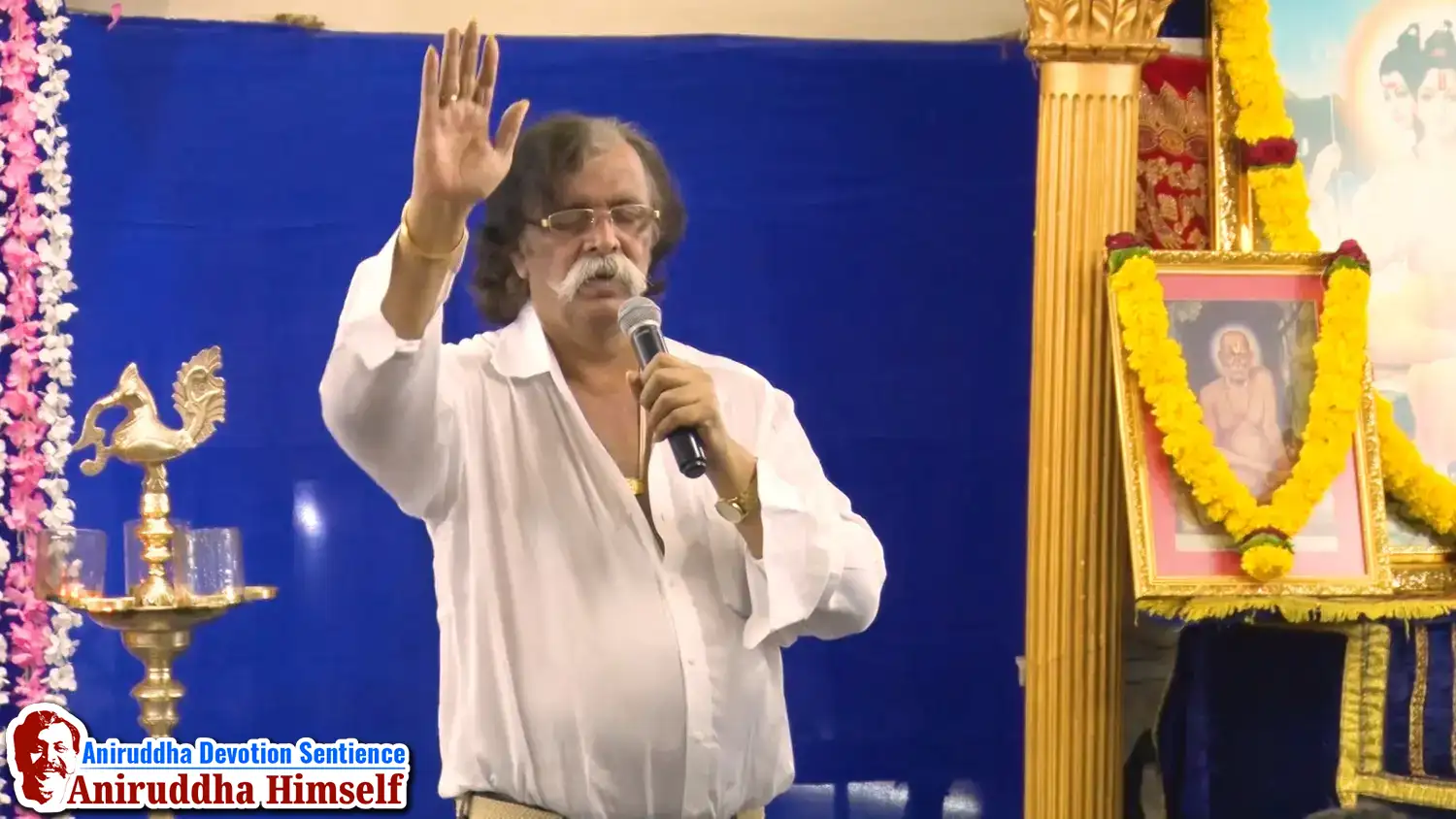
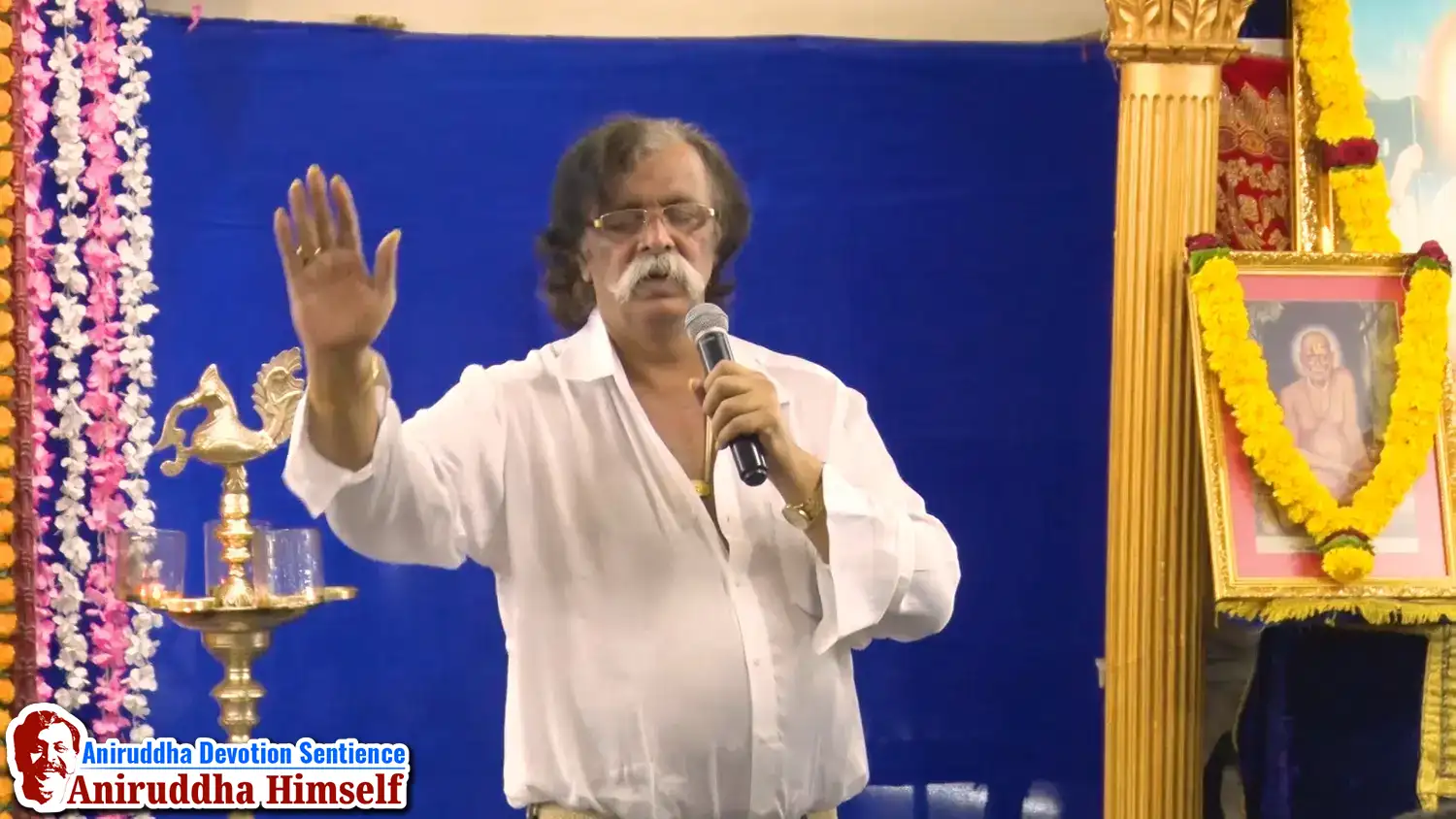
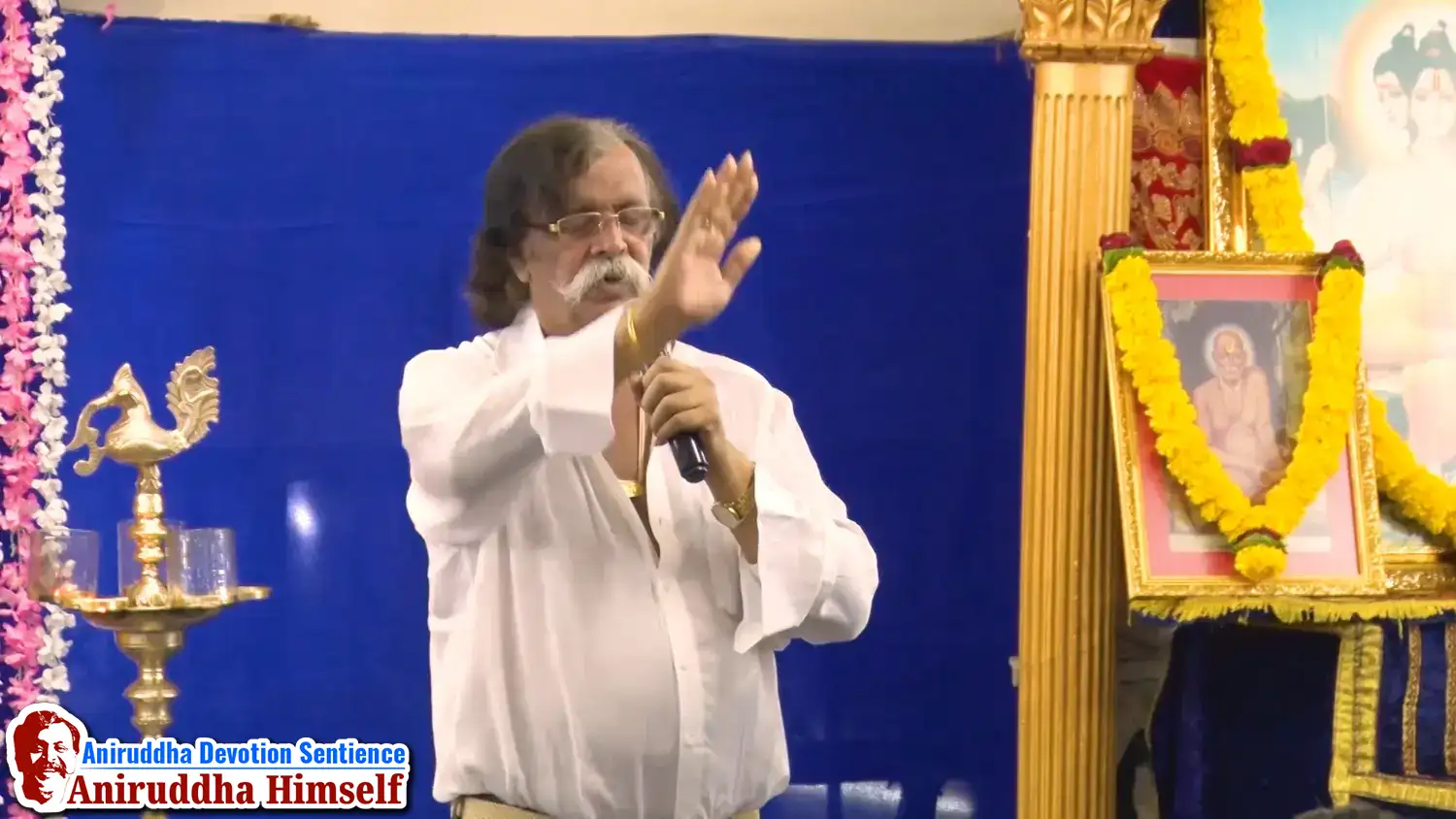
- Keep your eyes open or closed and with the palm of your right hand, write Ramnama in the air. While doing so, hold the feeling that you are seated on the lap of that four-armed form of Prabhu Ram, and that you are writing His Name in the air in His presence.
- Close your eyes and place your right hand over your heart, keeping the fingers slightly apart. Chant Ramnama in your mind. While doing so, cultivate the feeling that the vibrations of the Naam are entering your heart from your mouth. This Ramnama reaches our inner being, purifies the heart, and spreads from the heart throughout the entire body.
- Close your eyes and, using the ring finger (the finger next to the little finger) of the right hand, write Ramnama on the palm of the left hand. This Namasparsha should be practised five times daily, with eyes closed. When I perform Namasparsha, Charanadhyana happens naturally.
Namasparsha is a simple and effortless way of attaining Charanasparsha. Once Namasparsha is performed, Charanasparsha is inevitably attained.
Sahasranama Tattulyam Ramanama Varaanane
Paduka – Nama – Charana are inseparably connected.
Sahasranama tattulyam Ramanama Varaanane (सहस्रनाम तत्तुल्यं रामनाम वरानने) — One utterance of Ramnama is equal to the thousand Namas of Vishnu. Such is the greatness of Ramnama, as Shree Shiva Himself explains to Parvati.
Thus, this easy and natural means of imprinting Ramnama upon the mind, engraving it in the heart, and storing it within the inner being is Namasparsha. There is yet another beautiful connection between Namasparsha and the sacred Padukas.
Mahaprana Hanuman wrote the Nama of Ram on the rocks used to construct the Ramsetu; those rocks thus experienced the Namasparsha. Those rocks floated and it was across that very bridge built of rocks inscribed with Ramnama that Prabhu Ram, Lakshmanji, Hanumanji and the Vanara army crossed over it.
Namasparsha as ‘Hanumat Sparsha’
In the editorial ‘Tulsipatra – 1586’, Sadguru Shri Aniruddha also refers to Namasparsha as ‘Hanumat Sparsha’. Hanuman is the son of the Wind (Pavanputra); He is the living Ramnama. Therefore, writing Ramnama in the air is the truest form of Namasparsha. Hanuman is the Mahaprana, present in every living and non-living being. Through Namasparsha, Hanuman touches our heart and connects our inner being to the Atmarama. Thus, Ramnama reaches deep within us. When we write Ramnama in the Ramnama notebook within the outline of Hanuman’s form, that too is Namasparsha. Even while writing the digital Ramnama notebook, one receives Namasparsha.
The name 'Ram' is made up of three seed syllables ‘Ram’ - (रं’ बीज), ‘Aam’ (’आं’ बीज), and ‘Ma’ (’म’ बीज). These three syllables are nothing but the three steps of Swayambhagwan Trivikram.
Ra + A + Ma = Ram.
This very Ramnama symbolizes both the Nama as well as His Charan. These charans themselves are Namasparsha. If we wish to enshrine Ram’s padukas within our heart, Namasparsha is essential. Shree Lakshman constantly meditates upon the lotus feet of Mother Sita and Prabhu Ram. When one performs Namasparsha, Charanadhyana happens effortlessly.