Science and Bhakti: Two paths, one truth
For many, science and spirituality appear to belong to two different worlds. Science is associated with logic, evidence, and observation, while devotion is often misunderstood as blind faith.
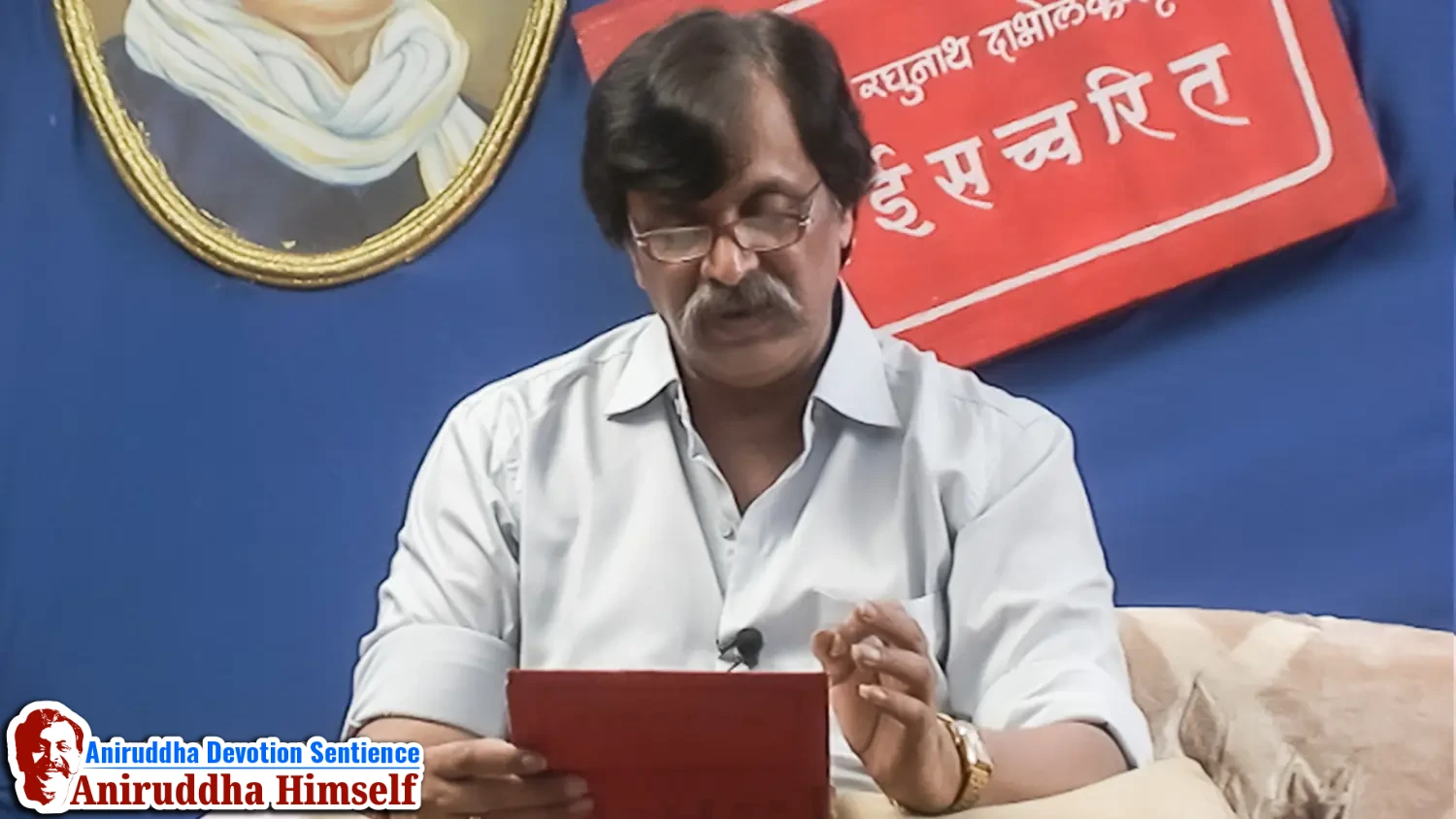
In his editorial The Need of Today, published in Dainik Pratyaksha on 16 December 2005, he wrote:
"Science and bhakti will never ever impede each other. On the contrary, the advancement in science will only add to the treasure of bhakti, while the power of bhakti will weaken the destructive potential of science and strengthen constructive discoveries."
This philosophy is reflected throughout his own life.
According to Bapu, science protects spirituality from superstition and irrationality, while bhakti protects science from selfishness and destructive misuse. Together, they become instruments for the welfare of humanity.
His years of medical education never distanced him from the Almighty. Instead, they strengthened his appreciation for the order, precision, and intelligence that permeate creation. Similarly, his spirituality never rejected scientific reasoning. Rather, it nurtured humility—the awareness that however vast human knowledge becomes, it always stands before an even greater cosmic intelligence.
The Sadguru: An eternal devotee
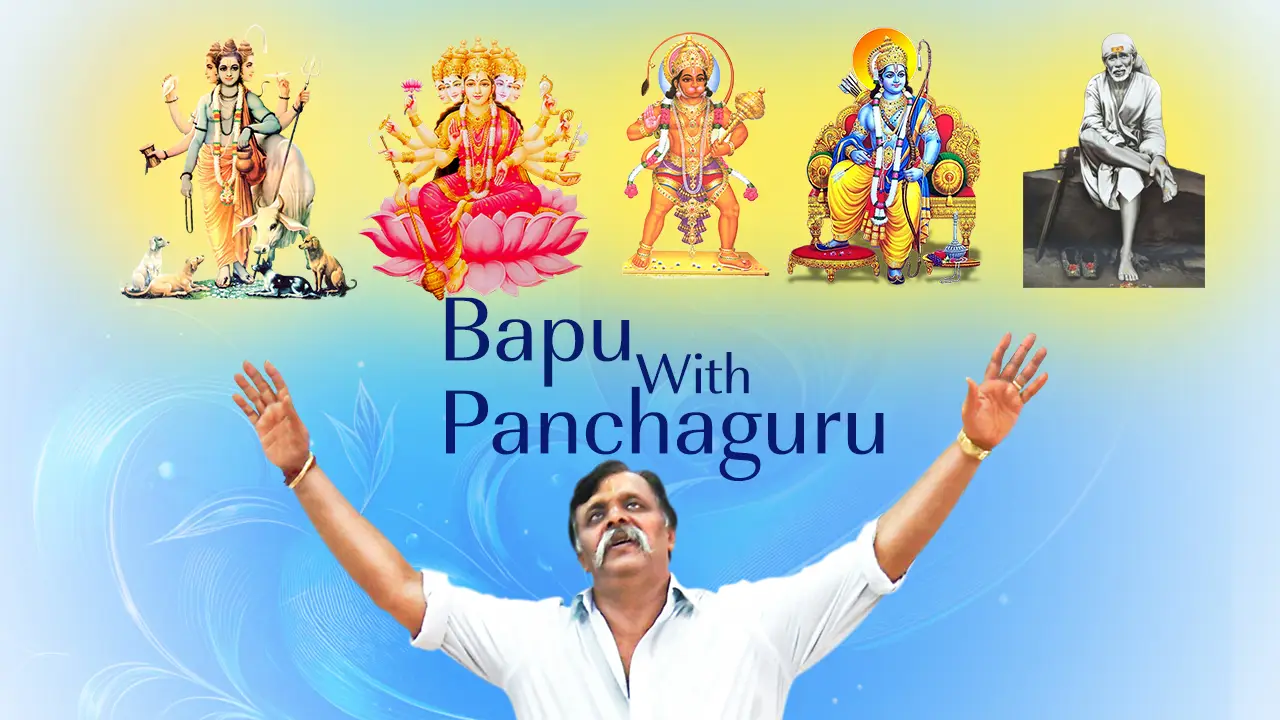
Although millions regard him as their Sadguru, Bapu has never ceased to see himself as a disciple, a bhakta. In the sacred work written by him, Shreemad Purushartha Grantharaj –Volume 2- Prempravas, he introduces the five Gurus who guide every dimension of his life. These Panchagurus are not merely deities of worship but the spiritual foundation upon which his life rests. His own life is an embodiment of unwavering Guru Bhakti and complete surrender to his five revered Gurus, whom he lovingly describes in ShreemadPurushartha Grantharaj.
- Shree Gurudatta is his Karavita Guru—the Master Enabler, the Guru who is the impetus, the driving force
- Shree Gayatrimata is his Vaatsalyaguru, the Guru who cares and nurtures.
- Shree Ram is his Karta Guru—the Doer Guru. (the Guru who does the action)
- Mahaprana Hanumant is his Rakshak Guru—The Guru who protects.
- Shree Sai Baba is his Digdarshak Guru—the Guru who guides, who directs.
Together, these Panchagurus reveal the spiritual architecture of Bapu's life and explain why his teachings harmoniously combine devotion, discipline, humility, compassion, and practical living.
Sacred adoration of Maa Jagadamba
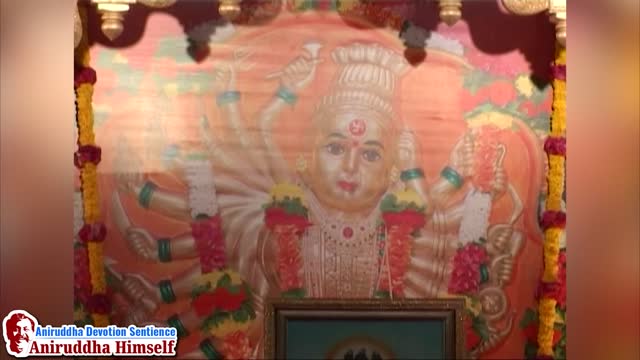
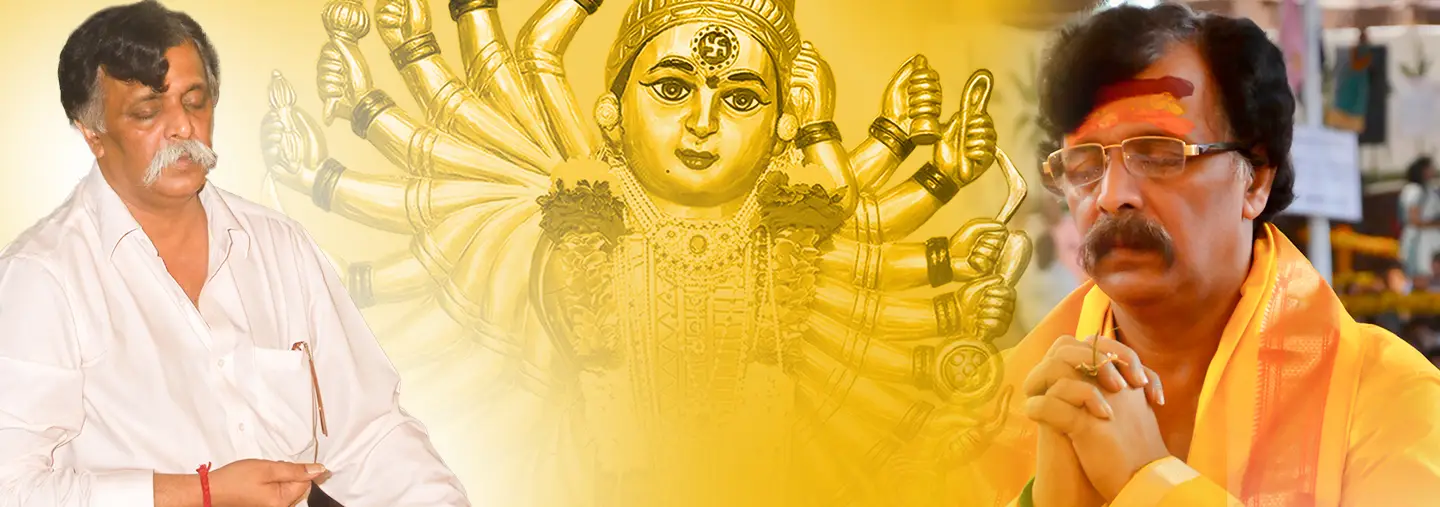
Another defining feature of Sadguru Shree Aniruddha Bapu's spiritual life is His profound devotion to Aadimata Mahishasurmardini.
Bapu worships Aadimata Mahishasurmardini above all as His Mother, rather than merely as the Divine Shakti. He lovingly refers to Himself as Her son, reflecting a relationship founded on complete trust, unconditional love, and absolute surrender. To Him, Aadimata is the ever-loving Mother in whose boundless care and protection He lives as Her child.
This simple expression reveals a profound spiritual attitude. Before he assumes the role of a teacher, he places himself in the position of a child—completely trusting in the boundless love and protection of the Divine Mother.
Immersed in bhakti
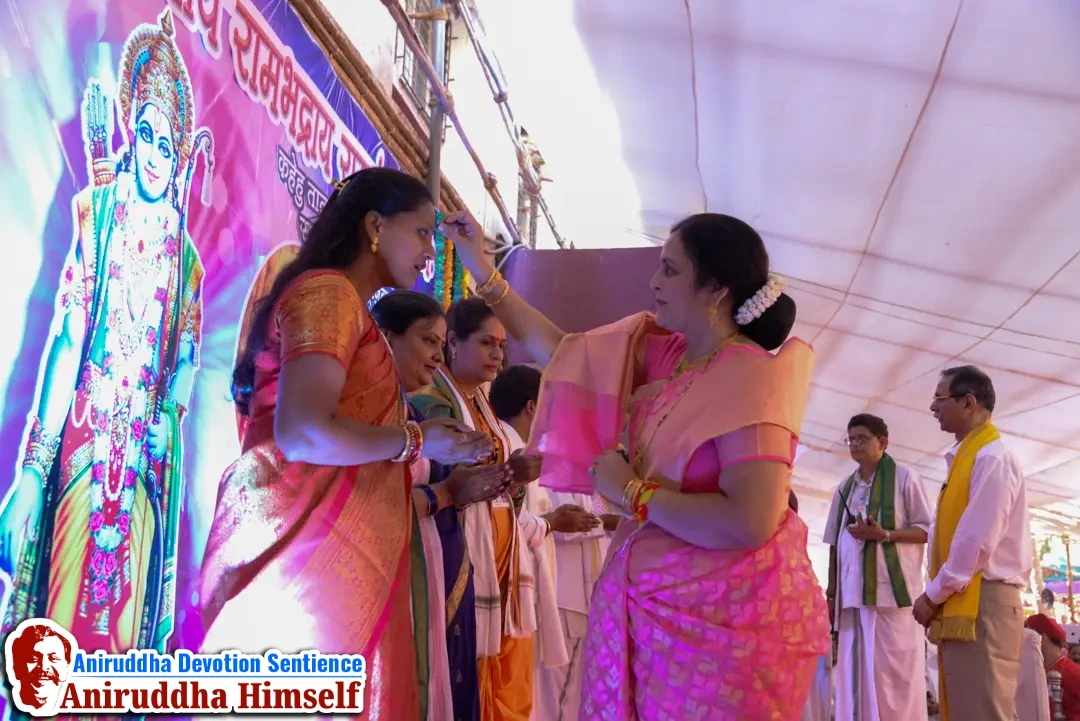
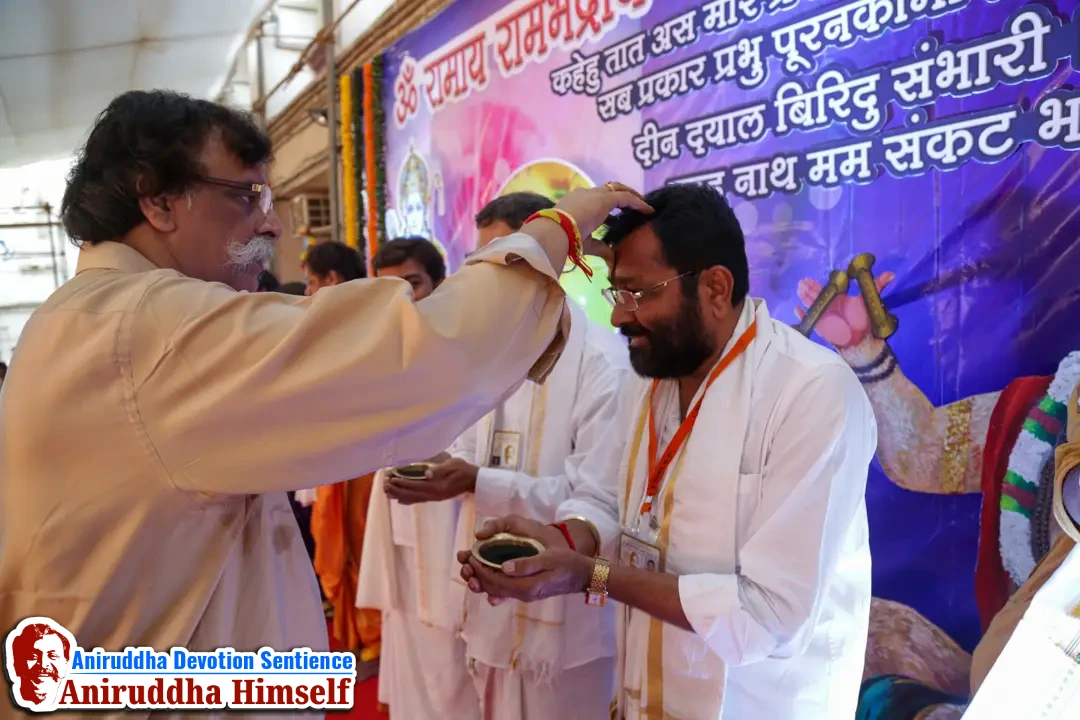
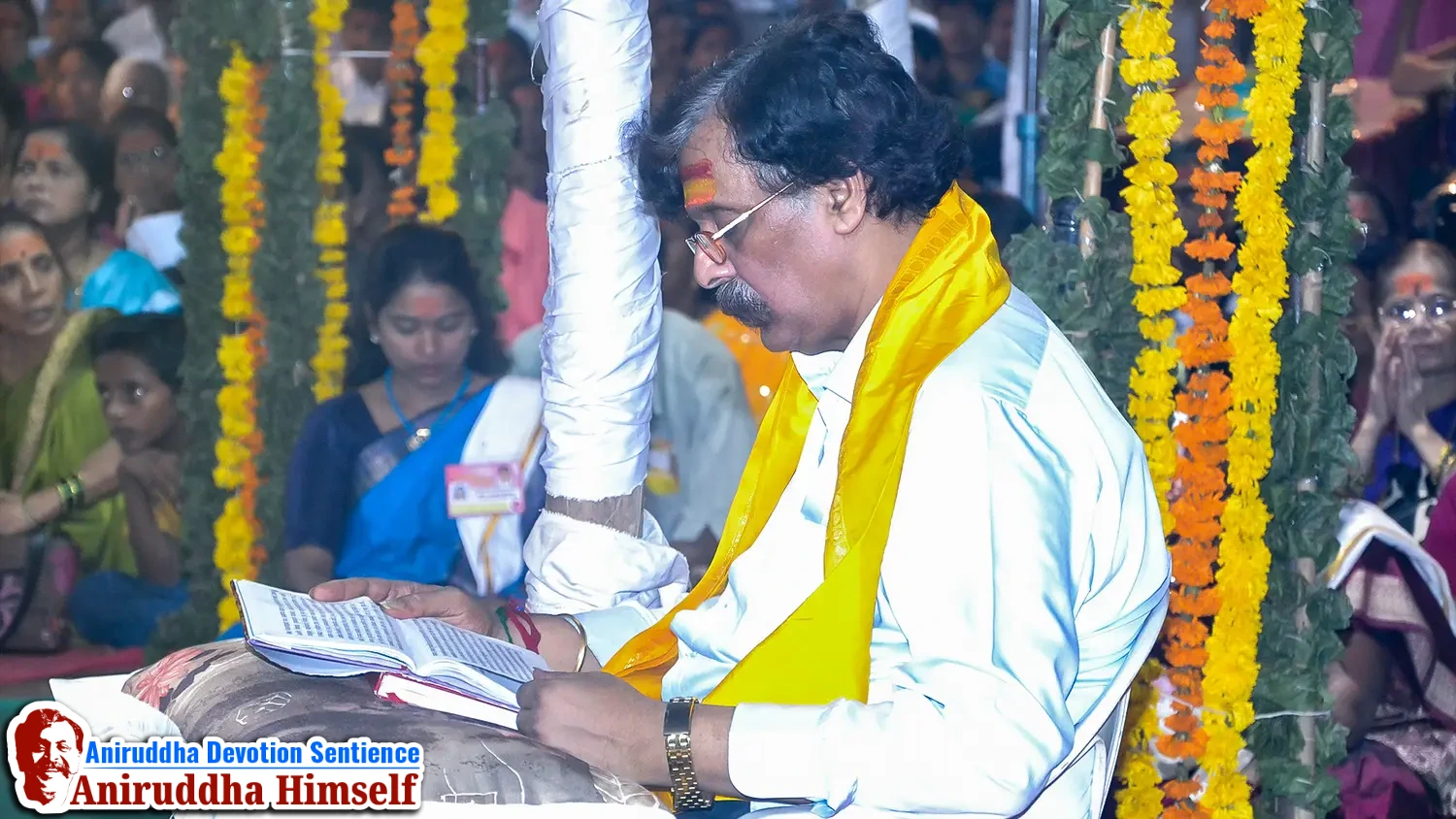
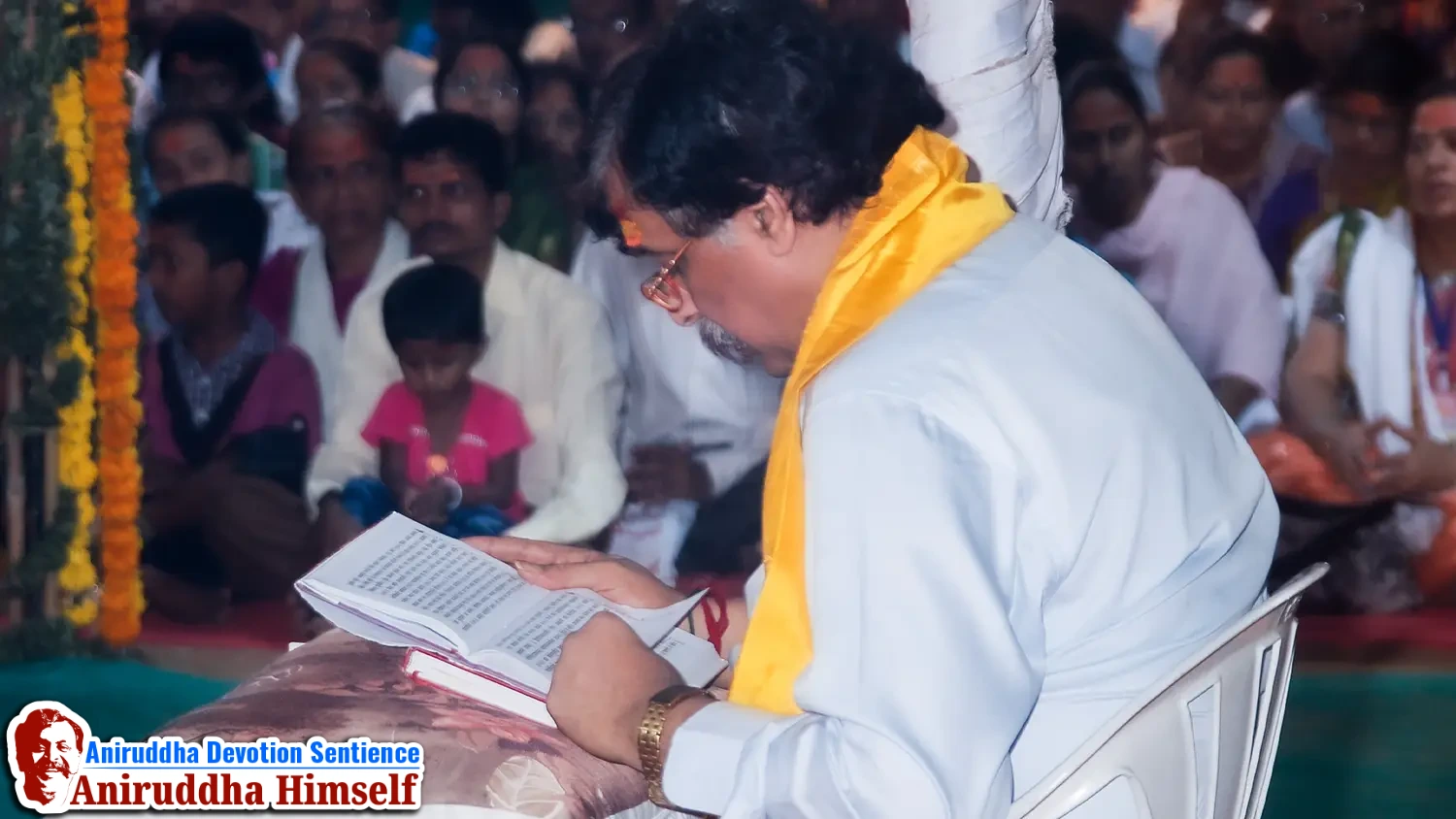
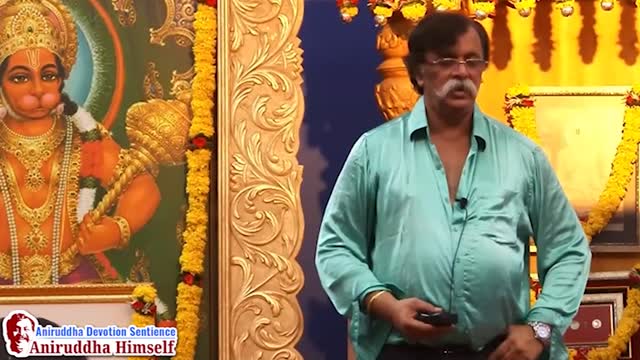
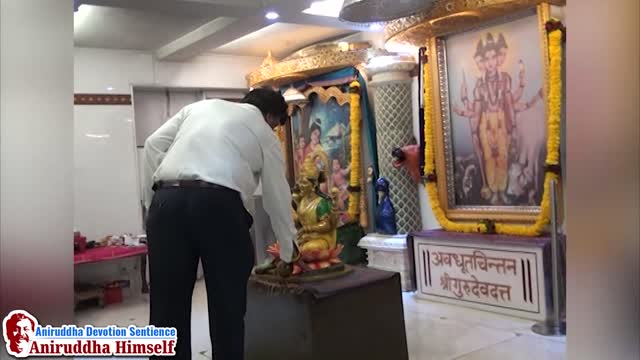
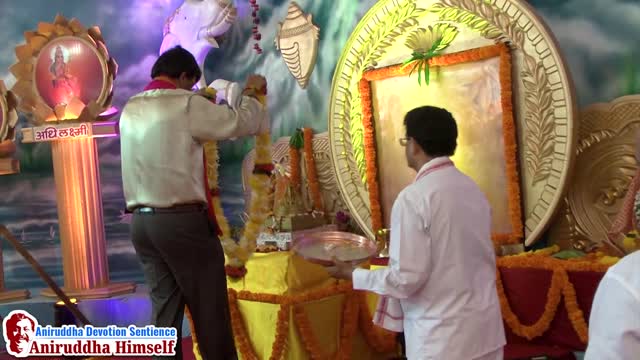
While Bapu's books and discourses explain his philosophy of devotion, it is at Shree Harigurugram that one truly witnesses how deeply bhakti shapes his daily life. The stage itself reflects his inner world.
At its centre stands Shree Dattaguru, occupying the place of highest reverence and alongside are Shree Swami Samartha and Shree Sainath.
The arrangement silently conveys an important truth: before he stands in front of thousands as their Sadguru, Bapu first stands before the Divine as a devotee.
Without speaking a word, he teaches that reverence must always precede recognition, gratitude must come before guidance, and surrender must remain the foundation of leadership.
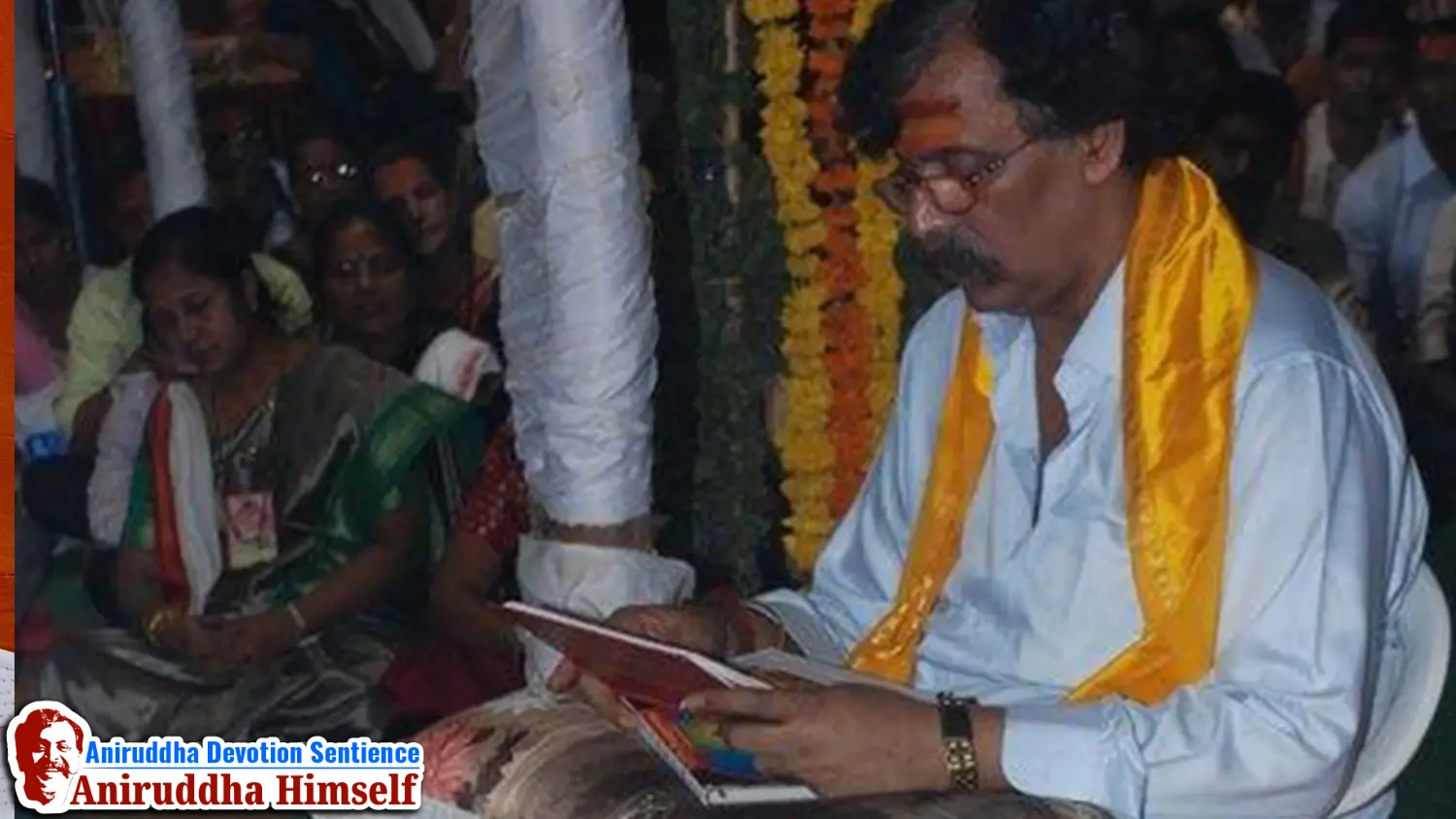
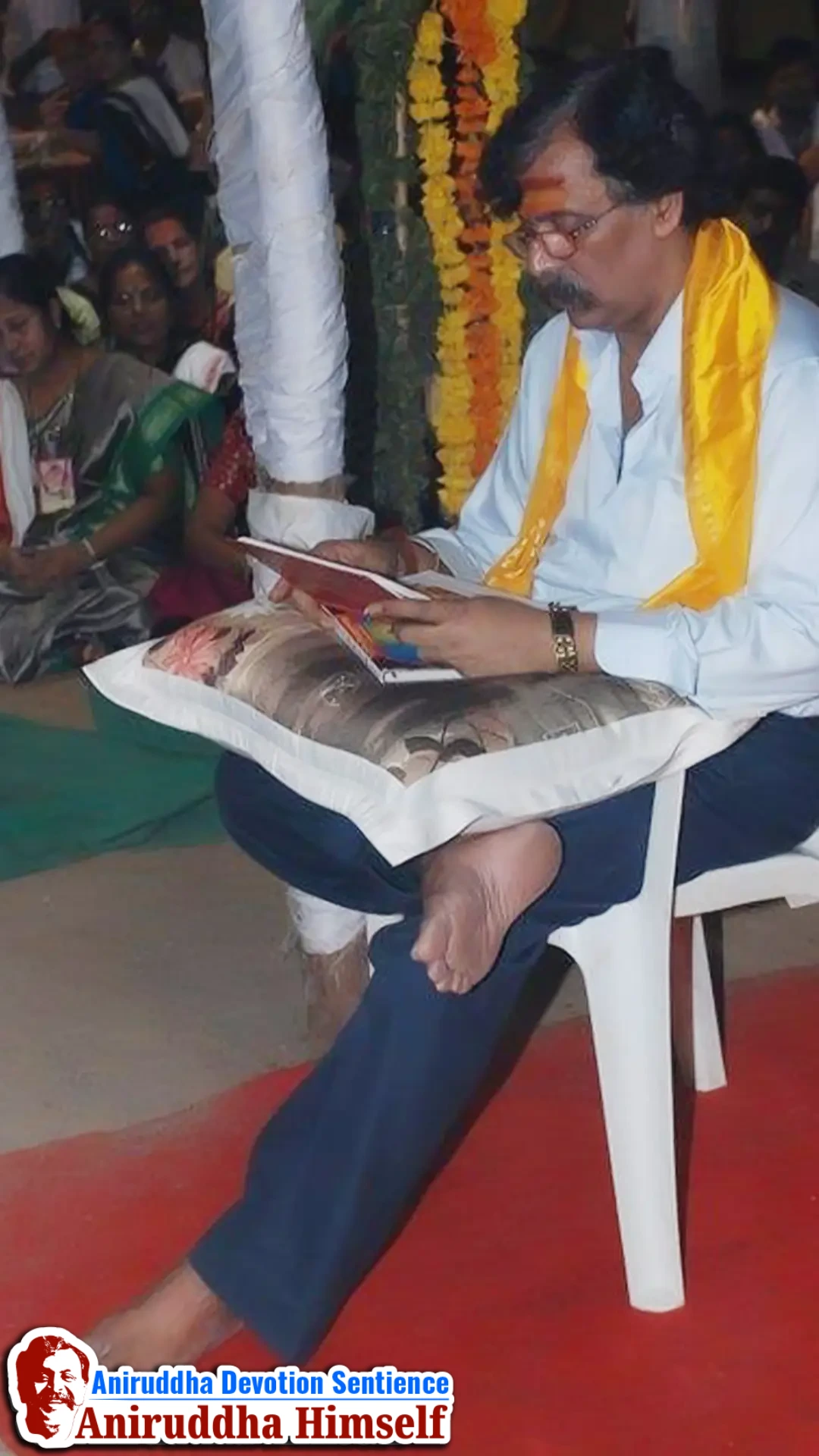
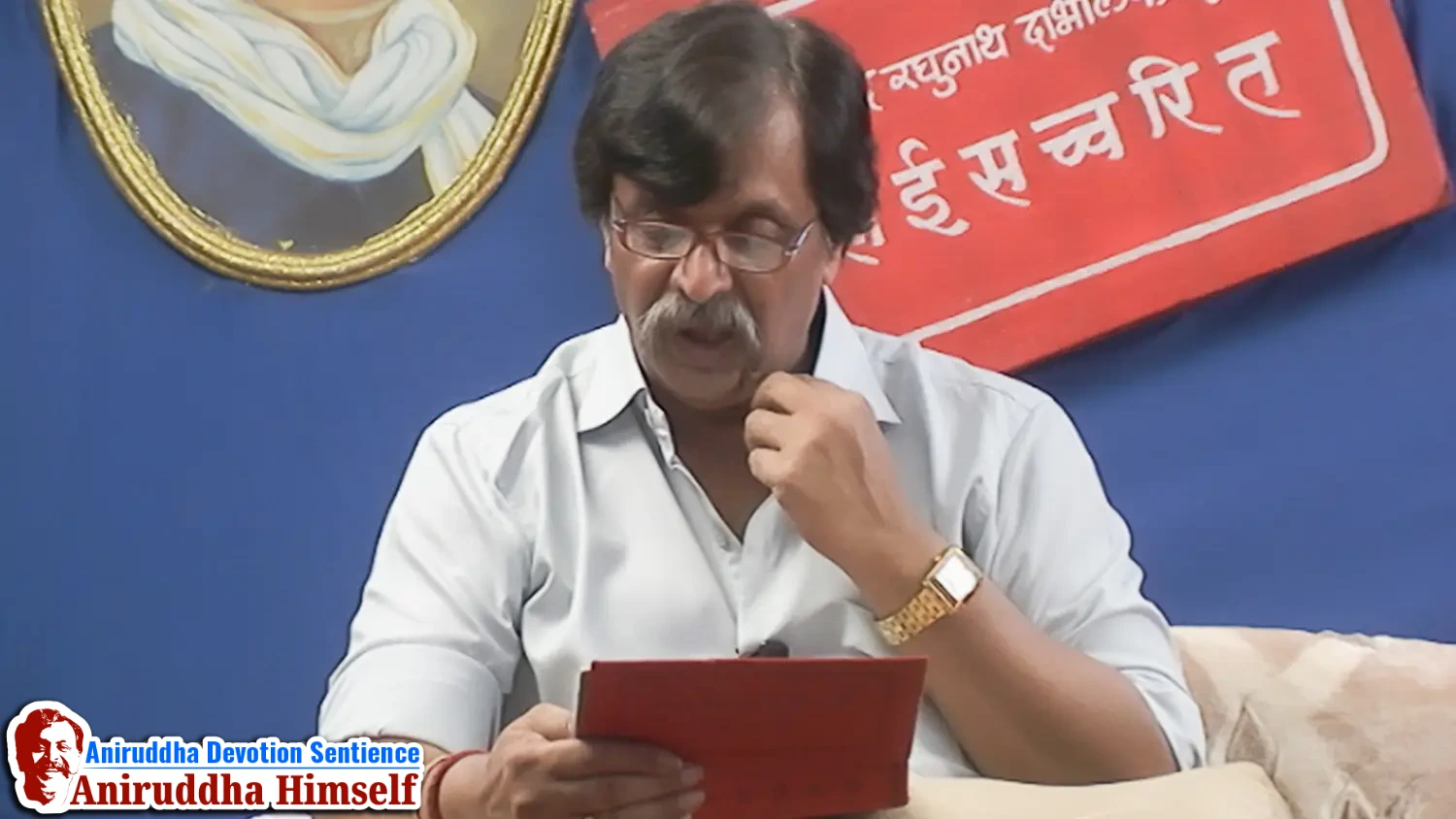
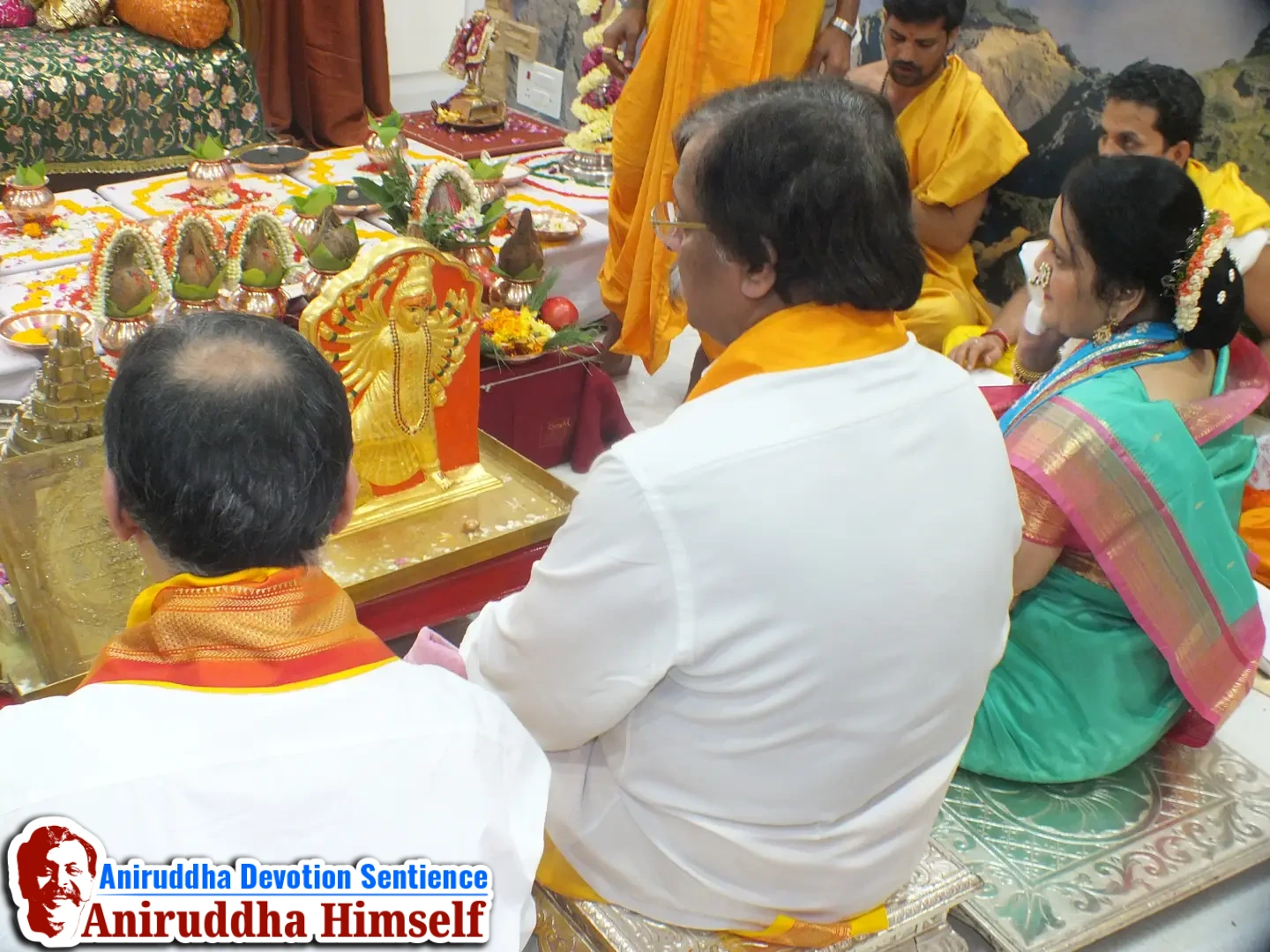
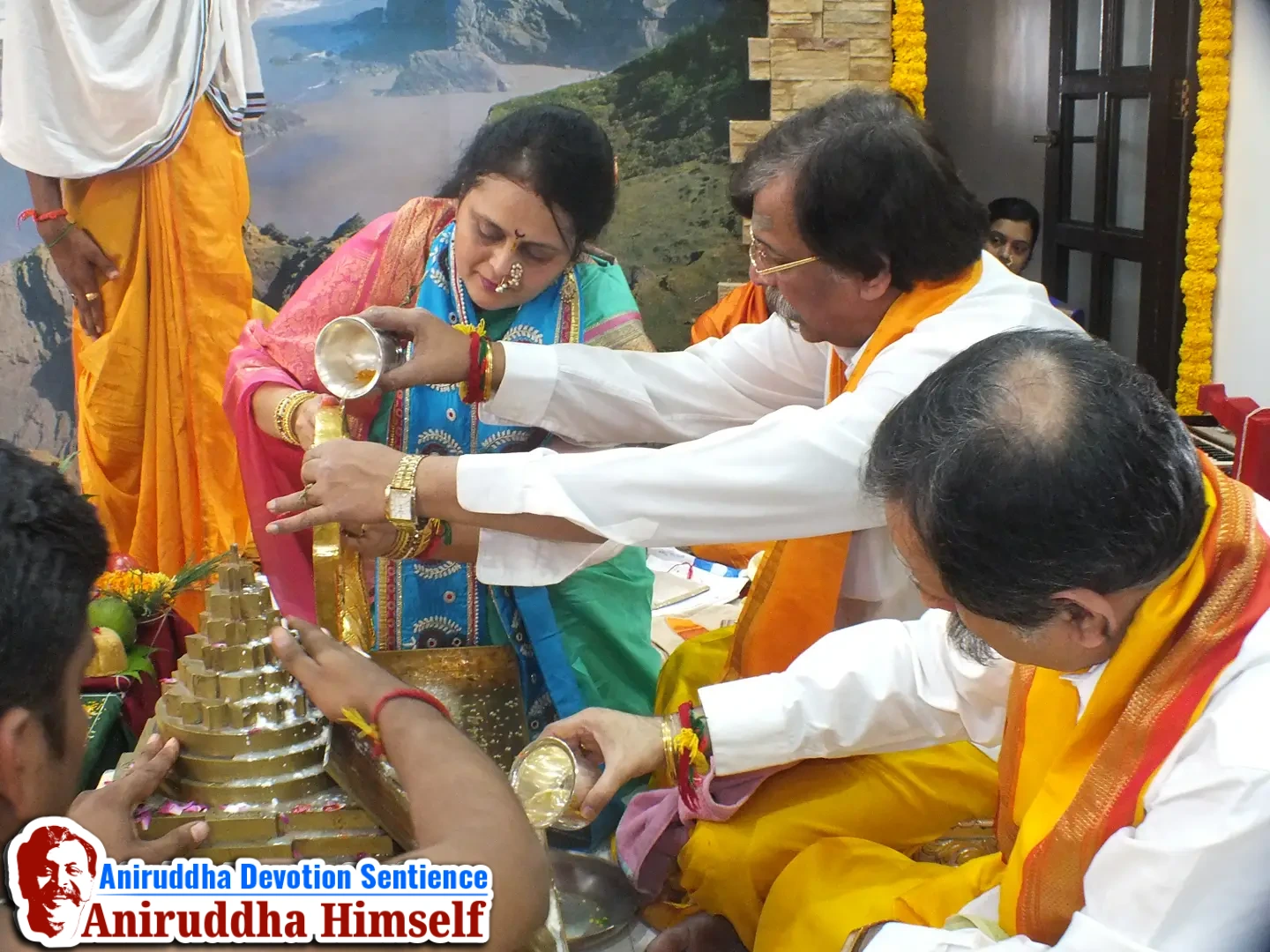
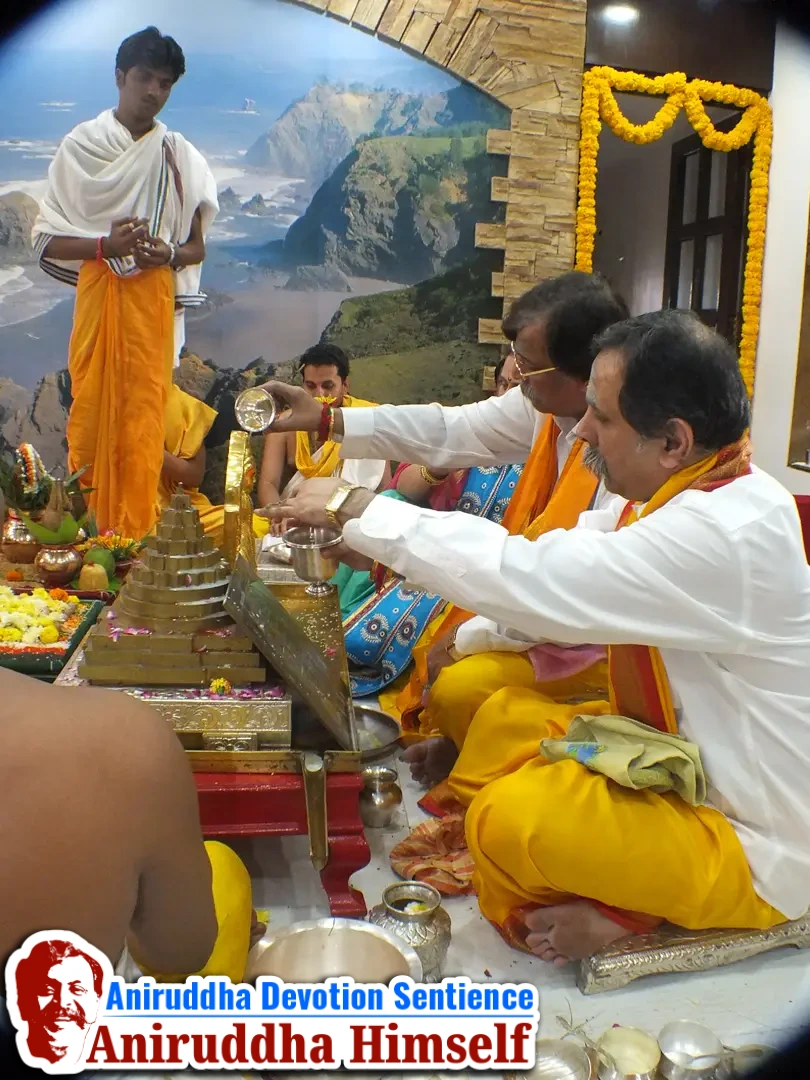
Sadguru Shree Aniruddha Bapu's life is firmly rooted in a disciplined and deeply enriching tradition of Upasana. His spiritual practice encompasses Nitya (daily), Naimittik (occasional), and Vishesh (special) Upasana, each observed with unwavering regularity and devotion. As part of His daily Upasana, Bapu recites the Shree Hanuman Chalisa, Sundarkand, Shree Ramraksha Stotra, Ghorkashtoddharan Stotra, Dattamala Mantra, Shree Dattabavani, Devi Aparadhakshamapan Stotra, Shubhankara, and Ashubhanashini Stotra. He also regularly studies the Ramcharitmanas and recites a chapter from the Shree Saisatcharitra, reflecting His reverence for the timeless wisdom of these sacred texts.
Beyond this, Bapu observes a well-defined cycle of monthly and annual Upasana. Every year, He retires to His residence in Sangli for a period dedicated exclusively to spiritual practices. At his Mumbai residence, too, two Shree Dattayaags are performed annually. Special observances such as the Paramba Poojan during Navratri, the Upasana on Shree Swami Samarth Prakat Din, and the sacred Poojan performed by His family on the occasion of Guru Pournima further reflect the continuity and depth of devotion that permeate His household. Well-versed in the Vedas and their traditions, Bapu performs every Upasana with profound scriptural understanding, meticulous discipline, and, above all, heartfelt Bhakti. In His life, Upasana is not an occasional observance but a continuous expression of love, gratitude, and complete surrender to the Almighty.
Bhakti as a way of Life
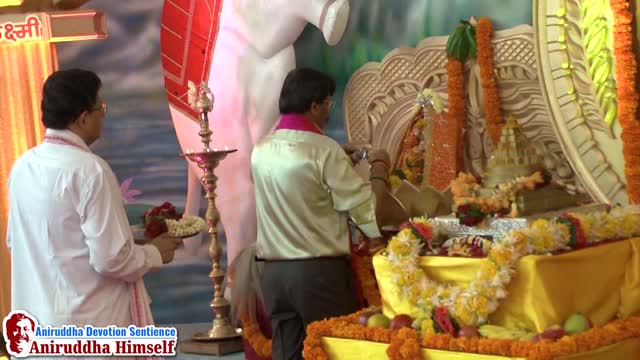
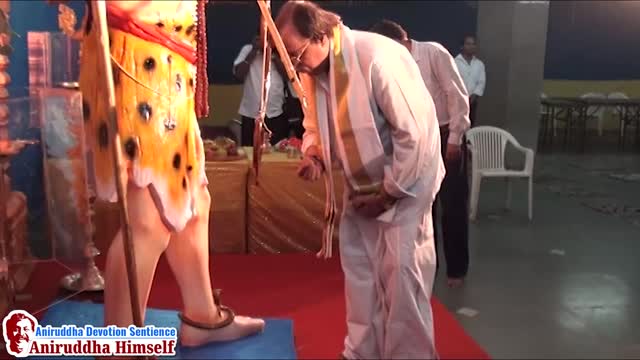
For Sadguru Shree Aniruddha Bapu, devotion is not confined to rituals. Whether performing Pujan, participating in Aarti, reciting sacred mantras, writing books, composing editorials for Dainik Pratyaksha, or delivering discourses, the same spirit of devotion remains evident.
His relationship with scriptures reflects the same approach.
He studies and explains the Ramayana, Mahabharata, Bhagavad Gita, Shreemad Bhagavatam, Guru Charitra, Shree Sai Satcharita, and the lives of saints not merely as sacred literature but as living guides for everyday life.
Walking in Divine Faith
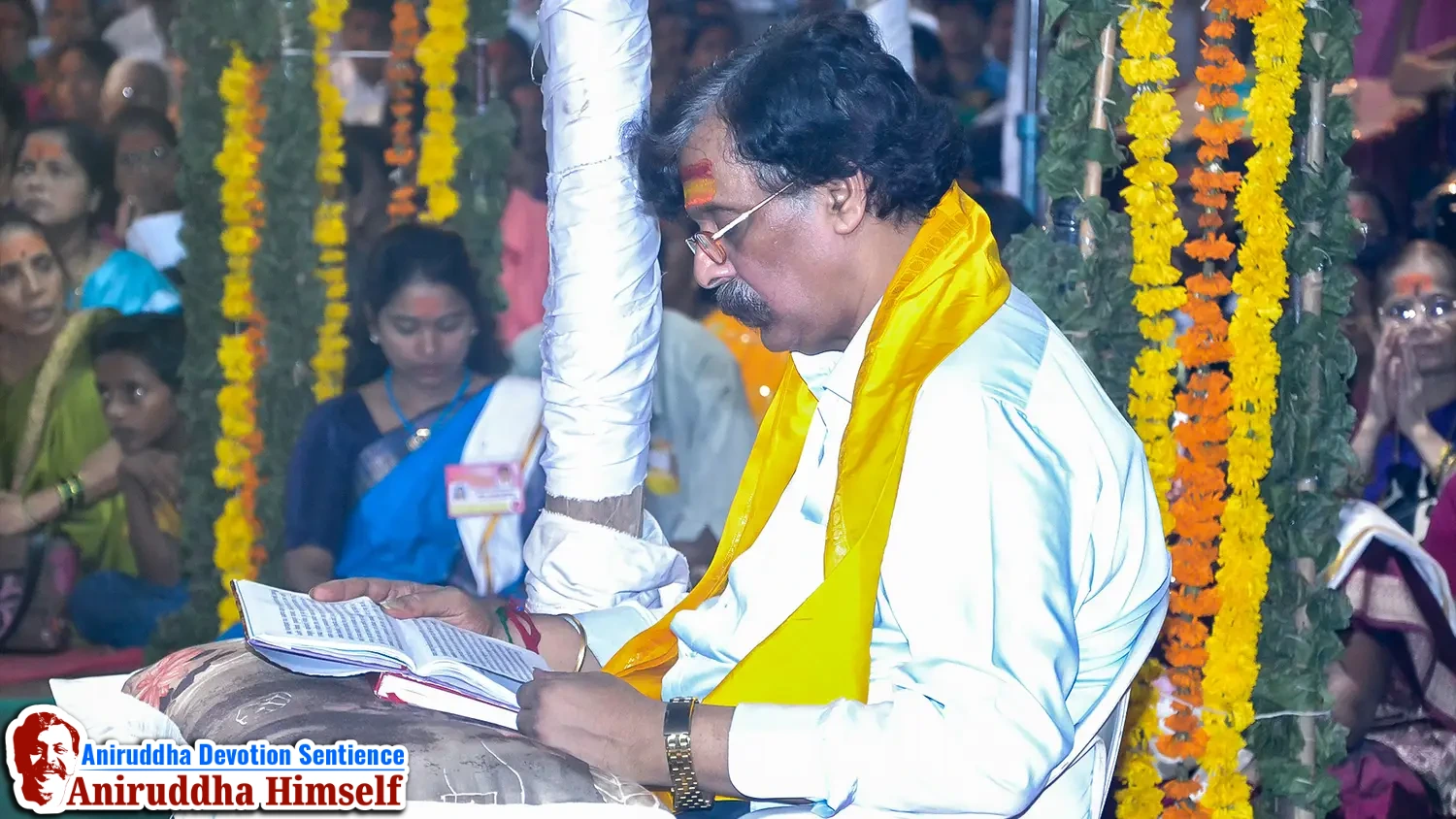
One of the most profound lessons Bapu imparts is the difference between believing in God and living with God, i.e. walking in faith.
For many people, faith begins during times of difficulty. Prayer becomes a request for help, and devotion is rooted in hope.
Bapu gently encourages seekers to move beyond this stage.
The Divine is no longer someone who may come in the future but One who is already present—guiding, protecting, strengthening, and accompanying every step of life.
This awareness changes the way one faces adversity. Rather than asking, "Why has this happened to me?" the devotee begins asking, "What is the Divine teaching me through this experience?"
Faith thus becomes a constant companion rather than an occasional refuge.
Bhakti That Serves Society
Bapu's teachings never separate spirituality from worldly responsibilities.
According to him, genuine devotion should make an individual more truthful, compassionate, disciplined, dependable, and willing to serve others.
This philosophy finds expression in the numerous selfless seva inspired by him, including healthcare initiatives, disaster management, blood donation drives, educational projects, and various forms of community service.
For Bapu, these are not separate from devotion—they are devotion in action.
Prayer without compassion remains incomplete.
Worship without service remains unfinished.
Knowledge without humility remains unfulfilled.
His life demonstrates that love for God naturally expresses itself as love for humanity.
In an age that often celebrates achievement above character and recognition above reverence, Sadguru Shree Aniruddha Bapu offers a different ideal. His life demonstrates that scientific excellence and deep spirituality can coexist, and that true wisdom finds its highest expression in humility. At the heart of His life lies the principle of being Ambadnya (अंबज्ञ), a Marathi term that signifies deep, unwavering gratitude at the lotus feet of Aadimata Mahishasurmardini, the Divine Mother. Bapu not only lives in this state of gratitude Himself but also constantly encourages every Shraddhavan to remain Ambadnya in every circumstance of life.
That is why, despite being a physician, a scholar, an accomplished author, and the Sadguru of millions, his most enduring identity remains the simplest—and perhaps the greatest of all.