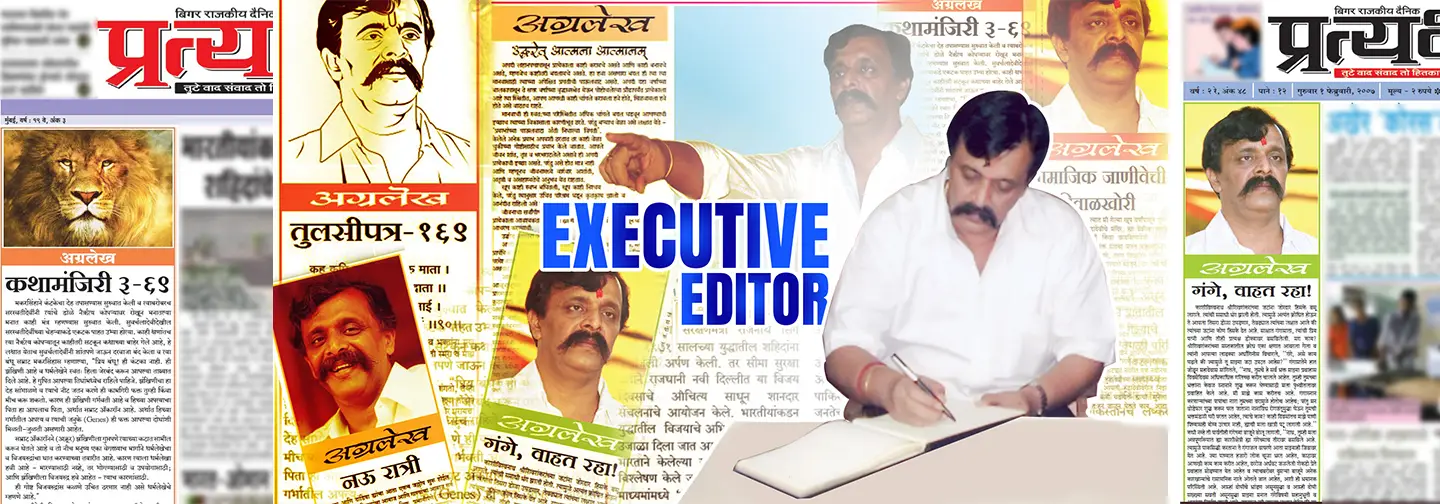
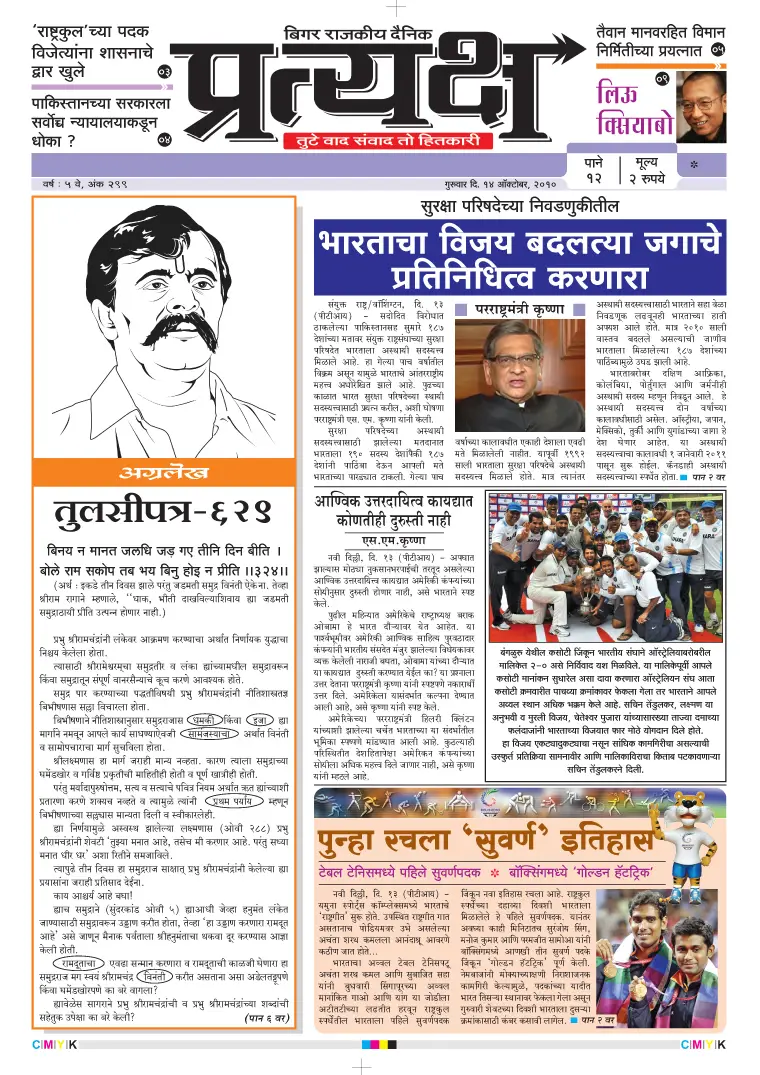
Bapu’s Editorial: The Guiding Light
Change is the only constant, and time changes everything. But those who refuse to change with time are eventually changed by time itself. Bapu’s editorials serve as an instrument that helps to keep pace with the changing times.
‘Harm often strikes in darkness.’ And darkness is not merely the absence of light; it is the absence of awareness about the realities unfolding around us. Through Pratyaksha and its editorials, Bapu has consistently sought to dispel this darkness by helping readers understand the social, economic, cultural, political, and spiritual forces shaping their lives.
These editorials of Bapu do away with ignorance as well as conjectures and speculations, and transform:
- Information into insight and knowledge
- Dream into reality
- Weakness into strength
- Lack into riches
- Adversity into opportunity
- Fear into discernment
- Life into a sacred purpose
The First Editorial
In his very first editorial, titled Uddharet Atmanam Atmanam (“I alone can bring about my upliftment and progress”), Bapu asserted that no individual can achieve true growth while remaining dependent on circumstances, miracles, destiny or the support of others.
Through his editorials, Bapu has consistently advocated a society that is neither a silent spectator to injustice nor one that reacts recklessly in the grip of emotion. Instead, he presents the ideal of a disciplined, responsible, and resolute society.
Click here to read Sadguru Aniruddha Bapu first editorial 'उद्धरेत् आत्मना आत्मानम्'
The ‘Third World War’
Among Bapu’s most significant editorial undertakings was the series on the Third World War, which traced the origins of the first two World Wars and examined a world moving steadily towards a third. Drawing upon rigorous research and analysis, these editorials did not merely predict future events but warned of emerging global realities.
Alongside highlighting the destructive consequences of a potential world conflict, Bapu outlined the strategic choices before India and their likely implications. These editorials were not confined to warning of danger. They explained how a global conflict could affect the everyday lives of ordinary citizens — financially, socially, culturally, and even in matters of health — thereby encouraging readers to remain aware, prepared, and resilient. Noted for their depth, objectivity, and foresight, these editorials attracted the attention of not only ordinary readers but also exponents of geopolitics and distinguished personalities from diverse fields.

The Grand History - Samartha Itihaas
Another widely acclaimed series of Bapu's editorials in Pratyaksha was ‘Samarth Itihaas’ (The Grand History). Inspired by the belief that a nation must understand its past to shape its future, this series sought to reconnect Indians with their true civilizational roots through the era of Emperor Samudragupta.
Far more than a celebration of bygone glory, Samarth Itihaas explored the principles that made India attain extraordinary prosperity and global influence — people-centric governance, a society rooted in Dharma, and a value system that placed wisdom above power.
Sunderkand
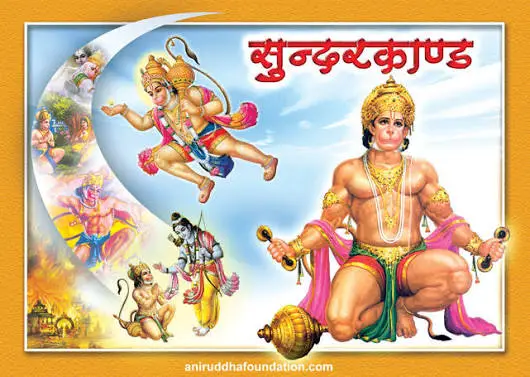
Through his editorial series Tulsipatra, based on the Sunderkand of the Ramayana, Sadguru Aniruddha Bapu emphasised that Sunderkand is not merely a scripture to be recited, but a guide to be lived, offering practical wisdom for building a life that is peaceful, purposeful, and fulfilling.
Within this series, Bapu also authored a remarkable set of editorials that revealed lesser-known truths of human history, including that of India. These writings introduced readers to perspectives largely absent from conventional narratives and vividly underscored the timeless observation that truth is often stranger — and far more astonishing — than imagination.
Navadurga
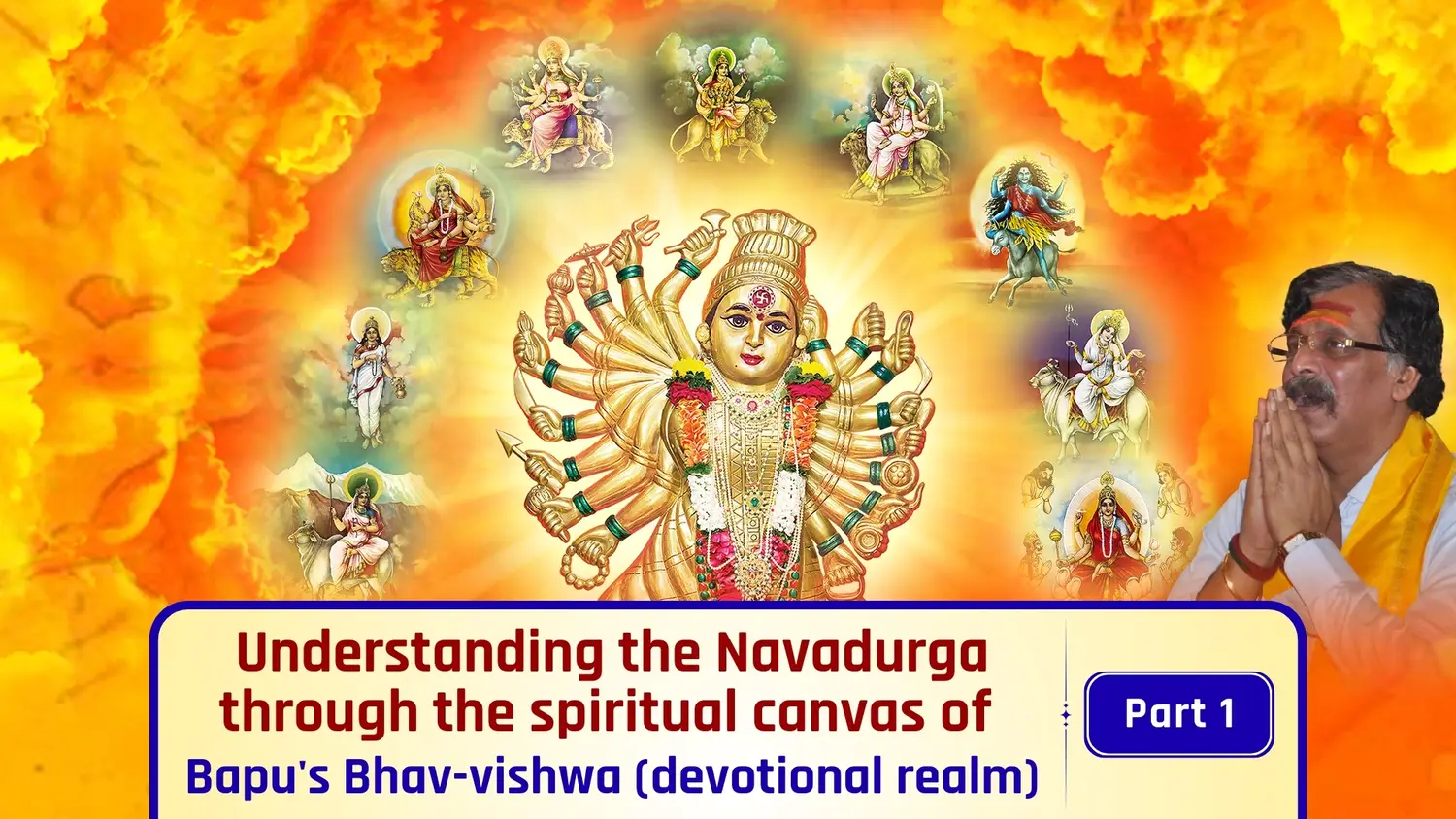
Sadguru Aniruddha Bapu editorials also unfolded the spiritual significance of the Navadurga — the nine sacred manifestations of Mother Parvati worshipped during Navratri. Drawing upon deep study and contemplation, Bapu explained their inner meaning and divine attributes in simple yet profound language, enabling devotees to develop a deeper, more meaningful understanding of the Navadurga beyond mere ritual forms of worship.
Shree Ganapati
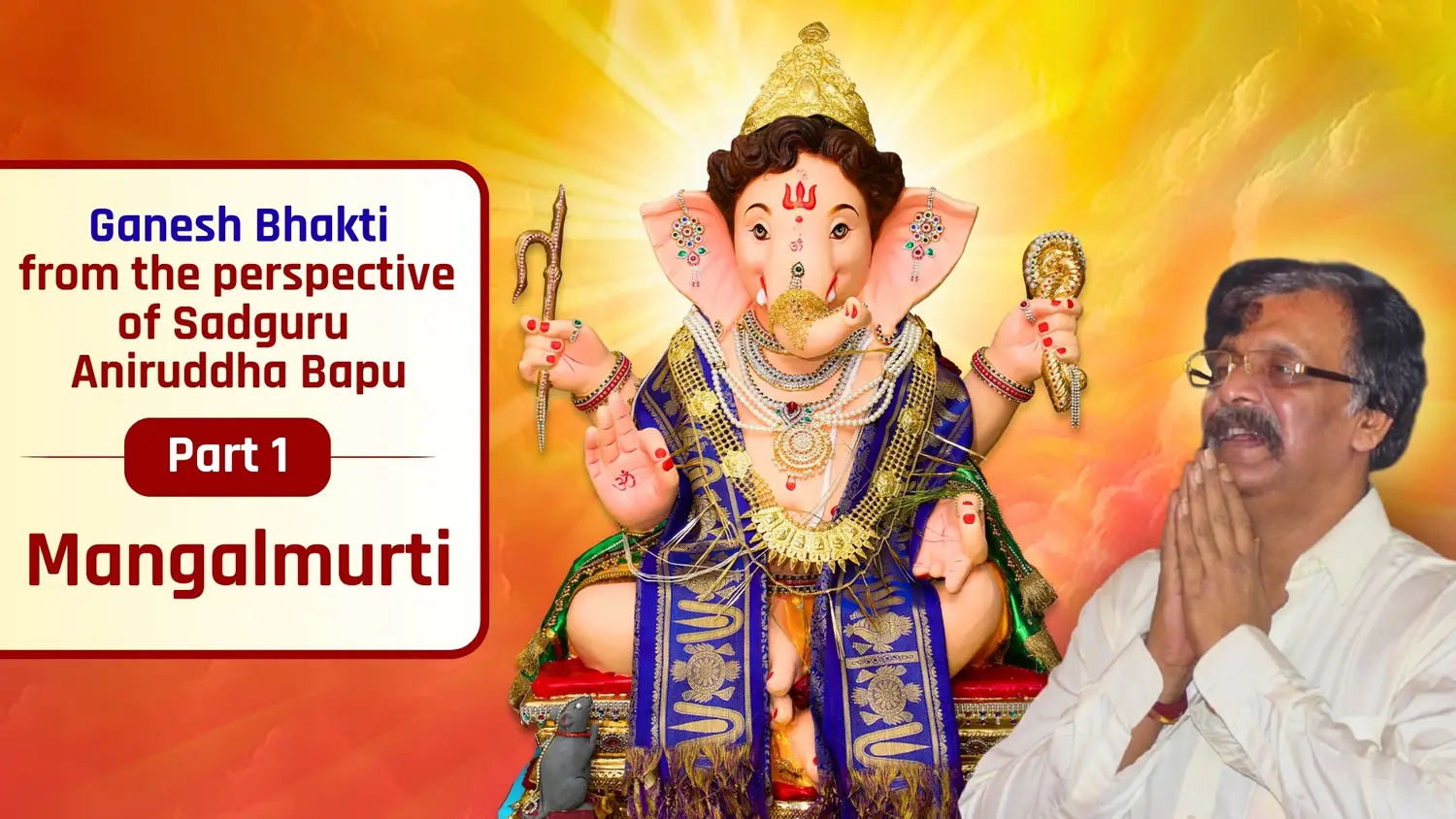
Shree Ganapati, the remover of obstacles and the One invoked at the start of every auspicious undertaking, holds a special place in devotees' hearts. Through a series of editorials in Pratyaksha, Sadguru Aniruddha Bapu explored the deeper philosophy and spiritual significance of Ganapati, drawing upon the Vedas, Puranas and the wisdom of the saints.
In simple and accessible language, Bapu explained the symbolism underlying Ganapati's form, attributes, worship, and sacred narratives. By illuminating the deeper principles behind widely known traditions and stories, Bapu helped readers move beyond superficial understanding and appreciate their true spiritual significance. These editorials not only enriched devotion but also enabled devotees to engage with their faith with greater clarity, conviction and awareness by overcoming ignorance and false narratives.
Kathamanjiri and the History of India
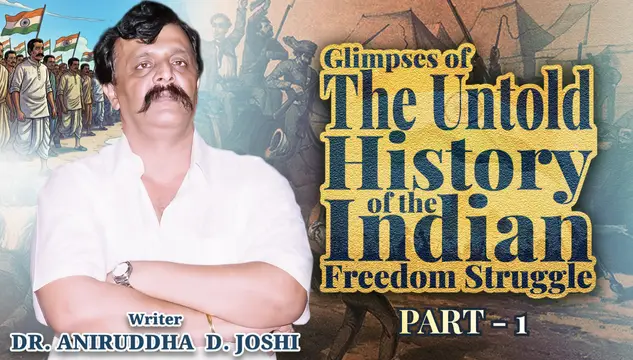
Following his celebrated series on Sunderkand, Bapu began the expansive editorials ‘Kathamanjiri,’ which were published in four series. Through Kathamanjiri, Bapu explored lesser-known dimensions of Indian history, civilisation, and spirituality, presenting a narrative that stretches from ancient times to the Indian freedom movement.
The essence of the first three parts of Kathamanjiri are Vijayrudra and Dharmalekha, who, despite being emperor and empress, chose to live as humble Das of Swayambhagwan Trivikram. Vijayrudra represents the beautiful dream of Indian civilisation, while Dharmalekha is the radiant expression of that dream. Their lives exemplify Bhakti, Dharma, courage, love and selfless service. Through their story, Bapu demonstrates that true success in both spiritual and worldly life rests upon the foundation of unwavering Bhakti.
The fourth part of Kathamanjiri presents the story of Rani Lakshmibai and several Indian freedom fighters in a new light, highlighting aspects of their lives and personalities that remain largely unknown to the masses. In these great beings, one sees ardent devotees who confront seemingly insurmountable challenges with Bhakti as the very basis of their strength and resolve.
Bhaktibhav Chaitanya - the Devotion Sentience
Among the many themes explored through Bapu's editorials, Bhaktibhav Chaitanya — the Devotion Sentience — explains the true essence of Bhakti. According to Sadguru Bapu, Bhaktibhav Chaitanya means lovingly surrendering oneself to Swayambhagwan Trivikram and living with the firm awareness that He is always with us, guiding and caring for us at every moment.
Bhaktibhav Chaitanya is the harmonious union of Bhagwatdnyan — true knowledge of the Bhagawant — and Bhaagwatbhaan — the living awareness of Him. Far from being a path of rigid rules and burdensome practices, it is a path of love, relationship, and surrender, where every thought, word and action arises from devotion. Bapu explains that through the Mantragajar of Swayambhagwan Trivikram and a life rooted in Devotion Sentience, a Shraddhavan gradually experiences greater fulfilment, inner beauty and an ever-deepening connection with the Bhagawant, who responds to the sincere call of every bhakta with boundless love and compassion.
Bapu’s editorials That Guide and inspire across Generations
For more than two decades, Sadguru Aniruddha Bapu’s editorials have transcended the conventional boundaries of journalism. The editorials discussed above represent only a glimpse of a vast canvas spanning thousands of writings on an extraordinary range of subjects from geopolitics, civilisational history, spirituality and personal upliftment to topics as diverse as computer literacy, the appreciation of the life and work of conservationist and wildlife enthusiast Steve Irwin on his passing, the strategic importance and necessity of India-Russia relations and numerous other devotional, social, national and global issues. Through these subjects, Bapu has ventured into areas many have ignored, overlooked, or hesitated to address, always with the objective of preparing society to face both present challenges and future realities.
Written with the welfare and well-being of society at heart — especially that of the common man — these editorials have sought to educate and empower readers. They have warned when vigilance was needed, guided when clarity was lacking, reminded when memory had faded and awakened when devotion had dimmed. These writings do not merely inform — they transform thought and deepen understanding, and most importantly, Bapu’s editorials will continue to guide and inspire generations to come.