Sadguru Charan

In spirituality, the role of the Guru is of supreme importance. Sant Tukaram Maharaj beautifully expresses this truth in his Abhanga:

‘सद्‍गुरुवाचोनी सापडेना सोय, धरावे ते पाय आधी आधी’

“Sadguruvachoni sapadena soy, dharave te pay aadhi aadhi.”

Similarly, the great saint Tulsidasji begins the Hanuman Chalisa with the celebrated verse:

‘श्रीगुरु चरन सरोज रज निज मनु मुकुरु सुधारि ...’

“Shri Guru Charan Saroj Raj, Nij Manu Mukuru Sudhari...”

Elaborating on this verse during his discourse on June 16, 2011, Sadguru Shree Aniruddha Bapu explained:

“With the sacred dust of the Sadguru's lotus feet, I cleanse the mirror of my mind. If the Sadguru's lotus feet reside in one's heart, then no matter how impure the mirror of the mind may have become, it is certainly cleansed.”

Lord Shiva Himself describes the glory of the Guru's lotus feet to Goddess Parvati in the Guru Gita:

‘सप्तसागरपर्यन्ततीर्थस्नानादिकं फलम् । गुरोरंघ्रिपयोबिन्दुसहस्रांशे न दुर्लभम् ॥’

“Saptasāgara-paryanta tīrtha-snānādikaṁ phalam |
Guror-aṅghri-payobindu-sahasrāṁśe na durlabham ||”

This means that the merit acquired by bathing in all the sacred pilgrimage sites spread across the seven seas is insignificant when compared to even one-thousandth of a single drop of the sacred water that has washed the Guru's lotus feet (Guru Charan Tirtha). Such is the immeasurable glory of the Guru's Charan Tirtha that even attaining one-thousandth of a single drop of it bestows incomparable blessings and merit.

In the Aranya Kanda of the Shree Ramcharitmanas, composed by Sant Tulsidasji, Lord Shree Rama Himself imparts the teachings of Navavidha Bhakti (the nine forms of bhakti) to Shabari. While describing the third form of devotion, He says:

‘गुर पद पंकज सेवा तीसरि भगति अमान।’

“Guru Pada Pankaja Seva, Tīsari Bhagati Amāna.”

This means that the third form of bhakti is to serve the lotus feet of the Sadguru with complete humility, free from all ego.

In Shrimad Bhagavata Mahapurana, Canto 11, Chapter 17, Verse 27, while describing the glory of the Guru, Lord Shree Krishna tells Uddhava, “Sarva-devamayo Guruh” (‘सर्वदेवमयो गुरु:’ - “The Guru embodies all the deities.”)

‘आचार्यं मा विजानीयात् नावमन्येत कर्हिचित् । न मर्त्यबुद्धयाऽसूयेत सर्वदेवमयो गुरु: ॥

“Acharyam Mam Vijaniyat Navamanyeta Karhichit |
Na Martya-buddhyasuyeta Sarva-devamayo Guruh ||”

This means: “Know the Guru to be My very own form. Never disrespect Him. Do not regard Him as an ordinary mortal (martya-buddhi), nor find faults in Him or bear any jealousy (asuya) towards Him. The Guru embodies all the deities.”

The Mundaka Upanishad instructs that one must seek refuge at the Guru's lotus feet in order to attain the knowledge of Brahman:

‘तद्विज्ञानार्थं स गुरुमेवाभिगच्छेत्समित्पाणिः श्रोत्रियं ब्रह्मनिष्ठम्।’

“Tad-vijñānārthaṁ sa gurum evābhigacchet samit-pāṇiḥ śrotriyaṁ brahma-niṣṭham.”

This means that to attain the knowledge of Brahman, a disciple should humbly and with complete surrender seek refuge at the Guru's lotus feet.

While offering obeisance to the Guru's lotus feet, the Guru Gita says:

वन्दे गुरुपदद्वंद्वं वाङ्मनश्चित्तगोचरम्। श्वेतरक्तप्रभाभिन्नं शिवशक्त्यात्मकं परम्॥

“Vande Gurupadadvandvam Vangmanashchittagocharam |
Shvetaraktaprabhabhinnam Shivashaktyatmakam Param ||”

This means: “I bow to the two lotus feet of the Guru, which are comprehensible to speech, the mind, and the intellect. The Guru's two lotus feet are the very embodiment of Shiva and Shakti and are adorned with two distinct radiances—white (pure, brilliant white) and red, respectively.”

Lord Shree Krishna is offered obeisance as the “Jagadguru” in the verse, “Krishnam Vande Jagadgurum.” We read in the Mahabharata that during Yudhishthira's Rajasuya Yajna, Lord Shree Krishna was accorded the honour of Agra Puja (the first worship).

तत्पादाववनिज्याप: शिरसा लोकपावनी: । सभार्य: सानुजामात्य: सकुटुम्बो वहन्मुदा ॥’

“Tatpadavavanijyapah Shirasa Lokapavanih |
Sabharyah Sanujamatyah Sakutumbo Vahan Mudaa ||”

This verse from the Shrimad Bhagavata Mahapurana (10.74.27) clearly states that the Pandavas worshipped the lotus feet of Lord Shree Krishna. With great joy and reverence, they washed His two lotus feet and joyfully placed upon their heads that sacred Charanamrita (the tirtha i.e. the nectar of the lotus feet), which sanctifies the entire world.

We bow to the Sadguru by placing our head at His lotus feet. The point on the forehead where the two eyebrows meet is associated with the Ajna Chakra in our vital (Pranamaya) body. The Ajna Chakra functions as a centre for receiving external vibrations and energy, much like a receiving station.

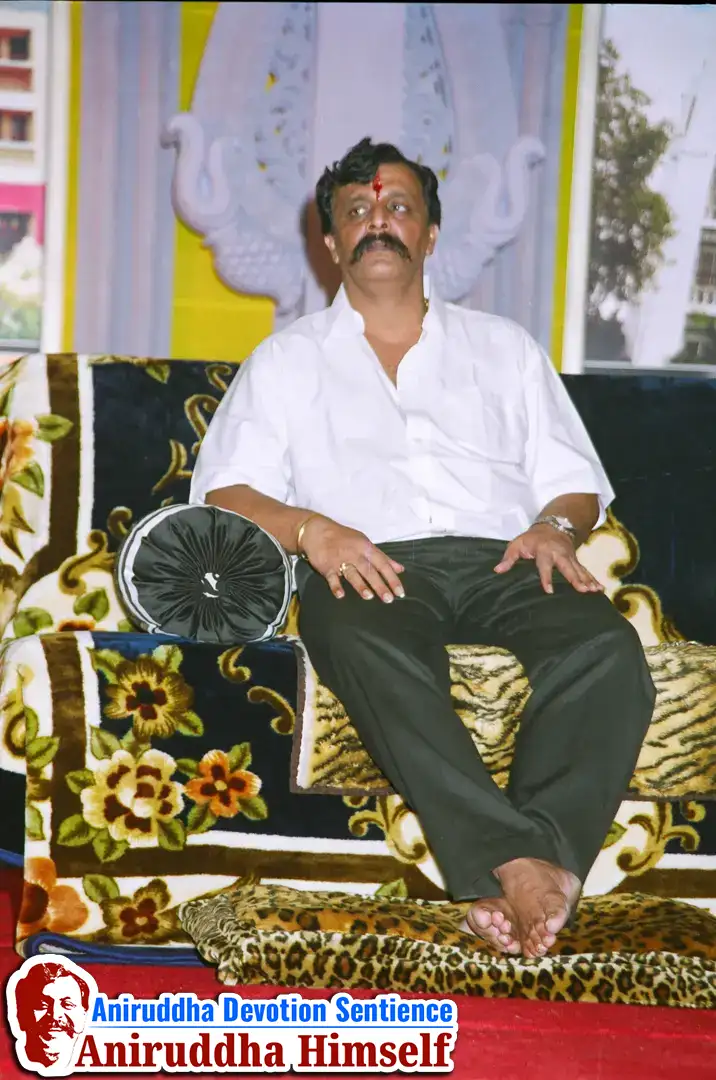
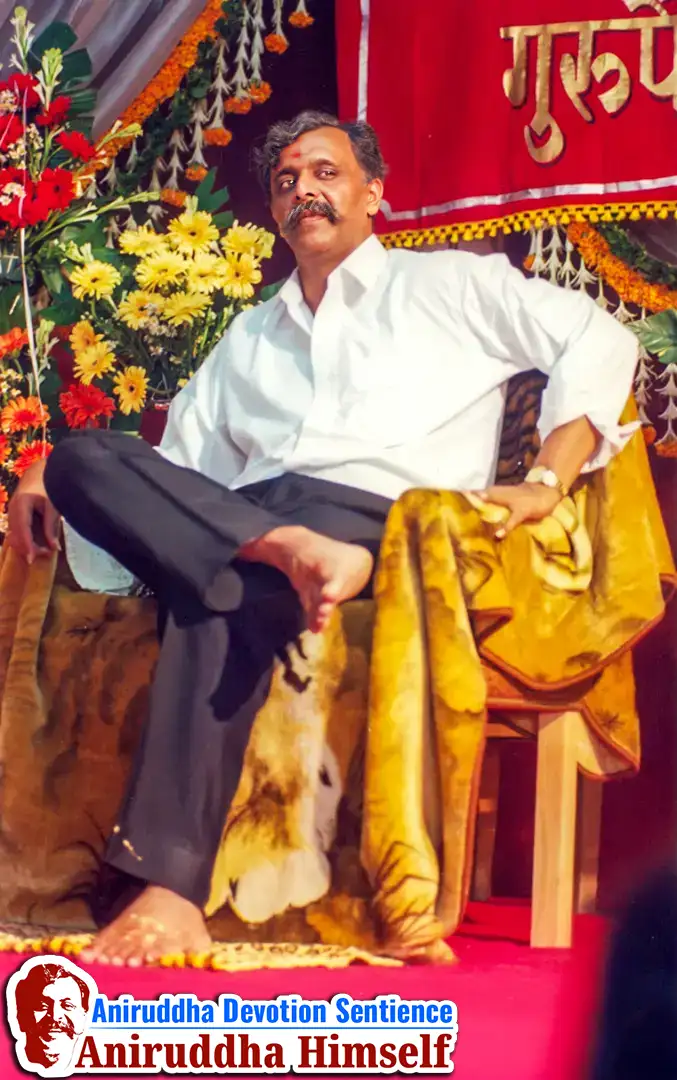
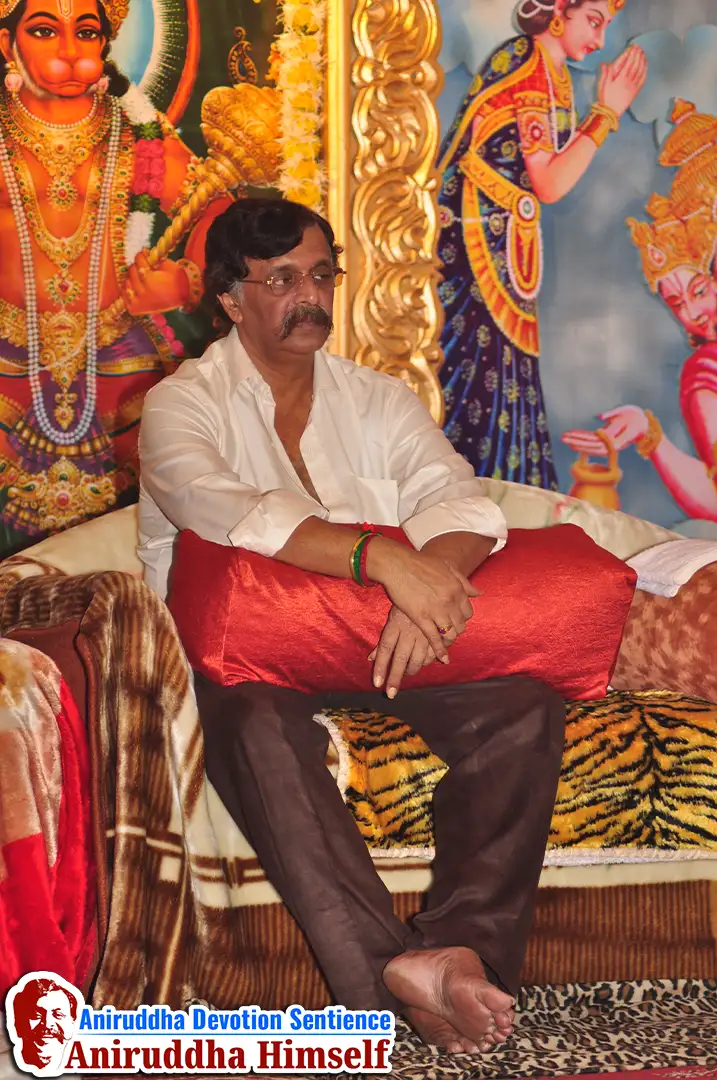
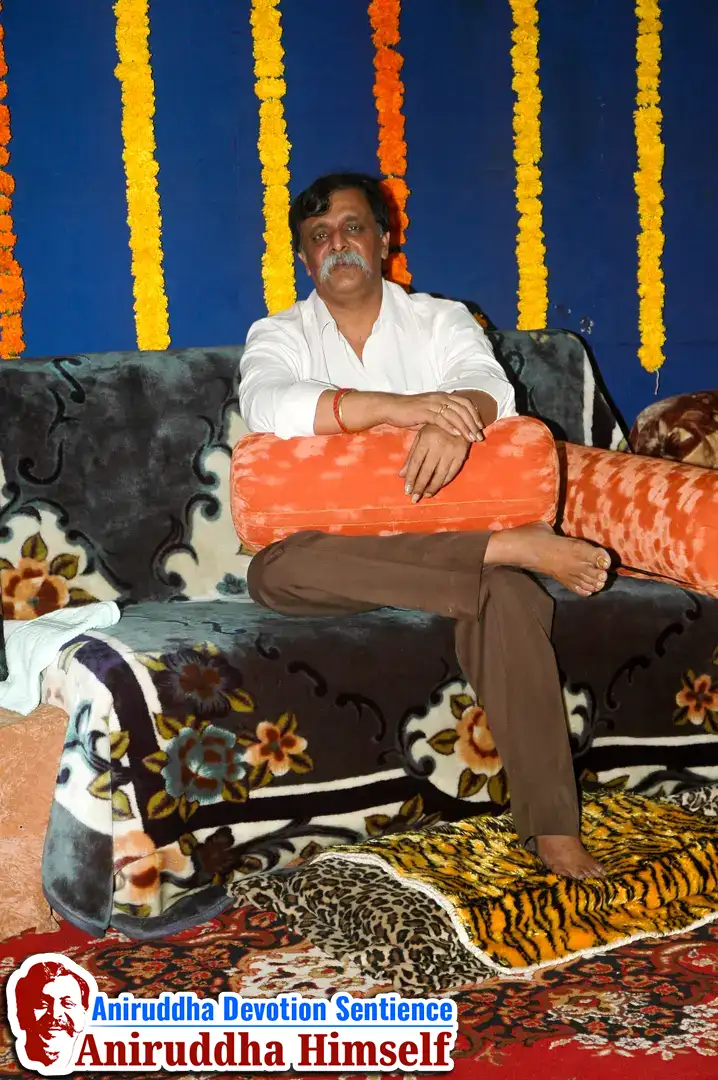
Sadguru Aniruddha Bapu immersed in the Bhakti of Dattaguru
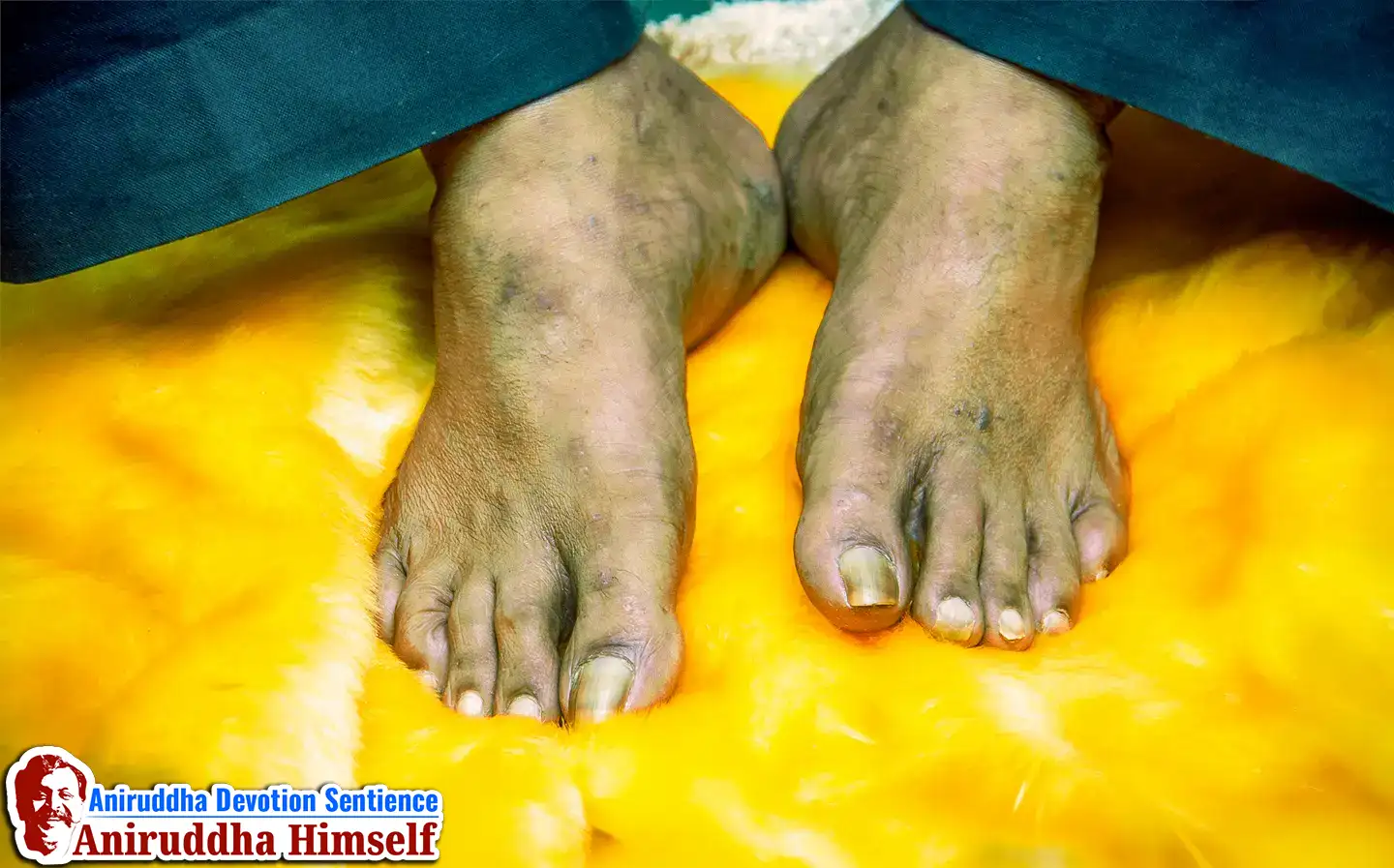
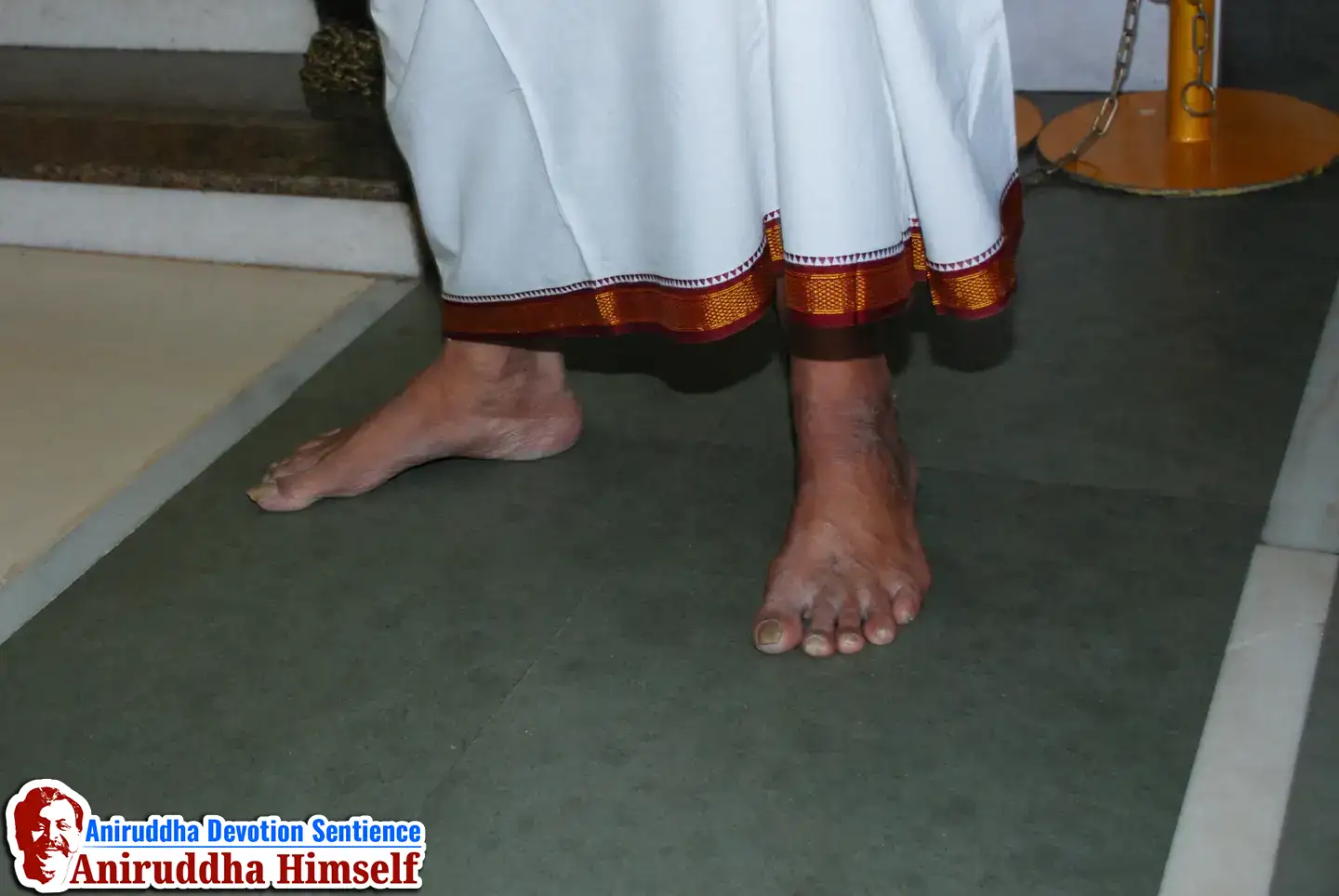
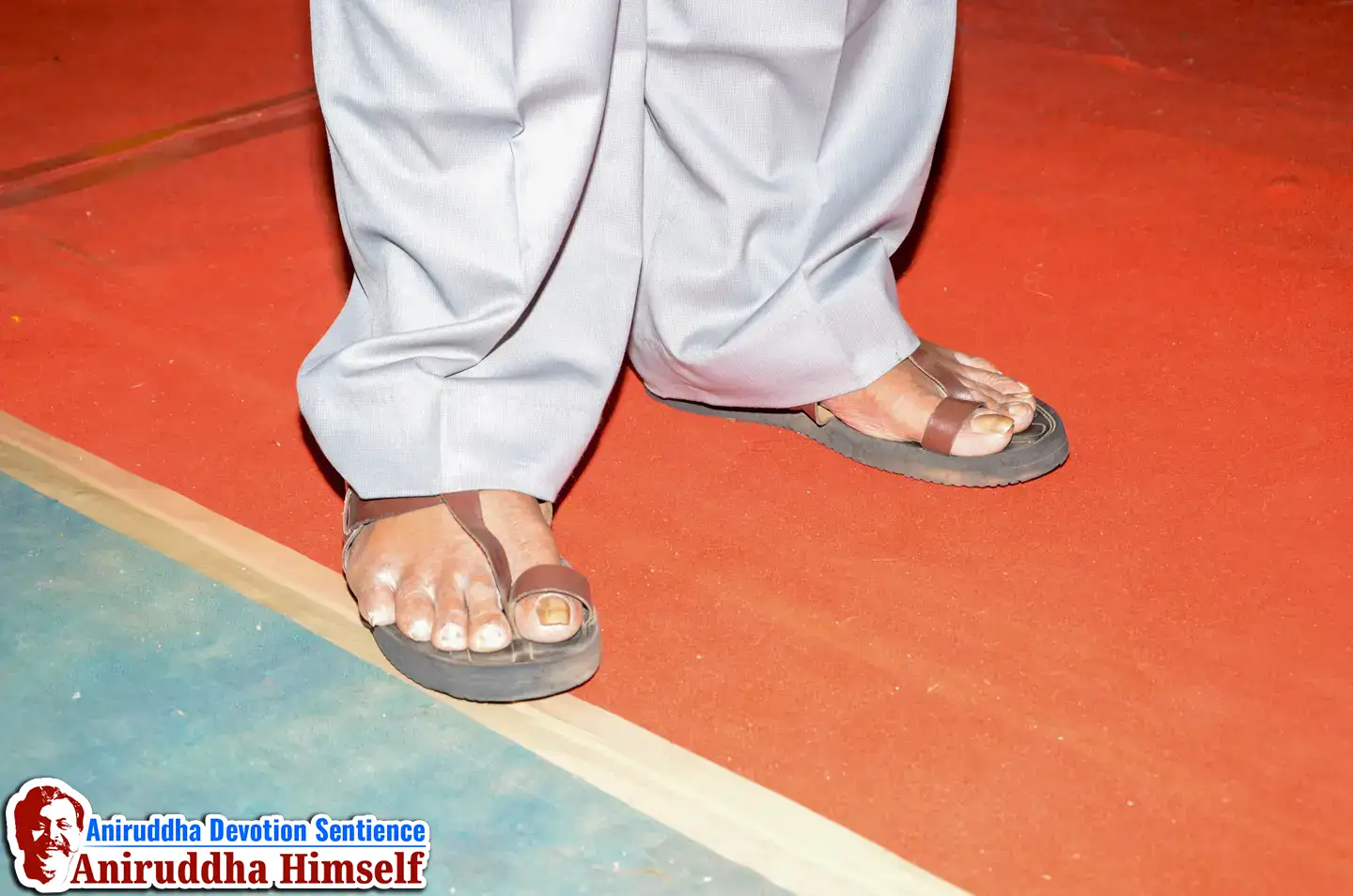
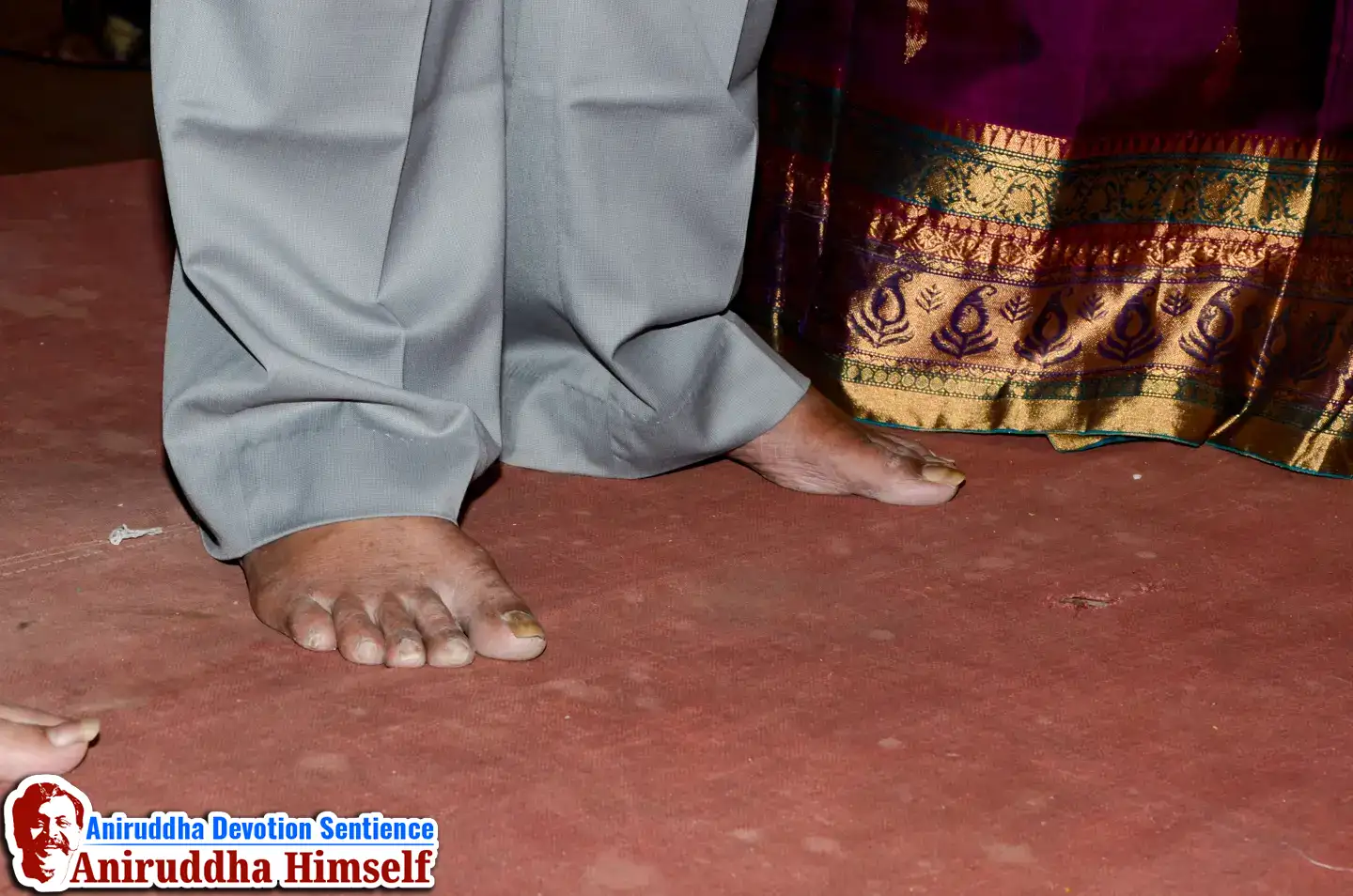
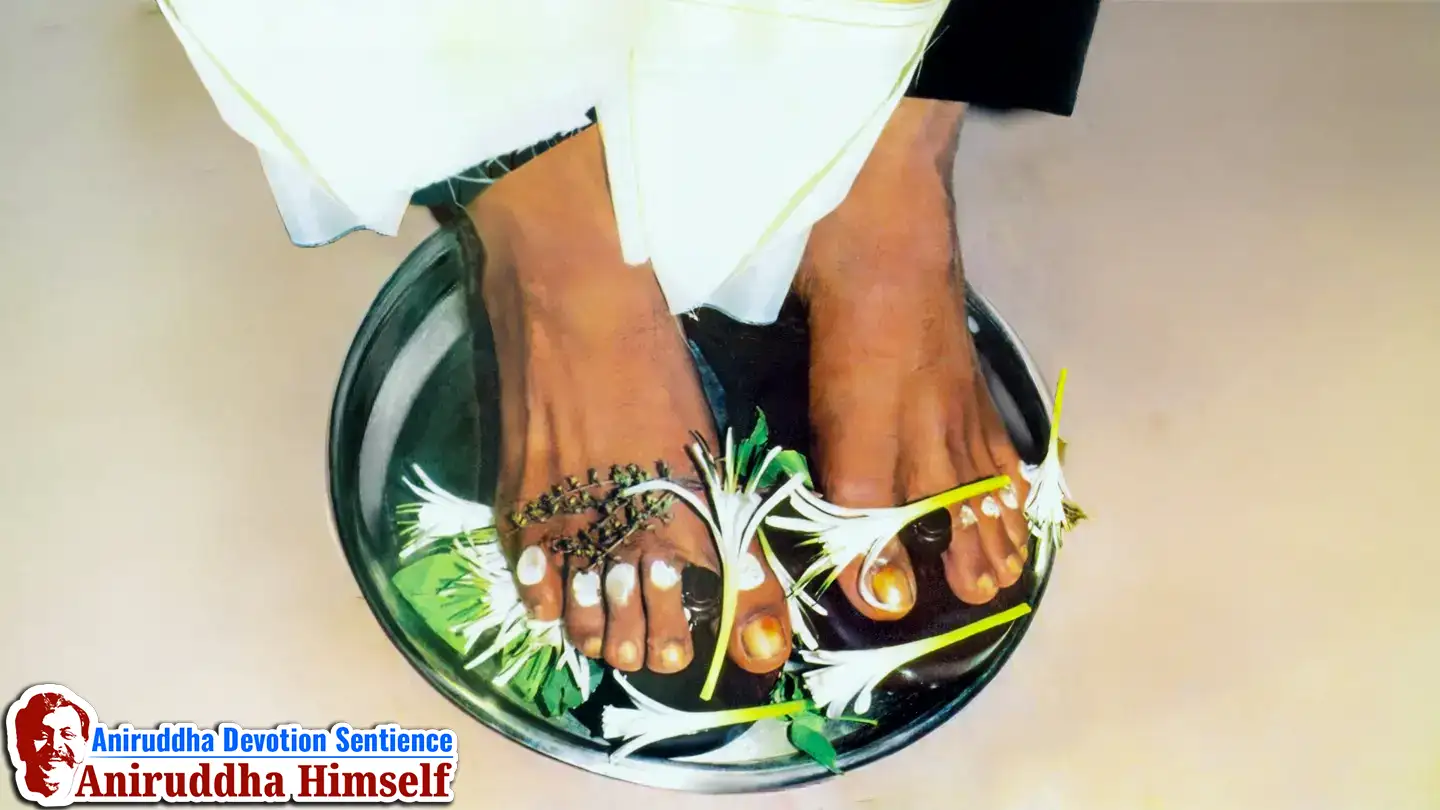
Sadguru Aniruddha Bapu’s sacred charan

The Touch of the Lotus Feet

When a devotee places his or her head upon the Sadguru's lotus feet or Padukas, he or she is able to effortlessly receive the vibrations flowing from the Sadguru's lotus feet and the Padukas. Therefore, it is said that one should never offer obeisance by placing one's head at an unknown or inappropriate place.

Sadguru Shree Aniruddha Bapu has repeatedly said that if one has to offer obeisance at a place about which one does not have clear knowledge, then while doing so, one should remember one's beloved deity (Ishtadevata) or Sadguru, and maintain the bhava (sentiment or feeling), “I am offering obeisance to him or her.” In that case, the obeisance is not considered to have been offered to that place or to the person present there; rather, it is the Sadgurutattva (the principle that is the Sadguru) that accepts it.

Charanamudras at Shree Harigurugram

Thus, Shraddhavans bow at the lotus feet of Sadguru Shree Aniruddha Bapu. During the early years of Bapu's discourses, Shraddhavans would lovingly and reverentially bow to Him by placing their heads upon His lotus feet. As the number of people attending the discourses increased over time, it became difficult for everyone to place their heads at the Sadguru's lotus feet. Hence, Shraddhavans began offering obeisance by touching the Sadguru's lotus feet with their hands.

Later, as the number of Shraddhavans attending Bapu's discourses at Shree Harigurugram continued to grow, it was no longer possible for everyone to physically touch the Sadguru's lotus feet. Therefore, Shraddhavans began offering obeisance to the Sadguru from a short distance. To enable them to bow by placing their heads upon the Sadguru's lotus feet, impressions of Sadguru Shree Aniruddha Bapu's lotus feet (Charanamudras) were placed at Shree Harigurugram for darshan.

Shraddhavans lovingly offer garlands of the Tripurari Trivikram Emblem at these sacred Charanamudras of the Sadguru. They offer these garlands with the prayer that the imprint of the Sadguru's lotus feet may be engraved upon their Mana (mind), prana(life force), and Pradnya (intellect). Shraddhavans symbolically offer the three-leafed Bilva leaf in the form of their mind, prana, and pradnya at the lotus feet of the Sadguru, who is the giver of divine knowledge.

In the following lines of the abhang (devotional composition) the same essence has been expressed beautifully,

‘मनः प्राणः प्रज्ञा माझे त्रिदल बिल्वपत्र।

“Manah Pranah Pragya Maze Tridal Bilvapatra.”

The Source of All Auspiciousness

Describing the lotus feet of Sadguru Shree Aniruddha Bapu, Adyapipa in the Aniruddha Chalisa says:

देख चरण सुमंगलमूला’

“Dekh Charan Sumangalamula,”

which means, “Behold those lotus feet, which are the very source of all auspiciousness, happiness, good fortune, and well-being.”

Through this line, Adyapipa makes us understand that in order for every aspect of our lives to become auspicious, it is essential to meditate upon the divine form of the Sadguru's lotus feet.

While describing how one should enthrone the Sadguru's lotus feet in one's heart, Sant Dnyaneshwar Maharaj says in the fifteenth chapter of the Dnyaneshwari:

‘आतां हृदय हें आपुलें । चौफाळुनियां भलें । वरी बैसऊं पाउलें । श्रीगुरुंचीं ॥’

“Ata Hriday He Apule |
Chauphaluniya Bhale |
Vari Baisau Paule |
Shrigurunchi ||”

He teaches that one should prepare one's own heart as a sacred seat and establish upon it the lotus feet of the Sadguru.
Sadguru Aniruddha Bapu immersed in the Bhakti of Dattaguru
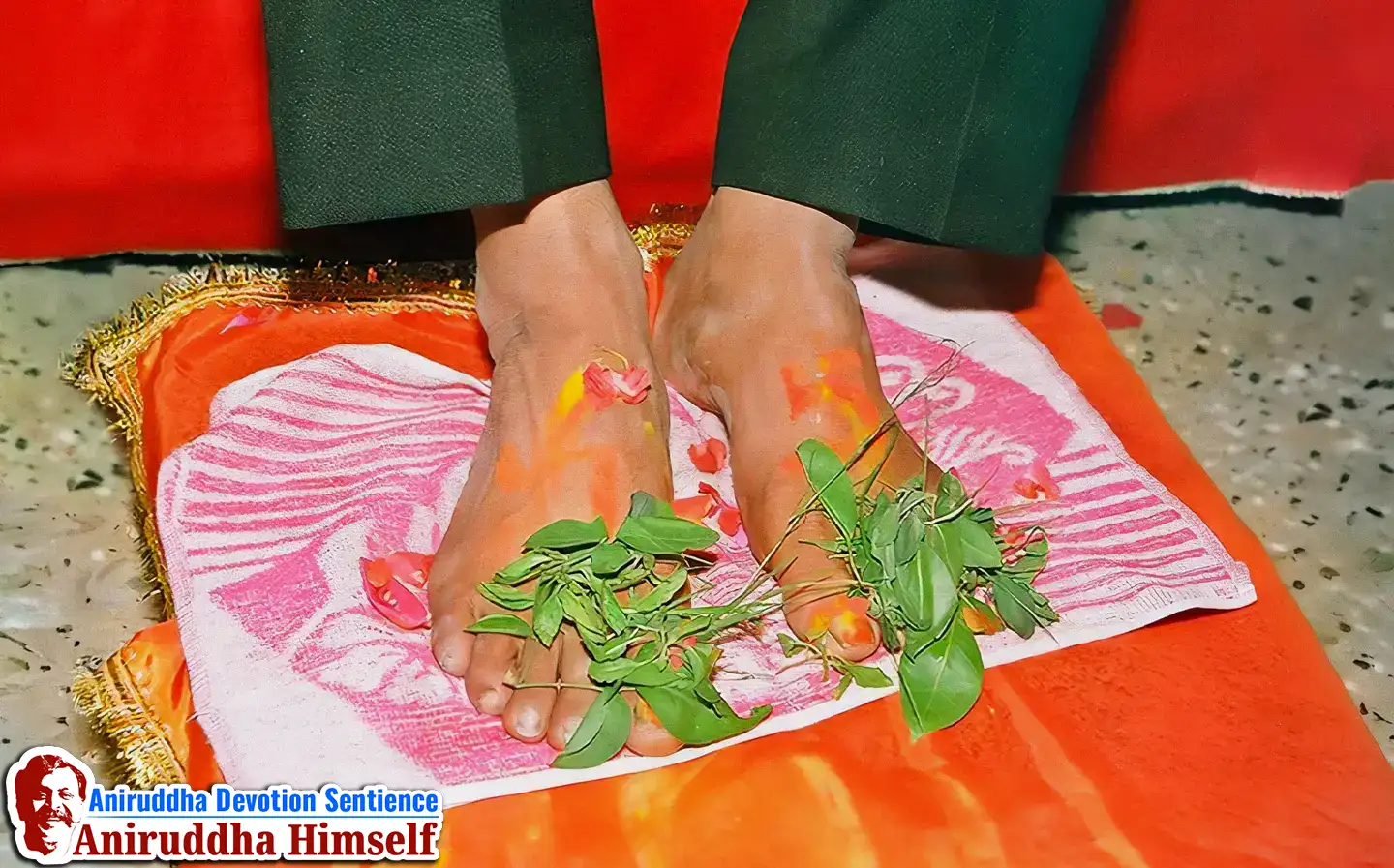
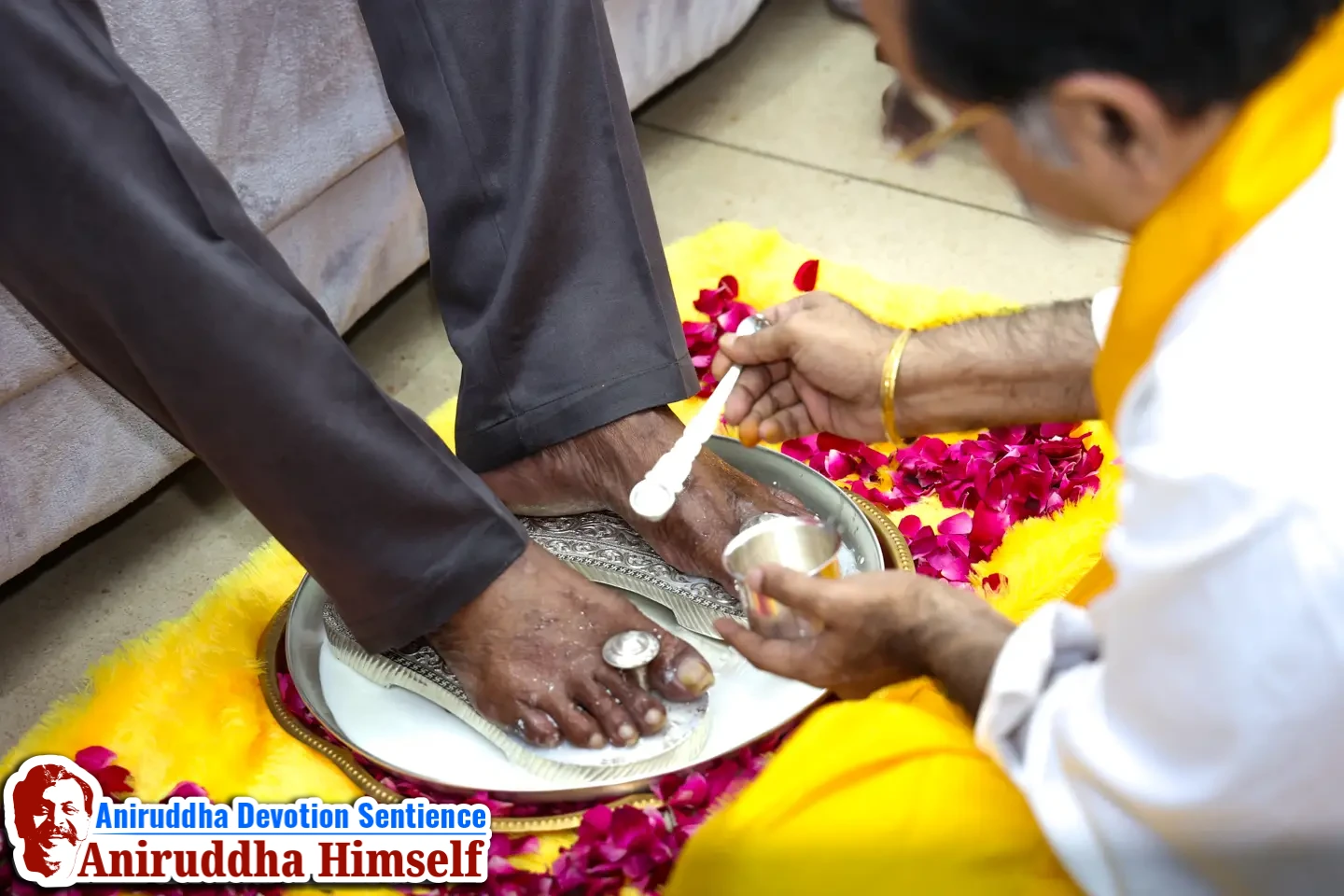
Param Poojya Sadguru Aniruddha Bapu’s Paadya-ppojan being performed by Pujya Samirdada

Lalkari and Charanadhuli

Sadguru Shree Aniruddha Bapu Himself remains in forever surrender at the lotus feet of His Panchagurus. Likewise, while bowing at the lotus feet of Sadguru Shree Aniruddha, Shraddhavans, with immense love and devotion, proclaim the Lalkari of their Sadguru:

अनन्यप्रेमस्वरूप दत्तभक्तचूडामणि चरणाश्रितत्रितापहर महापापविमोचक सर्वपुरुषार्थदायक शान्तिसिंहासनस्थ सद्‍गुरु श्रीअनिरुद्धसिंह की जय।

“Ananyapremasvarupa Dattabhaktachudamani Charanashritatritapahara Mahapapavimochaka Sarvapurusharthadayaka Shantisinhasanastha Sadguru Shree Aniruddhasimha Ki Jai.”

A Shraddhavan has complete faith that the lotus feet of the Sadguru are indeed capable of making every aspect of his or her life auspicious and of granting true spiritual upliftment. Such a Shraddhavan, to whom the sacred dust of the Sadguru's lotus feet is exceedingly dear, remains absorbed in the words from Aniruddha Chalisa:

‘बापु चरणधूली मोहे अतिप्रेमा । तन मन धन सेवा द्रिढ़ नेमा ॥’

“Bapu Charanadhuli Mohe Atiprema |
Tan Man Dhan Seva Dridh Nema ||”
Sadguru Aniruddha Bapu immersed in the Bhakti of Dattaguru
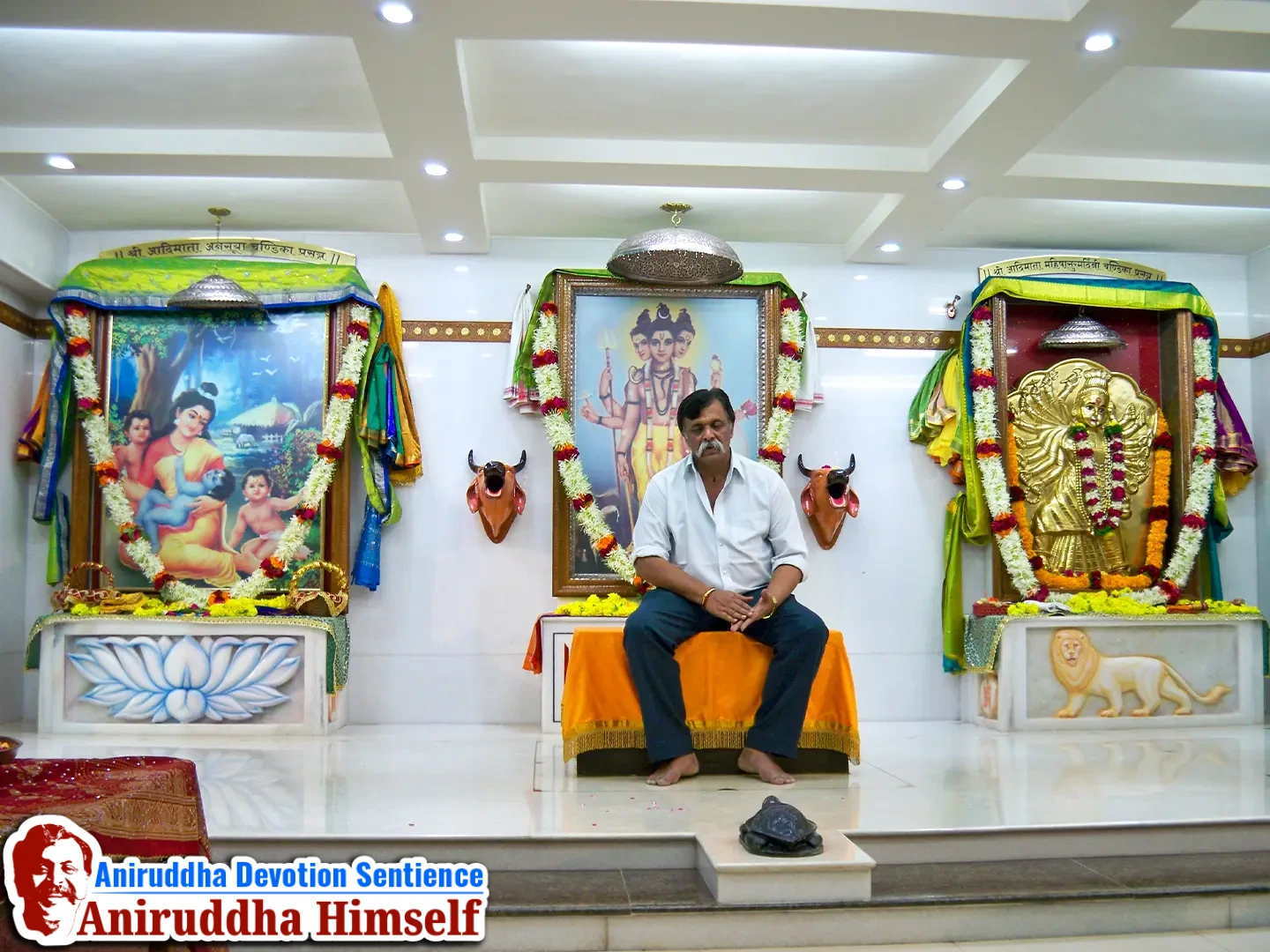
Sadguru Aniruddha Bapu at Shree Aniruddha Gurukshetram
Sadguru Shree Aniruddha Bapu's Lotus feet (Charan)