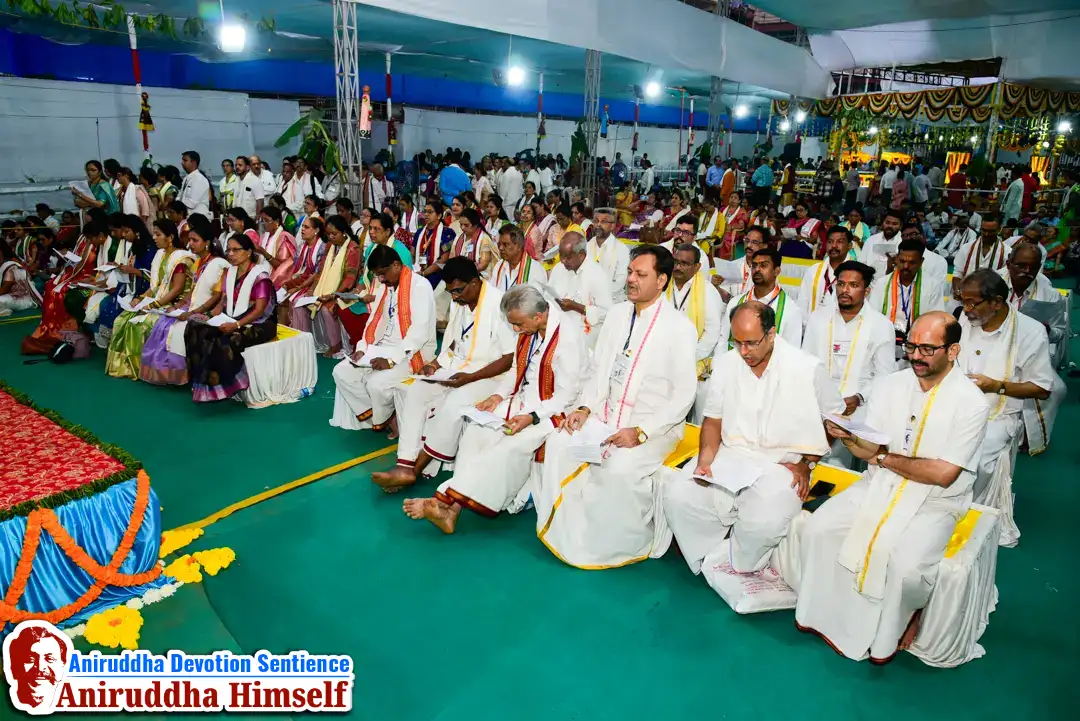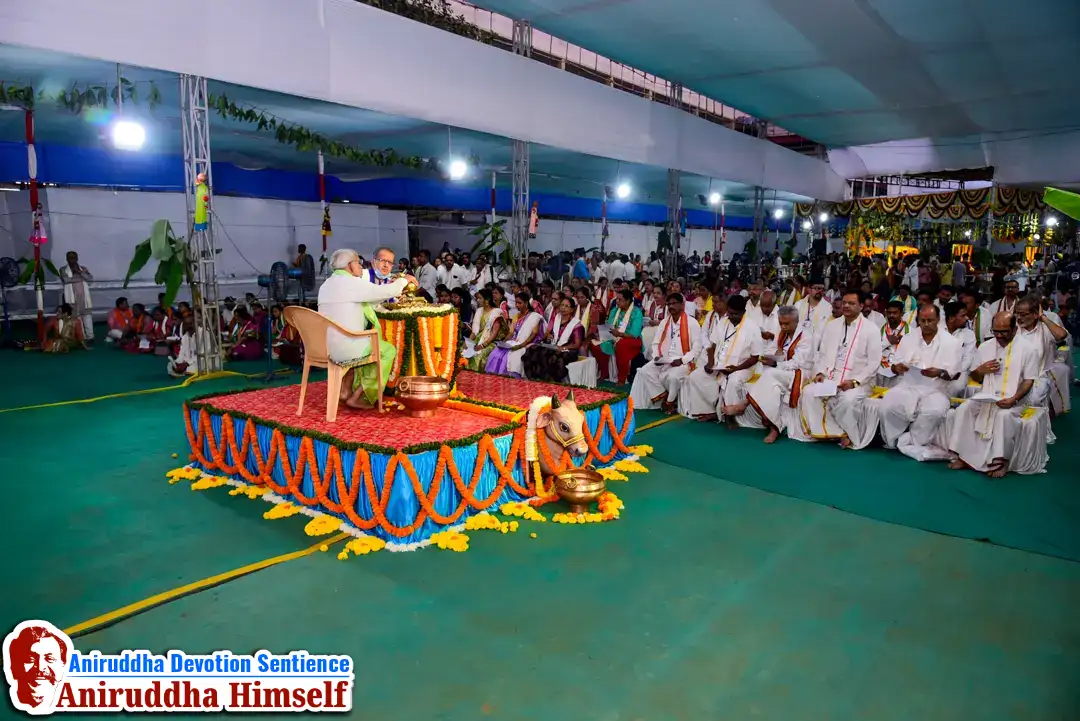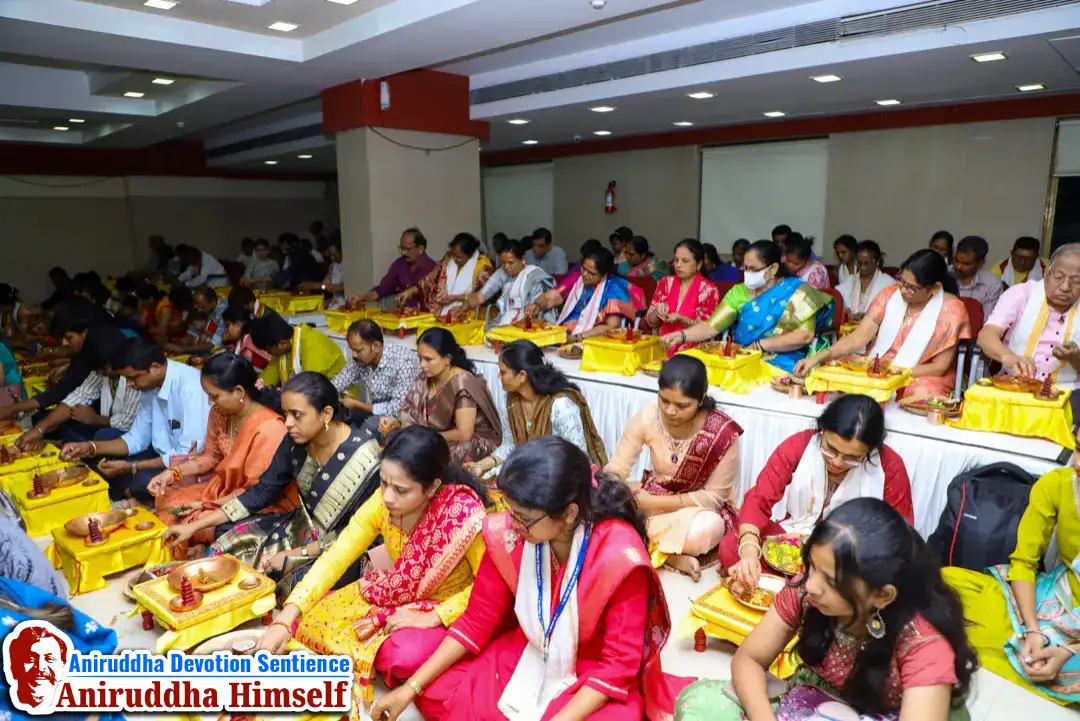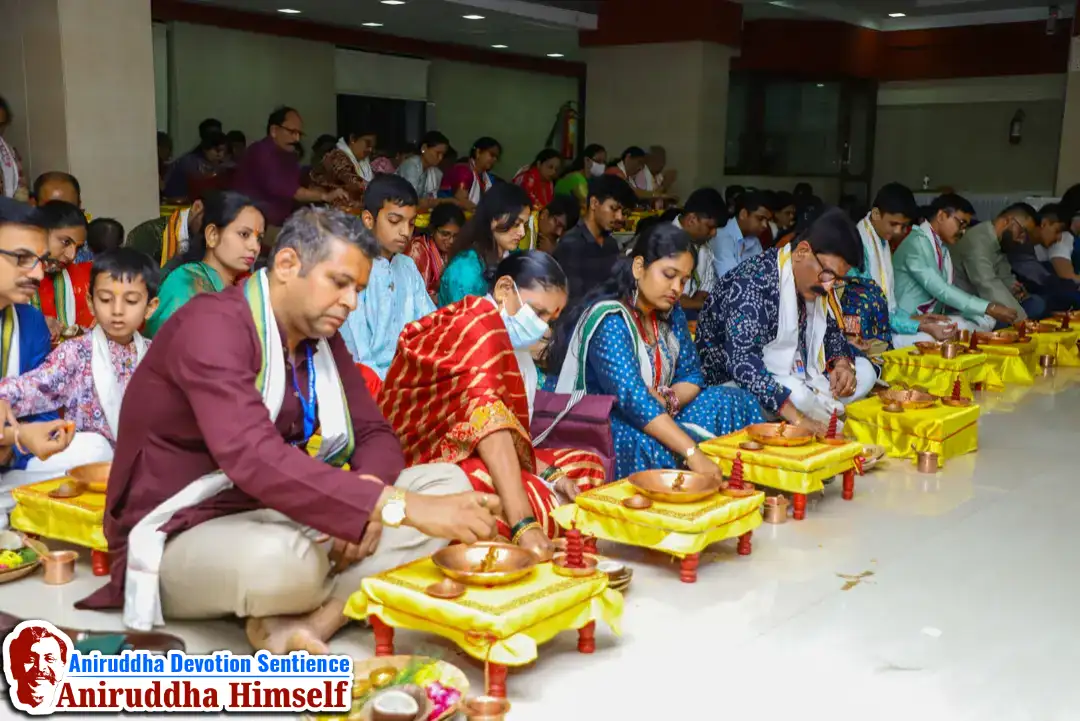
The Sacred Observances during the Utsav
Flag-hoisting ceremony
At sunrise, the Dhwajarohan (flag-hoisting) ceremony takes place amidst the recitation of the ‘Vedic Rashtra Geet’. During this ceremony, the Skanda Dhwaj (flag) is hoisted.
Shree Ganesh Pratishtha Yaag
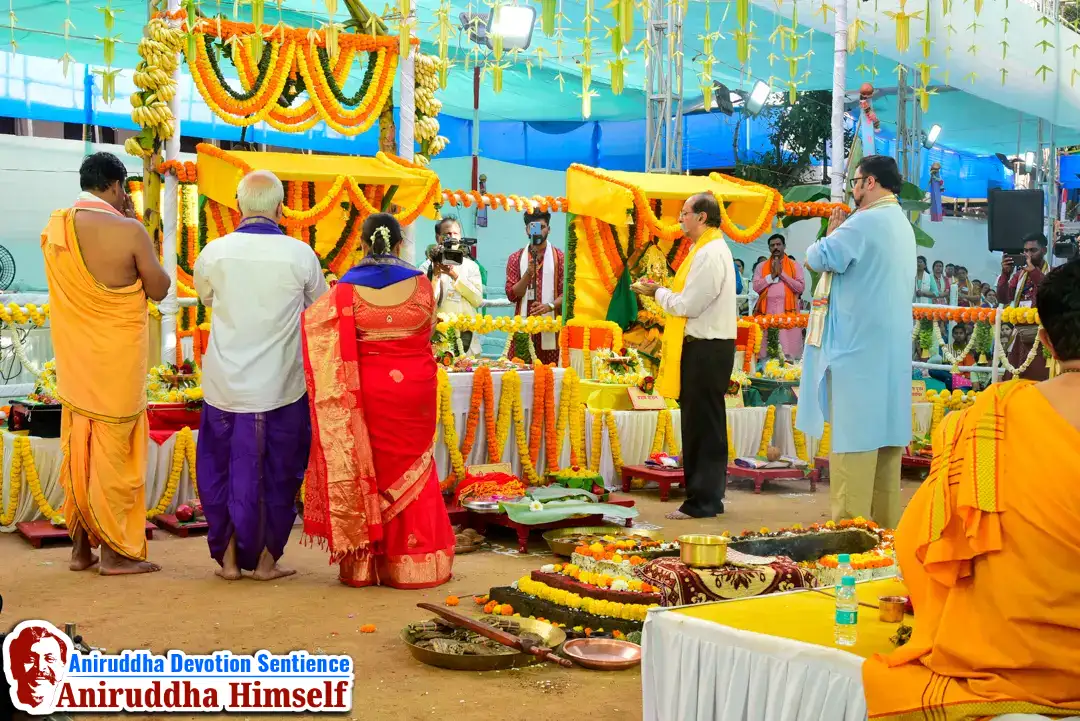
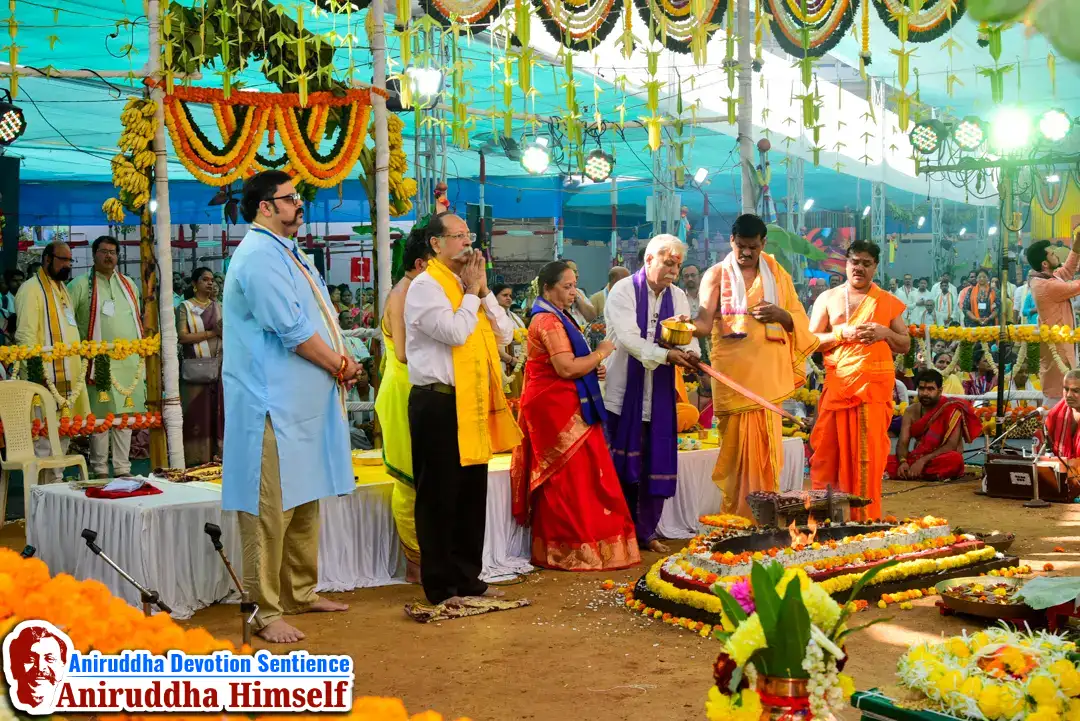
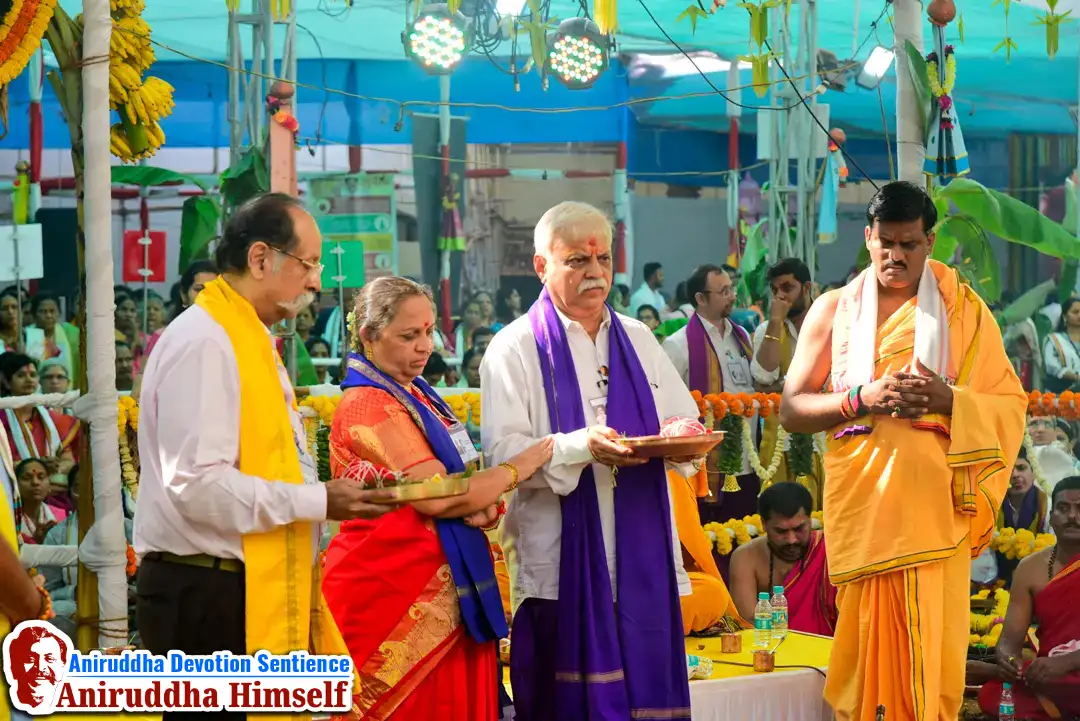
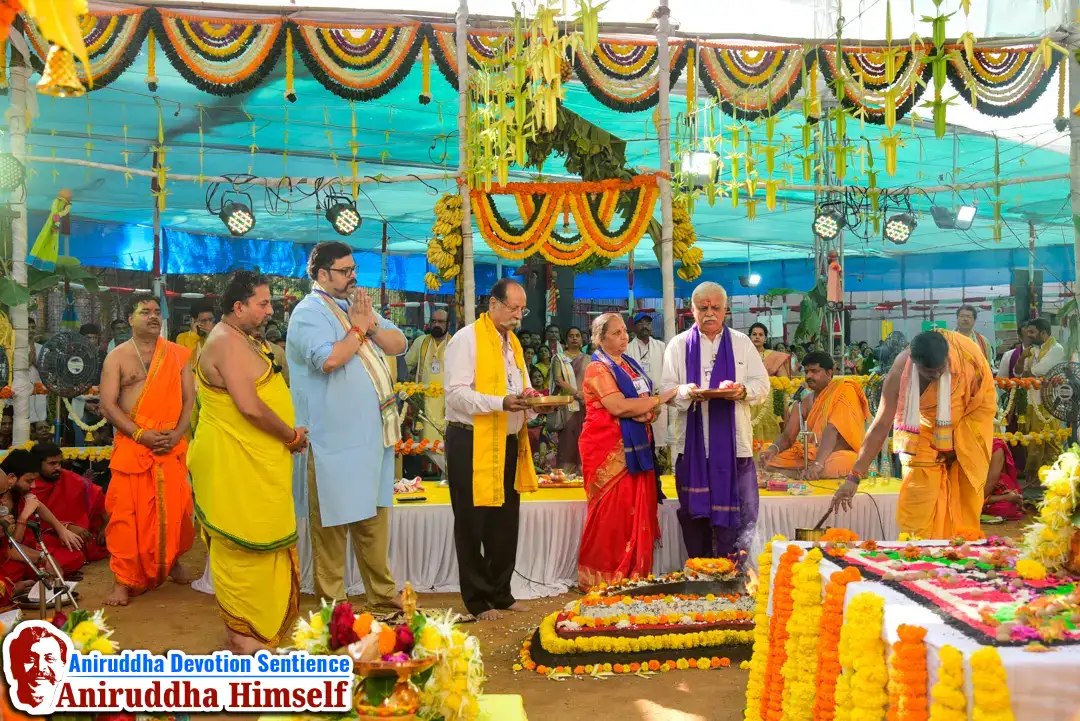
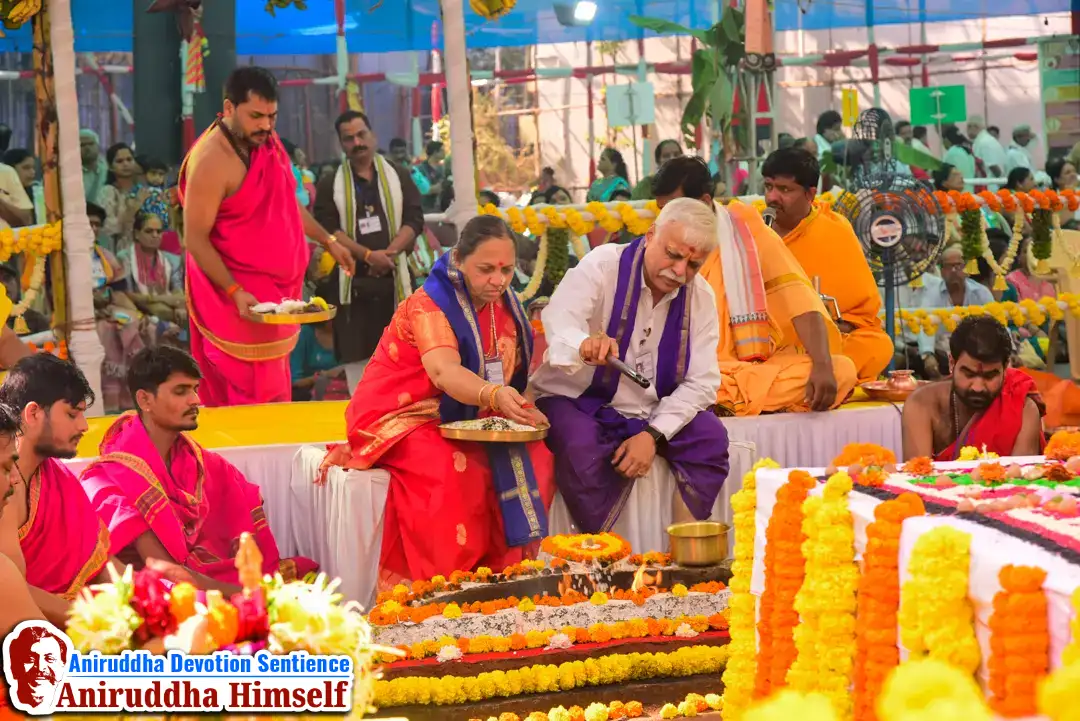
On the blessed day of Shree Maghi Ganpati Janmotsav, the ‘Ekdin Sadhya Shree Ganesh Pratishtha Yaag’ is meticulously organised in accordance with the timeless Vedic tradition. The ‘Shree Brahmanaspati’ form of Shree Ganpati is worshipped during this rite.
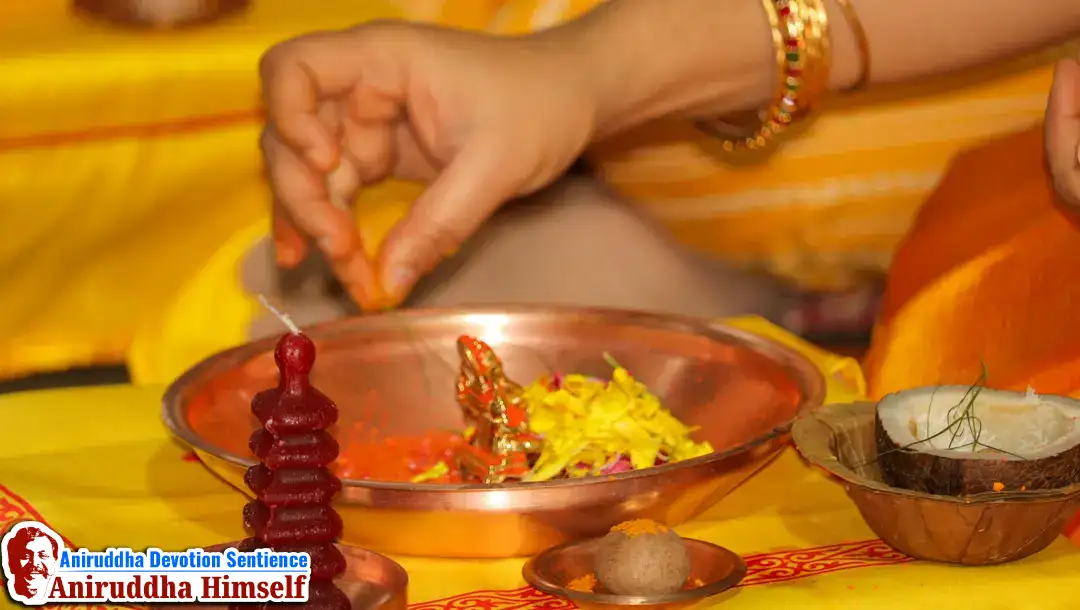
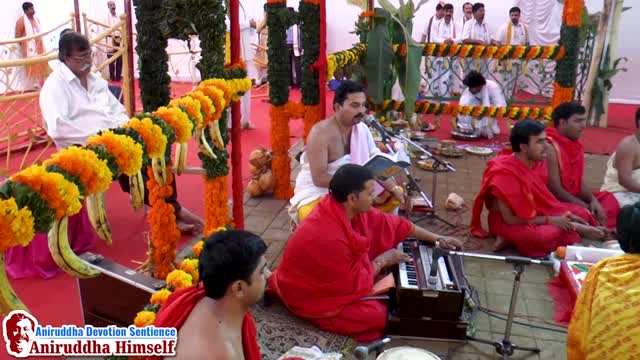
In this yagya, the Pratishthapana of Shree Ganesh idol is performed ceremonially through Vedic mantras. Accompanied by Vedic chanting, havan, sankalp and other prescribed rituals, this yaag is conducted with the intention of removing obstacles from the lives of devotees and bestowing well-being, auspiciousness and harmony.
Around noon, the sacred ritual of Shree Ganesh Janma (the Divine Birth of Shree Ganesh) is performed.
Shree Brahmanaspati Poojan and Abhishek
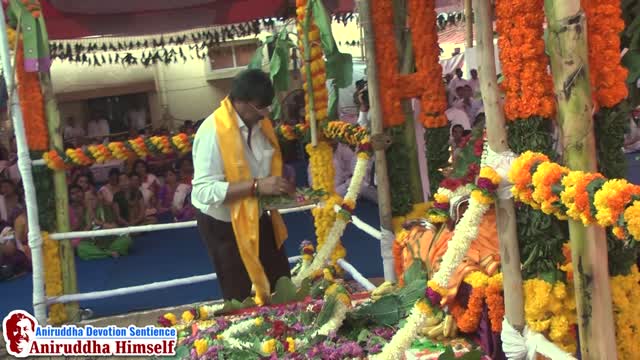
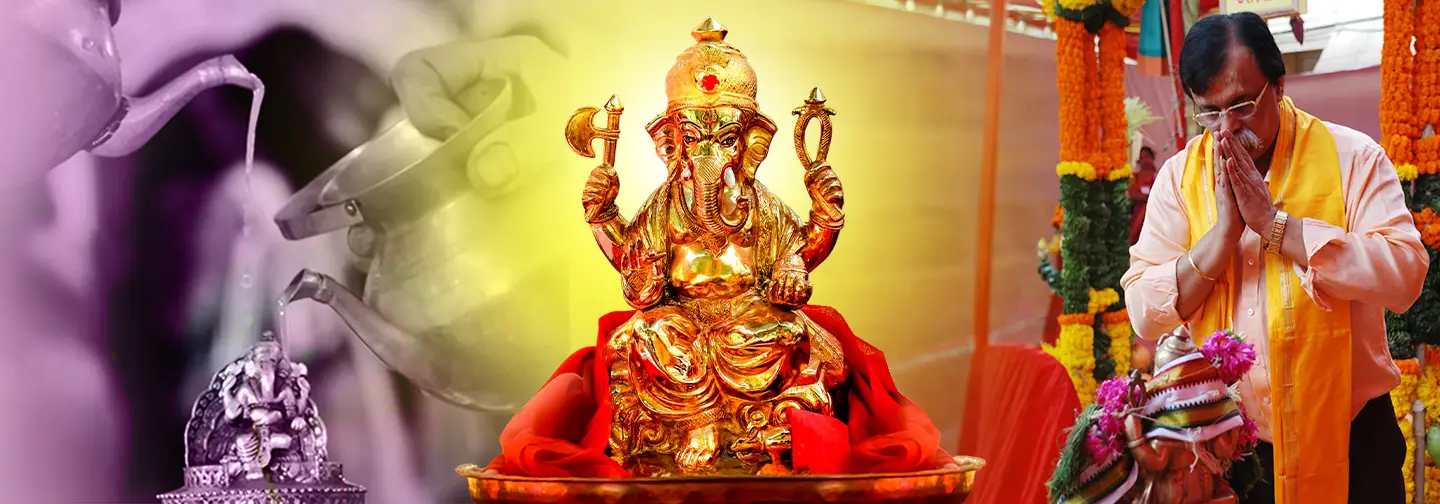
On this blessed occasion, the divine idol of Shree Ganapati in the form of Shree Brahmanaspati, which is worshipped at the residence of Sadguru Aniruddha Bapu, is ceremoniously brought forth and worshipped at the sacred location of the Utsav.
The worship of Shree Brahmanaspati includes a sacred ritual known as Nagar Parikrama. In this ritual, the revered idol of the Deity is carried in a ceremonial procession through a designated area while sacred mantras are chanted or devotional chants are sung, thereby circumambulating the entire area.
A sacred Abhishek (anointment) is lovingly performed upon the idol of Shree Brahmanaspati. This holy rite is accompanied by the recitation of the powerful ‘Shree Brahmanaspati Sookta'.
Shree Brahmanaspati Sookta, a timeless hymn gifted by the revered Sage Grutsamad Shaunak, is considered one of the most sacred hymns of the Rigveda. Its spiritual power is believed to be beneficial not only for an individual and the community but also for the entire nation; it nurtures the spirit of fearlessness and competence in every devoted, patriotic citizen.
Shree Ganpati Atharvasheersha Purascharan and Abhishek
Subsequent to the poojan of Shree Brahmanaspati, a dedicated chanting of the Ganapati Atharvashirsha is performed while the idol of Shree Brahmanaspati is offered an abhishek with the sacred waters collected from eight holy rivers.
Vighna-vinashak Poojan
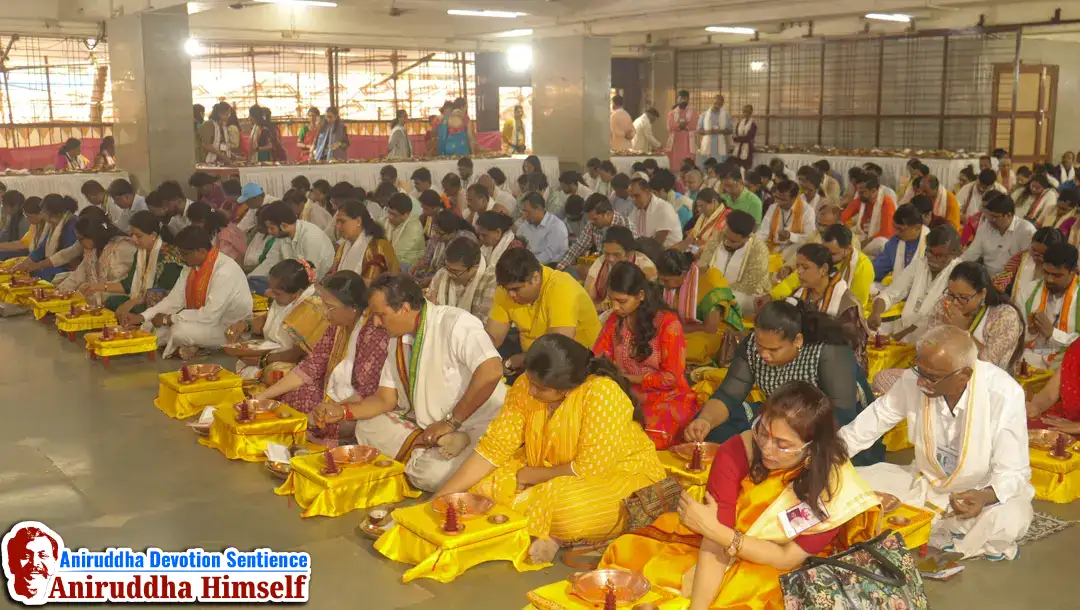
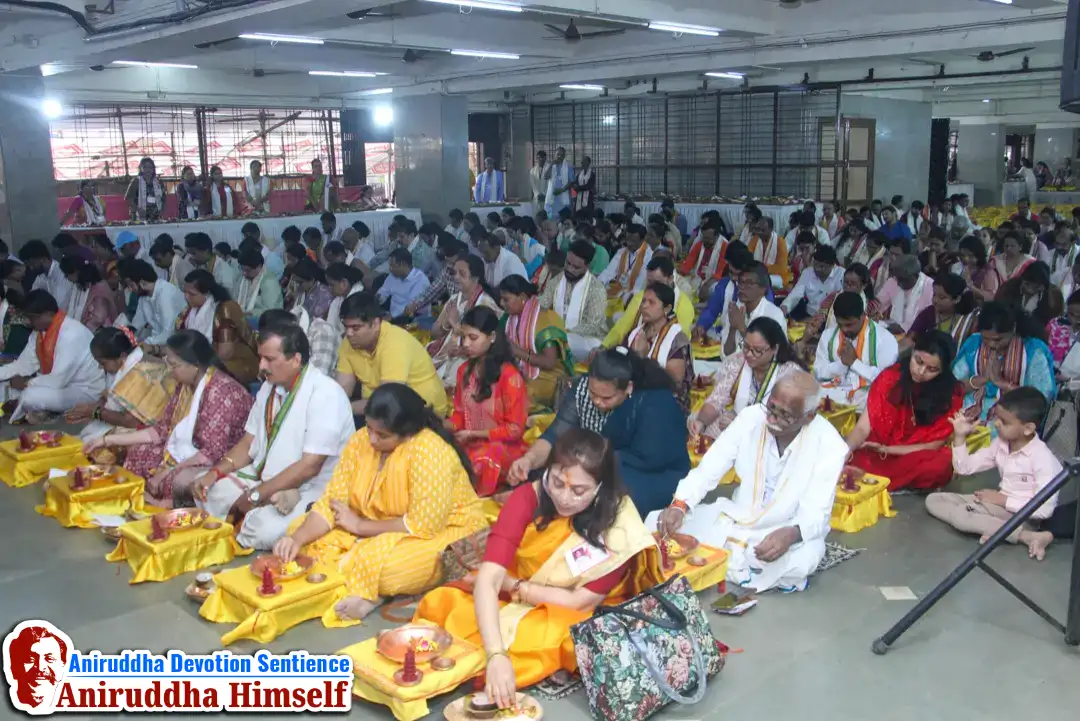
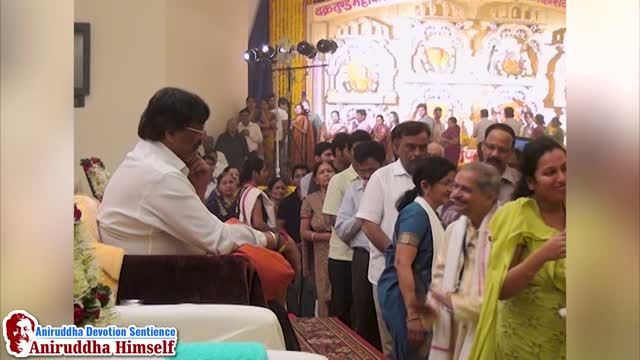
To seek freedom from obstacles and difficulties in life and to invoke a state of unhindered progress and well-being, the Shree Vighnavinashak Ganapati Poojan is performed during the Maghi Ganpati Janmotsav as per the sacred Sankalpa of Sadguru Shree Aniruddha. Shraddhavans lovingly participate in and perform this sacred worship with devotion in large numbers.
Shree Ashtavinayak Poojan and Darshan
Sadguru Shree Aniruddha illuminates a profound spiritual truth: “It is Shree Ganapati who governs the human Trividha Deha (the mind, Prana and intellect) and associated processes that are vital for a person seeking the grace of God.
The eight most significant spiritual centres of this inner system are under the direct, benevolent control of the Ashtavinayak (The Eight Forms of Shree Ganesh). The obstacles and difficulties encountered by a seeker in receiving God’s grace – often arising from errors in judgment or wrongdoing (Pradnya Aparadh) – are lovingly eradicated by humbly praying at the lotus feet of Shree Ashtavinayak.
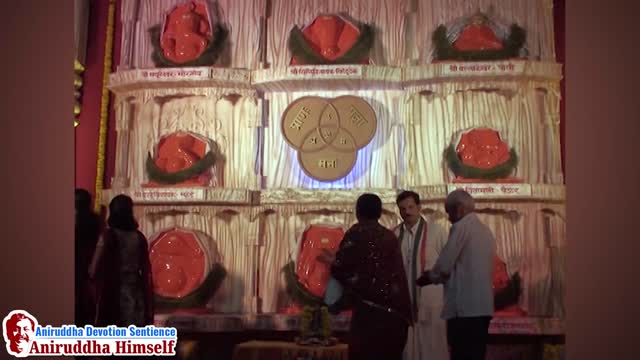
During this Utsav, the poojan of all the Ashtavinayak idols, mirroring their divine forms present at each of the original sacred locations, is performed in a Vedic manner. Shraddhavans then avail themselves of the Ashtavinayak darshan. Every devotee is also granted the blessed opportunity to offer sacred durva grass and red, fragrant flowers to Shree Brahmanaspati, as well as to Shree Ashtavinayak.
As an offering of devotion, the powerful Ganpati Atharvashirsha is continuously chanted during the Utsav celebrations. Shraddhavans are encouraged to participate actively in the soul-stirring chanting of the Brahmanaspati’s Mantra and the Atharvashirsha, which makes Shraddhavans feel connected to a divine stream of energy of Shree Ganesh.
With his unconditional love, Sadguru Aniruddha Bapu has given the following Brahmanaspati Mantra to all Shraddhavans. This mantra brings well-being and eradicates obstacles from life:
ॐ श्रीब्रह्मणस्पतये पार्वतीपुत्राय। मंगलमूर्तये गणपतये विश्वघनप्राणाय। सर्वविघ्ननिवारकाय नमो नमः॥
‘Om ShreeBrahmanaspataye Paarvateeputraaya, Mangalamurtaye Ganapataye Vishwaghanapraanaaya, Sarvavighnanivaarakaaya Namo Namah.’
The profound Darshan of Shree Brahmanaspati and the Ashtavinayaks, gently relieves Shraddhavans of the perils and obstructions they face in their lives. Moreover, their lives are further enriched and made prosperous by the omnipresent, loving grace of the Sadguru. In this spirit of deep devotion and reverence, the Shraddhavans faithfully celebrate the Shree Maaghi Ganesh Utsav year after year.
Mata Shivagangagauri Poojan
As Shree Brahmanaspati is the divine son of Mata Shivagangagauri (the combined form of Mata Parvati and Ganga Mata), a comprehensive Poojan, in accordance with prescribed holy rituals and Archan of Her are lovingly performed alongside the Shree Ganesh Pratishtha Yaag, using sacred Vedic mantras.
After the worship ceremony is completed, auspicious ‘Haridra’ (holy turmeric), believed to be a protective shield against the inauspicious, and yellow flowers are reverently offered to Mata Shivagangagauri while reciting Her Ashtottara Shatanamavali (108 Holy Namas) until the conclusion of the festival. It is believed that this chanting dispels everything inauspicious.
During the same period, Shree Brahmanaspati is continuously worshipped by offering durva grass while chanting the Brahmanaspati Mantra.
More about Shree Brahmanaspati: Guidance for the Journey of Life
The sacred scriptures reveal that the four divine weapons wielded by Shree Brahmanaspati are profoundly linked to the four petals, viz., Intake (Aahar), wandering (Vihar), conduct (Aachar), and thought (Vichar), of the Mooladhar Chakra in the Pranamaya Deha, which guides our earthly and spiritual pursuits.
Let us contemplate the significance of these four divine weapons and their gentle connection to our consciousness:
Parshu (The Axe):
Shree Brahmanaspati’s Parshu (Axe) is bestowed with the divine purpose of granting the right direction to one’s thoughts (Vichar). The Parshu represents Shree Ganapati’s profound influence over the Centre of Thought in the human body. It is the instrument to discern between the right and wrong or the good from the bad (Vivek Buddhi), cutting away illusion to reveal the truth.
Pash (The Noose):
The Paash is Shree Brahmanaspati’s divine weapon used to gently control and refine our conduct (Achar). Thus, the Paash represents Shree Brahmanaspati’s guiding influence over the Centre of Conduct in the human body. It reminds us of the power of Maryada (healthy limits).
Dant (The Tusk):
The Dant represents Shree Brahmanaspati’s compassionate influence on the Centre of Wandering (Vihar). The ceaseless travels of the mind, the journey of the intellect and the movement of the physical body and life force through the dimensions of time and space bring forth the duality of happiness and sorrow. The broken Tusk, a symbol of sacrifice, gently teaches us to discard the unwanted, distracting thoughts and reduce the mind’s restless wandering, grounding us in the present moment.
Modak (The Sweet):
The Modak symbolises Shree Brahmanaspati’s benevolent influence over the Centre of Intake (Aahar). It represents the mechanism that ensures only the good, the wholesome and the divine-aligned reach us. Intake here transcends mere food; it encompasses the thoughts, ideas and impressions we absorb through the sanctuary of our mind and all the 5 sense faculties. The Modak teaches us the sweetness of mindful absorption.
Thus, the Maghi Ganpati Janmotsav stands not merely as a festival, but as a sacred reminder of Shree Ganapati’s ceaseless guardianship over human life. As Brahmanaspati, He anchors the seeker at the very root of existence, harmonising thought, conduct, intake and movement and gently restores balance where confusion prevails. Through the profound observances of this Utsav — the Vedic chants, the Abhisheks, the Ashtavinayak Darshan and the loving guidance of Sadguru Aniruddha Bapu — obstacles are not merely removed but transformed into steps of growth. What remains in the heart is quiet assurance: that when life is aligned with Bhakti and offered with love and purity, Shree Ganapati Himself becomes the inner guide, leading the seeker steadily toward bliss, clarity and enduring auspiciousness.
Watch this video to know everything about Shree Maghi Ganapati Janmotsav: