The unique Upasana of Ramanujacharya
Around 300 years ago, Shri Ramanujacharya performed a unique and sublime form of upasana dedicated to Shree Balaji. Through the Saptakoti Archanam, he worshipped Bhagwan Venkatesh using the sacred eight-lettered mantra, “Om Venkateshaya Namah” (ॐ व्यंकटेशाय नमः), and brought the worship of his beloved deity to its complete fulfilment. This Saptakoti Jap was performed during the sacred period from Vaishakh Vinayaki Chaturthi to Vaishakh Mohini Ekadashi.
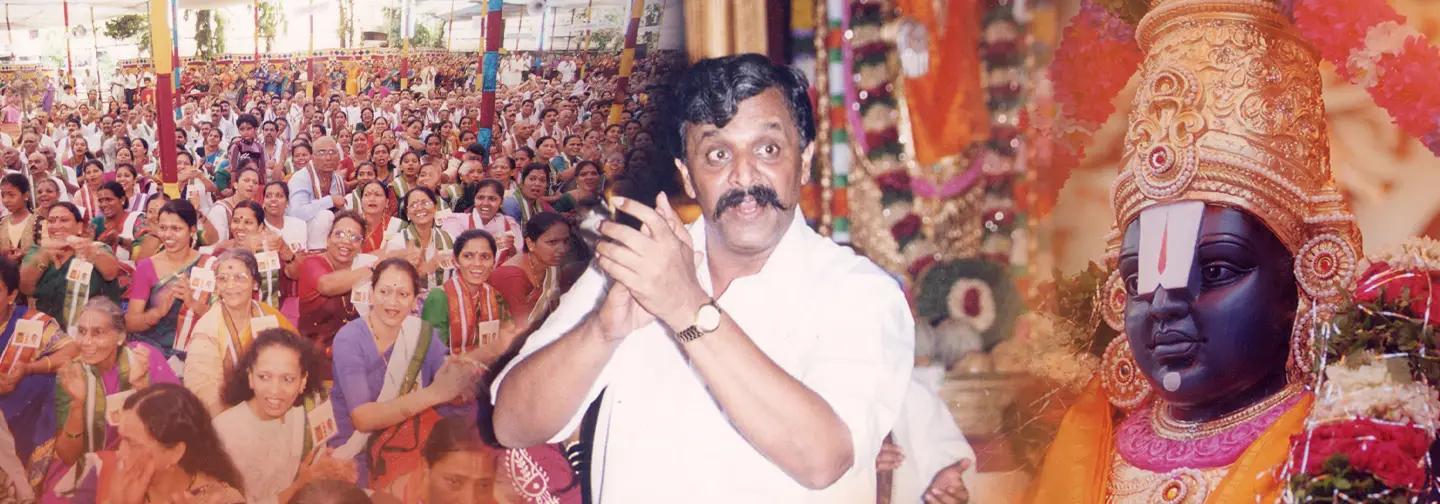
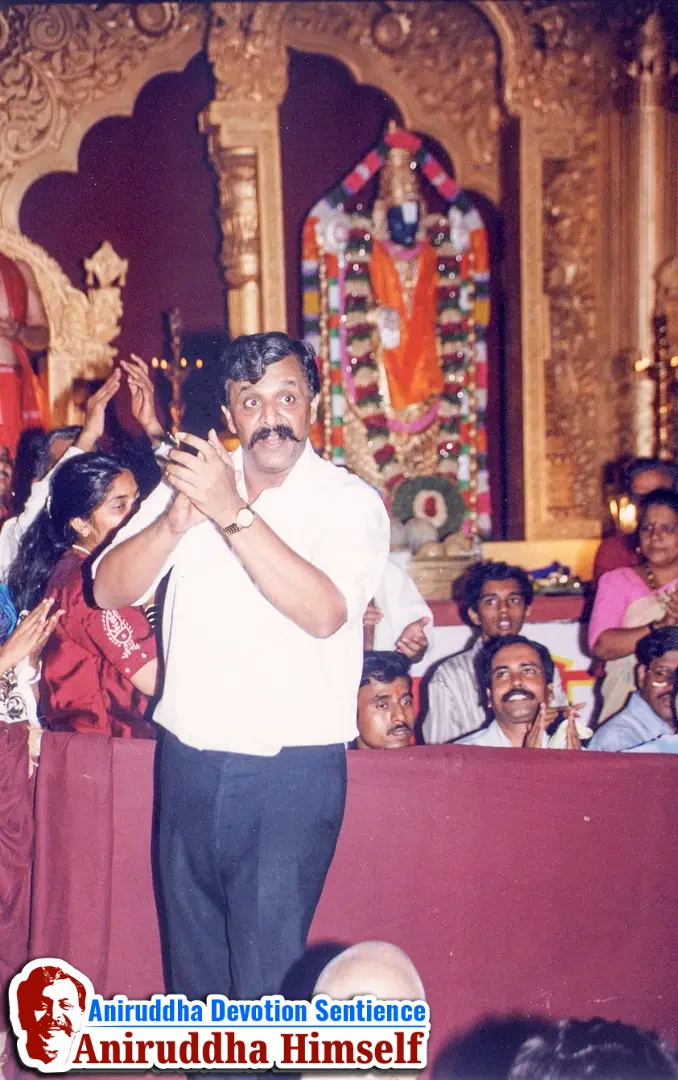
In the year 2000, Sadguru Shree Aniruddha Bapu too conducted such a Saptakoti Jap for all the Shraddhavans to participate, from 7th to 14th May, which was also between Vaishakh Vinayaki Chaturthi to Vaishakh Mohini Ekadashi. This Utsav was organised at Shree Harigurugram, New English School, Bandra (East), Mumbai.
“The devotion, the affection, the love, and the sincerity, with which Sri Ramanujacharya performed this Upasana, if we could perform it even with minutest sincerity in our heart, there would be nothing as beautiful as that. Ramanujacharya was a great person. I’m nothing like him – we all may be way too far to achieve the greatness of Sri Ramanujacharya, but we absolutely must not hesitate to follow in his footsteps. Never worry about the thought of how small we are, compared to his greatness.
Which path should I follow? It was the question that Shaunakmuni once asked his Guru, to which his Guru answered, ‘येनमार्गेनमहाजनागत:’ (Yen Maargen Mahajana Gatah), which means ‘one must follow the path on which the great men stride’. There is no threat in doing so at all. Today, we have to follow and thoroughly explore this sacred path of Shri Ramanujacharya,” said Sadguru Shree Aniruddha to all the Shraddhavans before the event of Shree Vyankatesh Saptakoti Jap.
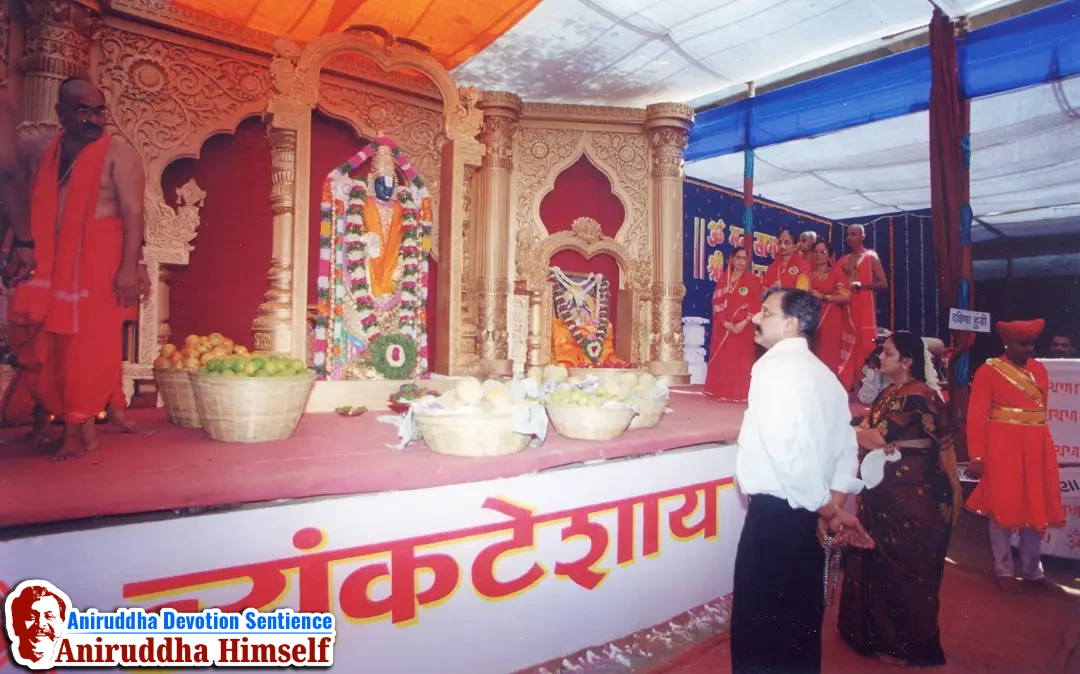
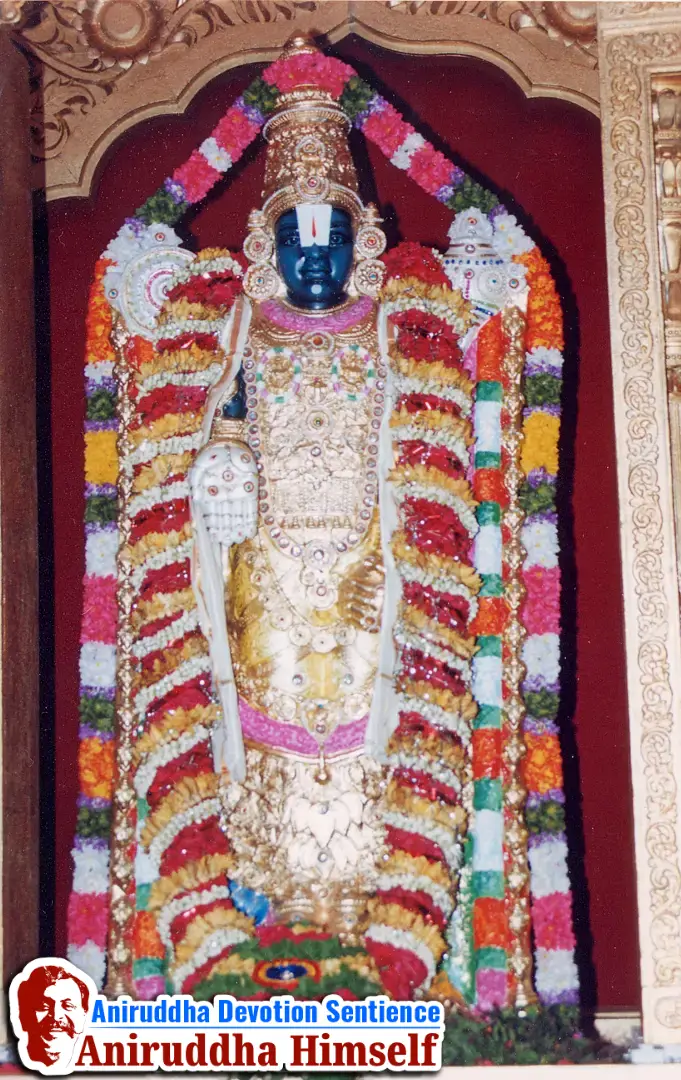
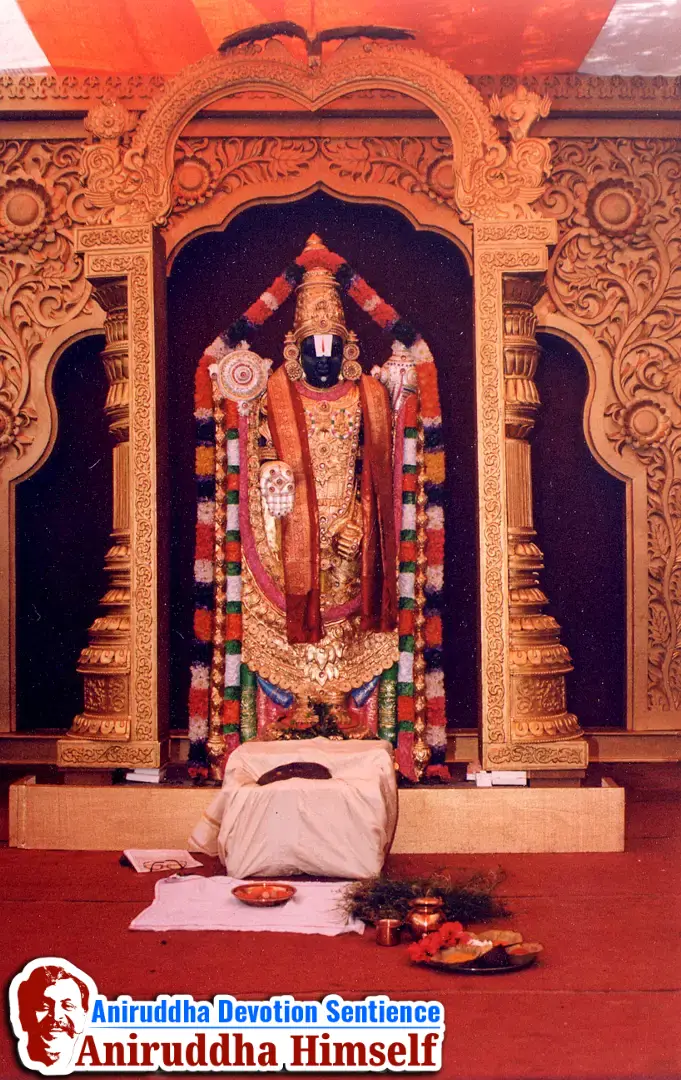
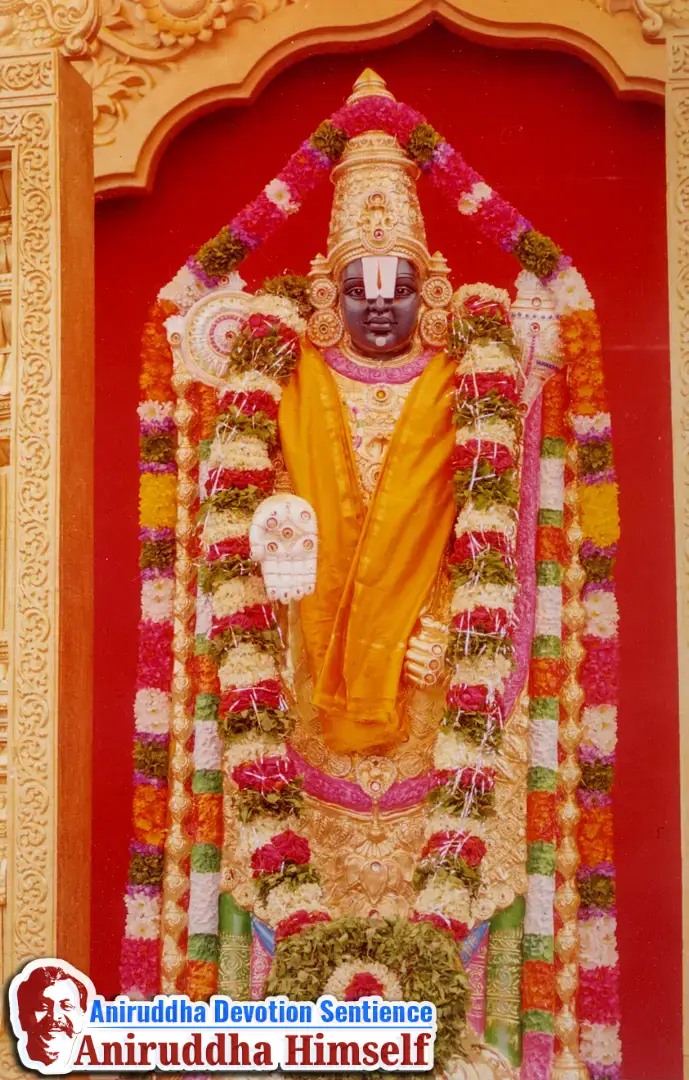
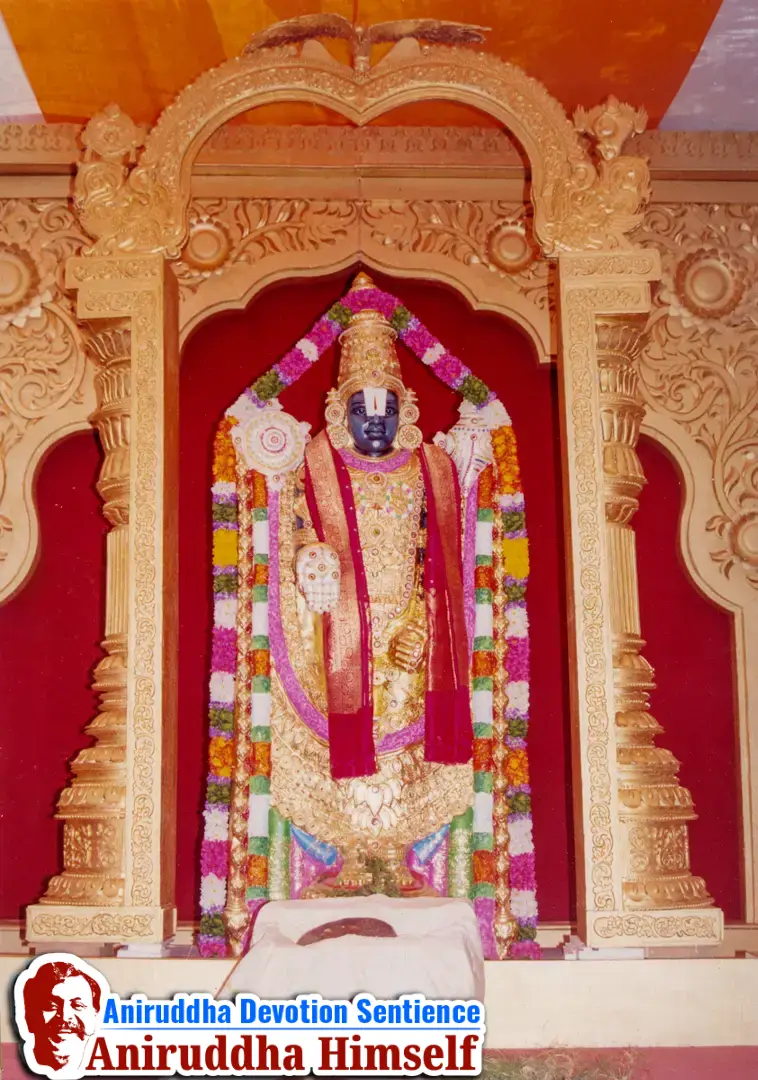
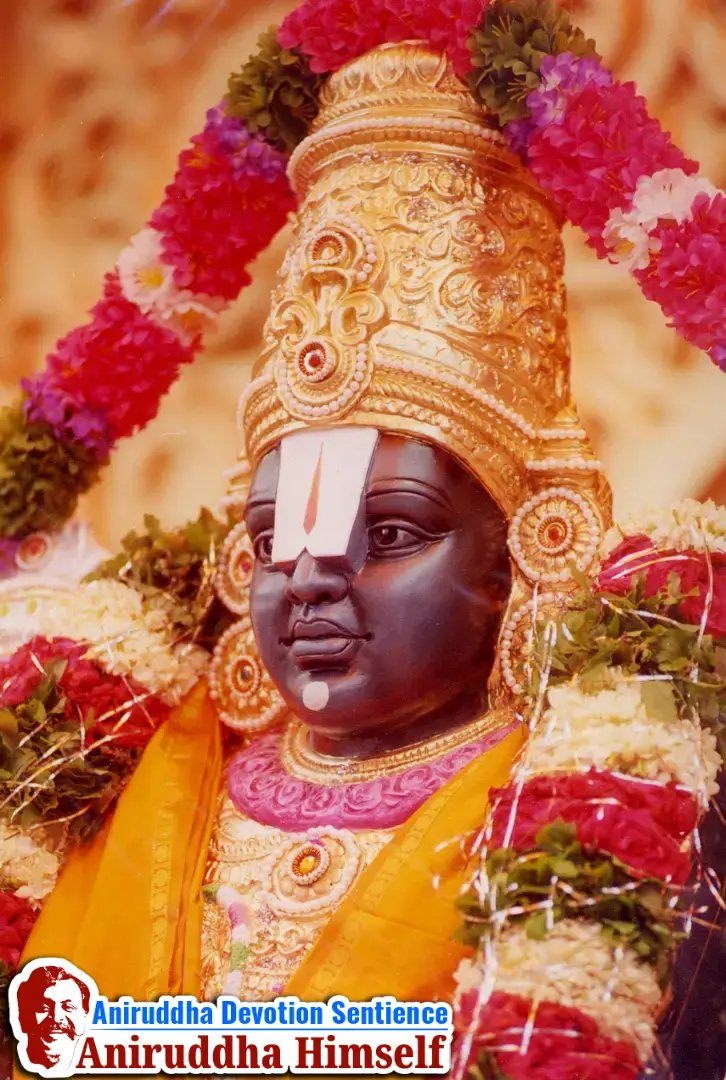
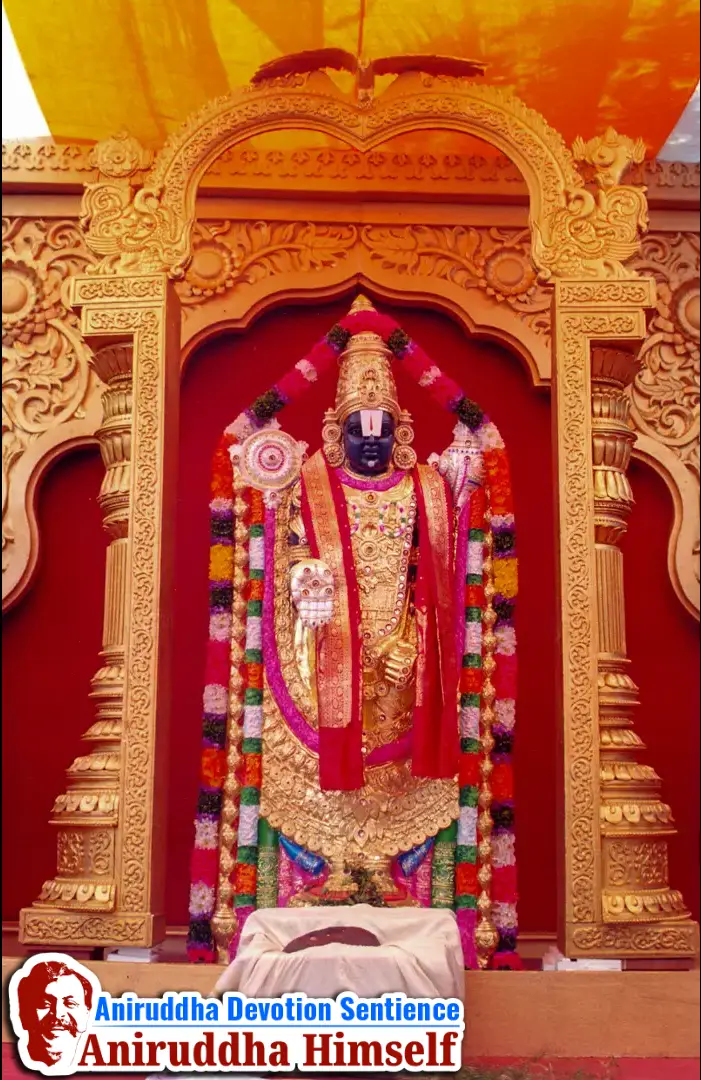
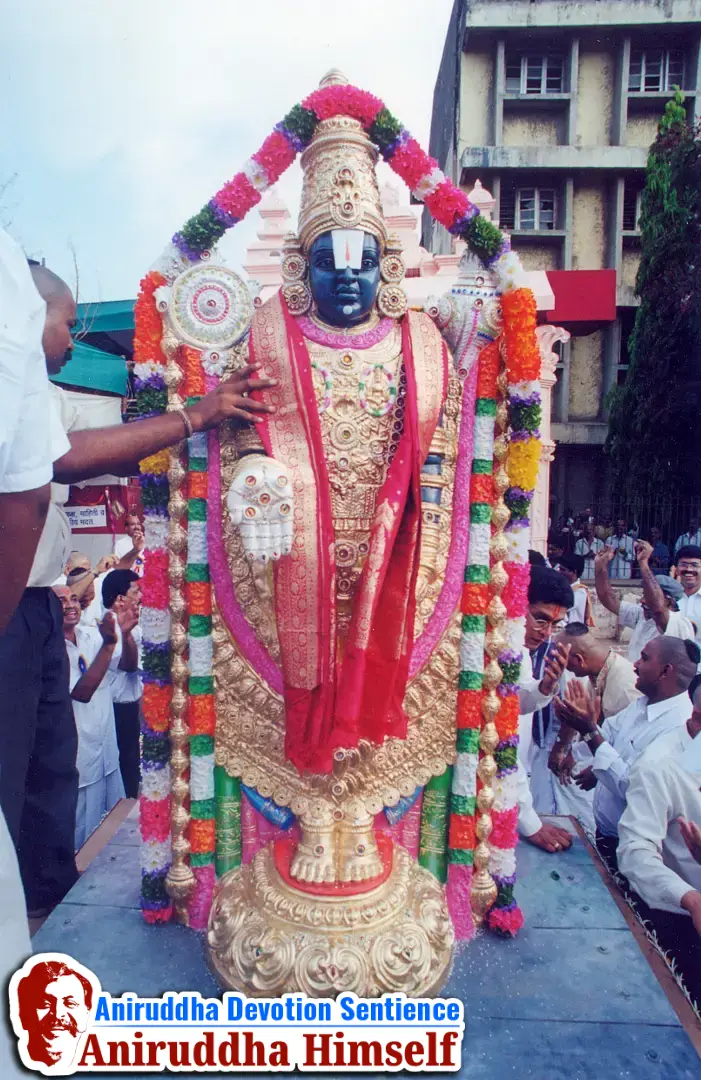
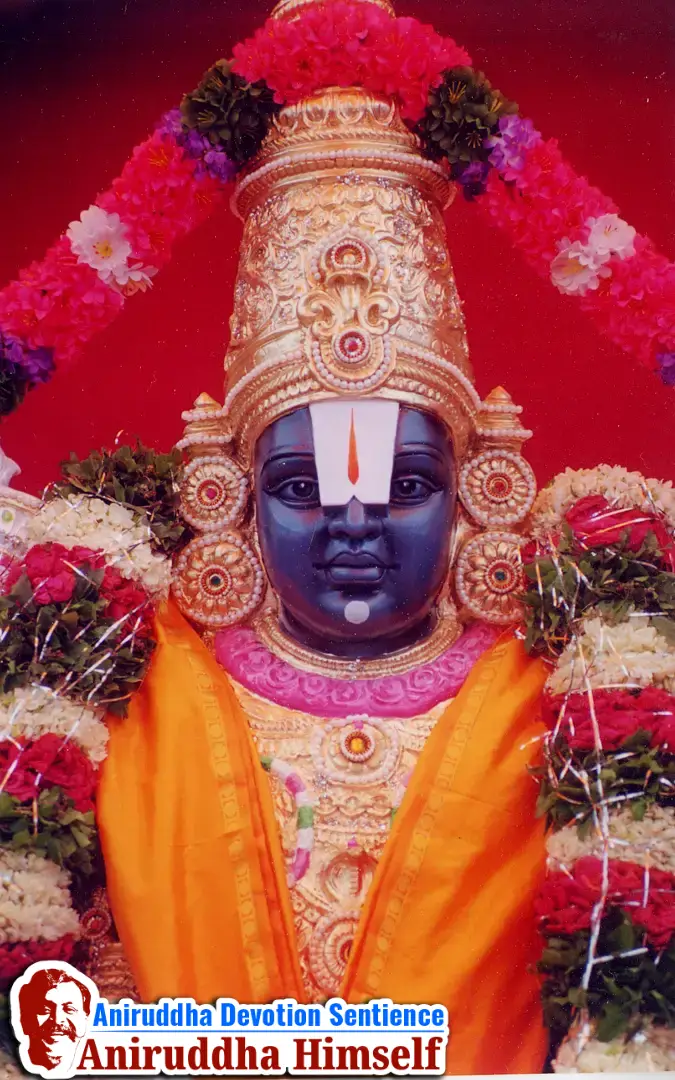
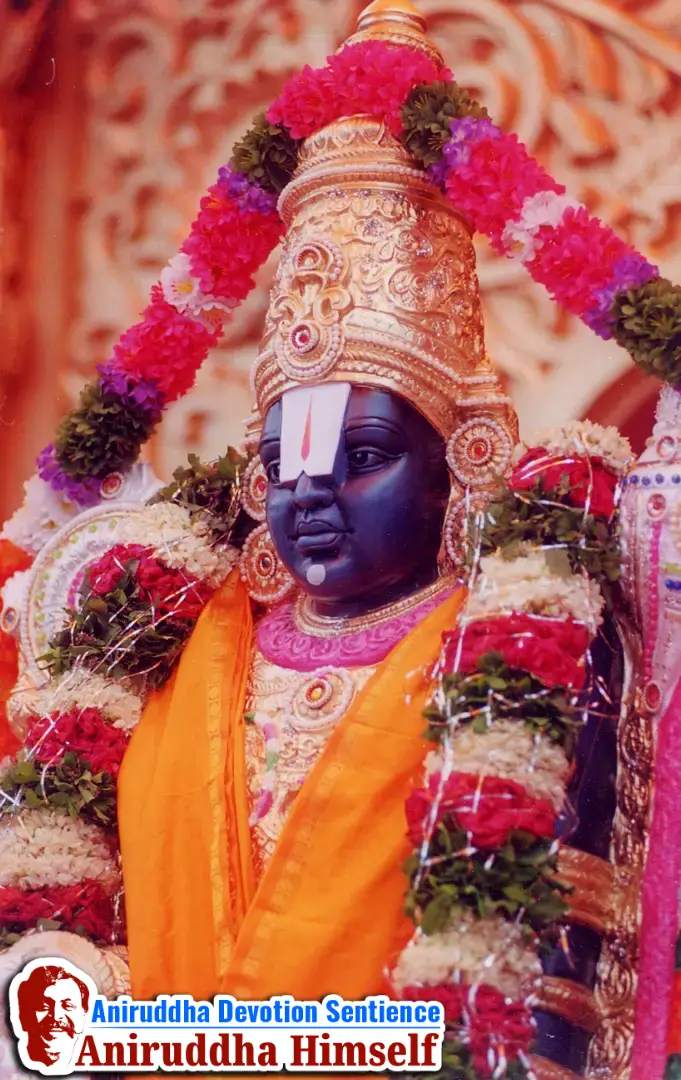
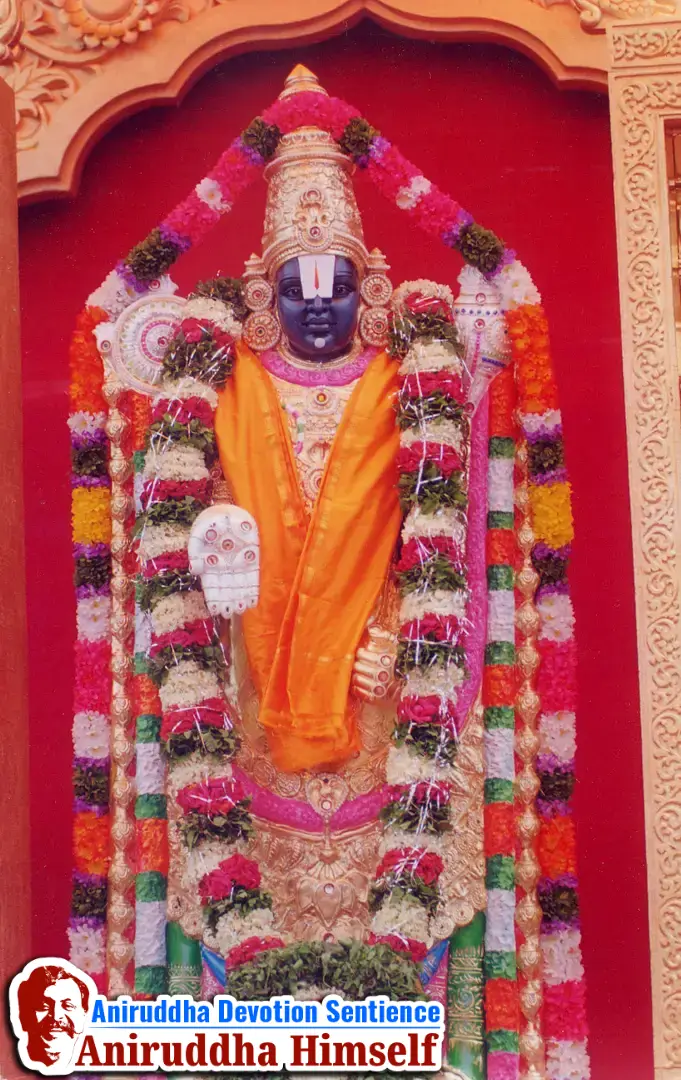
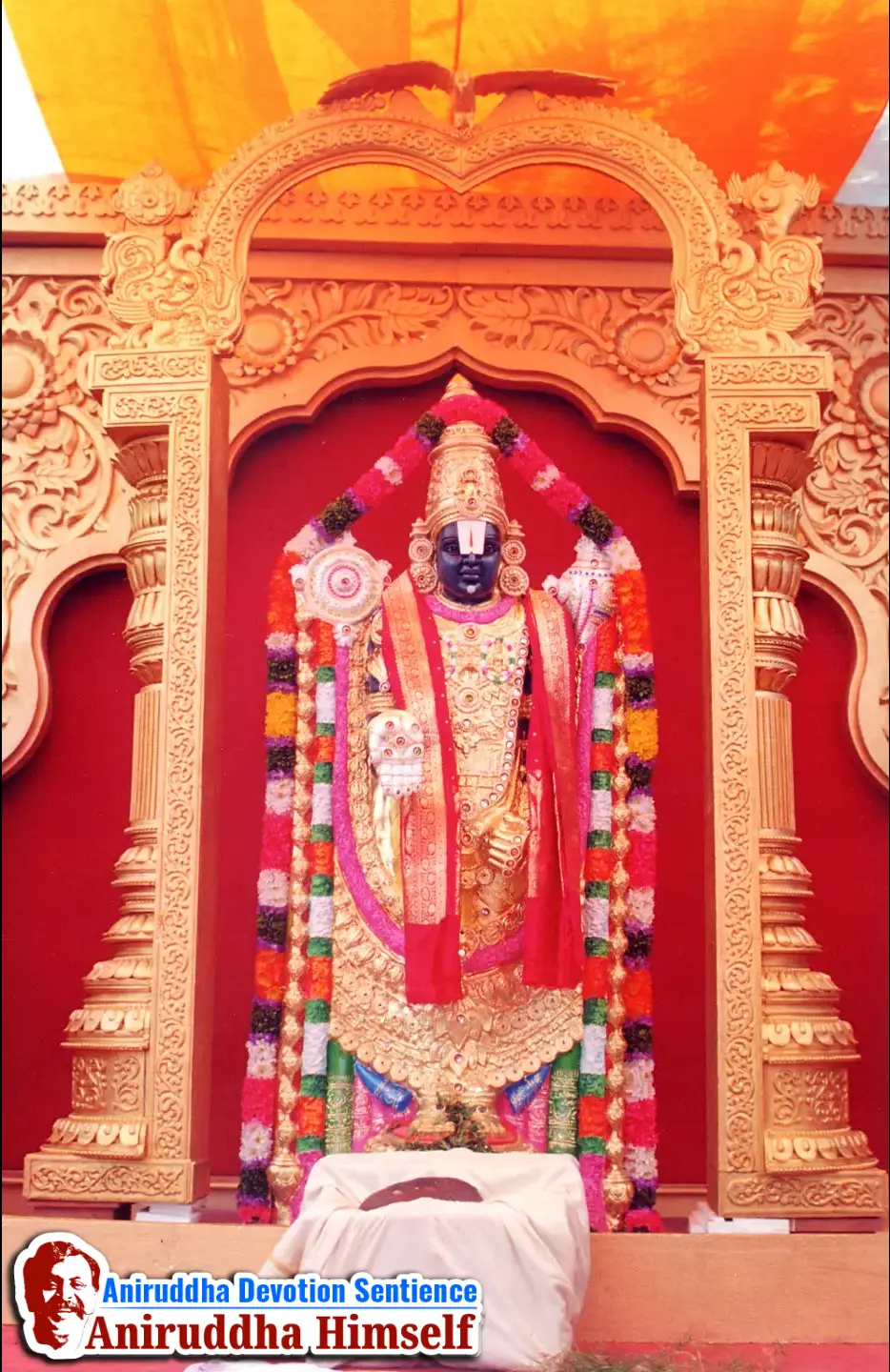
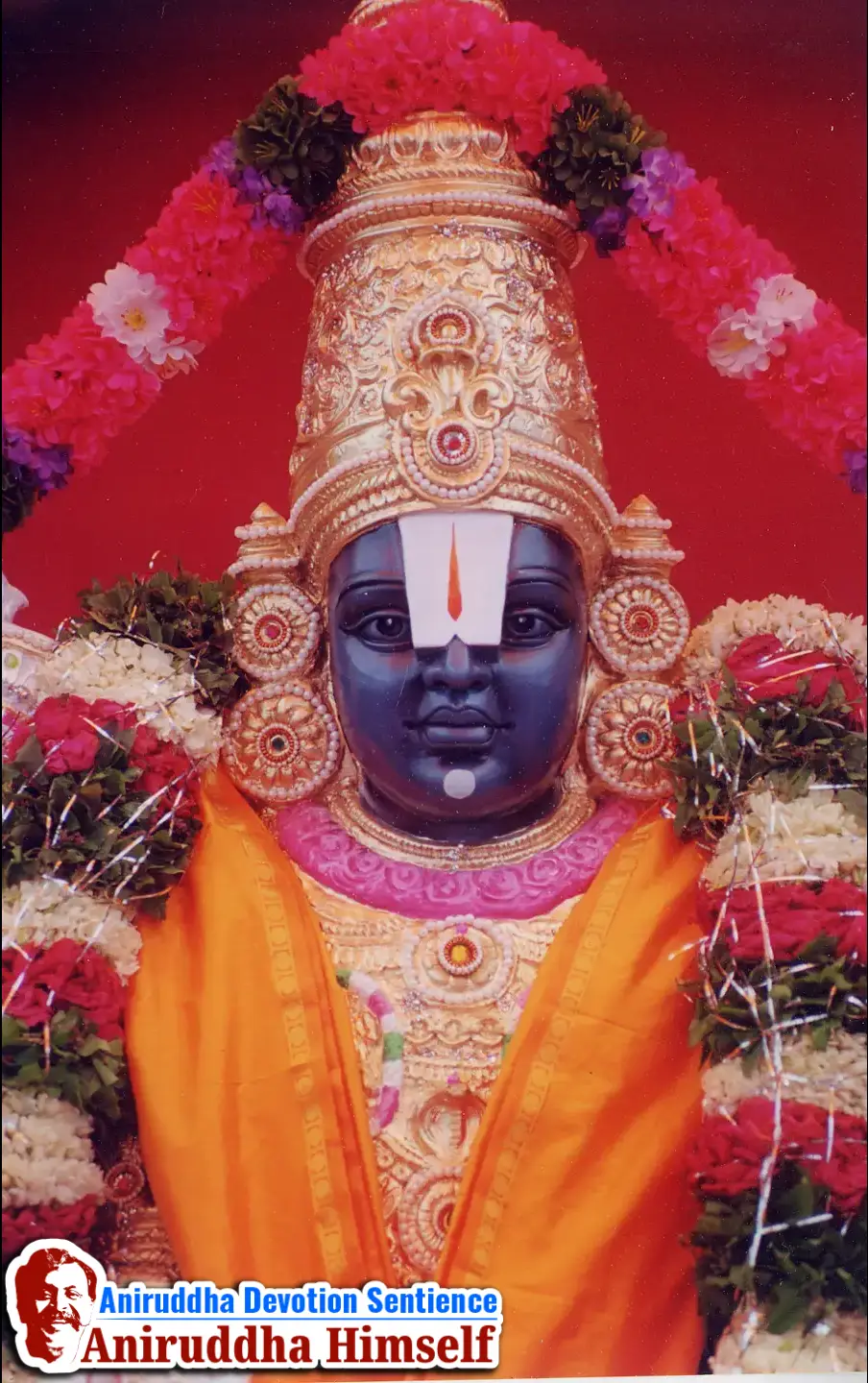
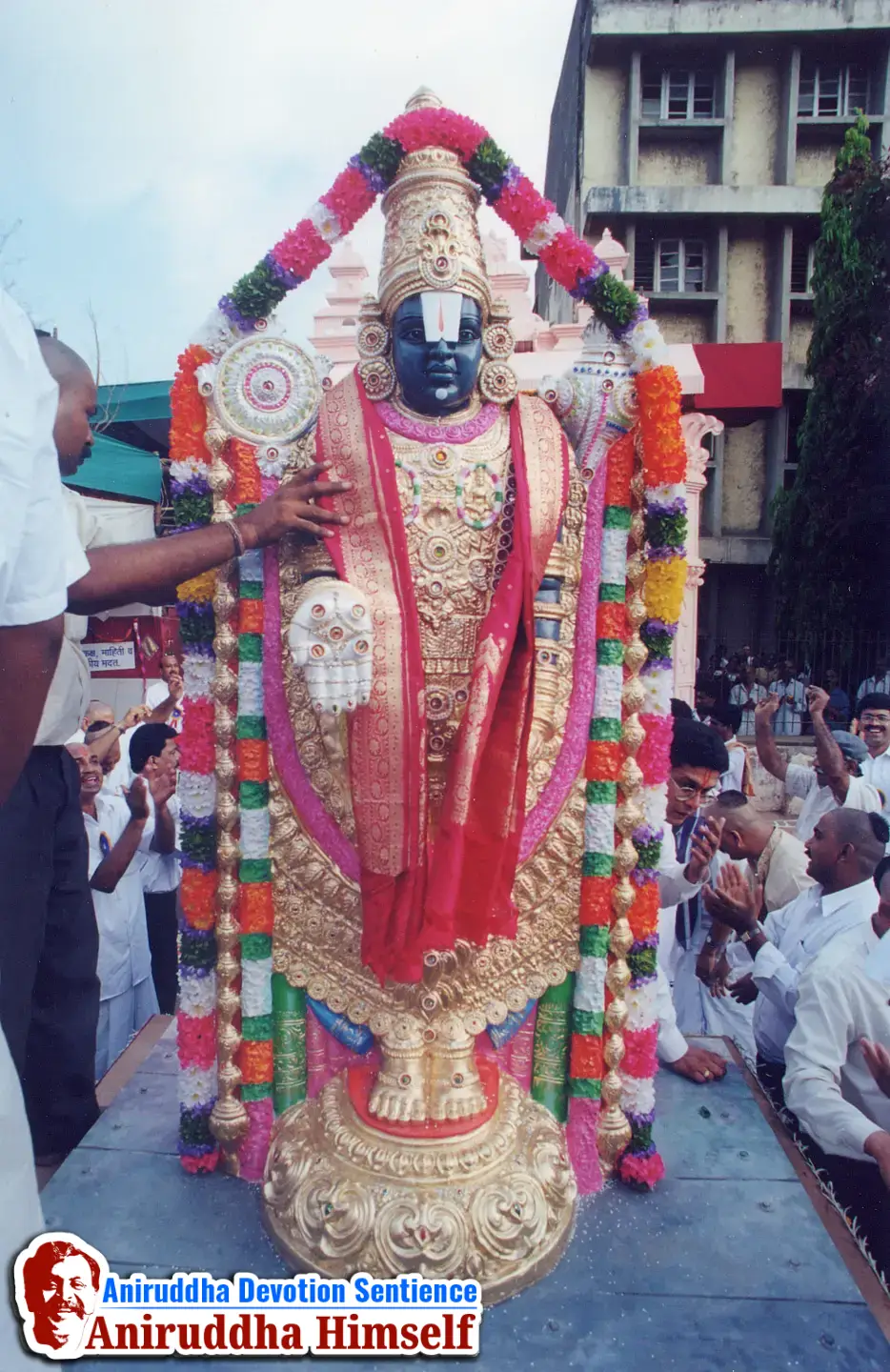
Idol of Shree Venkatesh with Saptachakras
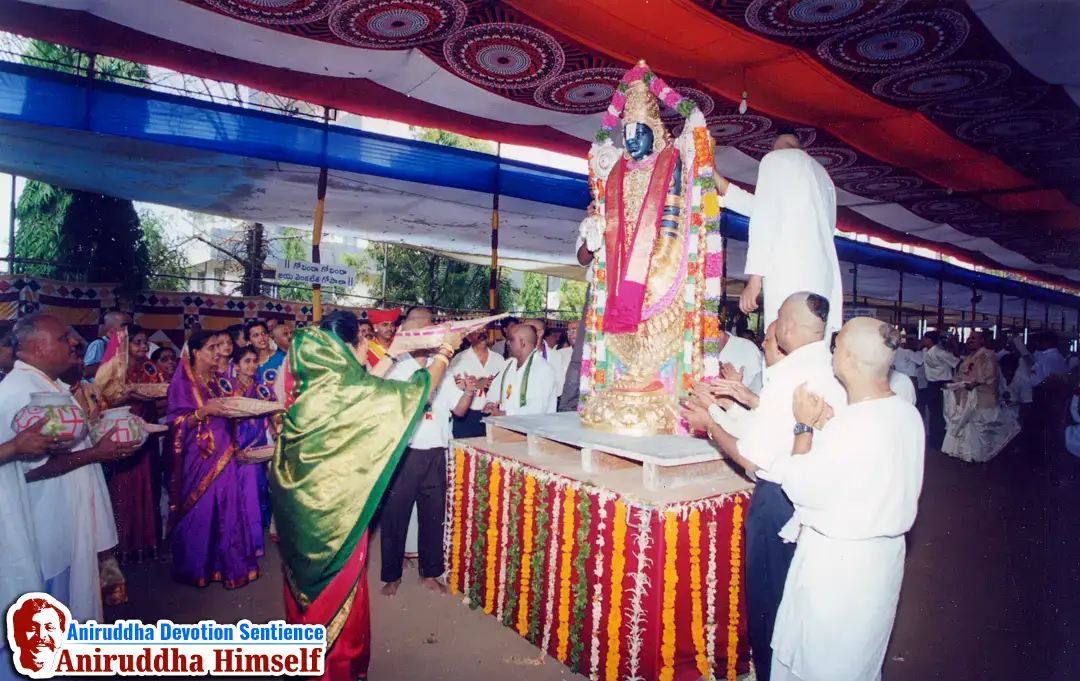
A 7-feet tall idol of Shree Venkatesh, like that of the original Tirupati idol, was erected at the Utsav. On one side of Lord Venkatesh was Goddess Padmavati and on the other, Seshagiri Venkatgiri. The ‘Saptchakra Sthapna’ (establishment of the Seven Chakras) was done in the idol while it was being carved. Before establishing the Saptachakras from the Mooladhara Chakra to Sahastra Chakra in the idol of Lord Venkatesh, 49 chosen Shraddhavans recited various mantras relating to all the seven chakras, and seven other Shraddhavans recited the prime mantra one million times. Only then was the Saptchakra established in the idol of Lord Venkatesh.
The Practice of continuous chanting
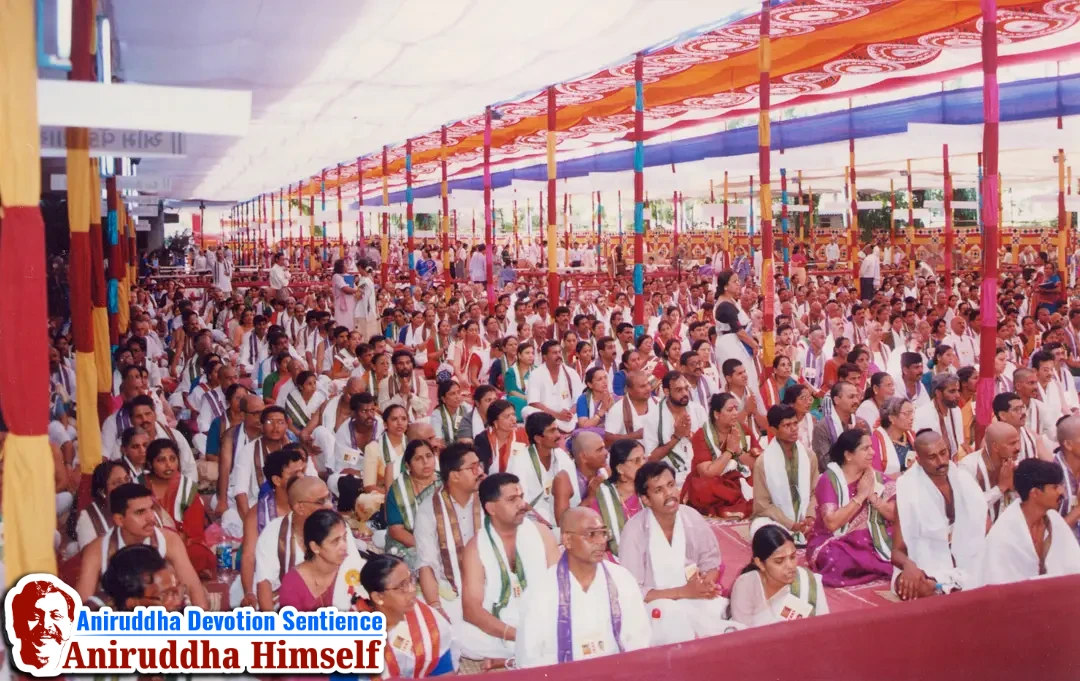
During the period of Shree Venkatesh Saptkoti Jap Utsav, the selected Shraddhavans would sit at their respective seats allotted to them, and begin chanting mantras in two batches from 8’o clock in the morning. The number of chants of this mantra rose as the Shraddhavans who came to take darshan also participated in it. Shraddhavans devotedly performed the Jap for 12 hours each day in two batches, alternating every hour for seven consecutive days. Each batch chanted the mantra ‘ॐ व्यंकटेशाय नमः’ (Om Venkateshaya Namah) 700 times to accomplish the Saptakoti Jap.
The Saptakoti Jap (7 crores times) was accomplished in the morning on the seventh day itself, but the chanting continued until late evening that day as per Sadguru Shree Aniruddha’s guidance. A consecration (abhishek) of water from three seas (Trisagar Sangam Jal) took place on 14th May 2000 after the chanting was concluded. During this period, the male Shraddhavans wore the traditional attire, maintained the conventional hairdo followed in Tirupati and applied ashtagandha, which created an atmosphere full of bhakti.
Importance of the 'Om Venkateshaya Namah' chant
Shedding light on the importance of the mantra, Bapu said, “Even though Sri Ramanujacharya chanted the mantra, ‘ॐ व्यंकटेशाय नमः’ 7 crore times, the mantra has truly been established by Goddess Shree Lakshmi, herself; and it was uttered for the first time by Lord Shesha’. Resultantly, every attending Shraddhavan sincerely chanted this mantra and departed, with the mantra engraved in their hearts.
Paapmochan Kund
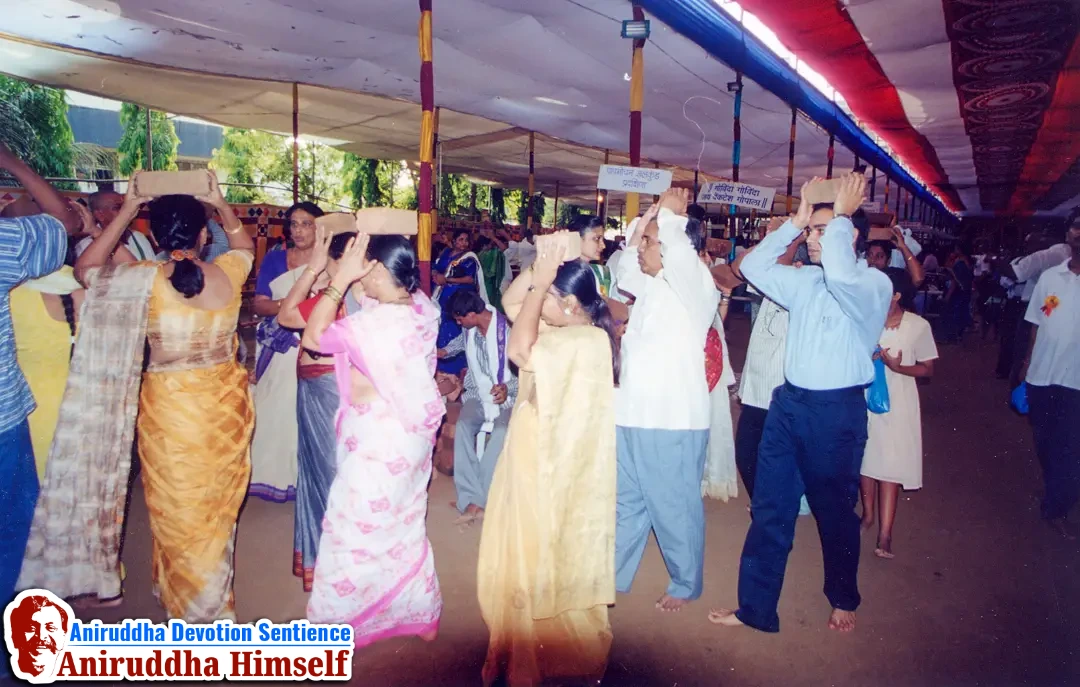
A ‘Paapmochan Kund’ was also erected at the event. All the Shraddhavans were performing the Paapvimochan circumambulation around the Kund, holding the Holy Brick (Ishtika) on their heads. The chant of ‘Govinda Govinda, Jai Vyankatesh Gopala’ went on during the circumambulation. The Ishtikas were made out of sacred soil and water of Tirumalai Sarovar and Padmasarovar. ‘Oh Lord, I may have made many mistakes until now, but may I commit the mistakes in the least hereafter,’ prayed Shraddhavans while circumambulating and chanting the mantra itself. Any Shraddhavan could chant this mantra and circumambulate as many times as they wished.
Mahapushpam and Mahabhog
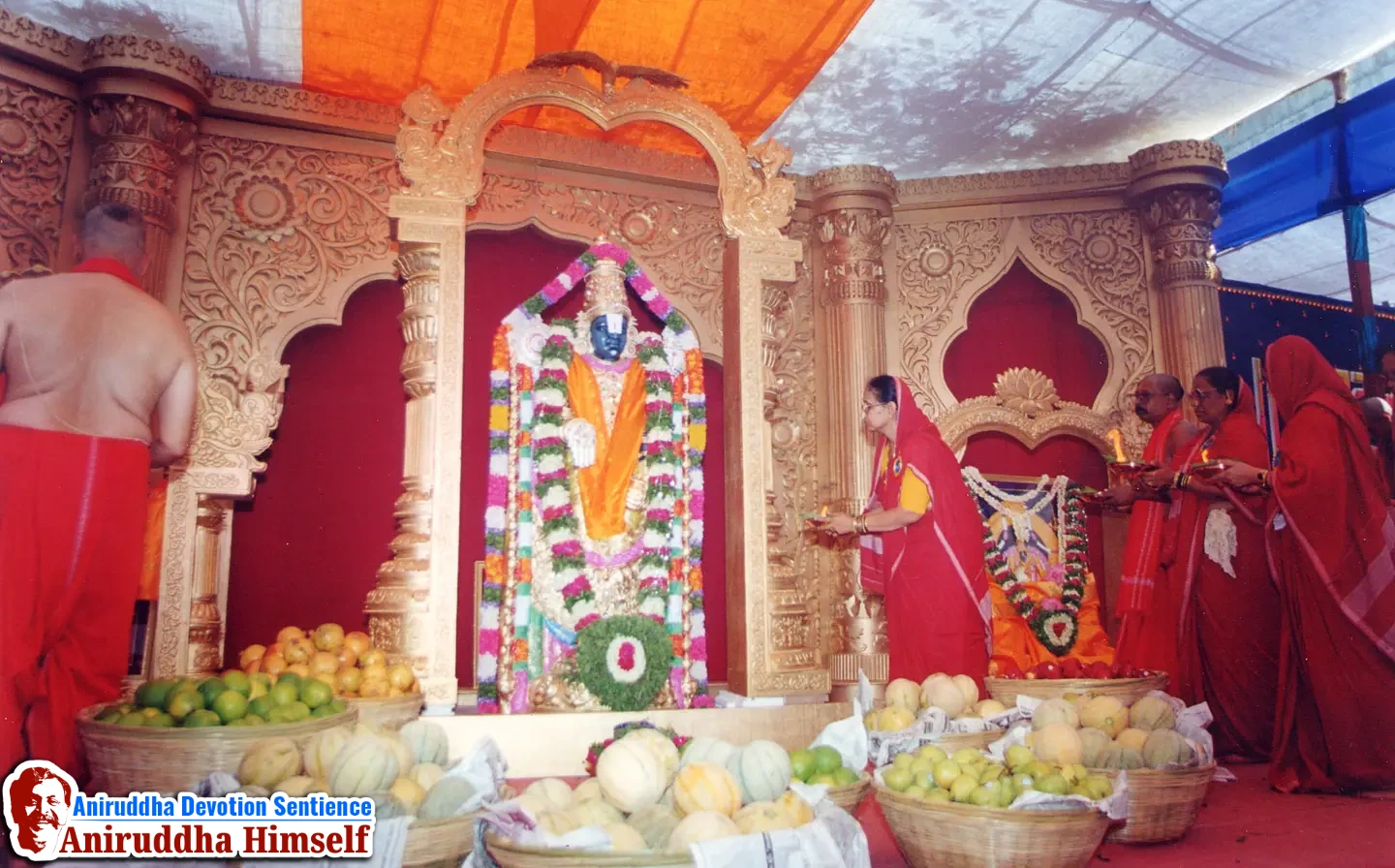
Every day, the idol of Shree Venkatesh was adorned with an ornamented Mahapushpam Haar (grand floral garland). The Mahabhog offered each day was also unique and magnificent:
- On the first and fifth day: 1008 fruits
- On the second and sixth day: 1008 laddoos
- On the third and seventh day: 1008 puffed-rice laddoos
- On the fourth and eighth day: curd-rice
This sacred Prasad was distributed among students in orphanages, the elderly, and the poor.
While offering this Mahabhog, the following chant was recited five times:
‘रमया रमणाय व्यंकटेशाय मंगलम् |
सर्व लोकनिवासाय श्रीनिवासाय मंगलम्|’Ramaya Ramanaya Venkateshaya Mangalam |
Sarva Loka Nivasaya Srinivasaya Mangalam |
Aarti and the 'Tham' (ठं) Beej
During this Utsav, the Aarti performed was exceptionally beautiful. All Shraddhavans lovingly and devotionally sang the Kannada Aarti composed by the saint-poet Purandara Dasa, as well as the composition of the saint-poetess Devi Andal of Tamil Nadu, even though many did not know those languages. The Aarti was performed every hour. On the very first day of the festival, Sadguru Aniruddha Bapu explained the meaning of these Aartis to the Shraddhavans.
Bapu said:
“If I want to lead a good life, then I have to be stable at first; and the beej (seed) that helps me achieve stability is the ठं (Thum) beej. The ठं (Thum) beej belongs to Lord Venkatesha. This beej belongs to Vitthal as well. Both of them are Balaji. This Panduranga from Karnataka is a Balmurti too. He is a Balgopa. Likewise, this Venkatesh too is a Balgopa. In fact, we worship both of them in the form of Balaji. We have to perform Upasana of this ठं (thum) beej.” Sadguru Aniruddha had also narrated the tales of Venkatesha and Vitthal in his pravachans which in turn helped Shraddhavans to connect more to these deities.”