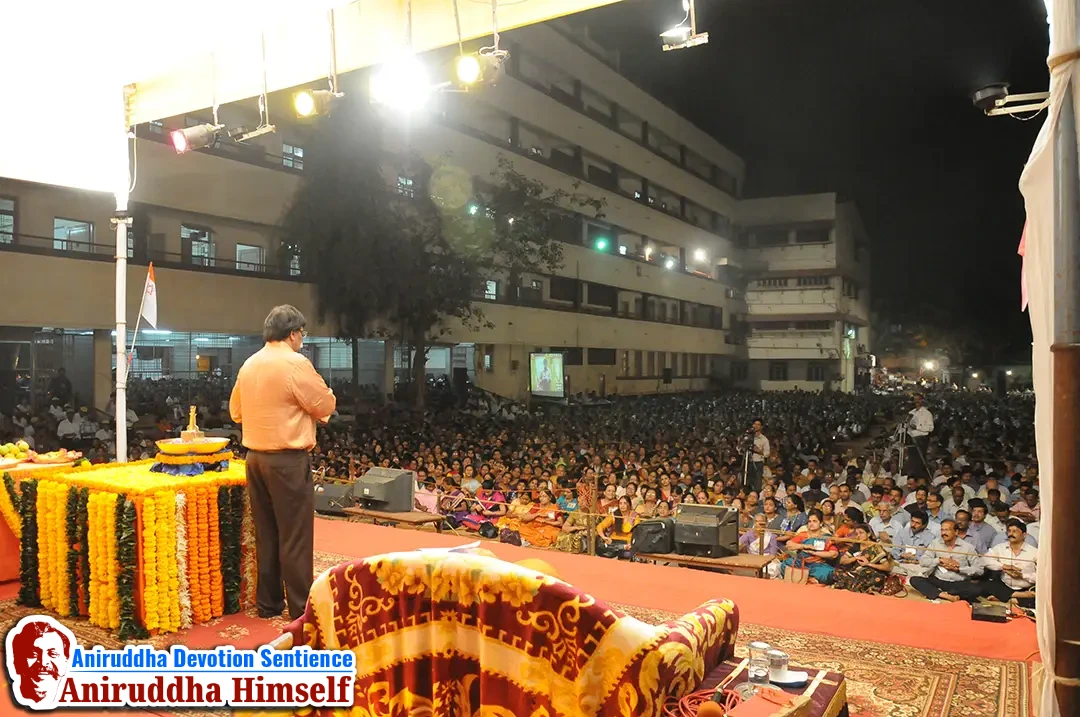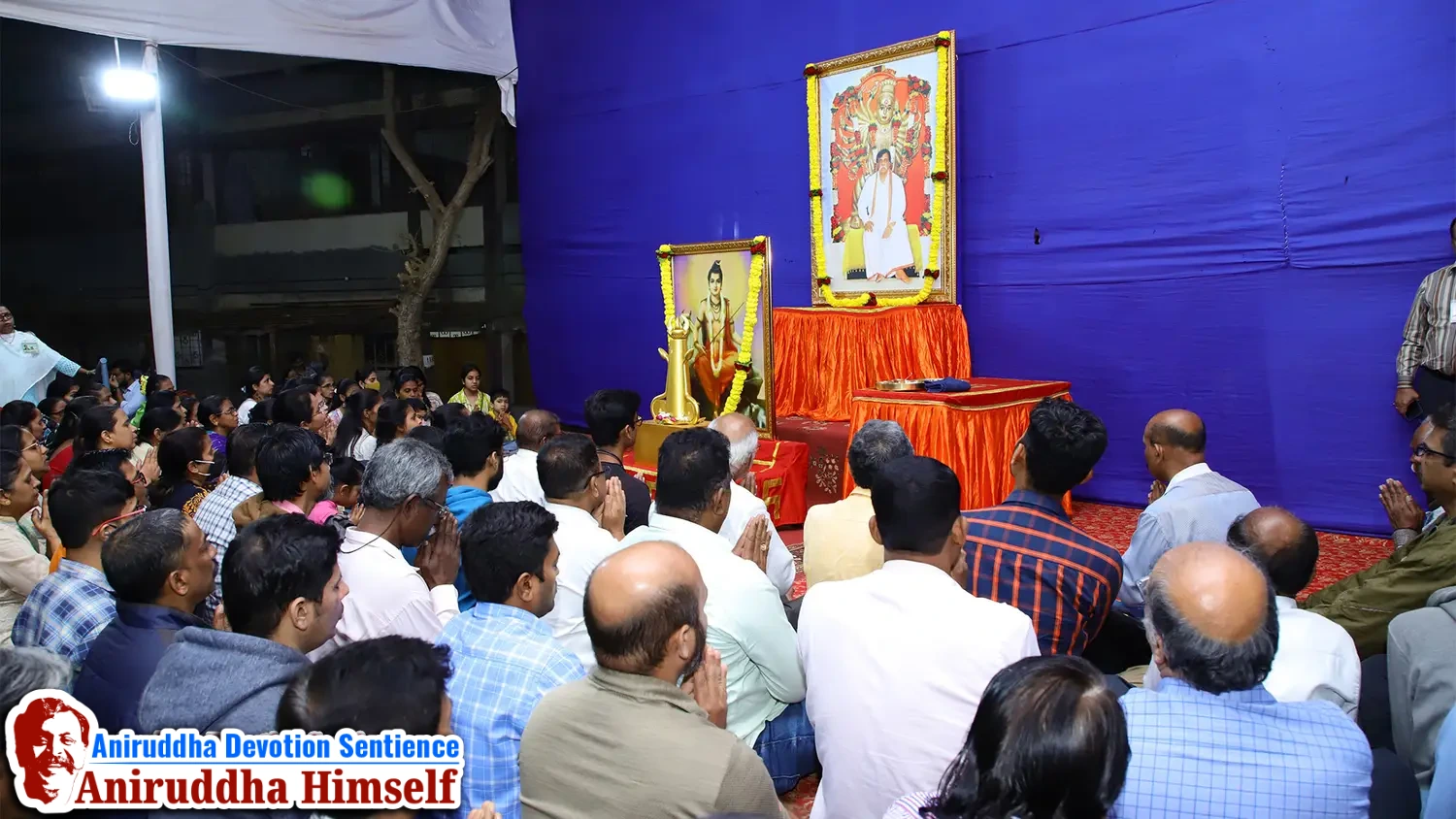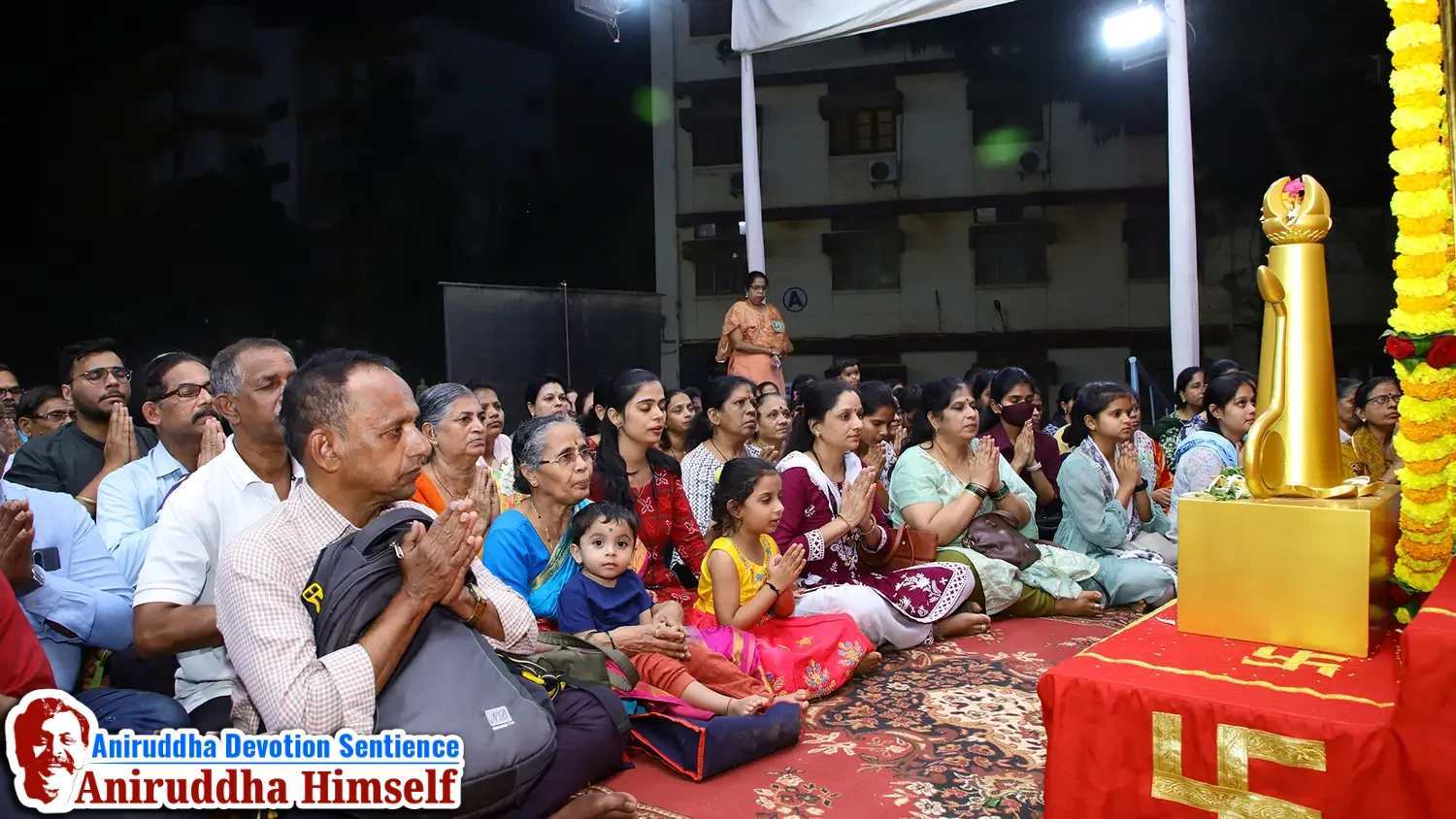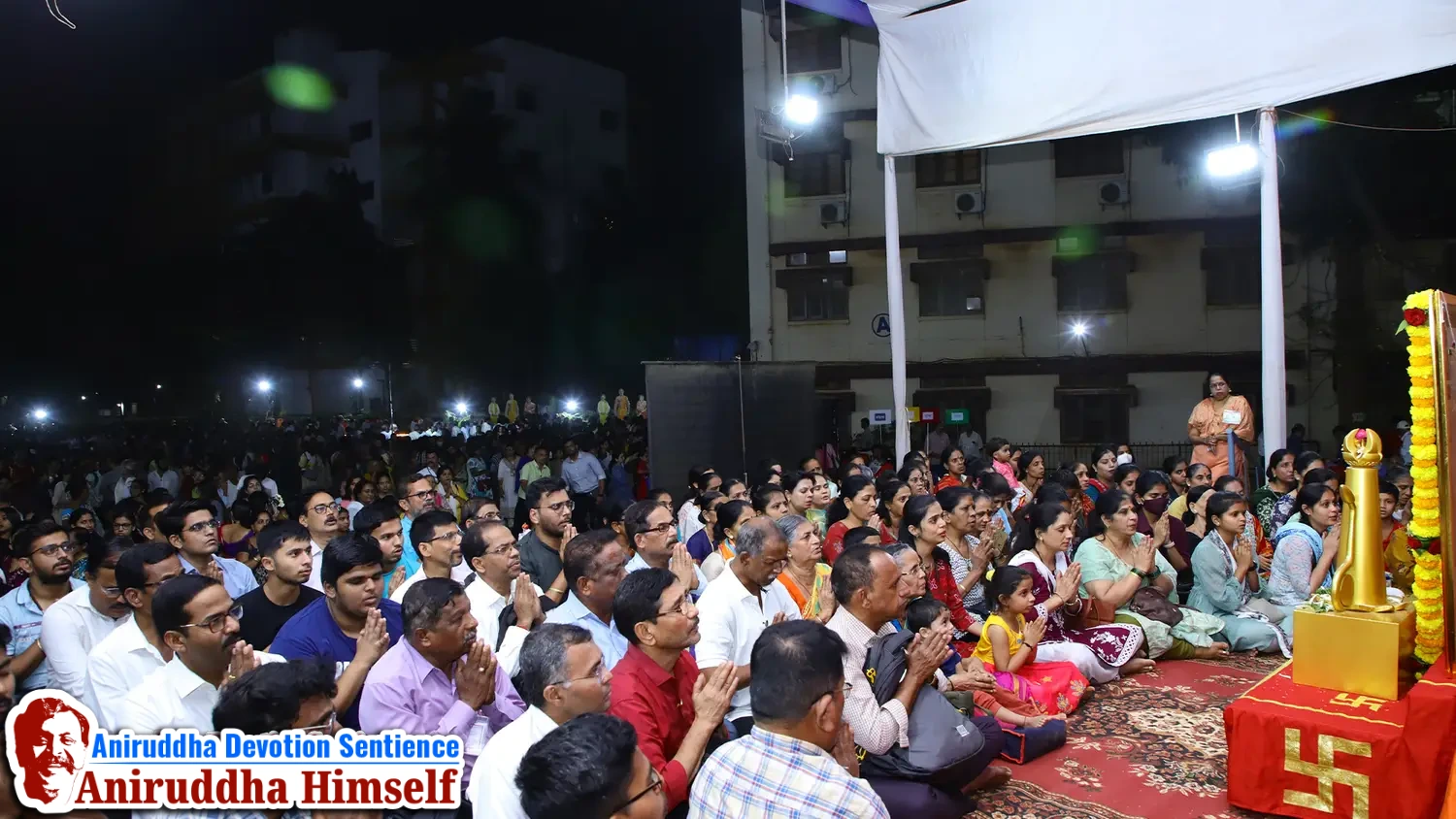
Spiritual Activities held every Thursday at Shree Harigurugram
1. Arrival of the Shreemadpurushartha Grantharaj
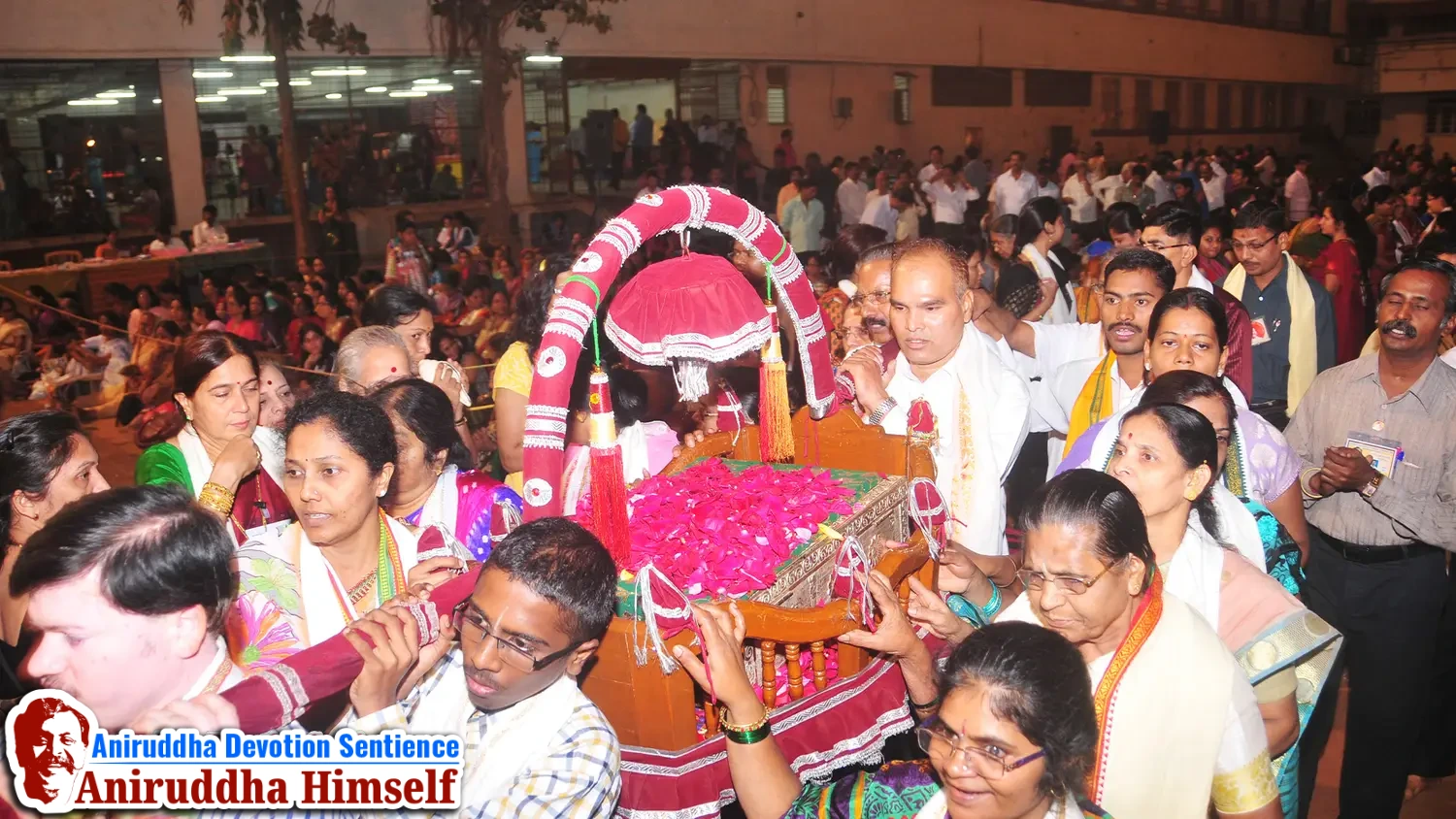
Each Thursday begins with the sacred arrival of the original manuscripts of the three volumes of the Shreemadpurushartha Grantharaj — Satyapravesh, Prempravas and Anandsadhana.
Carried in a palanquin (Palkhi) amidst a vibrant Dindi procession, accompanied by the resounding chant of “Jai Jai Aniruddha Hari”, the Grantharaj is welcomed with showers of flowers by Shraddhavans.
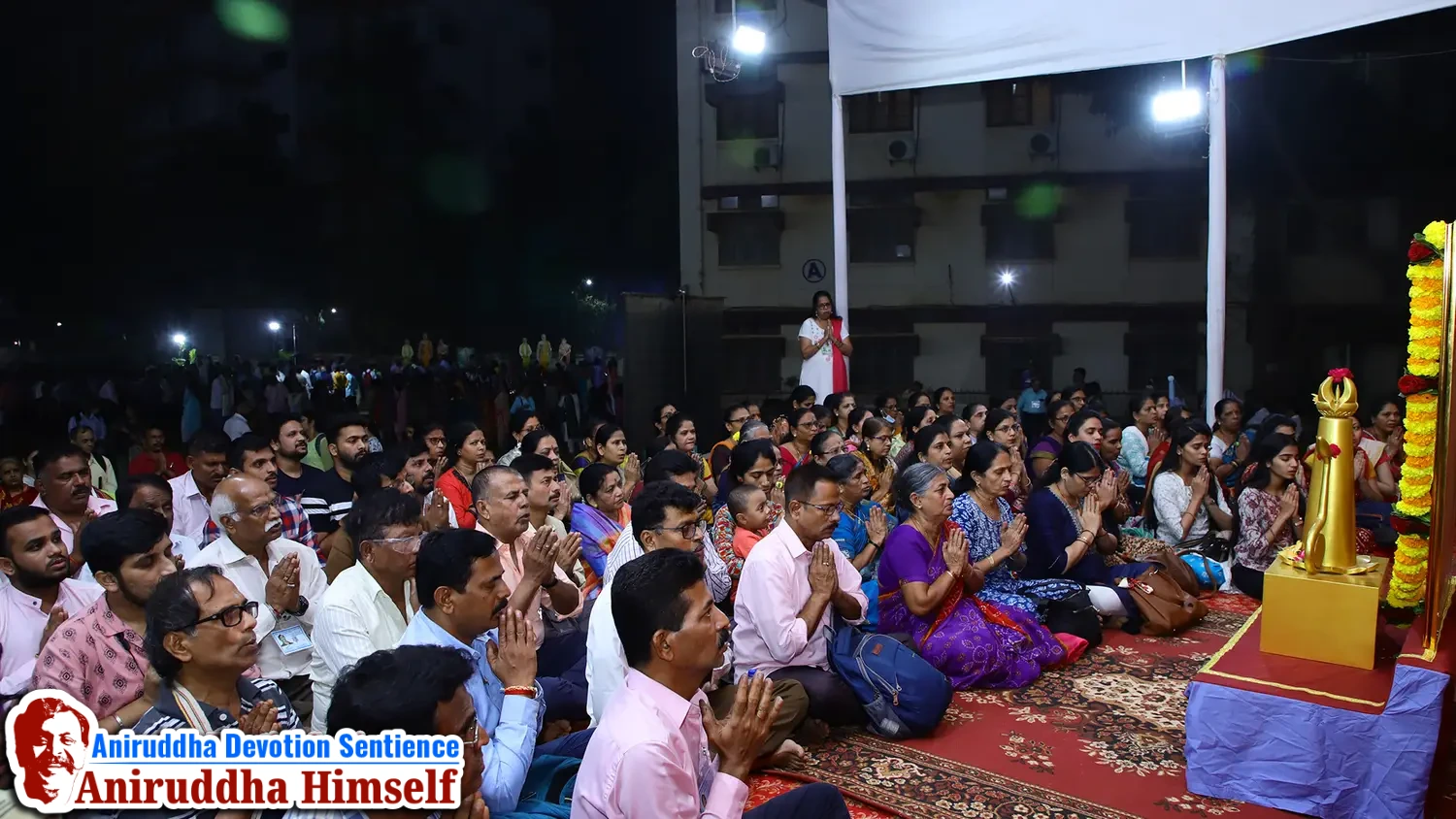
It is then respectfully seated in the wooden ‘Meghadambari’ (मेघडंबरी - a wooden canopy like structure) prepared specially for this purpose, which is placed beside the main stage. During Darshan, devotees lovingly offer Chawri seva, expressing their devotion through this sacred act.
2. Arrival of the idol of Shree Dattatreya
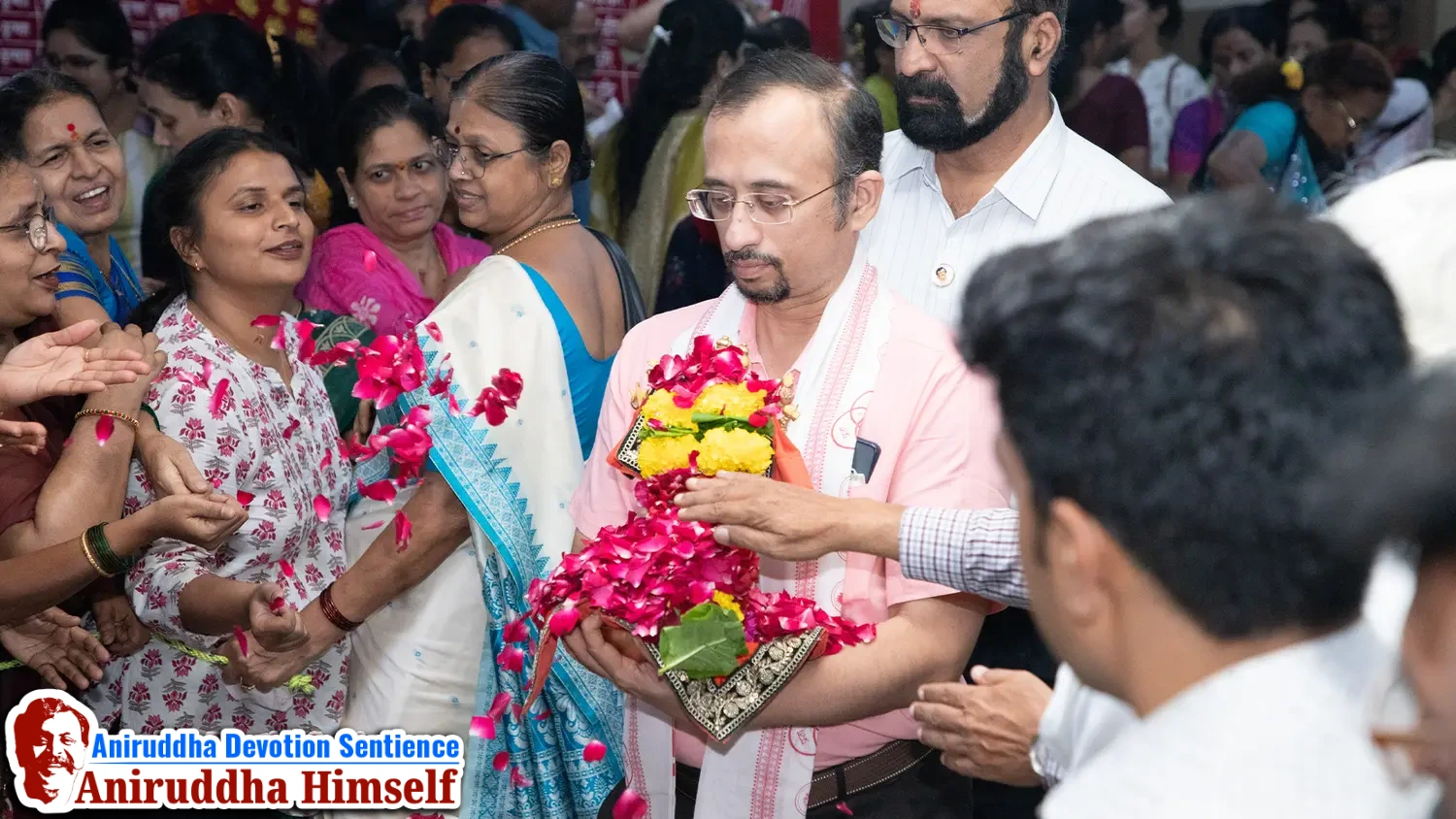
The idol of Shree Dattatreya, worshipped at Sadguru Aniruddha Bapu's residence, arrives amidst the auspicious sounds of the sacred conch and Ghanta.
As it proceeds towards the stage, Shraddhavans shower flowers in reverence. The Dattatreya idol is then placed in the Upasana arrangement, along with Shree Saisatcharita and the Rudraksha mala brought from Sadguru Bapu's residence.
3. Main Stage Arrangement
The stage is adorned with the sacred photographs of Shree Dattatreya, Shree Swami Samartha, Shree Sainath, and Mata Shivgangagauri. At its very centre is the sacred image of Adimata Mahishasurmardini, radiating Her divine presence.
A life-size portrait of Shree Hanuman, Bapu's Rakshak Guru (the Guru who protects), is placed directly behind the seat from which Sadguru Shree Aniruddha Bapu delivers His Pravachans and grants Darshan.
The Upasana arrangement also includes several other sacred objects of immense spiritual significance, such as the holy Vishnupaad Pashan (sacred stone) from Saptashrungi Gad, believed to bear the imprints of the lotus feet of Shree Mahavishnu; a Rudraksha Mala; a Shaligram; a Trishul (trident); and the sacred coins that Hemadpant received from Shree Sainath.
1) Importance of the sacred Vishupaad Pashan
While pursuing his M.B.B.S., Dr. Suchitdada came into the close company of Dr. Aniruddha Dhairyadhar Joshi (Sadguru Shree Aniruddha Bapu). Witnessing Bapu's extraordinary divinity gave rise to many questions in his mind. Those questions found their answer during the sacred Brahmamuhurta of Hanuman Pournima on 16 February 1994. As instructed by Bapu, during that very sacred Brahmamuhurta, he recited the Hanuman Chalisa 108 times. Upon completing the recitation, Shree Sainath granted him a direct divine darshan and said:
“From today onwards, always stay by Shree Aniruddha's side.”
Thereafter, while at the sacred Saptashrungi Gad, when Sadguru Aniruddha Bapu was doing the Sankirtan of the Nama “Shree Narasimha” from the Vishnu Sahasranama, Suchitdada was blessed with the divine darshan of Shree Mahavishnu in the form bearing the Shankha (conch), Chakra (discus), Gada (mace), and Padma (lotus) which manifested upon a nearby Pashan (stone). Recognizing its sanctity, he brought this sacred stone from Saptashrungi Gad to Mumbai.
Later in 1996, the sacred Vishnupaad Pashan was ceremonially installed by Sadguru Shree Aniruddha at Shree Sai Niwas, Bandra, on the auspicious occasion of Mahashivaratri, Wednesday, 25 February 1998. A special three-day upasana was conducted at the time of the installation. At the conclusion of this sacred observance, Sadguru Shree Aniruddha himself engraved the divine footprints of Shree Mahavishnu upon the Vishnupada Pashan.
The Vishnupaad Pashan has been installed upon the very desk on which the sacred Shree Sai Satcharita was written by its revered author Govind R. Dabholkar at Sainiwas, making it a place of profound spiritual significance. Devotees can take darshan of the Vishnupada Pashan every Thursday at Shree Harigurugram, New English school, Bandra, where Sadguru Aniruddha Bapu delivers discourses and on all other days at Shree Sai Niwas, Bandra.
2) Importance of two coins
In 1878, Shri Jagannathrao Padhye came to Akkalkot in obedience to the command of Shree Swami Samarth. After showering him with His divine grace, Shree Swami Samarth instructed him to visit Him at Shirdi and blessed him with two silver coins.
Later, when Jagannathrao's son, Shree Gopinath Shastri Padhye, visited Shirdi, Shree Sainath took out two silver coins from His shoulder bag, placed them in Gopinath Shastri's hands, and lovingly remarked at their very first meeting, “Have you realized the truth now?”, thereby bestowing His grace upon him.
Shree Vidyamakarand Gopinath Shastri Padhye (1866–1938), the great-grandfather of Sadguru Shree Aniruddha Bapu, was the blessed recipient of these two silver coins from Shree Swami Samarth and the two silver coins from Shree Sainath. Of these four sacred coins, one coin bestowed by Shree Swami Samarth and one bestowed by Shree Sainath are placed every Thursday at Shree Harigurugram, Bandra, on the main stage.
3) The Japa Mala, Shaligram and Trishul
Sai Niwas is the residence of Hemadpant, Shri Govind Raghunath Dabholkar (Retired Magistrate), where the sacred Shree Saisatcharitra was written between 1921 and 1929.
Before taking Mahasamadhi in 1918, Shree Sainath entrusted Hemadpant with three sacred objects: a small Trishul (trident), a Japa Mala (rosary), and a Shaligram. On 28 May 1996, Sadguru Shree Aniruddha Bapu, uttered the very preordained words and asked for these sacred relics from Appasaheb Dabholkar, Hemadpant's grandson.
Today, all three of these sacred objects are placed every Thursday at Shree Harigurugram, Bandra, for the Darshan of Shraddhavans.
Before the Upasana begins, Kalash containing sacred water from Shree Aniruddha Gurukshetram is brought and placed on the stage and, upon the completion of the Upasana, it is distributed to all as Teertha-Prasad.
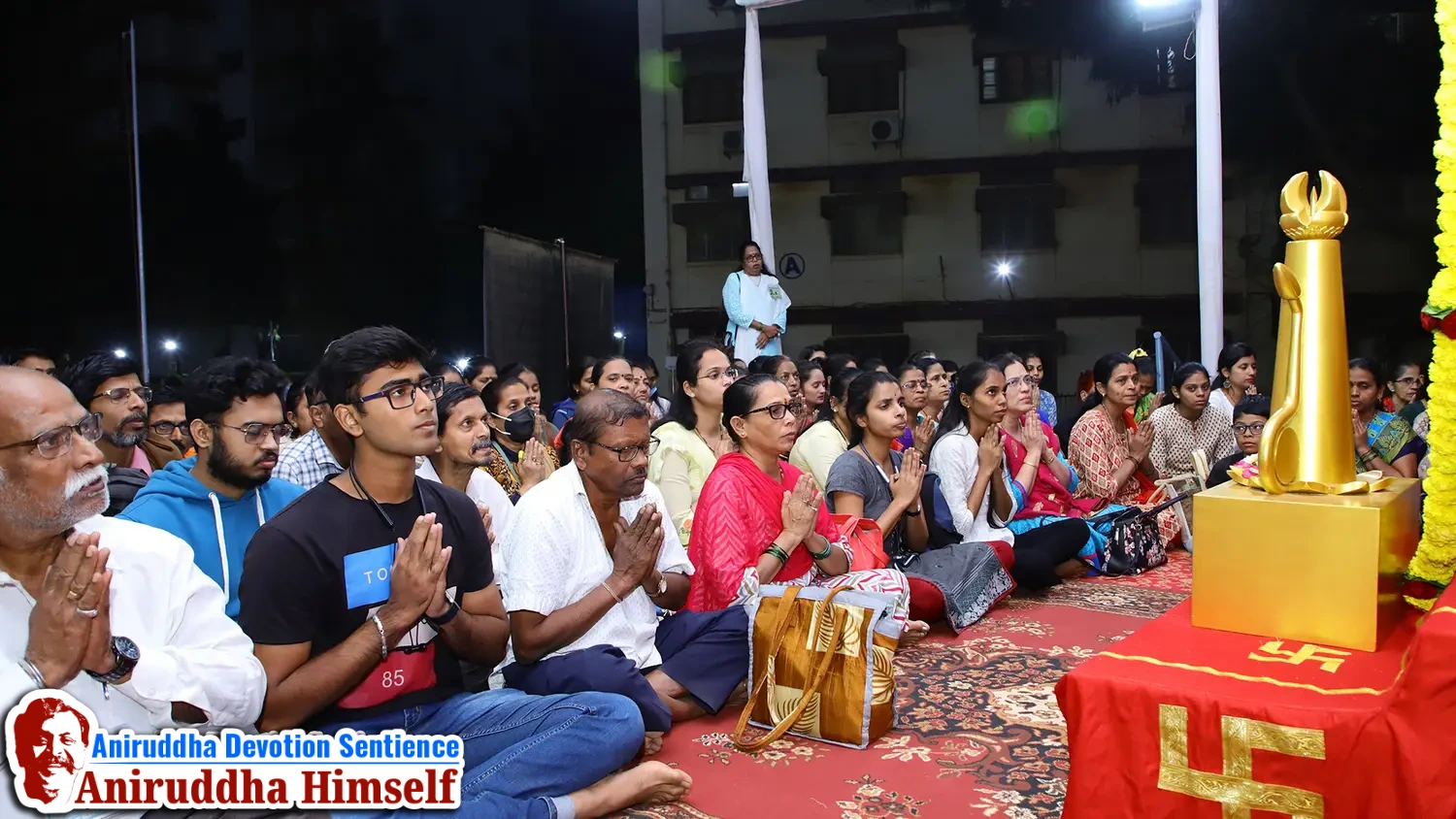
A designated Upasak (worshipper), representing all Shraddhavans, sits in front of this sacred arrangement and performs the Upasana on their behalf.
4. Collective Upasana
Every Thursday, Shraddhavans come together in a divine powerful collective Upasana, chanting sacred Shlokas, Japas, and Stotras. Each sacred chant resonates within the heart, deepening the devotee's connection with the Divine.
5. Shree Swastikshem Sanwad
Shree Swastikshem Sanwad is a unique and extraordinary spiritual experience in which every Shraddhavan, with closed eyes and an open heart, enters into a direct communion with the Chandikakula. Shraddhavans believe that this sacred dialogue, lasting approximately five minutes, establishes a direct and effective connection with Adimata, the Sadguru, and every member of the Chandikakula. Whether experienced at Shree Harigurugram or at any authorised Upasana Kendra, its spiritual efficacy remains the same.
6. Worship of Adimata Mahishasurmardini and Shree ShivaGangaGauri
During the Upasana, Mata Shivgangagauri is offered Haridra, Kumkum, Chandan, Udi, Haridra-Akshata, Kumkum-Akshata, Bilvapatra, Tulsipatra, flowers and Shreephal (sacred coconut).
Thereafter, while 36 repetitions of the Shloka 'Jayanti Mangaalaa Kaali Bhadrakaali Kapaalini Durgaa Kshamaa Shivaa Dhaatri Swaahaa Swadhaa Namostu Te' in Sadguru Bapu's voice are chanted and poojan of Adimata Mahishasurmardini is also performed by offering Haridra, Kumkum, Chandan, Udi, Haridra-Akshata, Kumkum-Akshata, Bilvapatra, Tulsipatra, flowers and coconut (Shreephal) to Adimata Mahishasurmardini.
7. Experiences of the grace of Sadguru Aniruddha and Bhakti Compositions
'Jaya Mani Jaisa Bhav | Taya Taisa Anubhav |'
(As is the sentiment in one's mind, so is the experience)
Shraddhavans are blessed to experience Bapu's grace time and again through numerous astonishing experiences that either resolve life's difficulties or protect them from adversity. Those who have been blessed with such experiences naturally feel inspired to share them with others, while fellow Shraddhavans eagerly listen to these extraordinary accounts of the Sadguru's grace. The Shreemadpurushartha Grantharaj describes the sharing of such divine experiences as Sankirtan, the second form of Navavidha Bhakti.
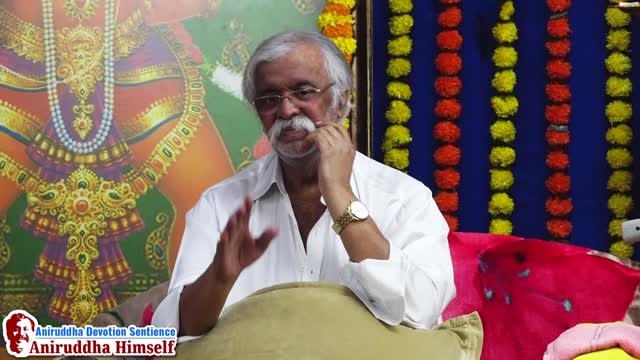
Accordingly, video-recorded narrations of devotees' experiences are presented every Thursday at Shree Harigurugram. Listening to the Sadguru Leelas experienced by fellow Shraddhavans fills the hearts of everyone present with deep devotion and gratitude. Following each narration, Abhangs and other devotional compositions are played. Inspired by boundless love and devotion for Sadguru Shree Aniruddha Bapu, these soulful compositions awaken profound feelings of love, surrender, and gratitude, immersing every devotee in the bliss of Devotional Sentience.
8. Arrival of Sadguru Aniruddha Bapu at Shree Harigurugram
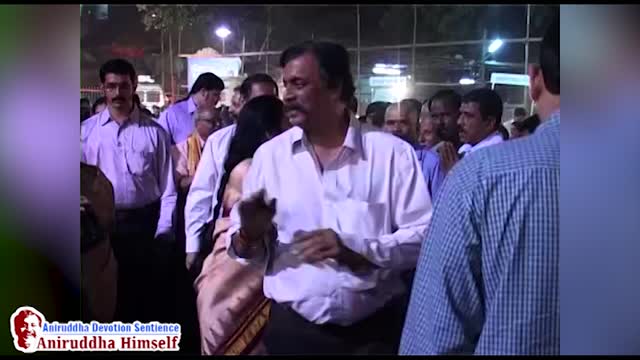
The most awaited moment—the arrival of Sadguru Shree Aniruddha Bapu. Amidst the resounding chants of “Aala Re Hari Aala Re,” the very first glimpse of Bapu at Shree Harigurugram fills every heart with love, fulfilment, and joyful anticipation, transforming the entire atmosphere into an ocean of bliss. A simple wave of His hand becomes a shower of grace, and every heart rejoices in His presence.
9. Aarti
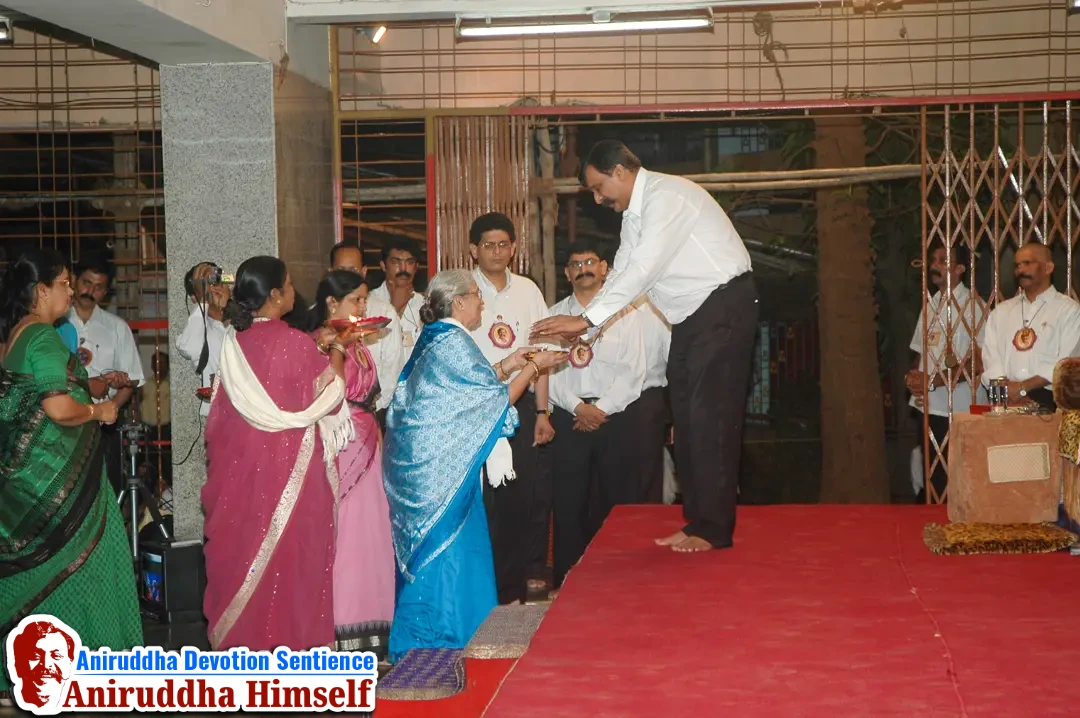
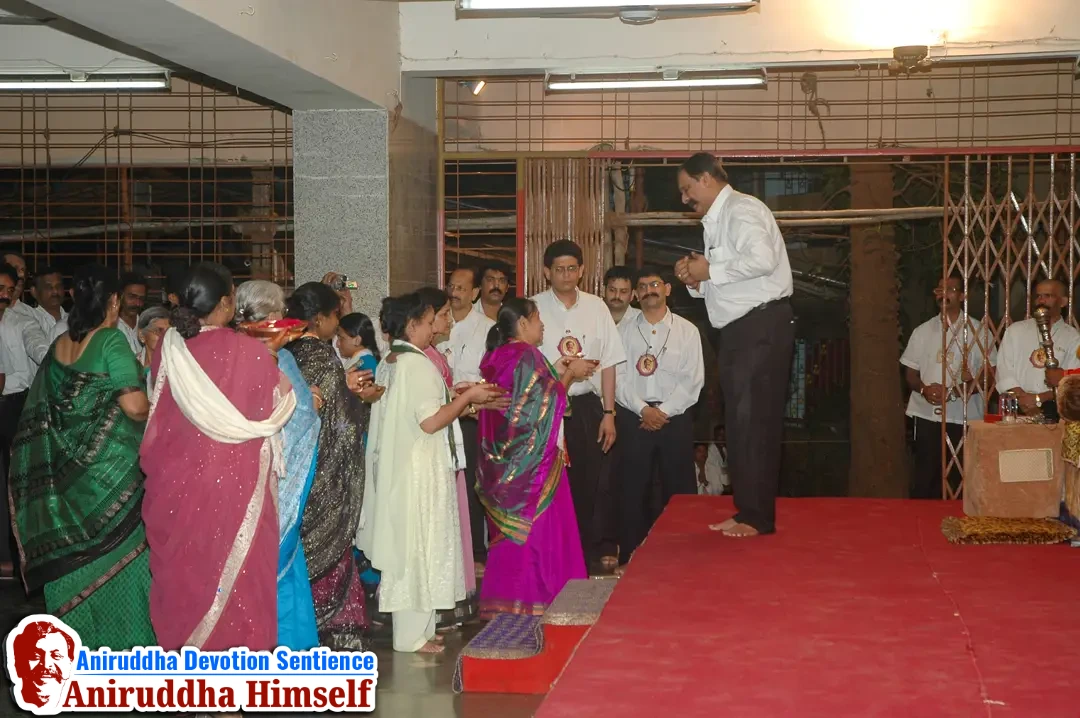
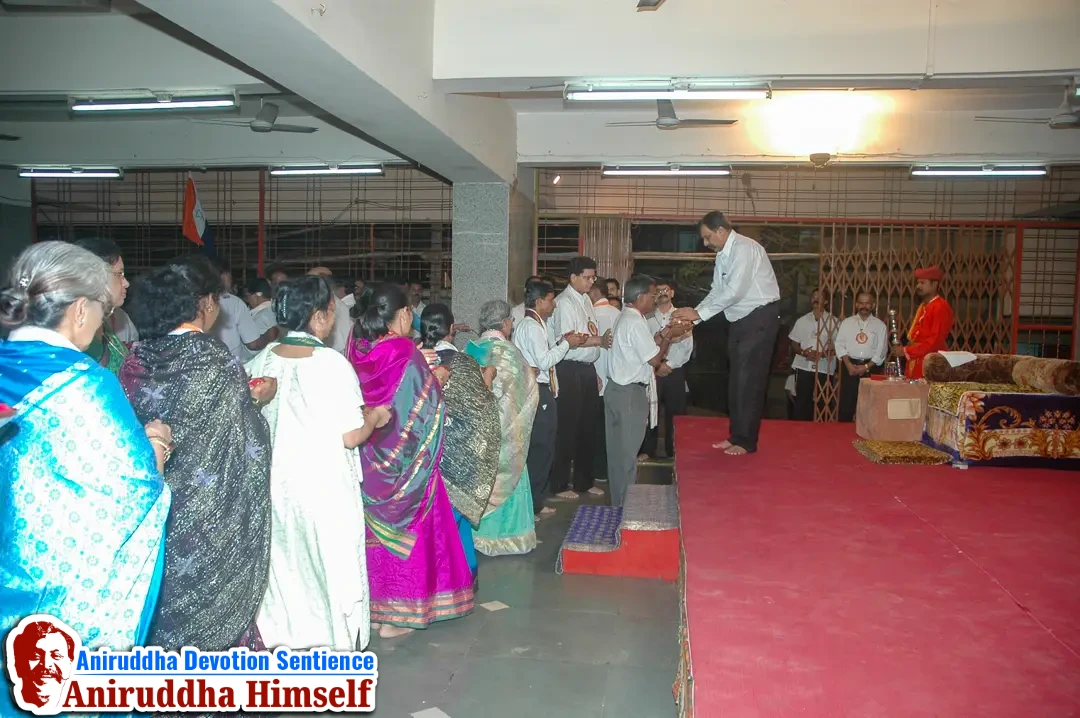
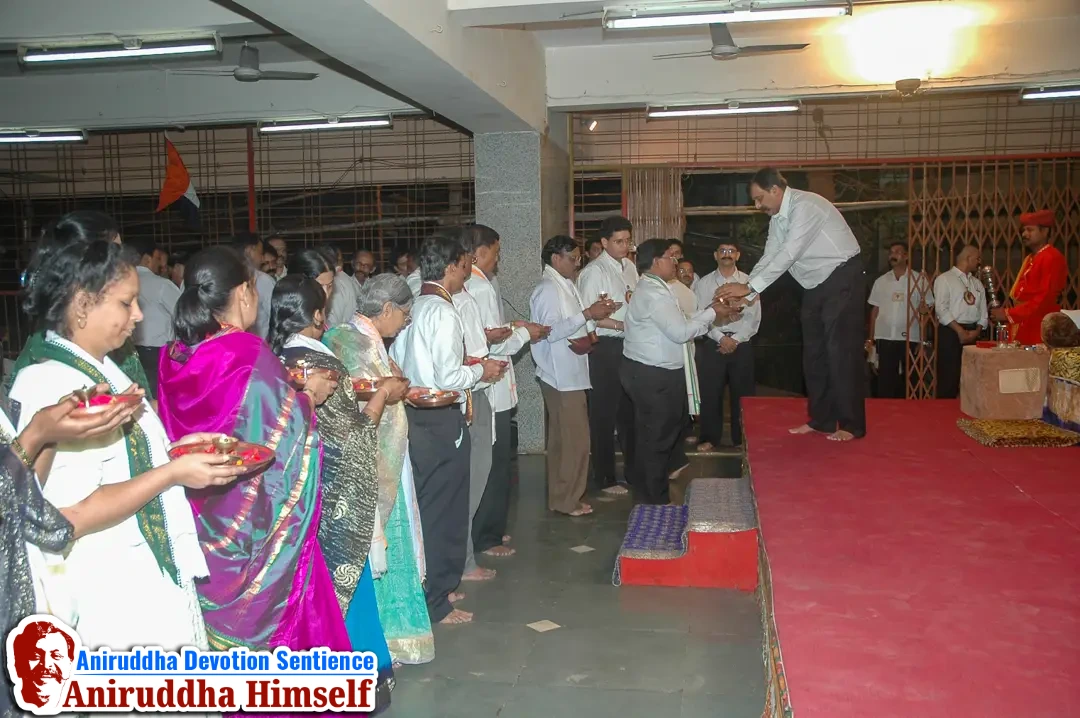
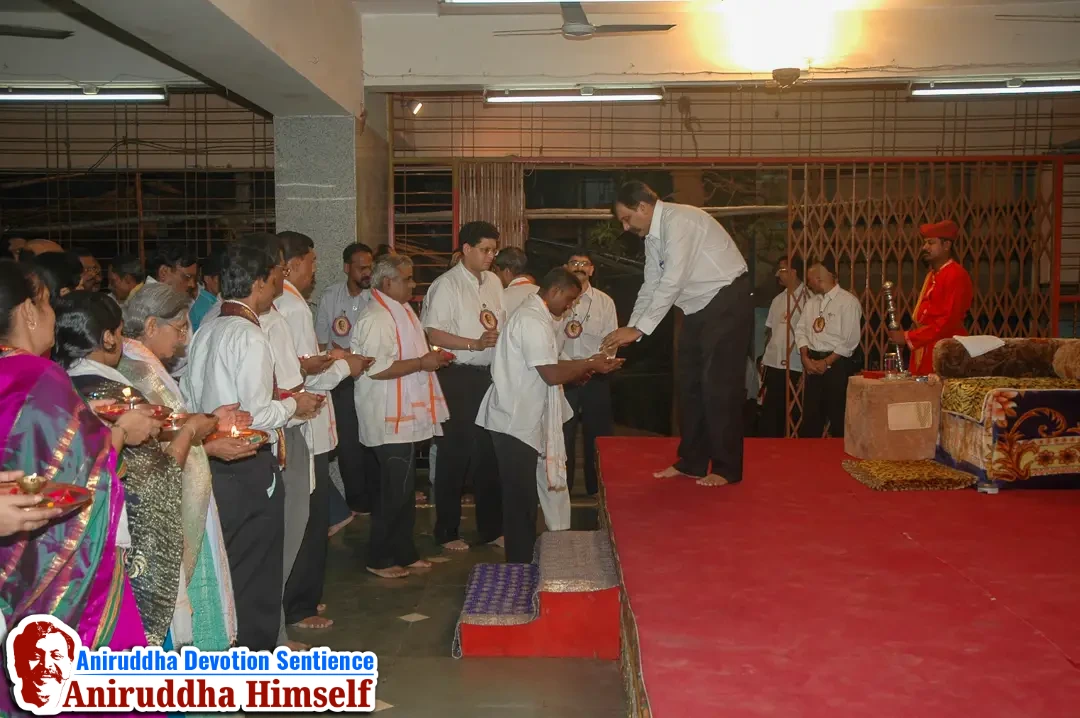
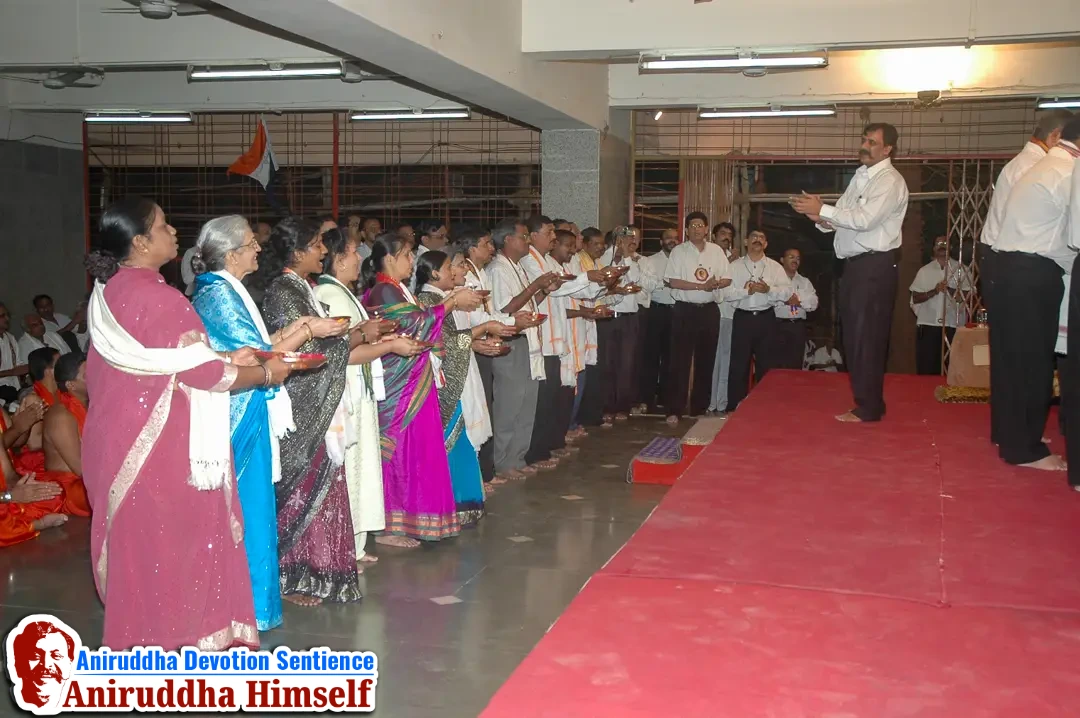
The Aarti is performed with deep devotion and reverence. Shraddhavans have the blessed opportunity to offer Aarti before the deities on the main stage as well as before the Shreemad Purushartha Grantharaj. As they participate in this sacred ritual, they offer their heartfelt gratitude at the lotus feet of the Divine.
Shraddhavan volunteers whose birthdays fall during the week are given the opportunity to perform the Aarti before the main stage. Likewise, Shraddhavans who have completed writing the prescribed number of Ramnaam books under Aniruddha's Universal Bank of Ramnaam are also blessed with this opportunity. The Aarti begins with “Durge Durghat Bhari,” offered to Adimata Jagadamba, followed by “Aarti Saibaba,” the Aarti of Sadguru Shree Sainath.
10. Sadguru Bapu's Pravachans
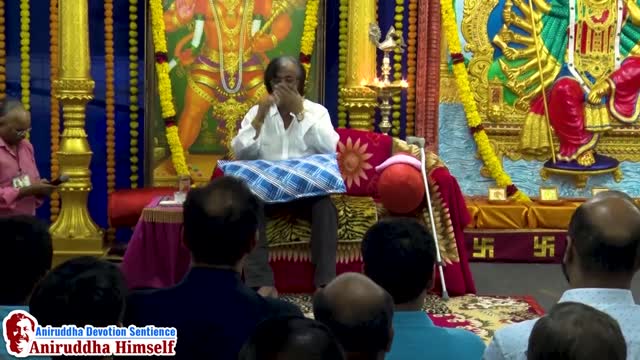
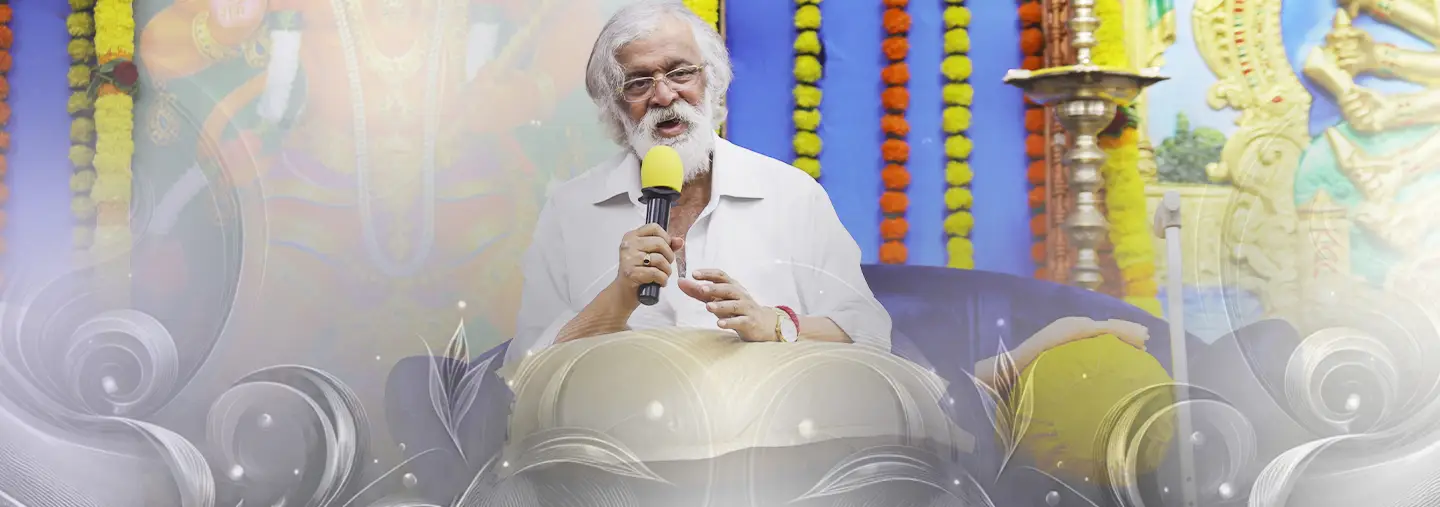
When Bapu speaks, it is far more than a discourse or a Pravachan—it is the loving guidance of a father, His Pitruvachan. Countless Shraddhavans experience their deepest questions being answered through His divine words. Through two Pravachans—the first in Marathi and the second in English—Bapu addresses both worldly and spiritual aspects of life, offering clarity, strength, and direction. These Pravachans are especially cherished by the younger generation, who eagerly gather to imbibe every word of His guidance.
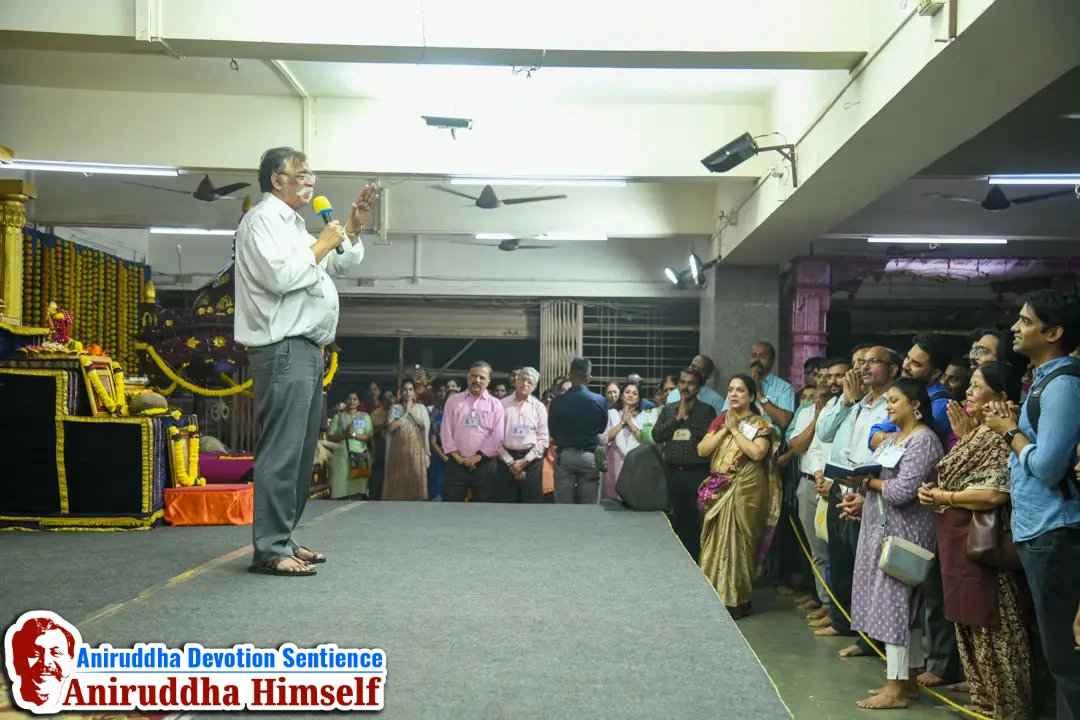
Starting from 1995 to date, the pravachans delivered by Bapu have been on
- 11 Promises of Sadguru Shree Sainath
- Vishnusahasranamavali
- Special discourses like ‘Attack on Parliament, ‘Self-Health’
- Lalitasahasranamavali (Hindi)
- Radhasahasranamavali (Hindi)
- Mantras and Stotras from the book Mahasankatmochan Mahapapanivarak Divyaprakash Aradhanajyoti
- Shreeramraksha Stotra
- Shree Gurukshetrum Mantra
- Algorithms of the Swayambhagwan Trivikram
- Shree Shabda Dhanyoga
- Shri Saisatcharit (Hindi)
- Panchmukhahanumat-Kavach
- Shree Sooktam
- Swayambhagwan Trivikram (Harihar) Anant-Namavali
- Naradiya Bhaktisutram (English)
- Stories of various devotees (Marathi and Hindi)
11. Sadguru Darshan
Following the Pitruvachan, Shraddhavans bow before the Sadguru while chanting the mantra “Om Aniruddhaaya ShreeSaptachakranivaasiniputraaya Dattapautraaya Namah” and perform three self-circumambulations (Pradakshinas)
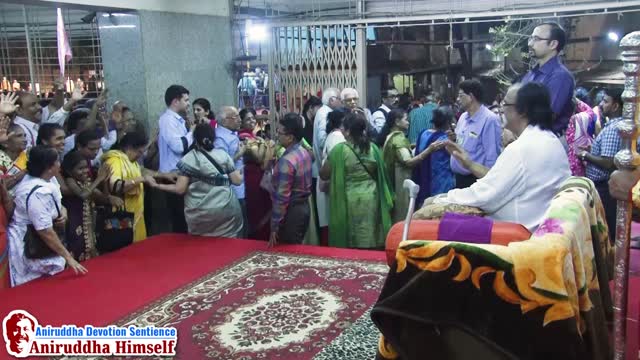
Thereafter, amidst the resounding chants of “Jai Jagadamba Jai Durge” and “Naathsanvidh,” Shraddhavans are blessed with the golden opportunity to immerse themselves in the Bhakti Ganga and receive the Sadguru's Darshan. As they behold Him, their faces radiate love, devotion, and gratitude, bringing to mind the heartfelt words of Adyapipa:
“Bharlya dolyani mi gheto darshan varamvar | Bapu re jasi hrudayapar ||”
“With tear-filled eyes, I behold Your Darshan again and again; O Bapu, You transcend even the deepest reaches of my heart.”
Darshan is that sacred moment when every Shraddhavan receives the opportunity to pour out the heart before the Sadguru. A glance, folded hands, tear-filled eyes, a gentle smile, or even silence itself becomes a language of love between the Sadguru and His devotee. The Darshan hall is transformed into a sanctuary overflowing with devotion, affection, gratitude, and bliss, where countless hearts connect with Him in their own unique way.
12. Importance of the sacred Jhaal (झाल - a protective shelter)
According to the Sadguru's divine resolve, a sacred Jhaal is placed across two arches inside the Darshan Hall before devotees receive Darshan, and across another two arches in the open grounds after Darshan. Explaining the significance of the Jhaal during His discourse on 21 May 2015, Bapu said:
“The Jhaal is a manifestation of Adimata's blessings.”
Just as a mother lovingly shelters her child beneath the pallu of her saree, Adimata's Jhaal offers the same loving protection to all Her Shraddhavan children. Sadguru Bapu has further explained that as devotees pass beneath the Jhaal, their aura is not only cleansed of impurities and the effects of past faults, but is also replenished with the spiritual strength it lacks. The sanctity of the Jhaal is enhanced further by the fact that the Jhaals used at Shree Harigurugram were consecrated during the Shree Shreeshwasam Utsav. As with every aspect of the spiritual path, the grace received is always in proportion to the devotee's faith.
Pathways of Devotion: Sudeep and Uud Arpan
1. Sudeep
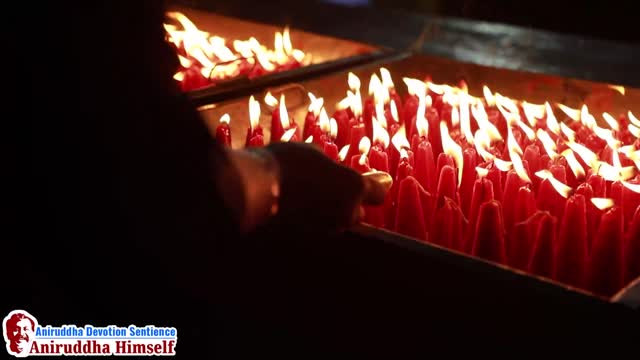
The Sudeep is a sacred lamp that symbolically carries the heartfelt prayers of devotees to their Sadguru. Shraddhavans light a Sudeep for Ichhapurti (fulfilment of wishes), Badhanivaarak (removal of obstacles), Peedanaashak (relief from suffering and distress), Janmadin (birthdays), and Darshan (to drift away from the Shadripu and walk on the divine path and to get essential as required). Each flame becomes a silent messenger, carrying the devotee's prayers and heartfelt sentiments to the Chandikakula.
Until recently, Sudeep could be lit only at Shree Harigurugram. However, recognising that it was not always possible for every Shraddhavan to visit Shree Harigurugram, Sadguru Shree Aniruddha Bapu graciously permitted devotees to light Sudeep in their homes, workplaces, or wherever they wished. This compassionate resolve reflects Bapu's constant endeavour to make spirituality simple, accessible, and practical for the benefit of every Shraddhavan.
2. Uud (incense)
On Thursdays and during Utsavs, Shraddhavans offer Ud (sacred incense) into the consecrated, living fire of the Aniruddha Agnihotra. This simple act, which is a form of Devayajna, provides householders with an opportunity to lessen worldly afflictions and seek the Sadguru's grace and support during times of difficulty.
In the chapter on Yadnya in Shreemad Purushartha Grantharaj – Volume Three, Anandsadhana, Sadguru Shree Aniruddha Bapu identifies Dhup and Uud as the Havandravya (materials offered as oblations) to be used in Devayajna. Bapu writes:
“In the Devayajna, Dhup and Ud are to be offered into the living sacred fire before the image of the Almighty. While making this offering, one should chant the Name of God, or recite the Stotra or Mantra propounded in the Shreemad Purushartha. Most important of all is the heartfelt awareness that 'I am offering this Dhup or Uud directly before the Almighty and into the sacred fire as an offering unto Him.'”
3. Satsang
Collective recitation of the Hanuman Chalisa and Aniruddha Chalisa, along with the singing of devotional hymns, continues as Shraddhavans receive the Sadguru's Darshan. Accompanied by the rhythmic sounds of the tabla, harmonium (peti), and cymbals (taal), these sacred chants fill Shree Harigurugram with divine vibrations, uplifting every heart. Shraddhavans present there also enthusiastically join in the singing and recitation, experiencing the joy and blessings of Satsang in the Sadguru's presence.
4. Pradakshina-Sur Prayer
This is another spiritual event that is conducted every Thursday at ShriHarigurugram in the open ground. On Thursday, 10 March 2016, Sadguru Shree Aniruddha Bapu explained the significance of the Pradakshina-Sur-Prarthana:
“While listening to this prayer, the circumambulations (Pradakshinas) of the seven chakras within our own body, together with the seven chakras of Mother Earth (Vasundhara), as well as those of Swayambhagwan Trivikram and Adimata Jagadamba, take place naturally.”
The Pradakshina-Sur-Prarthana begins immediately after Bapu's Pitruvachan and continues alongside the Sadguru Darshan. During this Upasana, which is open to all Shraddhavans, a sacred image of Shree Ekmukhi (One-Faced) Dattatreya and the Shree Trivikramlinga are placed upon the stage.
5. Sadguru Charanmudra Darshan and offering of Tripurari Trivikram Mala
Every Gurubhakta understands the profound spiritual significance of the Sadguru's Charanmudras (sacred footprints). Sadguru Shree Aniruddha Bapu has elaborated on the importance of the Tripurari Trivikram symbol in the Shreemad Purushartha Grantharaj.
While explaining the Adnya Chakra in Shreemad Purushartha Grantharaj – Volume Two, Prempravas, Bapu writes:
“The Tripurari Trivikram symbol is the symbol of the Vishuddha Chakra, whereas the Tripurasur Kali symbol represents the completely impure chakra.”
Shraddhavans firmly believe that devotion at the Sadguru's lotus feet gradually purifies the Vishuddha Chakra and destroys the influence of Tripurasur Kali in their lives. They therefore pray that they may attain the Sadguru's lotus feet, successfully progress on the path of Sundarkand, and continue to deepen their devotion to His sacred feet.
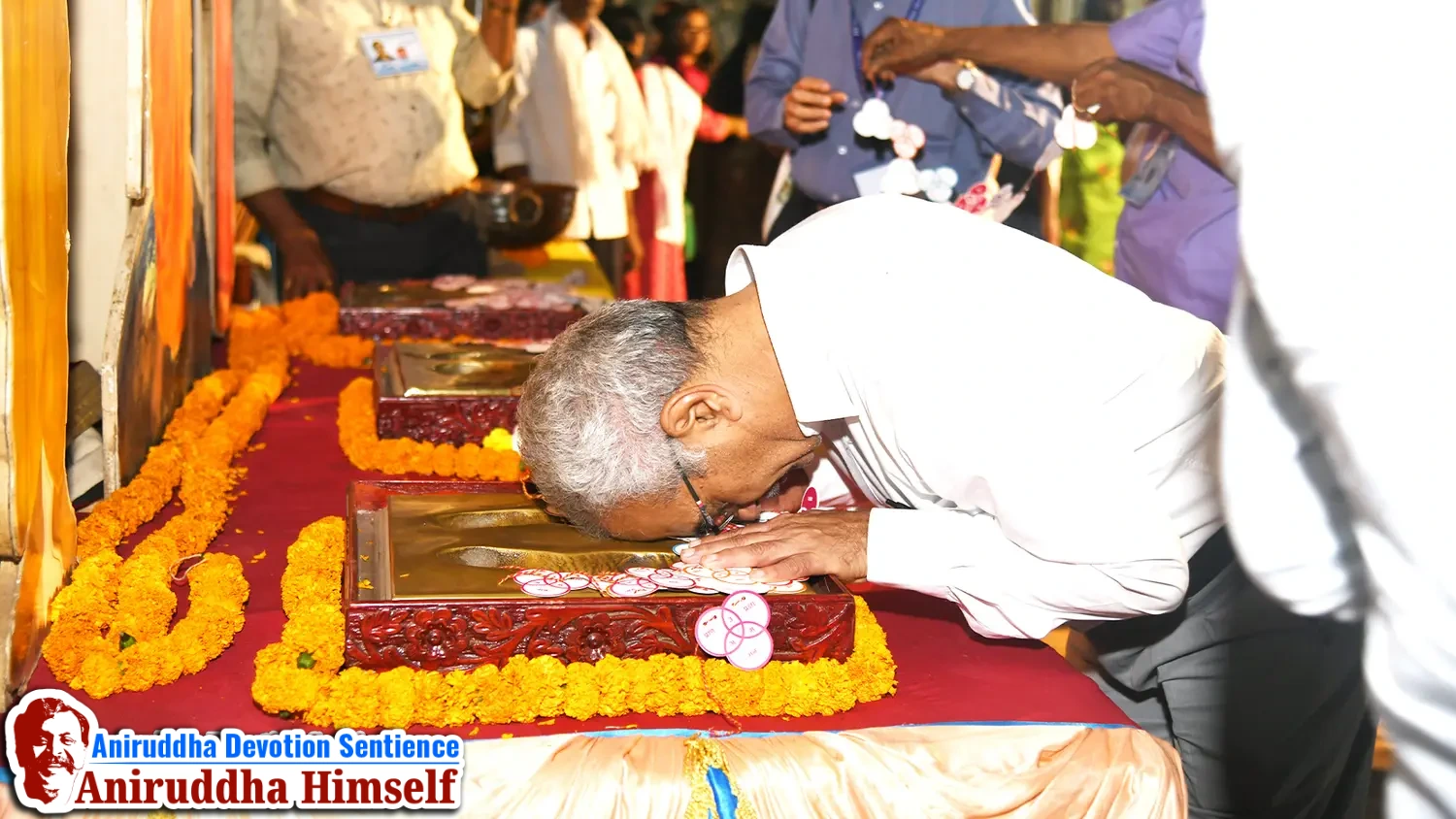
As an expression of this devotion, Shraddhavans offer Tripurari Trivikram Malas to the Sadguru's Charanmudras and bow their heads in reverence before them. Devotees believe that this sacred act helps free them from all forms of sorrow and the effects of adverse destiny. Thereafter, the volunteers gently touch each devotee's forehead with the Shree Dattayantra as a sacred blessing.
6. Benefits of Writing Ramnaam Book
Out of His loving concern that everyone should receive the blessings of writing the Ramnaam, Sadguru Shree Aniruddha Bapu established Aniruddha's Universal Bank of Ramnaam, and made the Ramnaam books and Anjanamata books available to all Shraddhavans. Those who complete and submit these books become eligible to receive several special blessings upon reaching specific milestones. Among these, the most cherished is the opportunity to receive Charansparsha—the touch of the Sadguru's lotus feet, which is granted upon the completion of 151 Ramnaam books. These blessings are conferred on the first Thursday of every month at Shree Harigurugram.
The Grace experienced at Shree Harigurugram
Within the sacred precincts of Shree Harigurugram, devotees, through the Sadguru's grace, find support, inner strength, peace, freedom from worries, fearlessness, contentment, and everything truly needed to lead a meaningful and fulfilling life.
Every Thursday, Shree Harigurugram immerses Shraddhavans in the boundless love and Bhakti of Sadguru Shree Aniruddha Bapu. After receiving the Sadguru's Darshan and blessings, devotees return with hearts filled with assurance, peace, and contentment.
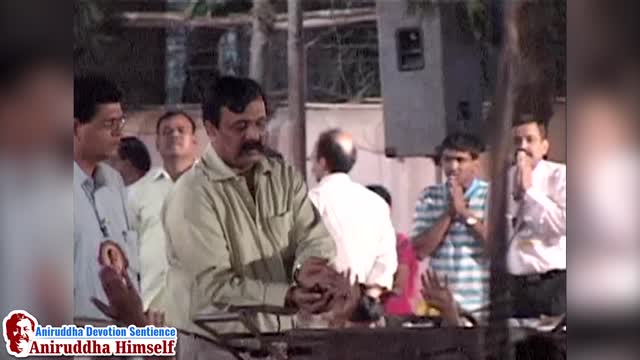
As Sadguru Shree Aniruddha Bapu departs from Shree Harigurugram after His Pravachan, devotees bid Him a loving farewell. It is far more than a farewell, it is a deeply moving expression of love, devotion, gratitude, and longing, a sight that touches every heart. Shraddhavans leave for their homes carrying the joy of having met their beloved Bapu and hearts overflowing with devotion. Yet, even as they depart, they eagerly await the next Thursday, longing once again for the blessed opportunity to be in the loving presence of their dear Sadguru.
Address
Shree Harigurugram, New English School, Government Colony, Kherwadi, Bandra (East), Mumbai – 400 051
View on MapTime of Upasana
8.00 pm onwards (Every Thursday)