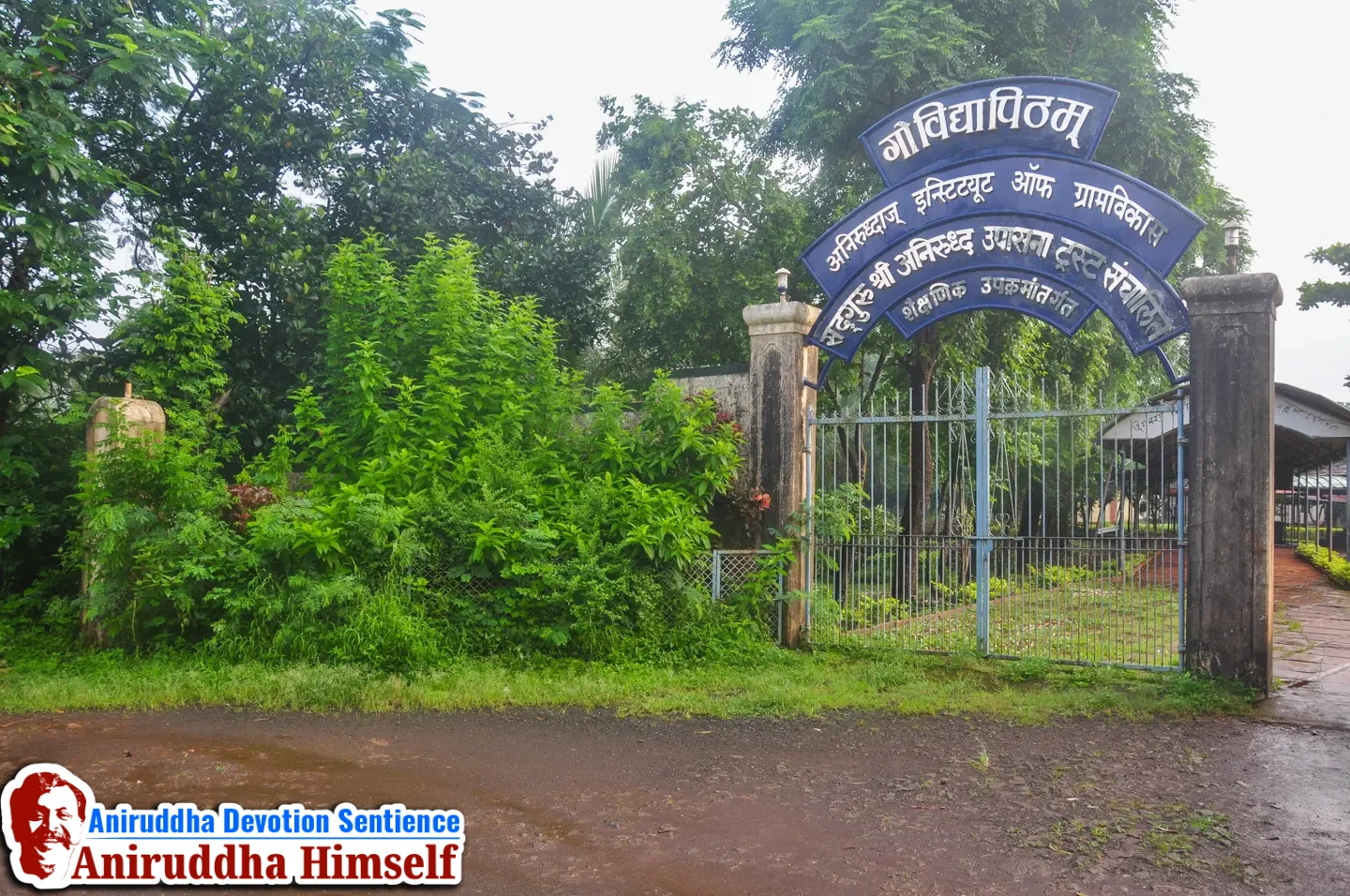
Shree Datta Sabhamandap
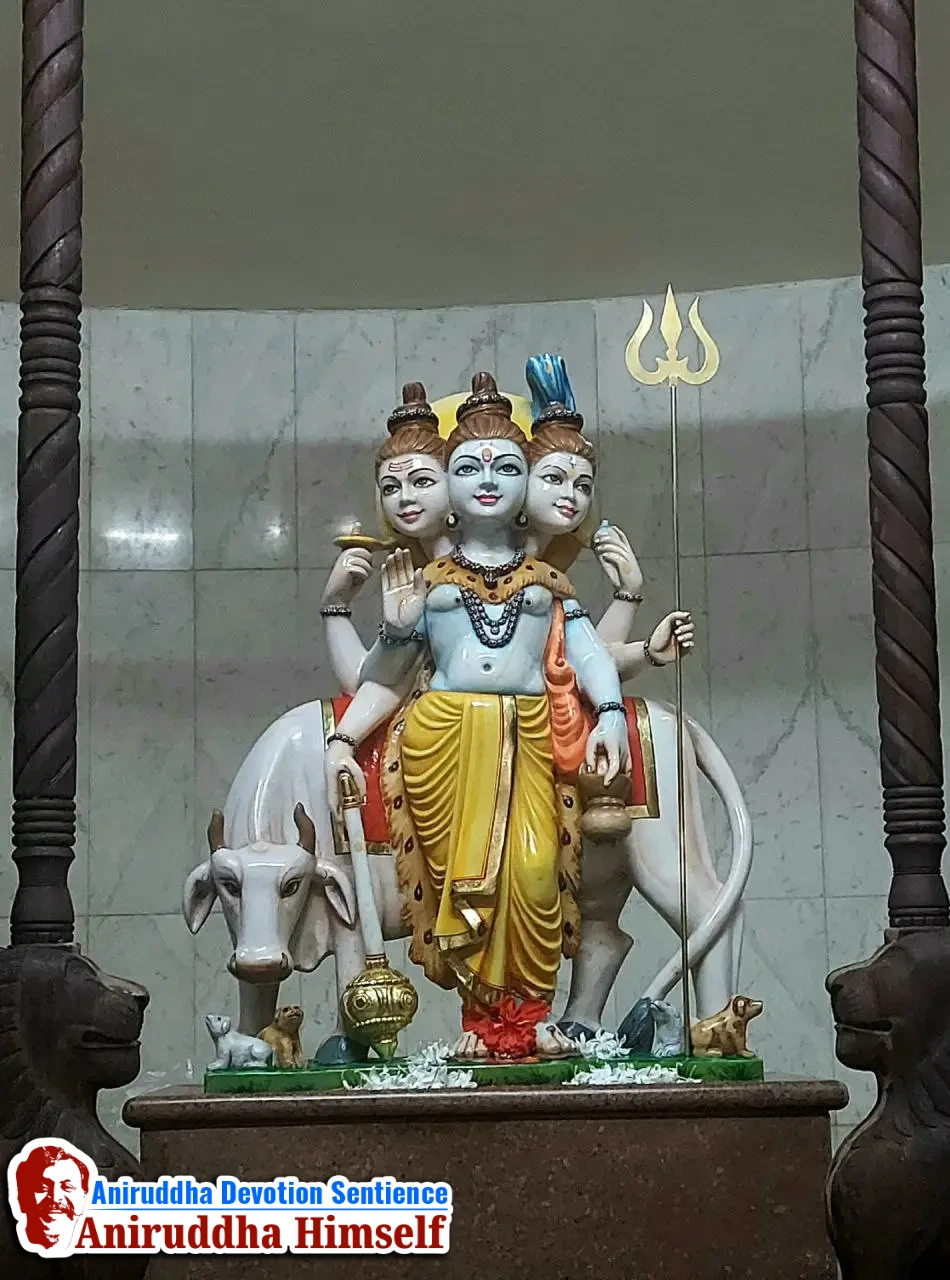
Bhagwan Shree Dattaguru is Sadguru Shree Aniruddha Bapu's Karavita Guru (the Master Enabler) and the Master of the Annamaya Kosha (the physical sheath). In accordance with Bapu's sacred resolve, the extraordinary, awe-inspiring and spiritually enriching Avadhoot Chintan Utsav was celebrated in 2008.
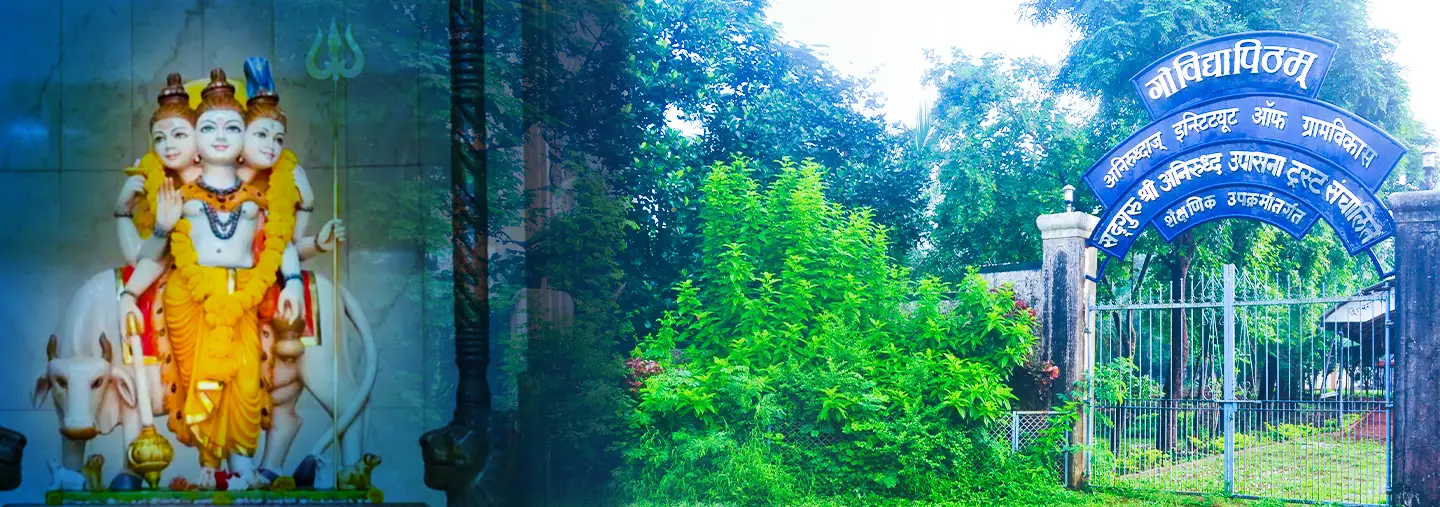
As Bhagwan Shree Dattatreya holds profound significance in Sadguru Shree Aniruddha Bapu's life and mission, an idol of Bhagwan Shree Dattatreya has been established at Shree Govidyapeetham. The Datta Sabha Mandap houses sacred images of Bhagwan Shree Dattatreya and Shree Hanuman, along with portraits of numerous revered sages and saints. Ten pillars stand on either side of the hall, each displaying one such portrait. The first portrait is that of Devarshi Narada, the original Acharya of the Bhaktipitha. Sadguru Shree Aniruddha Bapu has referred to these sages and saints as the spiritual forerunners in his book Prempravas. Their presence within this prayer hall serves as a constant source of inspiration, encouraging devotees to deepen their Bhakti and strengthening their enthusiasm to walk the path of devotion.
After participating in the Shramadaan Seva conducted every Saturday and Sunday by the Sadguru Shree Aniruddha Upasana Centres, Shraddhavans gather in this hall for Satsang and joyous devotional celebrations. Upon completing four hours of selfless seva, they are blessed with the opportunity to receive the Hastamudra bearing the actual handprints of Sadguru Shree Aniruddha Bapu. Holding the Hastamudra reverentially upon their heads, they circumambulate the sanctum three times while chanting, "Chakrapani Aniruddha..." Gajar.
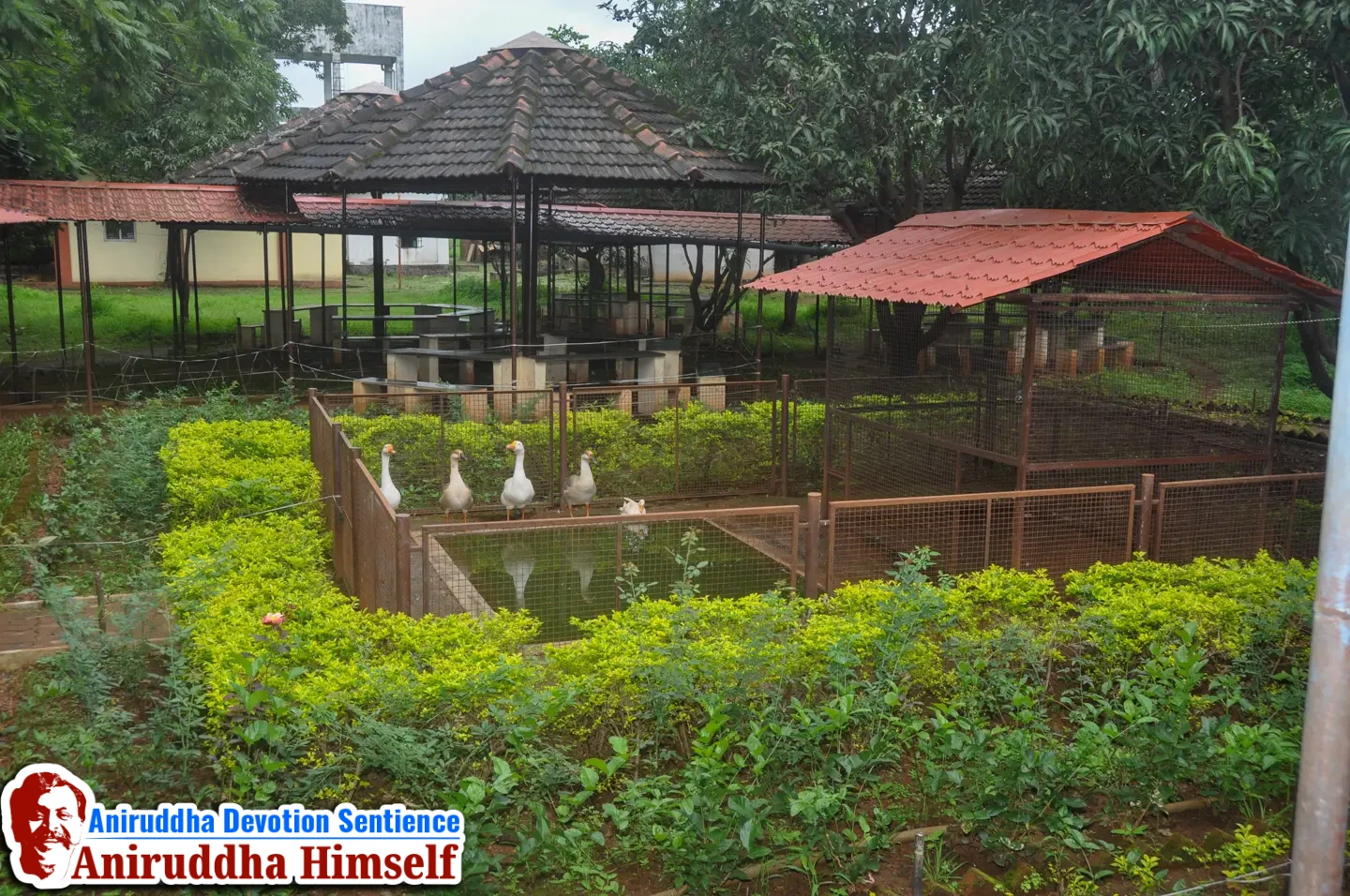
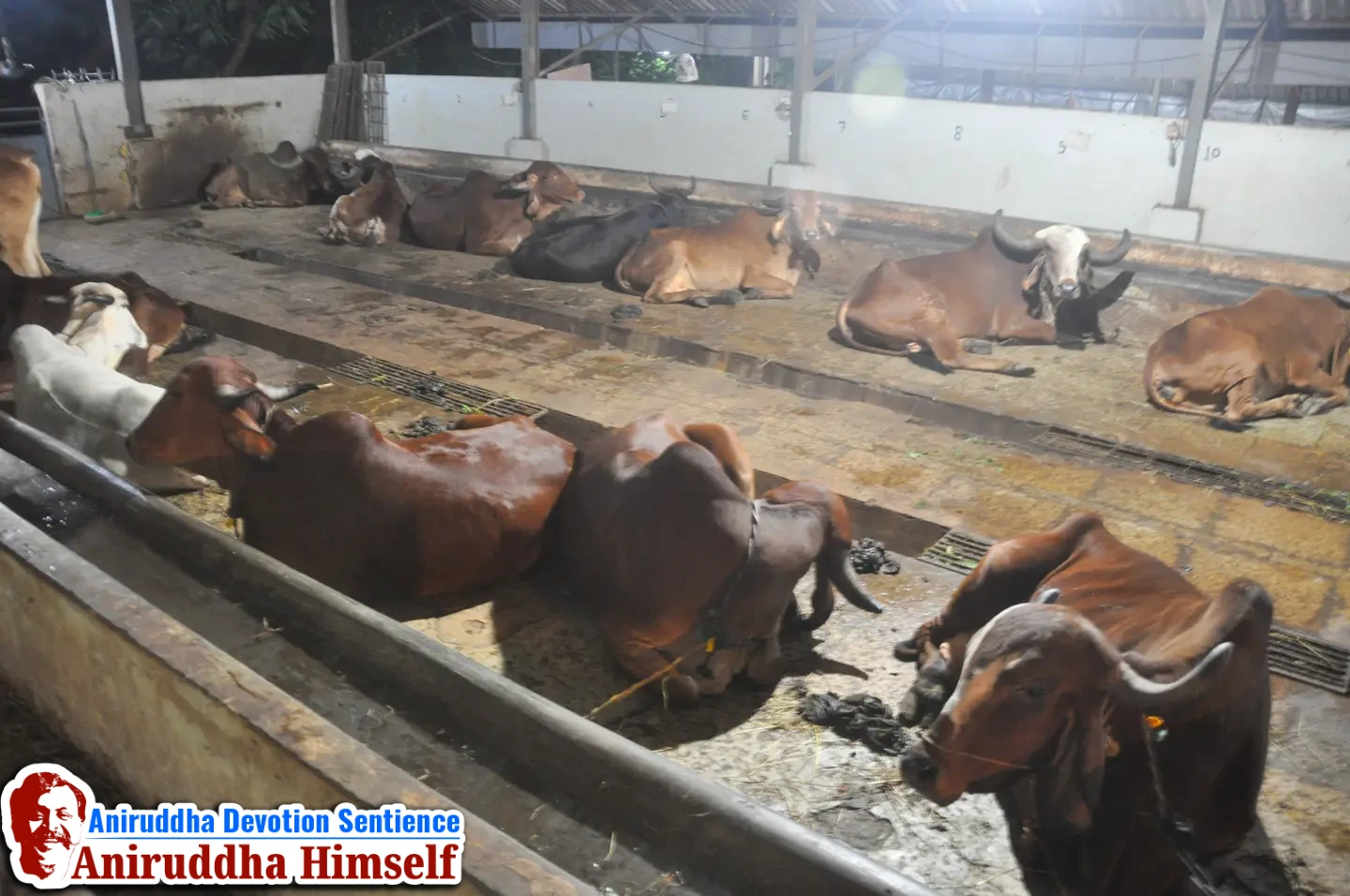
Goshala
The Gir cow, one of India's most revered indigenous breeds, holds a place of great significance in Indian culture. Every aspect of Gomata—from her milk, gomutra (cow urine) and dung to her very presence is regarded as sacred and immensely beneficial. In the Shreemadpurushartha Grantharaj, Volume III - Anandsadhana, Sadguru Shree Aniruddha Bapu lists 'the Nine Equal and Exclusive Allegiances for Shraddhavans,' wherein he also highlights the reverence for Gangamata and Gomata.
In 2023, on the auspicious occasion of Gudhi Padwa, Punganur cows were welcomed to Shree Govidyapeetham. Sadguru Shree Aniruddha Bapu has written about this unique indigenous breed in his editorial Kathamanjiri (No. 2-48) in the ’Daily Pratyaksha’. Bapu writes:
"The cows of the Pradnya breed (Punganur cows) were traditionally reared only in Gurukuls. These Pradnya cows were about the size of the calves of ordinary cows, while their calves were as small as young goats. Throughout Bharatvarsha, these Pradnya cows were regarded as highly sacred.
Apart from Gurukuls and the Ashrams of Rishis, these Pradnya cows were also reared by families living in towns and villages. However, the head of the family who wished to rear them was required to obtain a certificate from the Gurukul and give a solemn undertaking that he and his family would care for these delicate Pradnya cows with love and gentleness. Many Vaishnavas and devotees of Bhagwan Dattatreya lovingly reared these Pradnya cows in their homes."
Today, Shree Govidyapeetham is home to eight to nine Punganur cows, preserving yet another precious heritage of India's sacred indigenous cattle breeds.
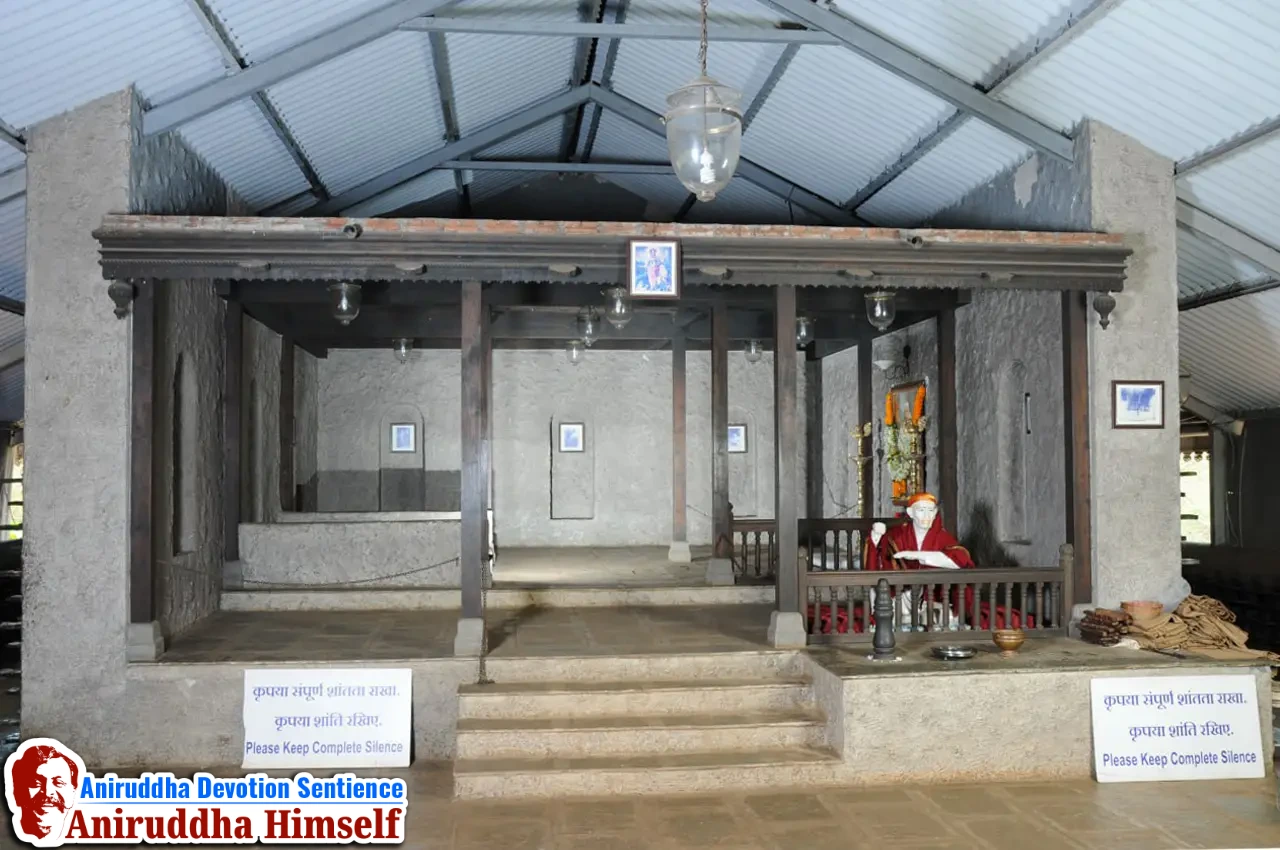
Shree Dwarkamai (Meditation Hall)
During His lifetime at Shirdi, Shree Sainath resided continuously in Dwarkamai. It was here that He established the sacred Dhuni, bestowed His divine Darshan upon countless devotees, and through His divine leelas, blessed them with innumerable spiritual experiences.
Over the years, with the ever-increasing number of devotees visiting Shirdi, it has become difficult to spend time in Dwarkamai, behold Darshan of Shree Sainath's sacred photograph to one's heart content, or sit there peacefully for recitation or chanting. It was with this in mind that a Dwarkamai-inspired Meditation Hall was established at Shree Govidyapeetham.
Moreover, the inner ceiling of the hall has been coated with the sacred soot collected from various Homas and Yadnyas. Consequently, this holy structure is revered as a place of divine protection for all who enter it.
This sacred and auspicious Meditation and Sadhana Hall was opened to all Shraddhavans on the auspicious occasion of Kojagiri Pournima in 2005.
In accordance with Sadguru Shree Aniruddha Bapu's resolve, Shraddhavans may sit before the photograph of Shree Sainath in this place and engage in recitation. Within this holy structure, devotees may perform Upasana, do Naamsmaran, meditate upon the Sadguru, or recite sacred spiritual scriptures. Shraddhavans believe that performing recitation or chanting in this sacred place multiplies its spiritual benefits and strengthens one's Bhakti. Many devotees have also been blessed with profound spiritual experiences here while performing recitation or chanting or simply by sitting silently and gazing lovingly at the sacred photograph of Shree Sainath during Brahmamuhurta.
This hall also has a marble idol of Shree Sainath, bestowing Udi upon devotees. On the occasion of Sadguru Shree Aniruddha Bapu's 50th birthday, celebrated on Tripurari Pournima (7 November 2006), this idol was consecrated through an uninterrupted Abhishek with the haridra (sacred turmeric) water. Thereafter, on 7 November 2006, the idol was ceremonially installed in this sacred hall by Appasaheb Dabholkar, the grandson of Hemadpant, the author of the Shree Sai Satcharitra.
Dhuni Mata
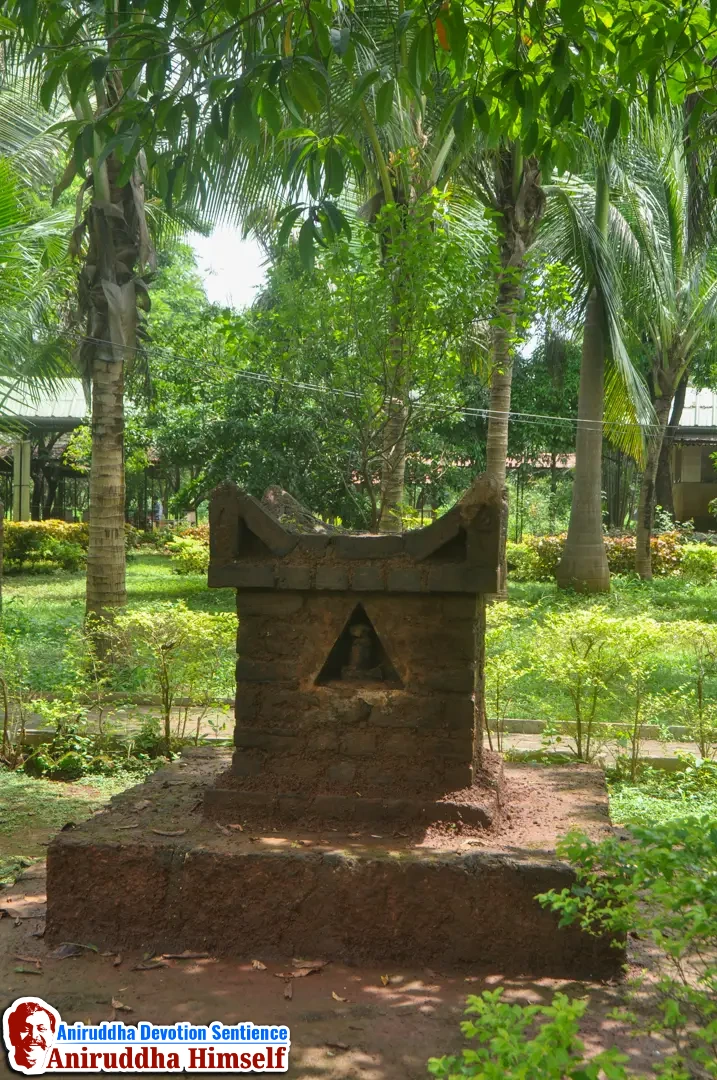
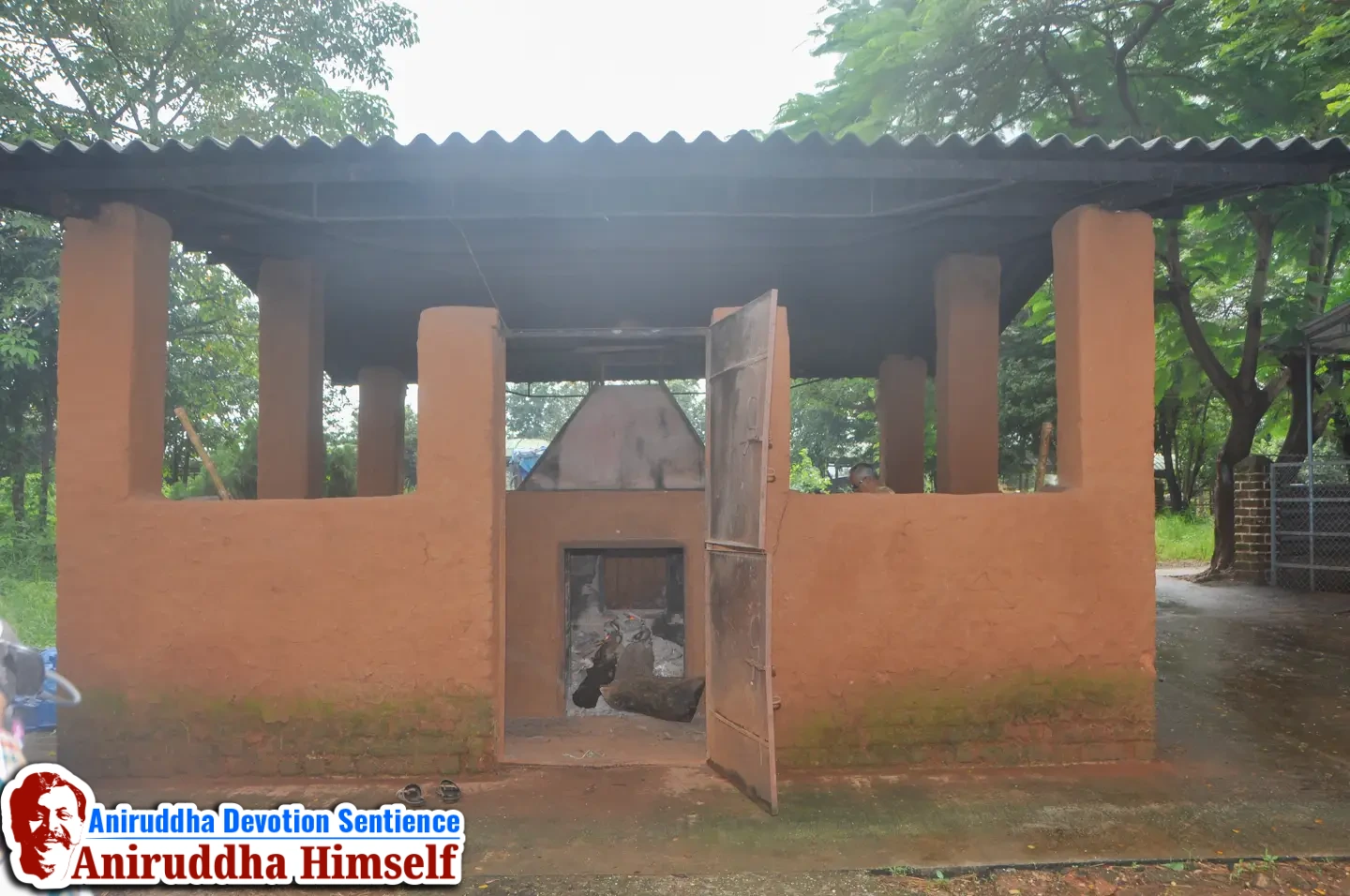
A short distance ahead of the Goshala stands Shree Dhunimata. The sacred Dhuni was established on 8 April 2002, when Param Pujya Suchitdada ceremonially kindled the sacred fire, while Sadguru Shree Aniruddha Bapu himself recited the prescribed Mantras.
Among the four sacred rituals performed at Shree Govidyapeetham, the Kashta-Govarya offering is performed near Shree Dhunimata. Arrangements have also been made for devotees who wish to offer only Kashta (sacred wood used as offering).
Garuda-Hanuman Stambha
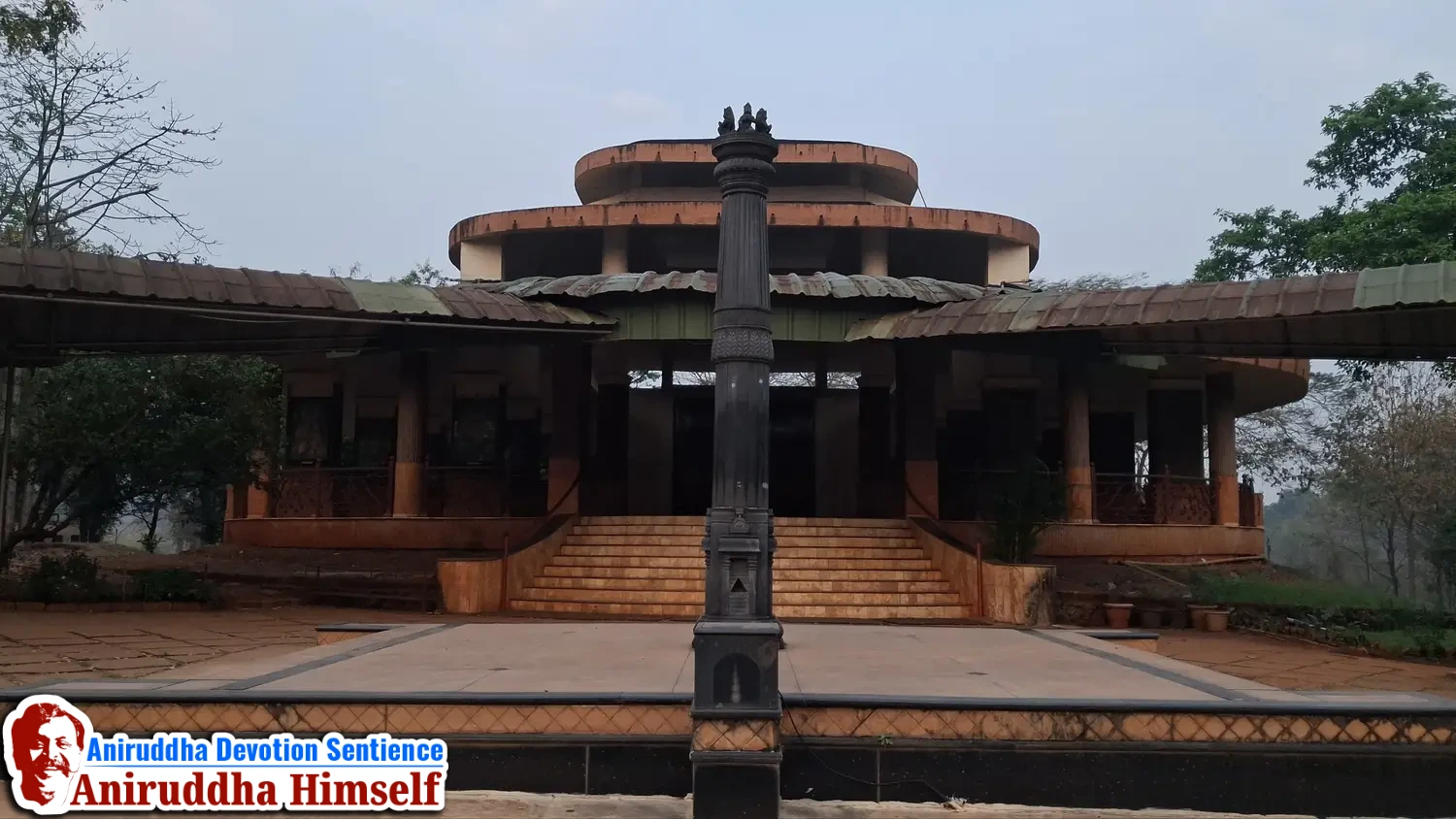
The Garuda-Hanuman Stambha was established, in accordance with the sacred resolve of Sadguru Shree Aniruddha Bapu, on the auspicious occasion of Kojagiri Pournima in 2005 near the ShreeDatta Sabhamandap. This sacred pillar is also known as the Papavimochaka Stambha (the Pillar that liberates one from sin).
On the eastern side of its pedestal is a small receptacle containing the Kumbha (sacred vessel) used by Adyapipa Sureshchandra Dattopadhye while performing the very first Papamochaka Vidhi (ritual for the removal of sin). It was Adyapipa who initiated this sacred ritual of Papakshaalana (the cleansing of sins).
In the course of life, every individual knowingly or unknowingly commits mistakes and accumulates sins. Many sincerely wish to free themselves from these burdens but are unaware of the means to do so. Out of his boundless compassion for Shraddhavans, Sadguru Shree Aniruddha Bapu has shown this simple yet profound spiritual practice to help reduce the burden of sin and seek protection from the adversities of life.
As Bapu explains: “Kshaalana means cleansing. Papakshaalana means the cleansing of sins. In other words, it is a ritual performed to reduce the effects of sins committed either in this birth or in previous births.”
This ritual was introduced on Guru Pournima in 2006. During the ritual, the devotee carries on the head a green Kumbha made up of six pots, symbolising the Shadripus (the six foes of good life and spirituality). Holding this Kumbha, the devotee performs a minimum of five circumambulations of the Garuda-Hanuman Stambha, although up to 108 circumambulations may also be performed. While circumambulating, devotees lovingly chant:
कलियुग में एक ही त्राता, अनिरुद्धराम रे; मेरे संग चले बोले, मेरा जगजेठी रे.
(Kaliyug mein ek hi traataa, Aniruddharaam re; Mere sang chaale bole, meraa Jagajethi re).
Meaning: In the Kaliyug, Aniruddharam alone is the Saviour; He walks beside me and speaks with me—He, the Supreme Lord of my world
After completing the circumambulations of the Garuda-Hanuman Stambha, devotees perform one circumambulation of the Pushkarani Teertha. Thereafter, proceeding to the Paapadaahan Agnihotra, the lotus-shaped Havan Kund, situated behind the Stambha, the Kumbha is offered into the sacred fire. The ritual concludes with the devotee offering prayers to Shree Sainath in Shree Dwarkamai.
The Kumbha for the Paapavimochaka Vidhi may be offered in multiples of 1, 5 or 11. Anyone above the age of 16 years may perform this ritual either for themselves or on behalf of their family members and loved ones.
Pushkarani Tirtha
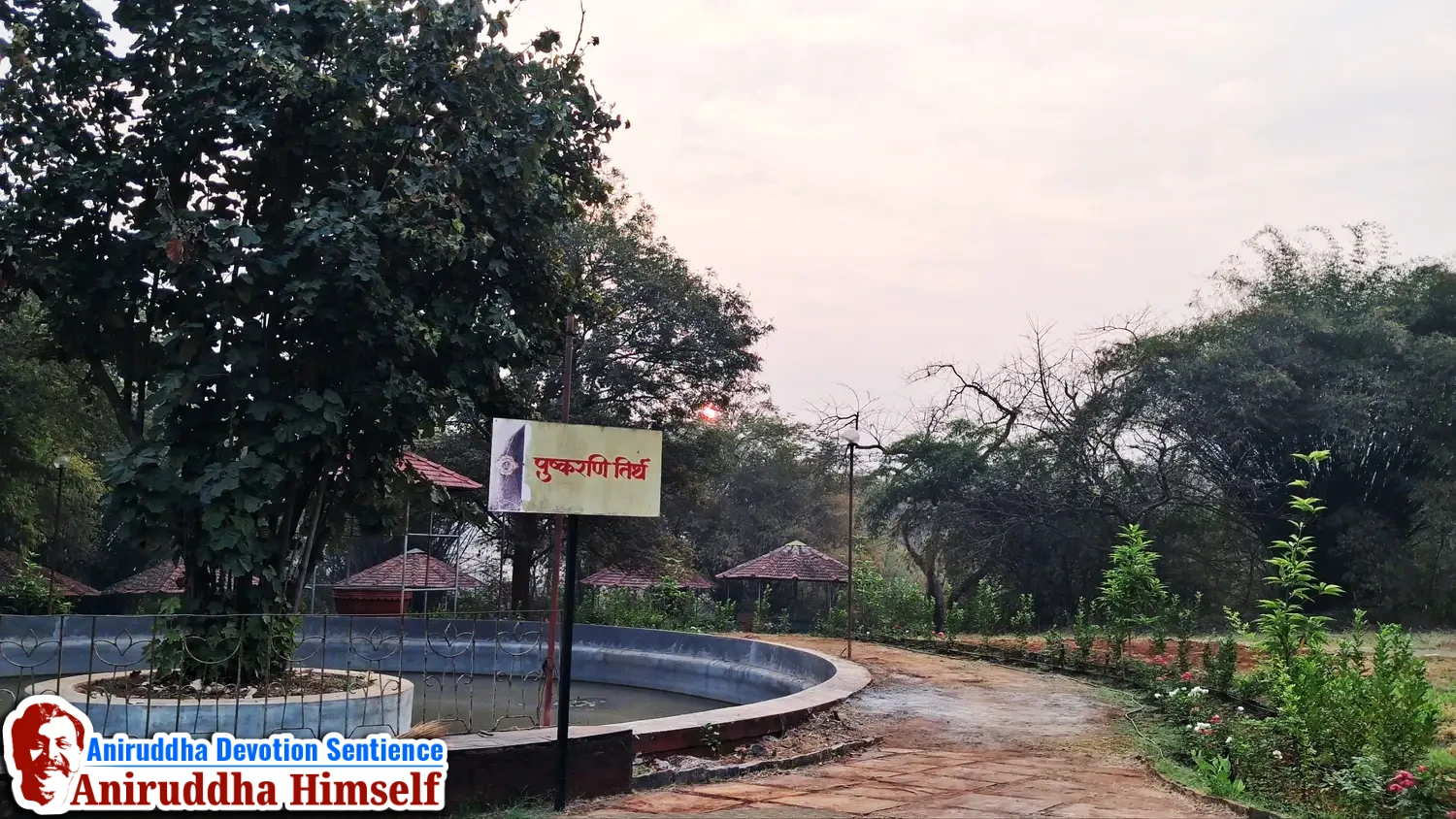
Situated opposite the ShreeDatta Sthan is the sacred Pushkarani Teertha. It has been built around the Muchukunda tree (bayur tree), which is considered dear to Shree Mahavishnu.
According to tradition, the sages Muchukunda and Kadamba were ardent devotees of ShreeKrishna even before His incarnation on earth. Upon learning that ShreeKrishna would descend to this world, they took birth in the form of trees on the banks of the Yamuna so that they could offer Him their loving shade.
Shraddhavans perform circumambulations around the Muchukunda tree while lovingly chanting: “ShreeKrishna Govinda Hare Murari, He Nath Narayan Vasudeva Radhe."
Dhyana Kutir
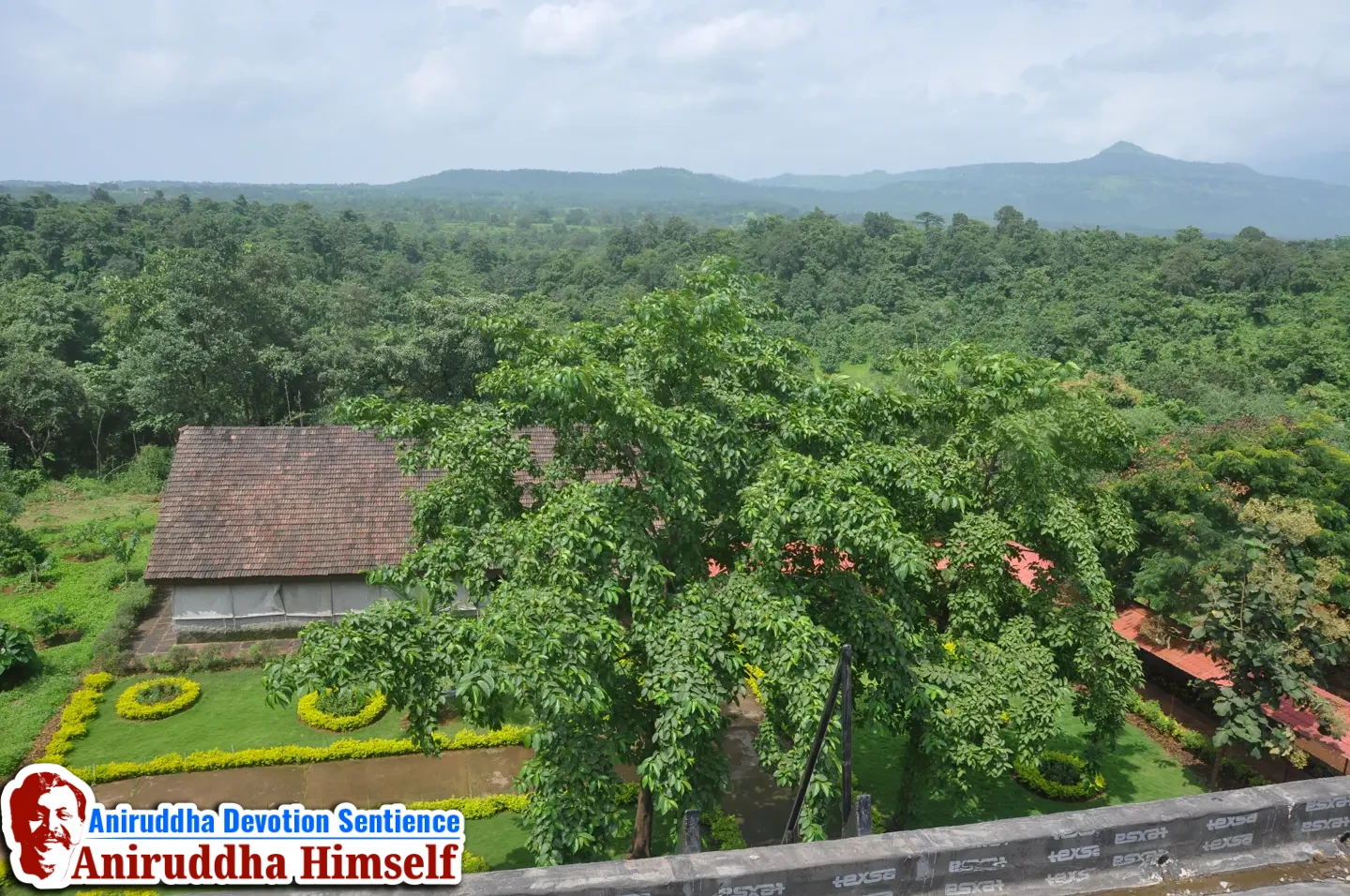
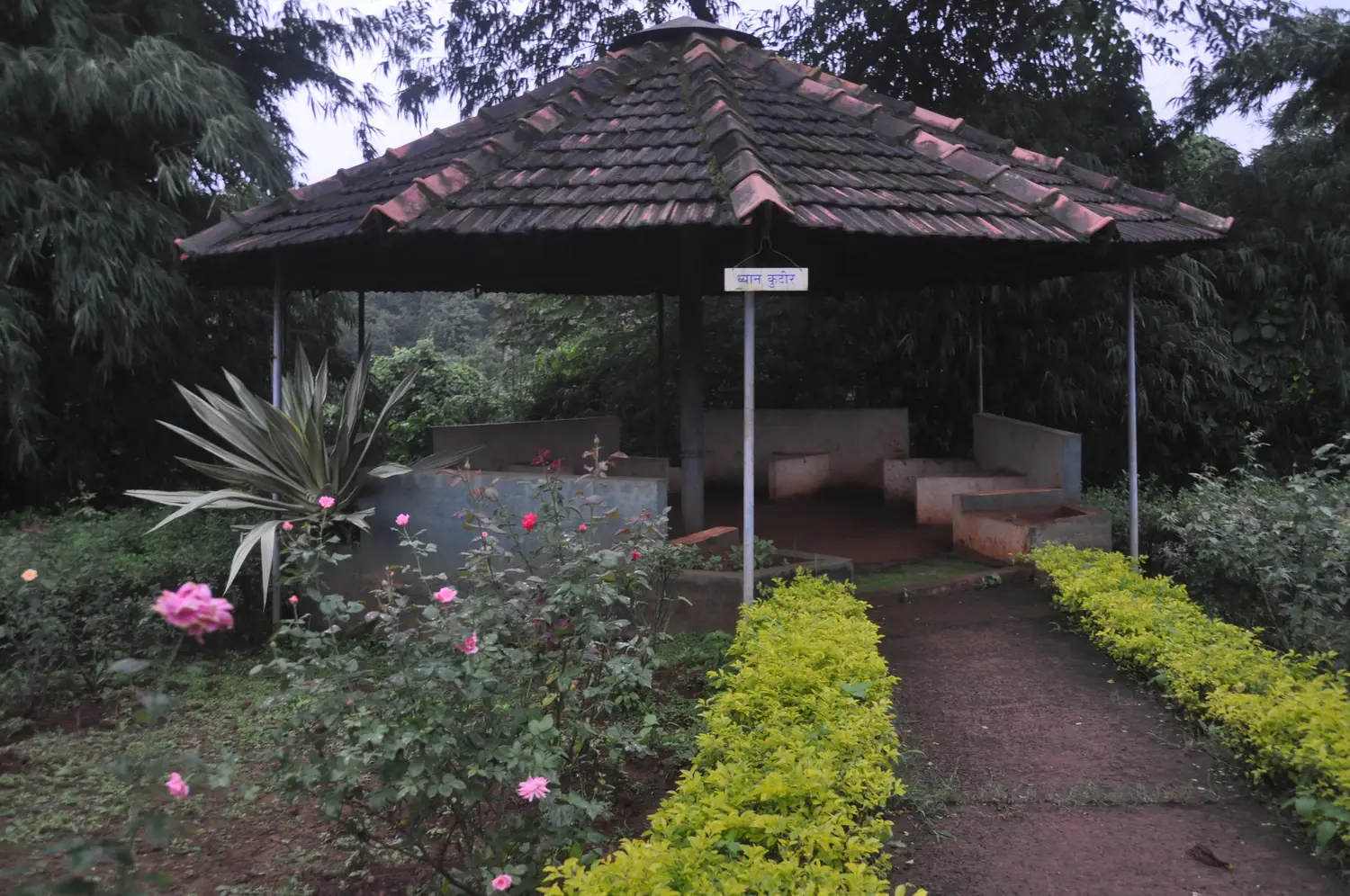
Located behind the Pushkarani Teertha are five Dhyan Kutirs (Meditation Huts). Designed according to a specific architectural plan, these quiet spaces provide an ideal environment for contemplation, reflection, meditation and recitation. Sadguru Shree Aniruddha Bapu has repeatedly emphasised the immense importance of Dhyan and meditation in his discourses. These Dhyan Kutirs offer Shraddhavans an opportunity to practise Dhyan in the manner taught by Bapu, enabling them to deepen this spiritual practice at home.
Grazing Grounds and the Sacred Banyan Tree
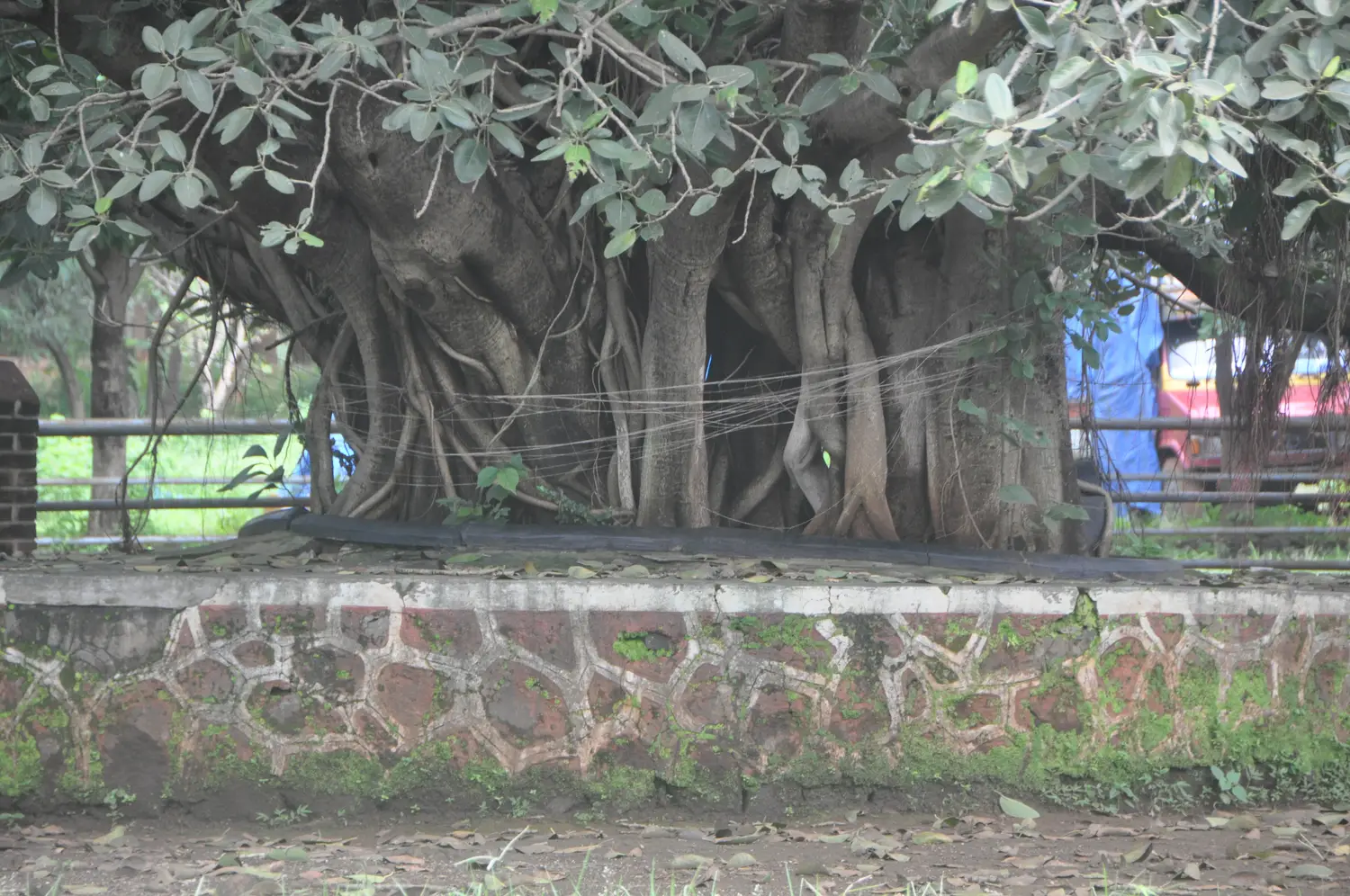
Adjacent to the Goshala lies the grazing grounds, home to an ancient banyan tree believed to be nearly 750 years old. One of the unique features of this remarkable tree is that it has no aerial roots, and its five trunks together form a single majestic tree.
Every evening, a sacred lamp is lit at the platform surrounding the tree. While devotees are not permitted to sit on this platform, they may enter the grazing grounds when the cows are not present and, while facing the Goshala, recite the Govardhan Mantra before the sacred banyan tree 27, 54 or 108 times.
Govardhan Mantra: “Om Aadiguru Gopaalaka Bhagwaan Shree Dattaatreya paahi maam.”