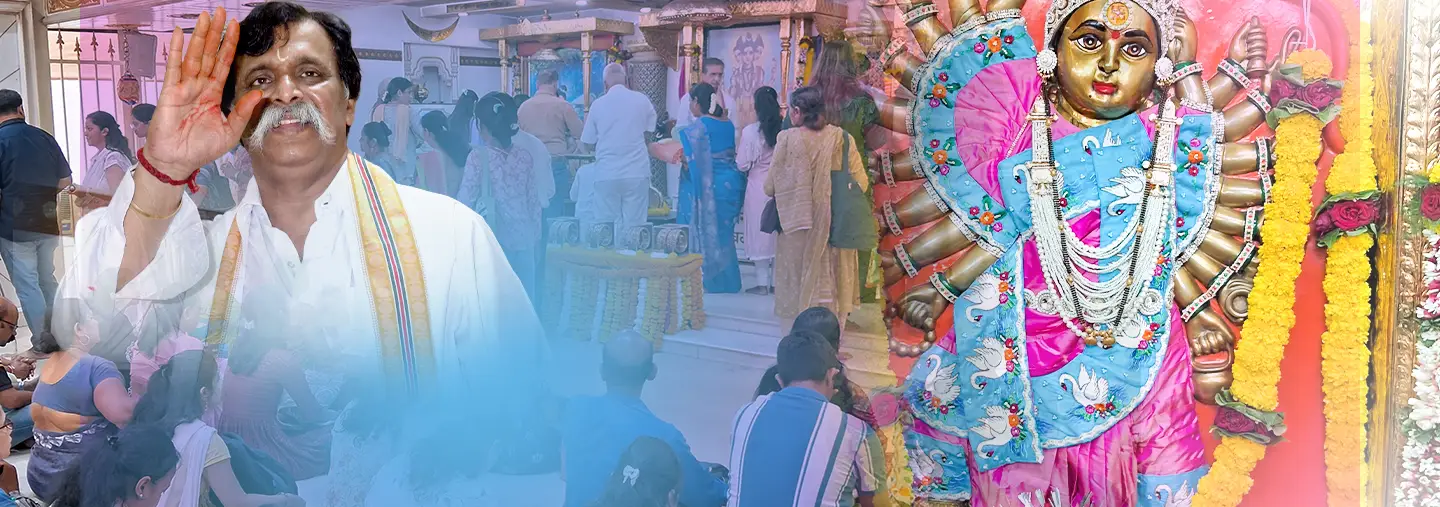
Aniruddha Bapu's Five Gurus
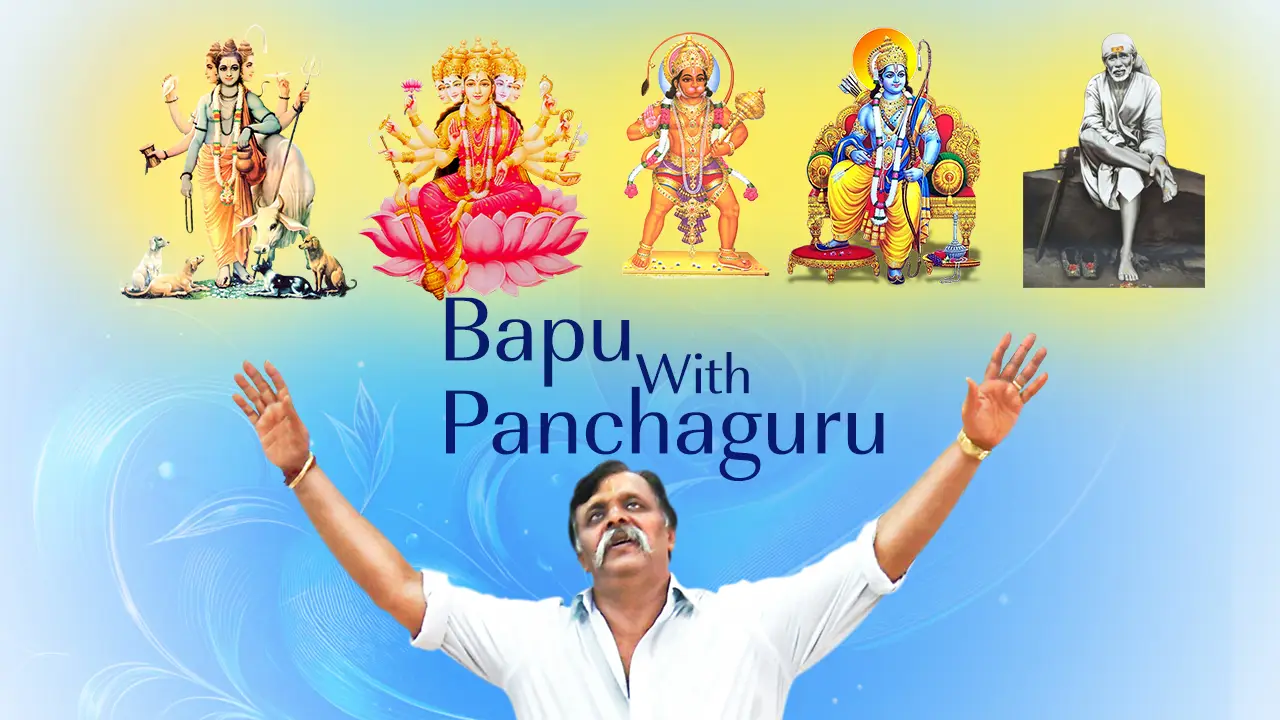
Shree Aniruddha Gurukshetram is the sacred abode established in accordance with the command of Parabrahma Parmeshwar Dattaguru. It is also the holy seat of the Panchagurus (five Gurus) of Sadguru Shree Aniruddha Bapu. In the second volume of Shreemad Purushartha Grantharaj, Prempravas, Sadguru Shree Aniruddha has beautifully explained the significance of these five Gurus.
- Dattaguru (Parmeshwar) – The Master Enabler (Karavita Guru)
- Shree Gayatrimata (Adimata) – The Guru who bestows motherly affection (Vatsalya Guru)
- Shree Ram – The Doer Guru (Karta Guru)
- Shree Hanumant – The Guru who protects (Rakshak Guru)
- Shree Sainath – The Guru who guides (Digdarshak Guru)
Spiritual Significance of Shree Aniruddha Gurukshetram
Dattaguru, Parmeshwar, Parabrahma—is the existence that pervades the universe and yet is beyond it, indescribable, omnipotent, beginningless and infinite. The entire universe comes into existence from the primordial impulse i.e. the Divine will of Parmeshwar Dattaguru, expressed as “Ekosmi Bahusyam”—“I am One; let Me become Many.” Through this divine will, the Parmeshwar manifests Himself as the entire creation.
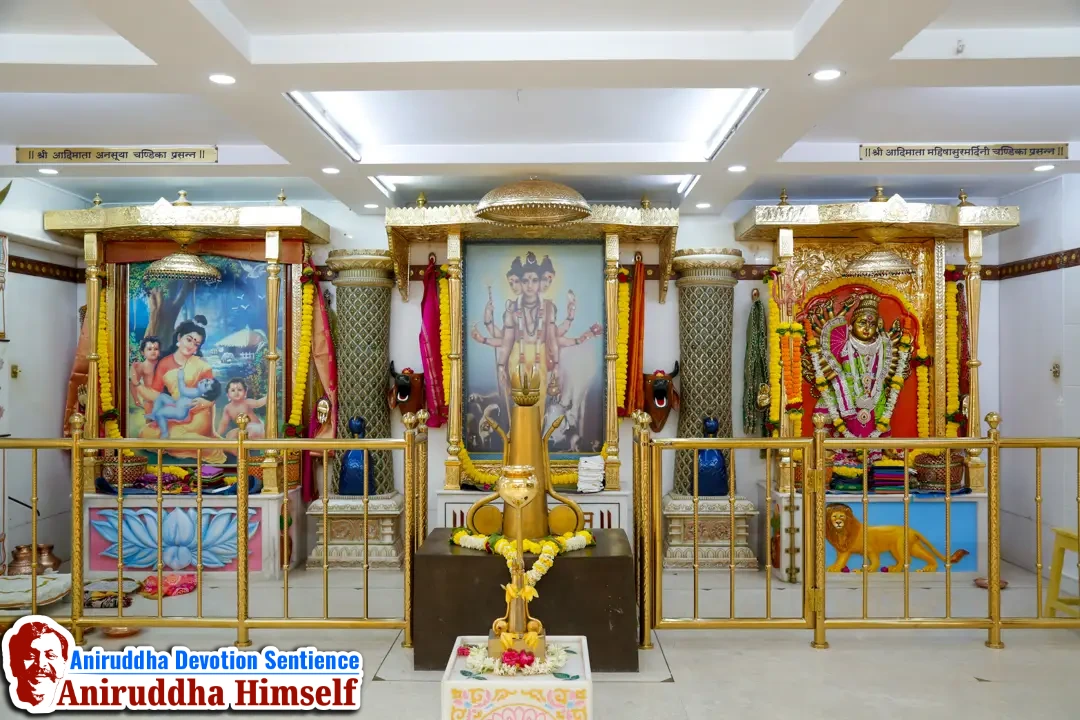
Shree Aniruddha Gurukshetram is the sacred abode where Dattaguru, Mahadurgeshwar, Shree Anasuya who is the auspicious (Shubhankara) manifestation of Adimata Chandika, Shree Mahishasuramardini who is also the manifestation of Adimata Chandika that destroys all inauspiciousness (Ashubhanashini) and the Shree Trivikram Linga enshrined on the Dharmasana are all established together. In other words, Shree Aniruddha Gurukshetram is the sacred abode of both the Tri-Nath and Shree Trivikram.
This sacred Shree Aniruddha Gurukshetram was established on the auspicious day of Gokulashtami, 3 September 2007, through the resolve (Sankalpa) of Sadguru Shree Aniruddha.
The Sacred Portrait of Dattaguru
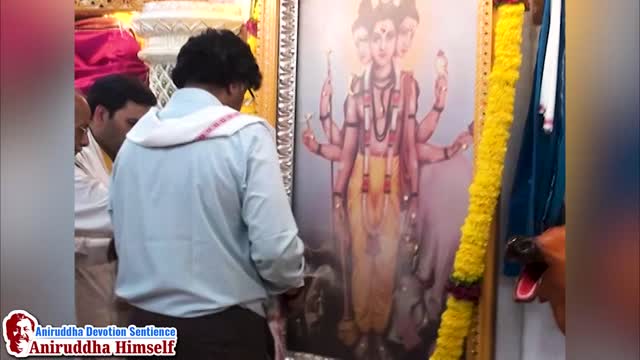
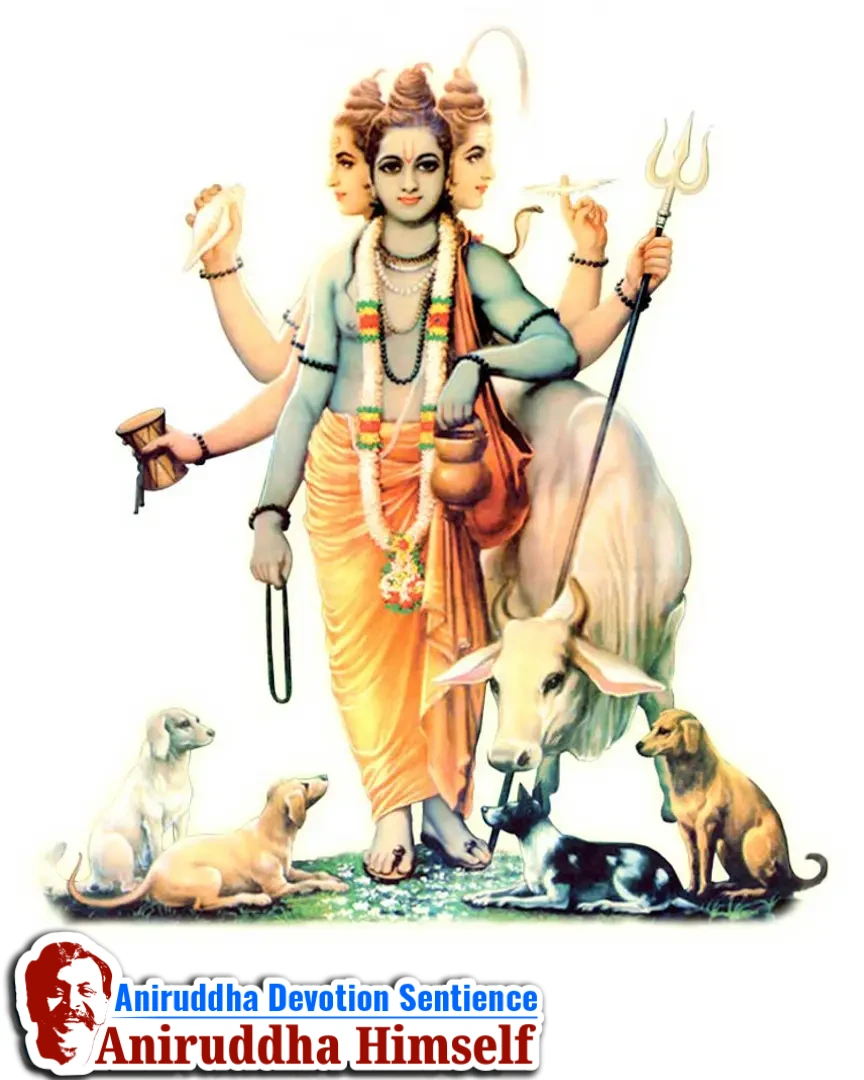
At the centre of the sanctum sanctorum (Garbhagriha) of Shree Aniruddha Gurukshetram is a rare and sacred portrait of Dattaguru. Sadguru Shree Aniruddha Bapu's great-grandfather, Shree Gopinathshastri Padhye, was an ardent devotee of Shree Swami Samarth of Akkalkot. He was also a devoted worshipper of Bhagwan Vitthal. As the fruit of his intense spiritual austerities and Upasana, he was blessed with this divine portrait of Dattaguru.
Shree Gopinathshastri Padhye's wife, Dwarkamai Padhye, presented this original portrait of Dattaguru to Sadguru Shree Aniruddha (Bapu) when He was eight years old. It was from this original portrait that Sadguru Shree Aniruddha had the present image prepared. Since the establishment of Shree Aniruddha Gurukshetram on the auspicious day of Gokulashtami, Monday, 3 September 2007, Shraddhavans have been blessed with the Darshan of this sacred portrait.
Mata Anasuya
To the left of Dattaguru's portrait is the portrait of Mata Anasuya. It was to shower Her boundless motherly love upon the entire universe that Adimata Chandika manifested Herself in the gross physical plane as Anasuya. As one gazes upon the portrait of Adimata Anasuya at Shree Aniruddha Gurukshetram, one cannot help but experience the warmth and tenderness of Her divine motherly affection.
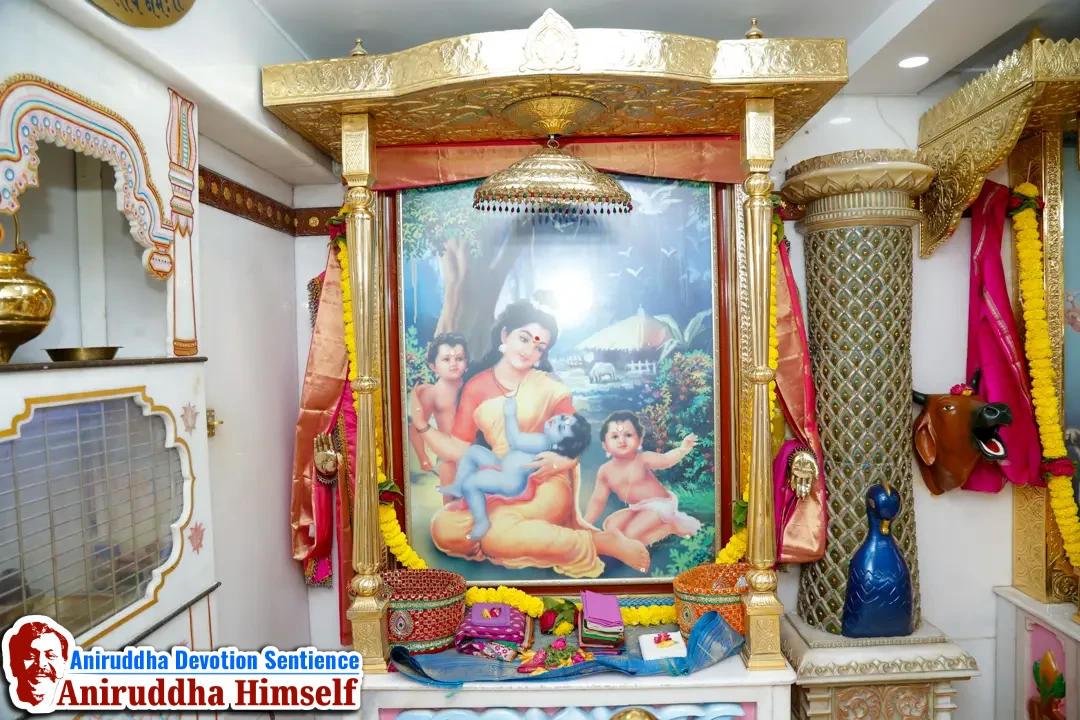
Shree Mahishasuramardini
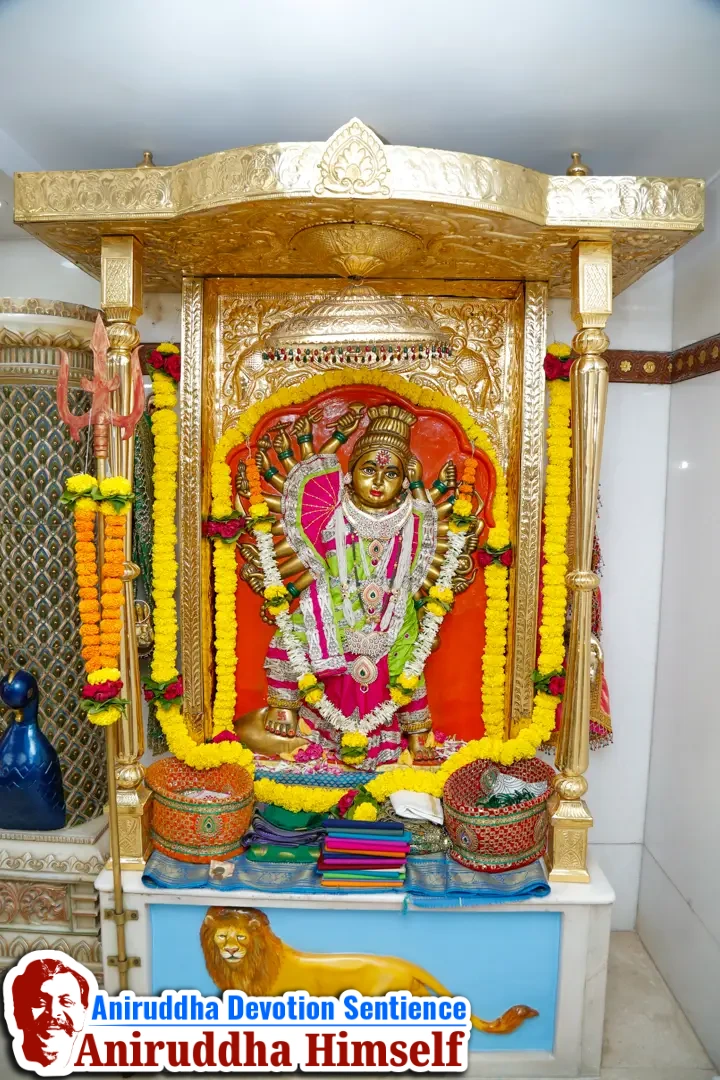
To the right of Dattaguru's portrait is the sacred image of Shree Mahishasuramardini. The subtle form of Adimata is Shree Mahishasuramardini Chandika—the Ashubhanashini (Destroyer of Inauspiciousness), who is the Divine Will (Ichchhashakti) of Shree Dattaguru. Unlike beings who take birth, this form of Mahishasuramardini does not incarnate through birth. Rather, in accordance with the purpose of the Divine Radiance, She manifests in an appropriate form to accomplish Her divine mission and, upon its completion, withdraws from manifest existence.
Shraddhavans believe that the image of Mahishasuramardini established at Shree Aniruddha Gurukshetram, the very form that slew the demon Mahishasura is not merely a representation of Adimata but is Shree Mahishasuramardini Herself.
Sadguru Shree Aniruddha established Shree Adimata Mahishasuramardini Chandika at Shree Aniruddha Gurukshetram on Sunday, 9 August 2009, during the sacred month of Shravan. To mark this installation, the Shree Vajramandal Peeth Poojan of Adimata Mahishasuramardini was performed over a period of nine days.
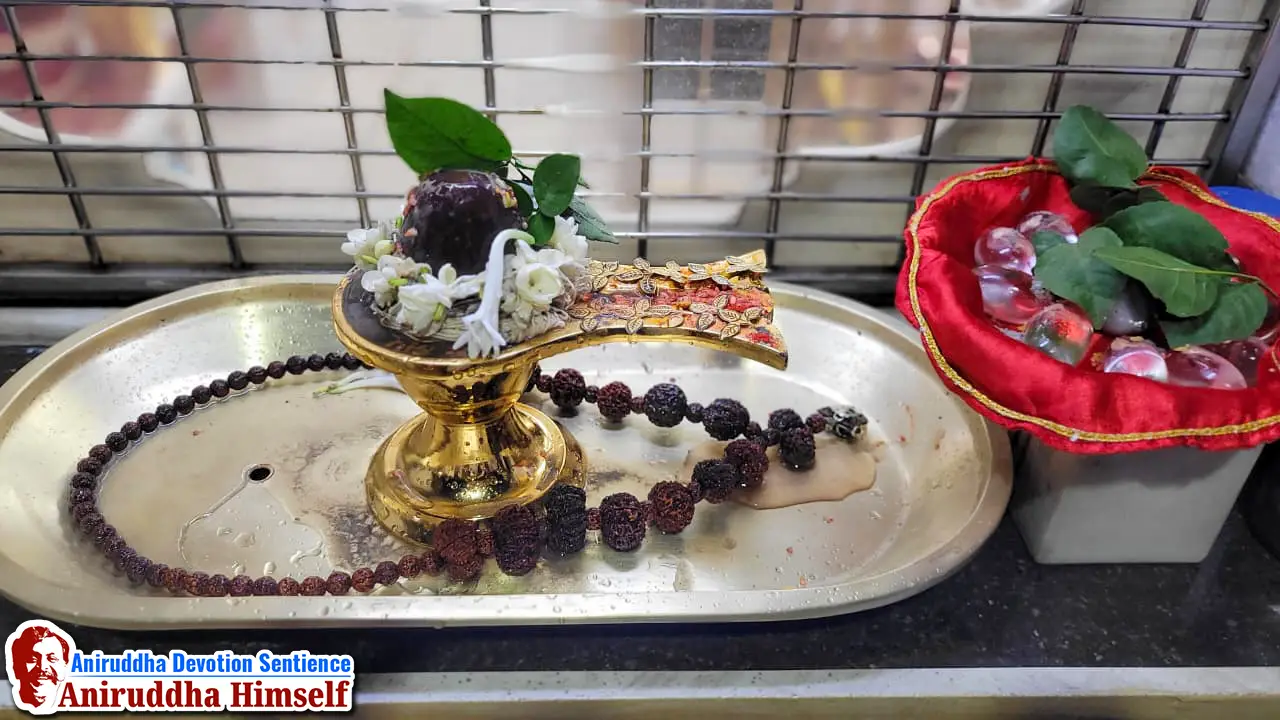
Shree Mahadurgeshwar Linga
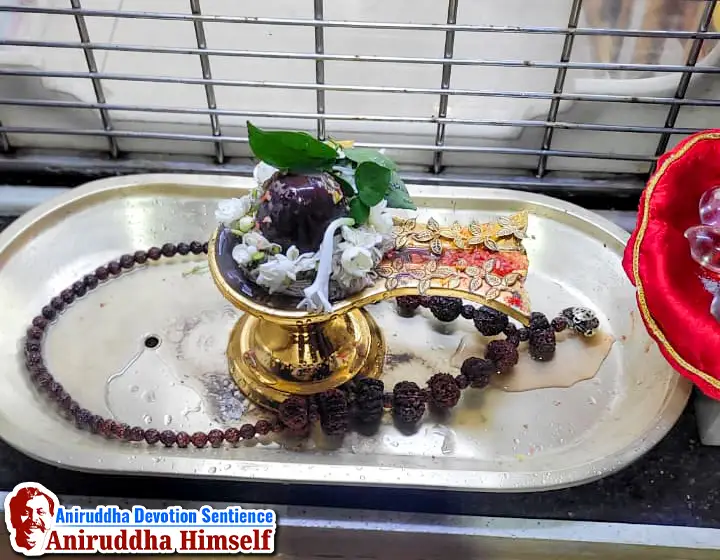
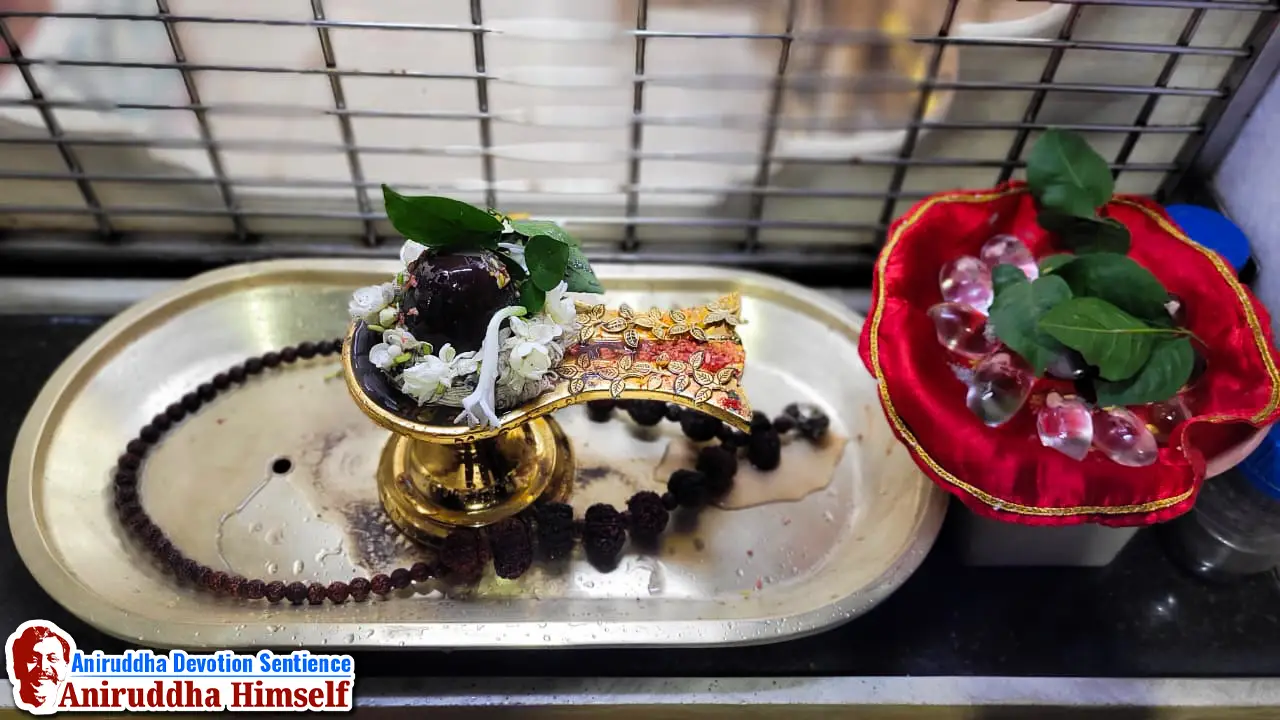
In accordance with the resolve of Sadguru Shree Aniruddha, the Narmada-origin Swayambhu Shree Mahadurgeshwar Linga was brought from the revered Gurujis of Shreeshailam. Shree Mahadurgeshwar is the Original Sacred Fire itself.
As the radiance of this Shree Mahadurgeshwar Linga was extraordinarily pure and intense, special care was taken during its consecration. No lamps were lit in its vicinity, and arrangements were made to ensure that not even the rays of the sun fell upon the Linga. Every effort was made to maintain complete coolness and serenity in the place of worship.
This extraordinary occurrence was personally witnessed and experienced by the Gurujis, the volunteers, and all those who were present during the consecration ceremony.
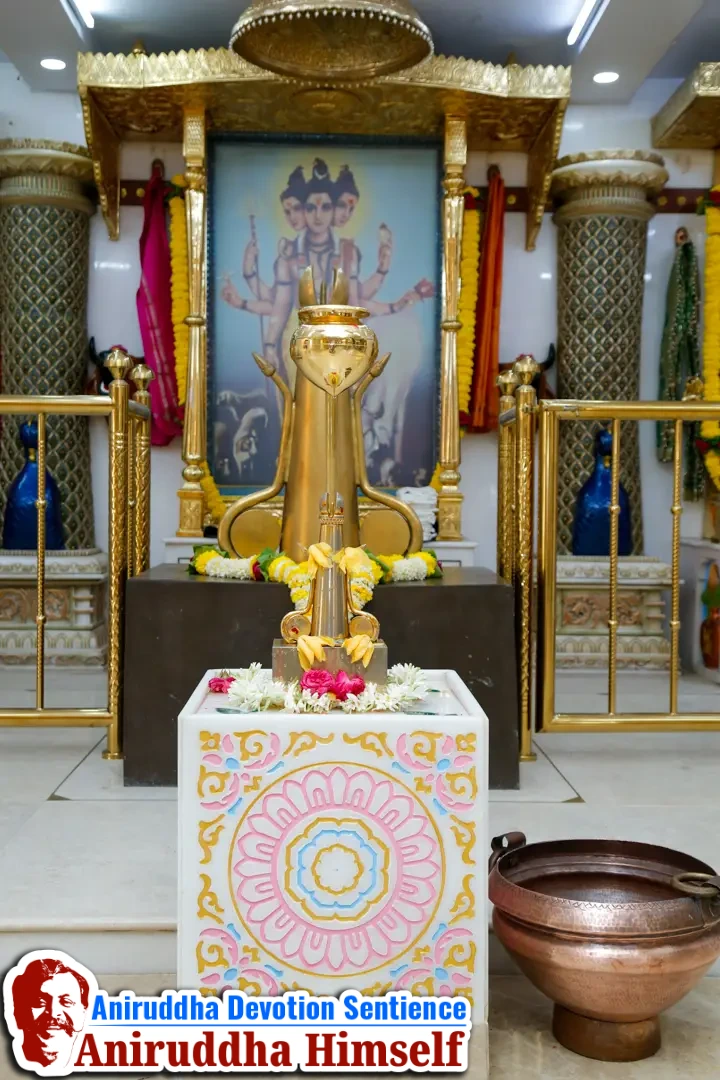
Dharmasana and Shree Trivikram Linga
In front of the sacred portrait of Dattaguru lies a stone known as the Dharmasana. It is believed that only one who has never deviated from Dharma in thought, word, or deed is worthy of being seated upon this sacred seat. In 2018, in accordance with the sacred resolve (Sankalpa) of Sadguru Shree Aniruddha, a Panchadhatu Shree Trivikram Linga was consecrated upon this very Dharmasana. Shraddhavans firmly believe that their Sadguru remains eternally enthroned upon this sacred seat.
Near the sacred Padachinha (Charanmudra) of Sadguru Shree Aniruddha is a portrait of the single-faced, four-armed form of Swayambhagwan Shree Trivikram. This unique form unites Shree Ram, bearing the Kodanda bow and the inexhaustible quiver of arrows (Akshaya Bhata), with Shree Krishna, holding the Shankha (conch) and Chakra (discus). Clad in the sacred Pitambara (yellow garment) and bestowing fearlessness through His Abhaya Mudra, this divine form beautifully embodies the unified essence of both Shree Ram and Shree Krishna.
The Sacred Foot Impressions (Charanmudra) of Sadguru Shree Aniruddha
In the Hindu scripture, Guru Gita, Bhagwan Shiva tells Mata Parvati:
“सर्व तीर्थाश्रयं देवि पादाङ्गुष्ठेच वर्तते”
(Sarva Tirthashrayam Devi Padangushtecha Vartate)
meaning, “O Devi, all sacred pilgrimage sites reside in the great toe of the Sadguru's holy feet.”
It was by the mere touch of Bhagwan Shree Ram's sacred feet that Ahalya, who had been turned into stone, was redeemed. Likewise, Das Ganu Maharaj himself witnessed and experienced the holy rivers Ganga and Yamuna manifesting from the lotus feet of Shree Sainath.
Such is the boundless and immeasurable glory of the Sadguru's holy feet. Their greatness is beyond description, and words themselves fall short of expressing their true magnificence.
By beholding the Sadguru's holy feet and bowing one's head before them, Shraddhavans receive the Sadguru's boundless grace and attain the spiritual merit equivalent to bathing in all the sacred Tirthas. It is therefore the heartfelt longing of every Shraddhavan to have the Darshan of the Sadguru's holy feet and to bow before them in reverence.
At Shree Aniruddha Gurukshetram, Shraddhavans are blessed with the Darshan of the sacred Charanmudra of Param Poojya Sadguru Shree Aniruddha. These Charanmudra are the actual impressions of Sadguru Shree Aniruddha's holy feet, whose Darshan Shraddhavans will continue to receive for generations to come.
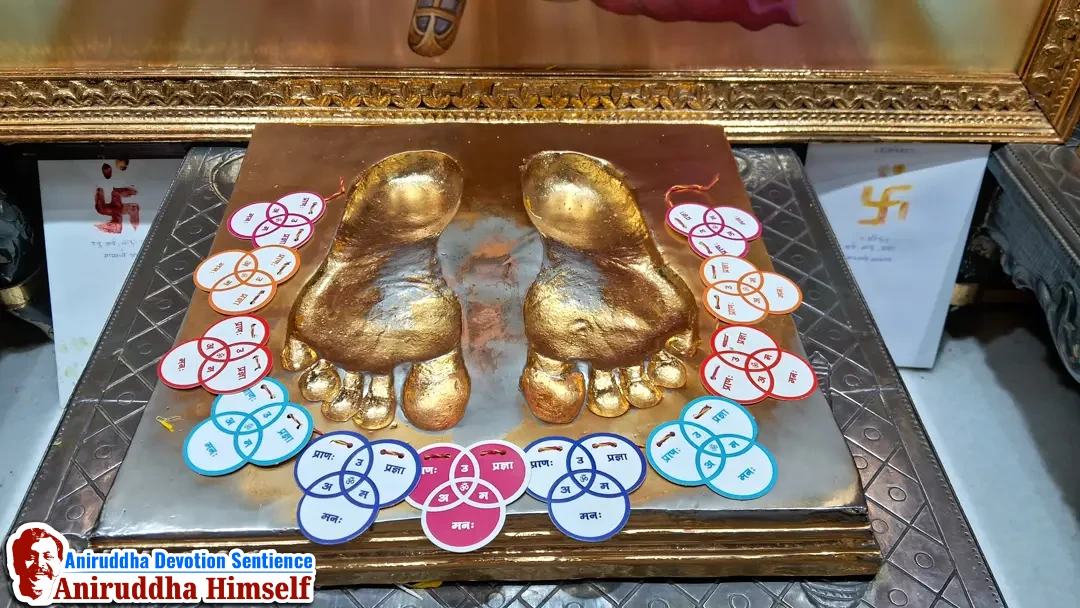
The Sacred Portrait of the Shree Chandikakul
Installed directly in front of the sacred Padachinha (Charanmudra) is the revered portrait of the Shree Chandikakul. This sacred portrait depicts the following divine deities:
- Adimata Chandika
- The eldest son of Chandika, Bhagwan Shree Dattatreya
- Mahaprana Shree Hanuman
- The second son of Chandika, Shree Kiratarudra
- Mata Shivgangagauri
- Parmatma in the form of Devi Simha (the Divine Lion)
From the Ashubhanashini Navratri of 2011 to the Shubhankara Navratri of 2012, Sadguru Shree Aniruddha Bapu undertook the Swastikshem Tapascharya. During this sacred period of penance, Bapu performed the Kundapayya Yajna in the Vishama-Ashtastram Kund, specially prepared in the precincts of Shree Aniruddha Gurukshetram, directly in front of the sacred portrait of the Shree Chandikakul.
Sarvanga Brahmastra is the divine force that destroys all that is unrighteous and inappropriate, while Sarvanga Karunashraya is the all-encompassing refuge of compassion for everyone who loves our nation, Bharat and the sacred values of the Devayana Path, i.e. the path of the divine.
Through these divine attainments, every Shraddhavan was to receive the strength to pray wholeheartedly as well as the ability to receive a response to those prayers. In other words, they would continually grow in their capacity to receive and accept the boundless grace of the Chandikakul.
As the sacred fruits of this Tapascharya, Sadguru Shree Aniruddha Bapu dedicated both Sarvanga Brahmastra and Sarvanga Karunashraya at Shree Aniruddha Gurukshetram, making their divine grace available for the welfare of all.
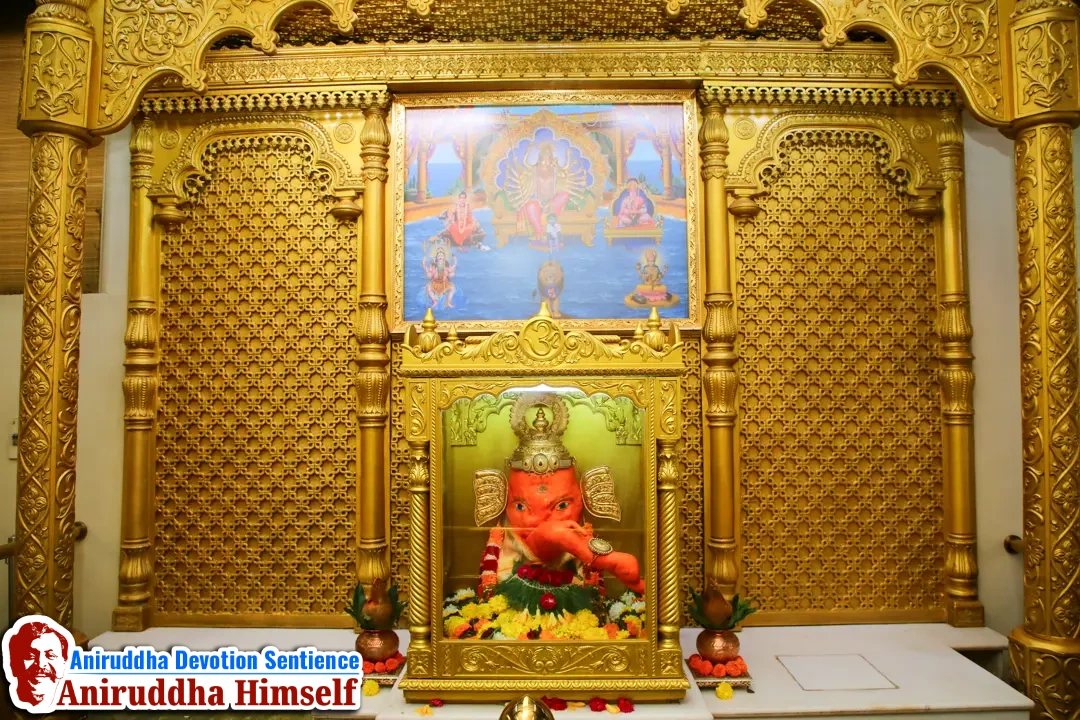
Shree Moolark Ganesh
In accordance with the resolve of Sadguru Shree Aniruddha Bapu, the consecrated idol of Shree Moolark Ganesh, is established below the sacred portrait of the Shree Chandikakul.
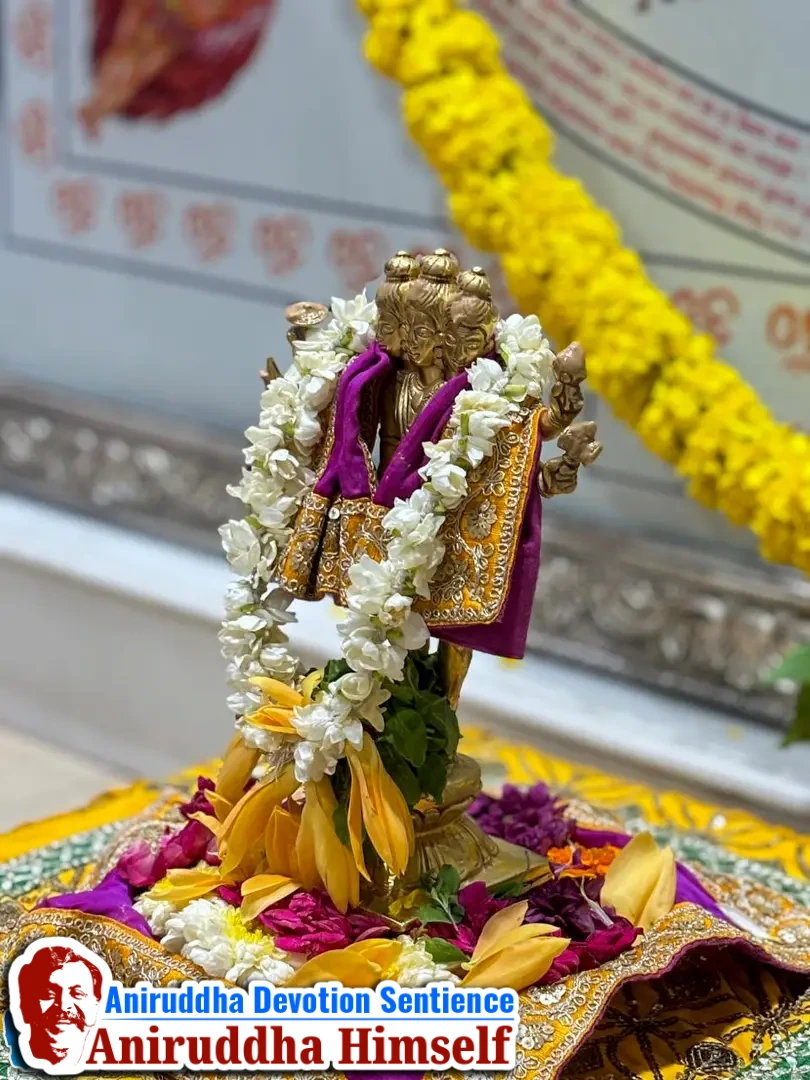
Shree Moolark Ganesh is a self-manifested (Swayambhu) form of Bhagwan Ganesh that emerges from the root of a particular sacred tree. There are two varieties of the Mandar tree found in nature: the Neelmandar and the Shwetmandar. The flowers of the Neelmandar tree are especially dear to Shree Hanuman, while those of the Shwetmandar tree are dear to Bhagwan Shankar. It is from the root of the Shwetmandar tree that Shree Moolark Ganesh manifests. For this reason, He is also known as Mandar Ganapati or Shwetark Ganapati.
To locate this rare and sacred form of Ganesh, Sadguru Shree Aniruddha Bapu entrusted a few knowledgeable individuals with the search. After a search that lasted nearly one and a half years, such a sacred Shwetmandar tree was finally discovered at Parli Vaijnath, in accordance with the divine resolve (Sankalp) of Sadguru Shree Aniruddha Bapu.
The knowledgeable individuals entrusted with this sacred mission by Bapu were instructed to perform the Digbandhan and Avahan Upasana for twenty-one days before undertaking this spiritually significant task.
After the self-manifested Shree Moolark Ganesh was brought to Shree Datta Nivas, Sadguru Shree Aniruddha Bapu undertook elaborate spiritual preparations before its installation at Shree Aniruddha Gurukshetram.
Nine Shraddhavans were instructed to observe specific spiritual disciplines and perform the recitation of the Ganapati Atharvashirsha twenty-one times daily for twenty-one consecutive days. During this period, the Shree Moolark Ganesh was anointed with a sacred paste prepared from Ashtagandha mixed with sesame oil.
For the three days preceding the installation, Bapu personally performed the worship of the self-manifested Shree Moolark Ganesh. On this sacred occasion, one lakh Durva (sacred grass blades) were offered to Bhagwan Ganesh as an expression of devotion.
Simultaneously, at Bapu's residence, the idol of Brahmanaspati was worshipped continuously every day from 8:00 a.m. to 9:00 p.m. through Abhishek and Poojan. Ten priests performed the rituals, while another eleven priests continuously recited sacred Stotras.
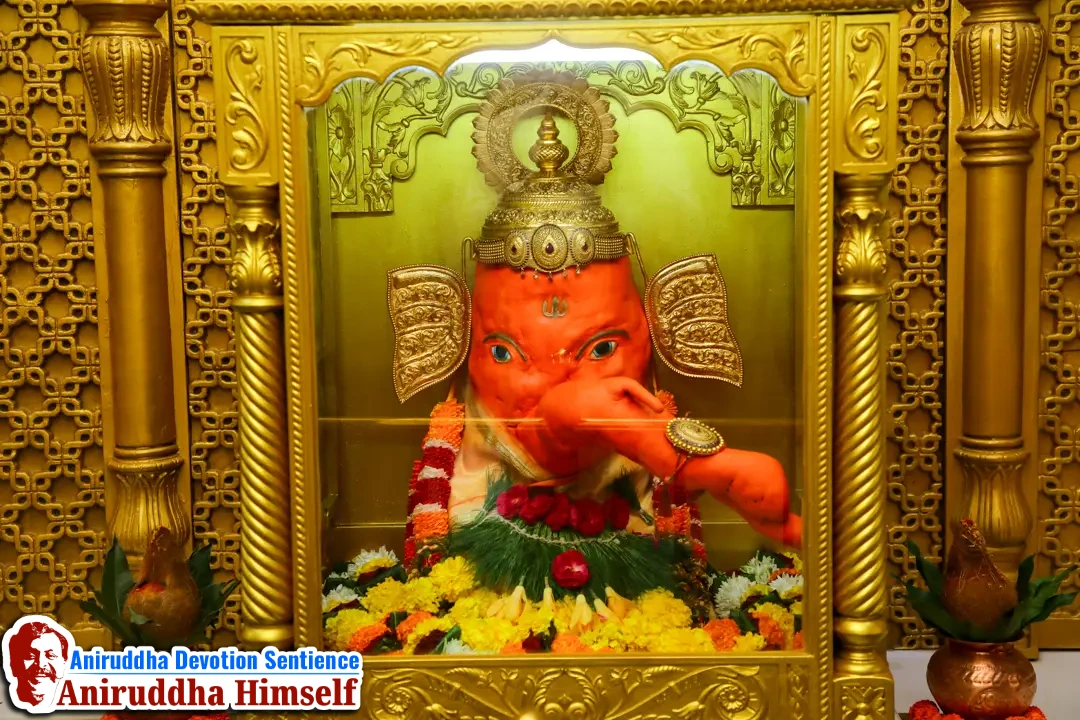
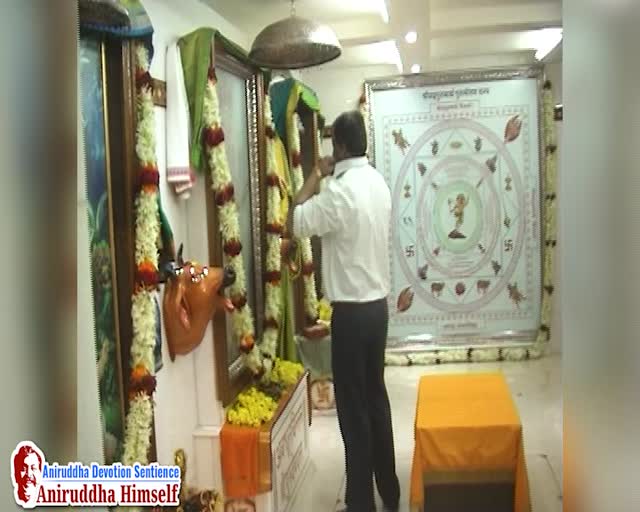
Shreemadpurushartha Purushottam Yantra (Kshama Yantra)
Sadguru Shree Aniruddha Bapu has described the Shreemadpurushartha Purushottam Yantra in the third volume of the Shreemadpurushartha Grantharaj, Anandsadhana. This sacred Yantra was consecrated by Sadguru Shree Aniruddha Bapu at Shree Aniruddha Gurukshetram on 3 September 2007.
The Shreemadpurushartha Purushottam Yantra is the abode of the five Gurus of Sadguru Shree Aniruddha Bapu. These Panchagurus are Bhagwan Shree Dattatreya, Shree Gayatri Mata, Bhagwan Shree Ram, Shree Hanuman, and Shree Sainath. At the centre of the Yantra stands Panchamukhi Hanuman—the supreme devotee, immensely powerful, valiant, and ever-compassionate towards devotees. He stands ever vigilant, ready to destroy unrighteousness and uphold Dharma.
Human beings inevitably commit mistakes, sins, and transgressions, whether knowingly or unknowingly. Along with granting forgiveness for these, prayer before this sacred Yantra also bestows the opportunity and inner strength to correct them and walk the righteous path. After all, only the one whose compassion is boundless and unconditional can extend forgiveness to every individual without discrimination and only Sadguru Tattva has such infinite forgiveness.
Ghanta (Sacred Bell)
In the Matruvatsalyavindanam, Sadguru Shree Aniruddha Bapu explains the profound spiritual significance of the Ghanta held in the hand of Adimata:
“Shree Saraswati, the embodiment of complete knowledge, offered the Bell at the lotus feet of Bhagwati.” (Reference: Chapter 9)
Bapu further explains:
घंटामंत्र
हिनस्ति दैत्यतेजांसि स्वनेनापूर्य या जगत्।
सा घण्टा पातु नो देवि पापेभ्यो नः सुतानिव॥
On 31 December 2009, Sadguru Shree Aniruddha Bapu consecrated the sacred Bell at Shree Aniruddha Gurukshetram after chanting the above mantra.
On the 17th of every month, a special Ghanta Poojan is performed at 11:30 a.m. at Shree Aniruddha Gurukshetram.
The Divine Kurma
Kurma means tortoise. Hari Kurma, the Divine Tortoise who bears Vasundhara (Mother Earth) upon His back, is the Kurma Avatar, the second incarnation of Mahavishnu.
According to the spiritual tradition, Mahavishnu has two divine consorts. One is Shree Devi, who remains eternally by His side, and the other is Bhu Devi, the Earth—our beloved Vasundhara. To fulfil His sacred responsibility towards Bhu Devi, Mahavishnu assumed the form of Kurma and bore the Earth upon His back, symbolising His unwavering support, protection, and sustenance of creation.
The sacred Udi Kumbha
At Shree Govidyapeetham in Kothimbe, an Akhand Dhuni (eternal sacred fire) burns continuously in accordance with the resolve (Sankalp) of Sadguru Shree Aniruddha Bapu. The sacred Udi (holy ash) generated from this Dhuni, where wood, cow-dung cakes, and husk are offered into the fire, is collected with great reverence.
In addition to this, the Udi obtained from the Yadnyas, Havans, and Mannat Dhoop conducted at Gurukul (Juinagar), the Udi from the Yadnyas performed during the Utsavs at Shree Harigurugram, and the Udi from the two annual Dattayadnyas conducted at the residence of Sadguru Shree Aniruddha Bapu are all brought together and enshrined in the Udi Kumbha at Shree Aniruddha Gurukshetram.
Furthermore, the Udi generated from the Yadnyas and Havans performed during both phases of the Purvaranga of the establishment of Shree Aniruddha Dham (held in 2025 and 2026) was also added to this sacred Udi Kumbha.
For Shraddhavans, this sacred Udi holds immeasurable spiritual significance. The Udi Kumbha at Shree Aniruddha Gurukshetram is regarded as an inexhaustible vessel of divine grace, from which Rudraganga Udi is made available to all devotees, free of cost, throughout the day and night.
In accordance with the teachings of Sadguru Shree Aniruddha Bapu, Shraddhavans apply the Udi with reverence every morning after bathing on the forehead (Adnya Chakra) and the throat (Vishuddha Chakra) before stepping out of their homes for any work. They also partake a small quantity of sacred Udi.
With unwavering faith in the Sadguru's grace manifest through the Udi, many Shraddhavans add it to food prepared in their homes and apply it to every new thing brought into the house. Regarded as a sacred shield of divine grace, the Udi is carried with deep faith during travel and is lovingly kept with them at all times as a constant source of spiritual protection.
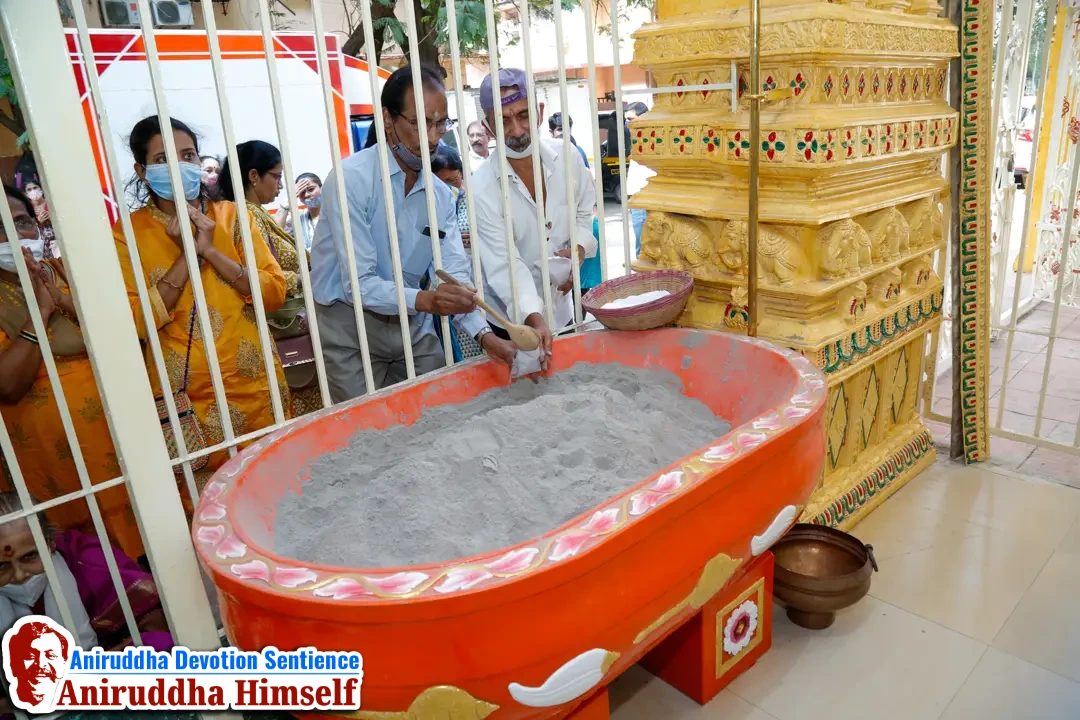
Narikel Balidanam Shila
According to the sacred traditions of Sanatan Dharma, offering a Shreephal (a sacred coconut) or ceremonially breaking it at a holy place is an age-old practice. It is believed that this sacred offering completes and sanctifies one's pilgrimage to the holy shrine. At Shree Aniruddha Gurukshetram, the ritual of Narikel Balidanam (Offering of a sacred coconut) is performed, and it holds profound spiritual significance for Shraddhavans.
In Chapter 16 of the Matruvatsalyavindanam, Sadguru Shree Aniruddha Bapu narrates the episode of the destruction of Chanda and Munda. In this episode, Kali Mata says to Shree Mahasaraswati:
“O Mother! I have ‘offered to You in sacrifice’, these gigantic and dreadful ‘beasts’ called Chanda-Munda. Do accept the sacrificial offering.”
The greatest beastly tendency within a human being is ego (Ahankar). The Shreephal (coconut) symbolically represents the human head. Thus, when a devotee offers or breaks a coconut before the Divine, it signifies the symbolic sacrifice of the ego and the beastly tendencies residing within the mind. It is an act of surrender, where one offers one's intellect at the Divine feet.
Along with ego, every individual carries numerous other shortcomings and negative tendencies, and every Shraddhavan sincerely wishes to be freed from them. At Shree Aniruddha Gurukshetram, Shraddhavans perform Narikel Balidanam by breaking a coconut at the designated sacred stone known as the Narikel Balidanam Shila. One half of the coconut is offered there as a sacred offering, while the remaining half can be taken home by the devotee as Prasad.
Purushartha Purushottam Yantra Utsav - Shree Hanuman Chalisa Pathan
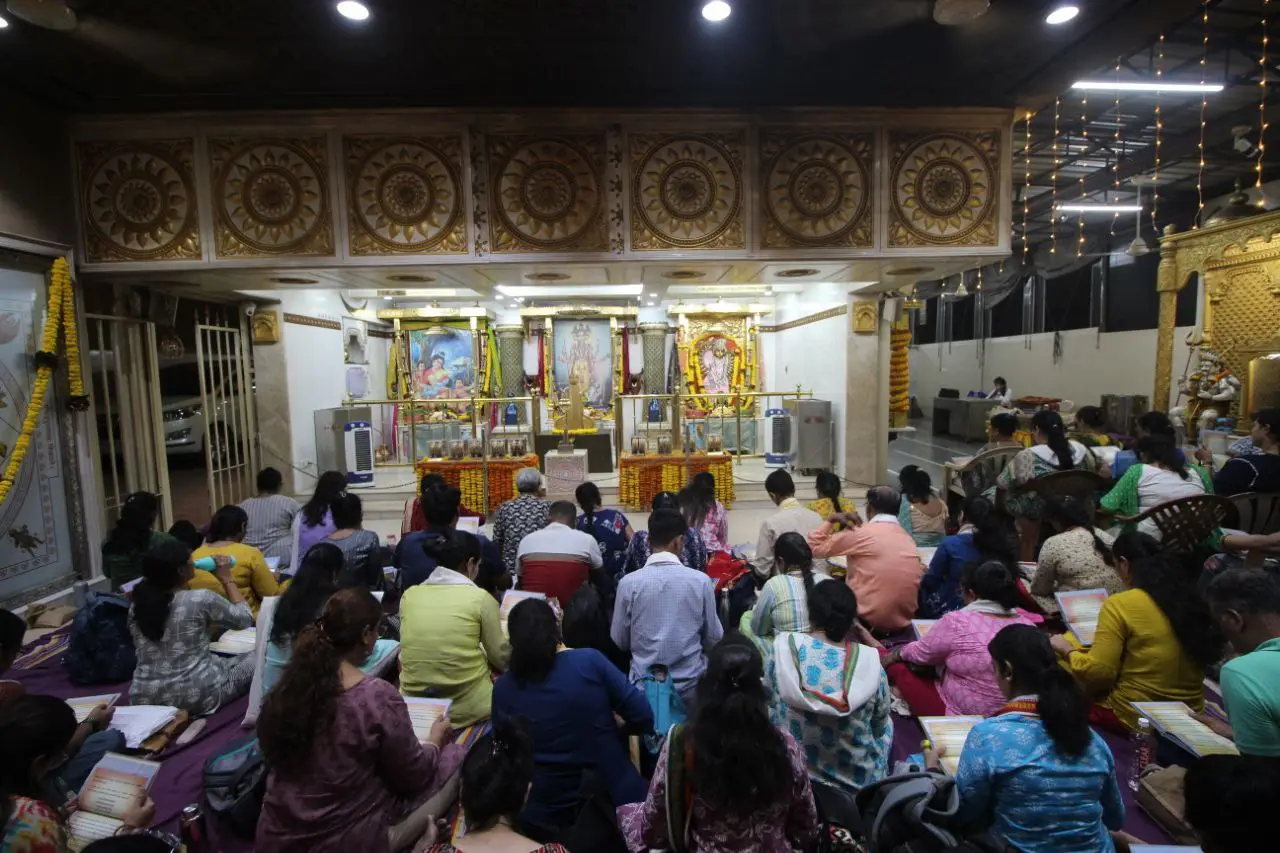
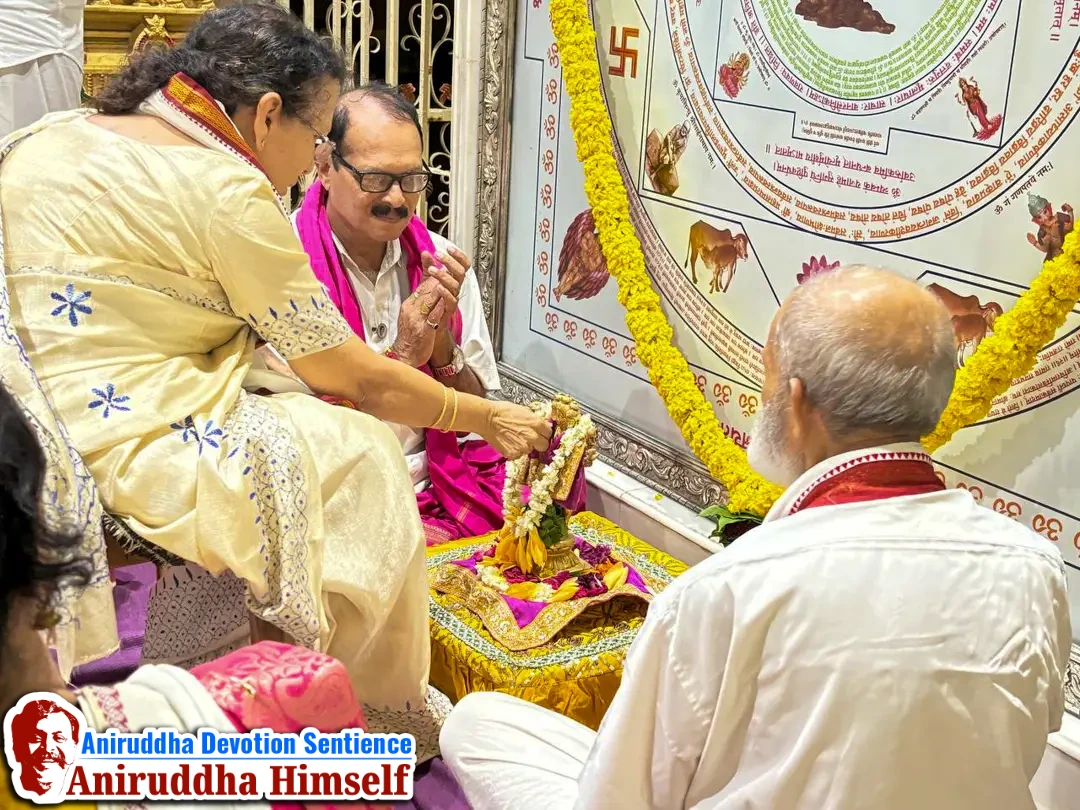
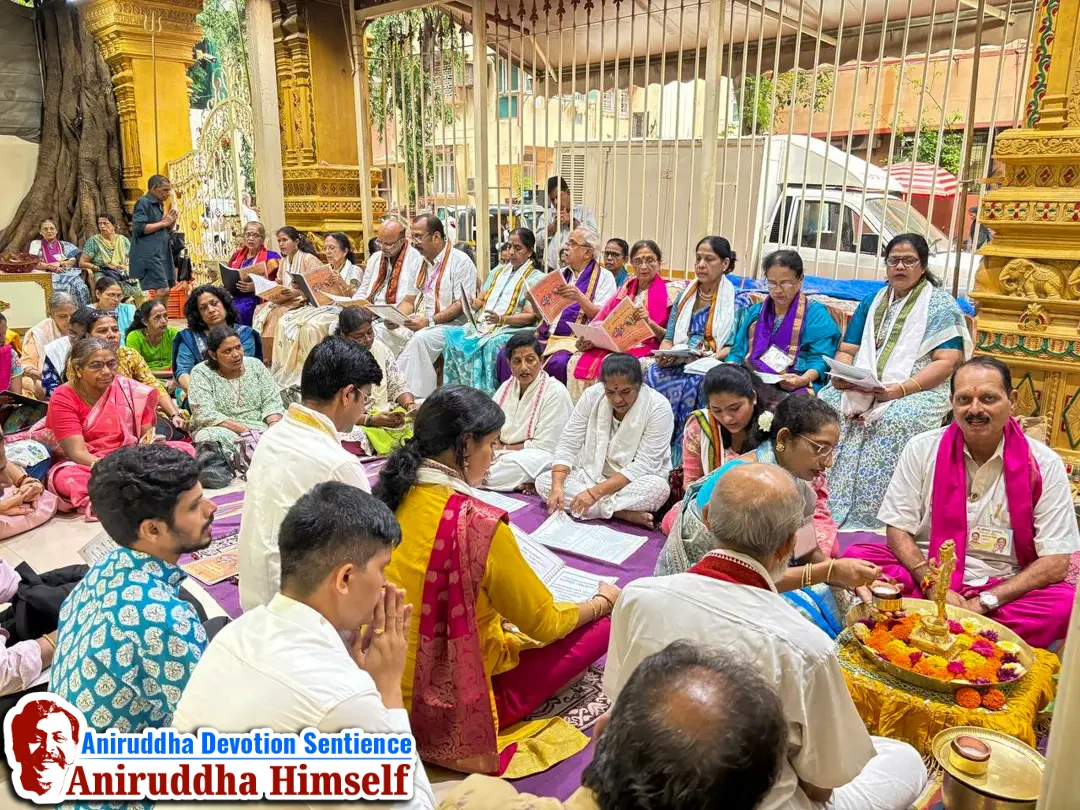
Each year, the Purushartha Purushottam Yantra (Kshama Yantra) at Shree Aniruddha Gurukshetram is celebrated with the sacred observance of the Shree Hanuman Chalisa Pathan. This recitation spans seven days and is held every year during a week in the month of May.
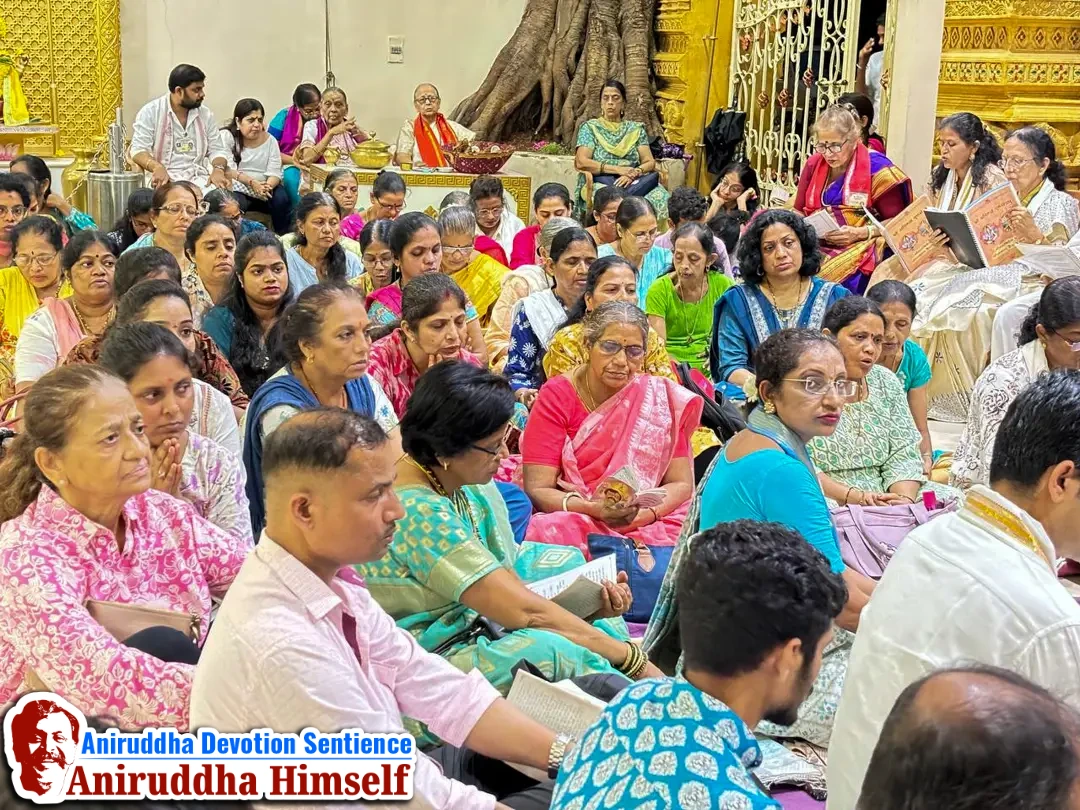
Each day, from 8:00 a.m. to 8:00 p.m., for twelve continuous hours, more than 108 Japakas participate in the collective recitation of the Shree Hanuman Chalisa. Divided into two batches, they are seated within the precincts of Shree Aniruddha Gurukshetram and recite the Hanuman Chalisa in one-hour sessions, with the sacred chanting continuously resonating throughout the Gurukshetram.
Established through the resolve of Sadguru Shree Aniruddha Bapu, Shree Aniruddha Gurukshetram stands as a sacred centre that radiates spiritual energy to the entire world. It is a place dedicated to the all-round welfare and upliftment of every Shraddhavan who comes seeking the Sadguru's grace.
Daily worship rituals performed at Shree Aniruddha Gurukshetram
8:30 a.m. Morning Poojan (Pratah Poojan)
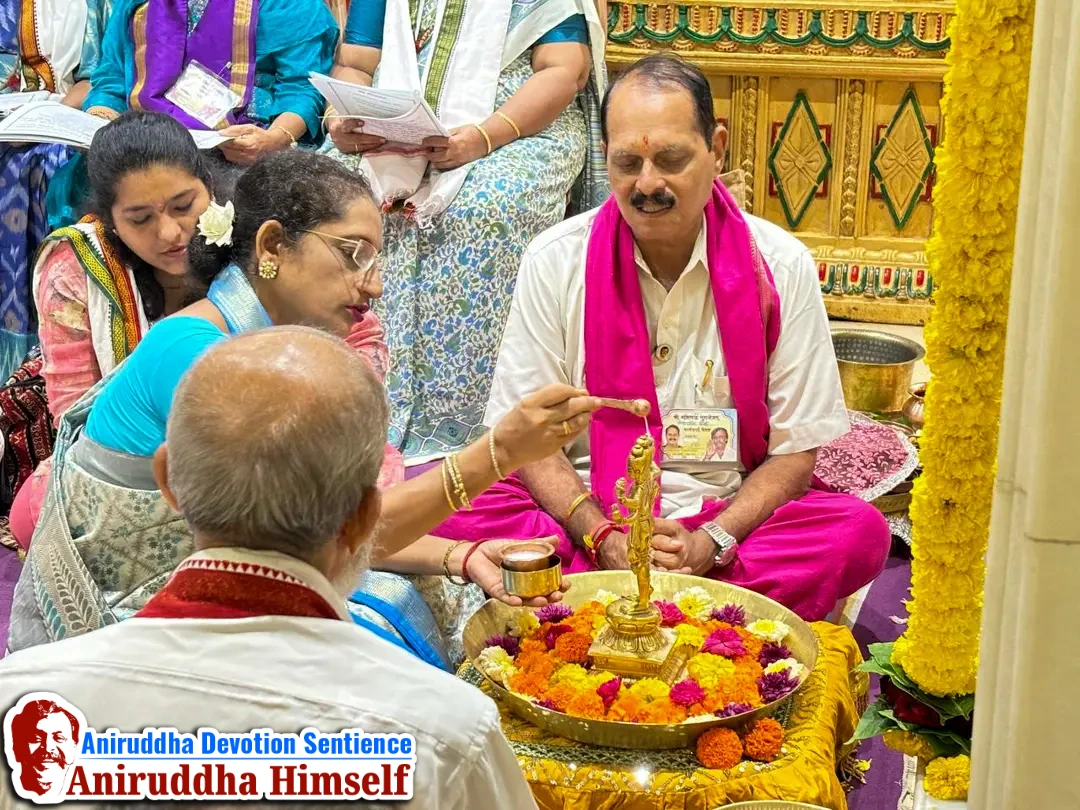
The worship of Jagadamba Mahishasurmardini is performed in the morning. During this Poojan, milk and sugar are offered as Naivedya, along with Dhoop, to Mahishasurmardini, Bhagwan Shree Dattaguru, and Adimata Anasuya.
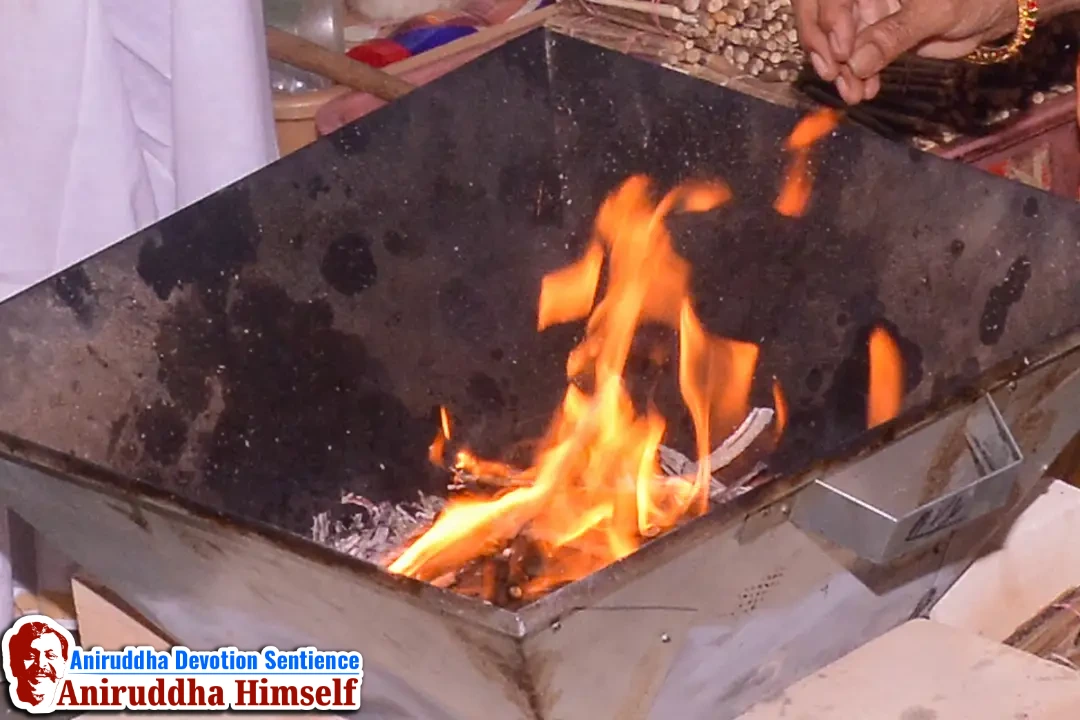
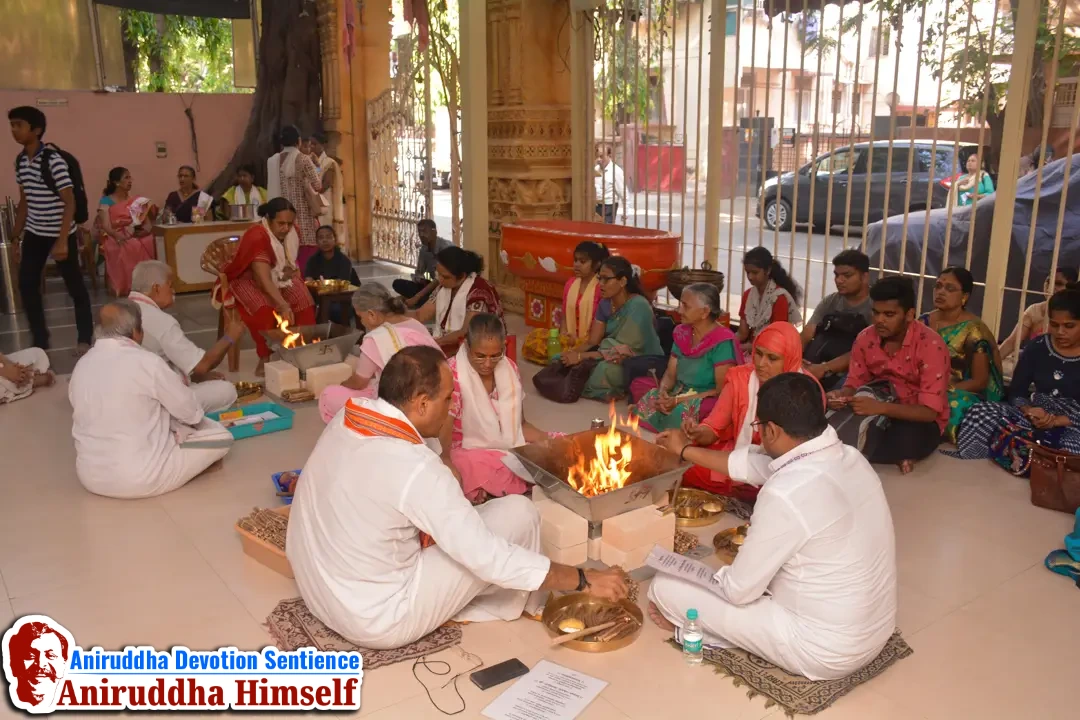
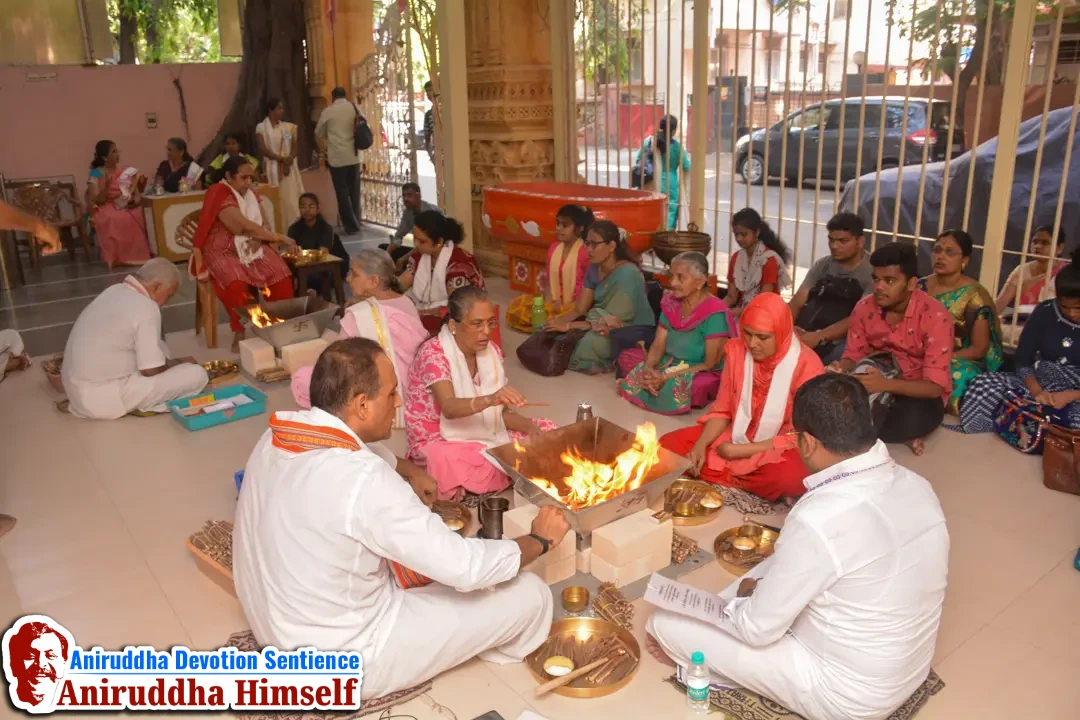
9:00 a.m. – 10:20 a.m. (approximately 3 Ghatikas / 72 minutes) Shree Chandika Havan
The Shree Chandika Havan is performed in the Gurukshetram amidst the continuous recitation of the Shree Adimata Shubhankara Stavanam and Shree Adimata Ashubhanashini Stavanam.
12:30 p.m. – 1:45 p.m. Madhyahna Poojan (Midday Worship)
All deities are worshipped, offered Naivedya, and the worship is concluded with Aarti. The sacred Audumbar tree is also worshipped.
After 2:00 p.m. Shree Moolark Ganesh Poojan
The worship of Shree Moolark Ganesh is performed, followed by the chanting of the Shree Moolark Ganesh Mantra 21 times.
8:30 p.m. Naivedya and Evening Aarti
Naivedya is offered to the Gomukh, Bhagwan Shree Dattaguru, Adimata Anasuya, and Mahishasurmardini, followed by the Evening Aarti.
10:00 p.m. – 6:00 a.m. Shree Ramrasayan Pathan
Shraddhavans sit in the premises of Gurukshetram and collectively recite the Shree Ramrasayan. Thereafter, they may continue with other Upasanas, Stotra recitations, or the reading of sacred scriptures according to their own devotion.
Special Poojans
- Monthly Shivaratri Poojan – The Shree Mahadurgeshwar Linga is worshipped on every monthly Shivaratri.
- Chaitra Navratri Utsav (Shubhankara Navratri)
- Ashwin Navratri Utsav (Ashubhanashini Navratri)
Address
551, Shree Datta Niwas, TPS III, Old, 8th Road,
Khar West, Mumbai, Maharashtra 400052