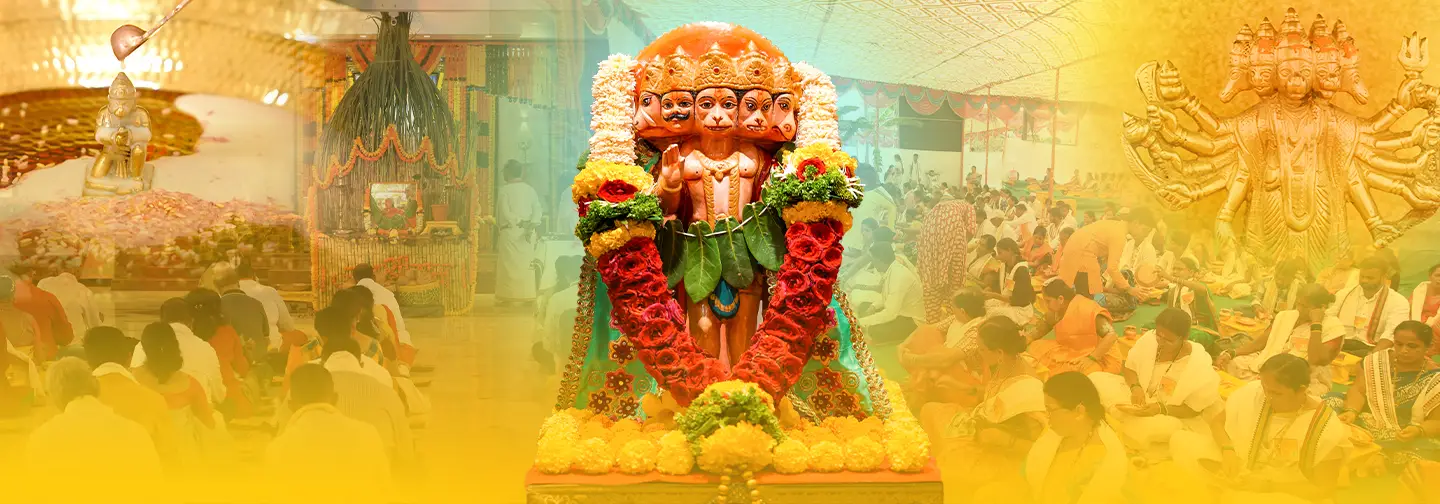
The Real Hanuman Pournima
Sadguru Aniruddha Bapu explained that when one listens deeply to the Ramayan, it becomes clear that Hanuman’s divinity manifested even at birth. Just moments after He was born, the infant Hanuman leapt toward the radiant sun, mistaking its crimson glow for a ripened fruit. By divine coincidence, Rahu (one of the nine major celestial bodies (navagraha) had also approached to swallow the sun, causing a solar eclipse. Since solar eclipses occur only on Amavasya, this episode offers a quiet scriptural indication of the moment of Hanuman’s birth, even though Hanuman's birth is popularly observed on the Chaitra Pournima day.
The Divine Significance of Hanuman Pournima
Among Hanuman’s infinite divine attributes, the Nama Sita-shoka-vinashak (the one who removes Mother Sita’s sorrow) shines brightest. The profound story behind this Nama reveals the spiritual essence of why Chaitra Pournima is revered as Hanuman Pournima.
On this auspicious day of Chaitra Pournima, Shree Hanuman began his mission to annihilate evil, and hence, it is truly celebrated as his Avirbhav Din (divine appearance day). The sacred journey that began from Bharat’s southern shore to Lanka, His meeting with Mother Sita, the destruction of Ashok Vatika (Ashok Van) and His return to ShreeRam — all form the Sunderkand, the most beautiful chapter of bhakti of the Ramcharitmanas.
Thus, Hanuman Pournima is the day when Hanuman first met Mother Janaki (Sita),who was held captive in Ravana’s Ashok Vatika. When Hanumanji met Mother Sita, He humbly presented ShreeRam’s ring as proof of His identity. Overwhelmed by His divine presence, Mother Sita embraced Hanuman as both her son and a revered father figure. That sacred day is celebrated as Hanuman Pournima — a day of divine union, courage and faith.
On this very day, Mother Sita recognised in Hanuman the reflection of ShreeRam’s beloved tutelary deity, Shree Shiva, in the form of Maharudra. By relieving Her sorrow, Hanuman became Sita-shok-vinashak, i.e. the destroyer of Sita’s grief. On the same day, Hanuman met Ravana and, with divine compassion, advised him to repent. However, blinded by ego, Ravana ordered Hanuman’s tail to be set on fire, which resulted in Hanumant burning down the golden Lanka. Thus, Hanuman Pournima symbolises the victory of truth, humility and devotion over arrogance and evil.
Sadguru Aniruddha Bapu’s reverence for Shree Hanuman
For Sadguru Aniruddha Bapu, Shree Hanuman is the Rakshak Guru, the Guru who protects. Bapu beautifully says, “Every devotee begins his journey on the path of Bhakti by holding Hanuman’s finger.
Sadguru Bapu lovingly guides Shraddhavans in reciting the Sunderkand, Hanuman Chalisa, Maruti Stotra, and Panchamukh Hanumat Kavach.
Every Thursday, at Shree Harigurugram, Hanuman’s grand portrait graces the Upasana stage. The collective chant “Om Shree Ramadutaya Hanumantaya Mahapranaya Mahabalaya Namo Namah” reverberates with sacred energy, binding all Shraddhavans in divine unity.
At Shree Aniruddha Gurukshetram, Hanuman is the presiding deity of the sacred ShreemadPurushartha Purushottam Yantra — the instrument of divine forgiveness.
Veneration of Shree Hanuman fills the heart with divine energy, courage and peace. Under Bapu’s guidance, devotees across the world continue these prayers, keeping alive the flame of Hanuman Bhakti.
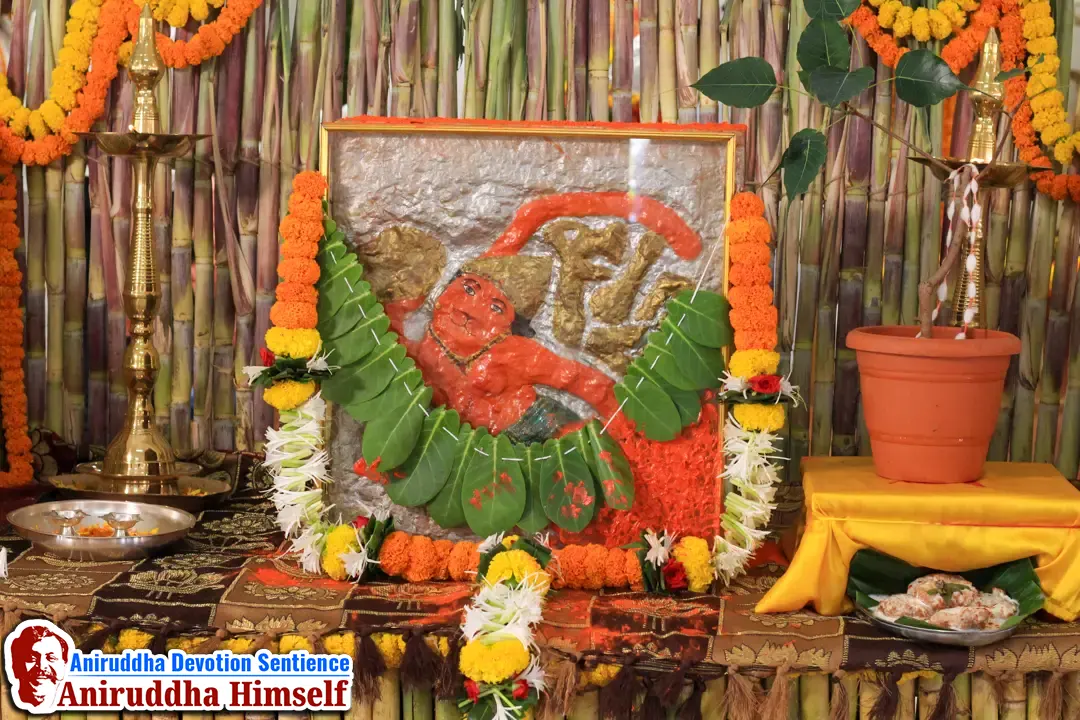
Hanuman Pournima Utsav at Shree Atulitabaladham, Ratnagiri
Every year, the Hanuman Pournima Utsav is celebrated at Shree Atulitbaladham, Ratnagiri. The name "Atulitbaladham" itself is derived from the revered epithet of Shree Hanuman, where Atulit means incomparable, Bal means strength, and Dham means abode. Together, Atulitbaladham signifies the abode of unparalleled strength and power—the very abode of Shree Hanuman himself.
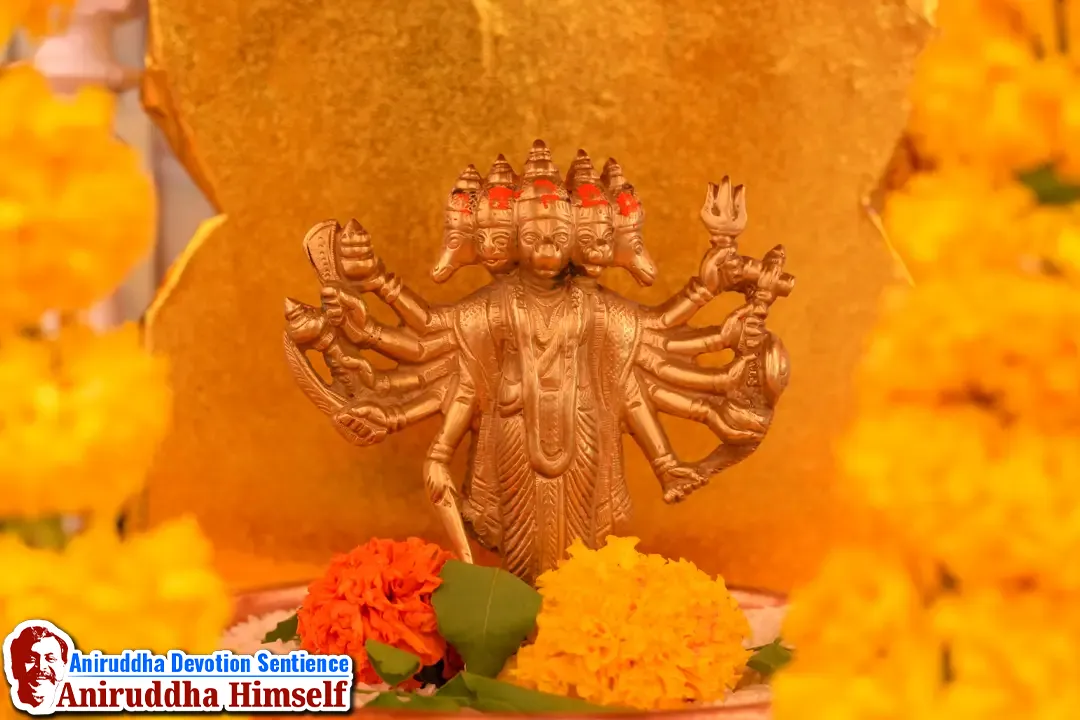
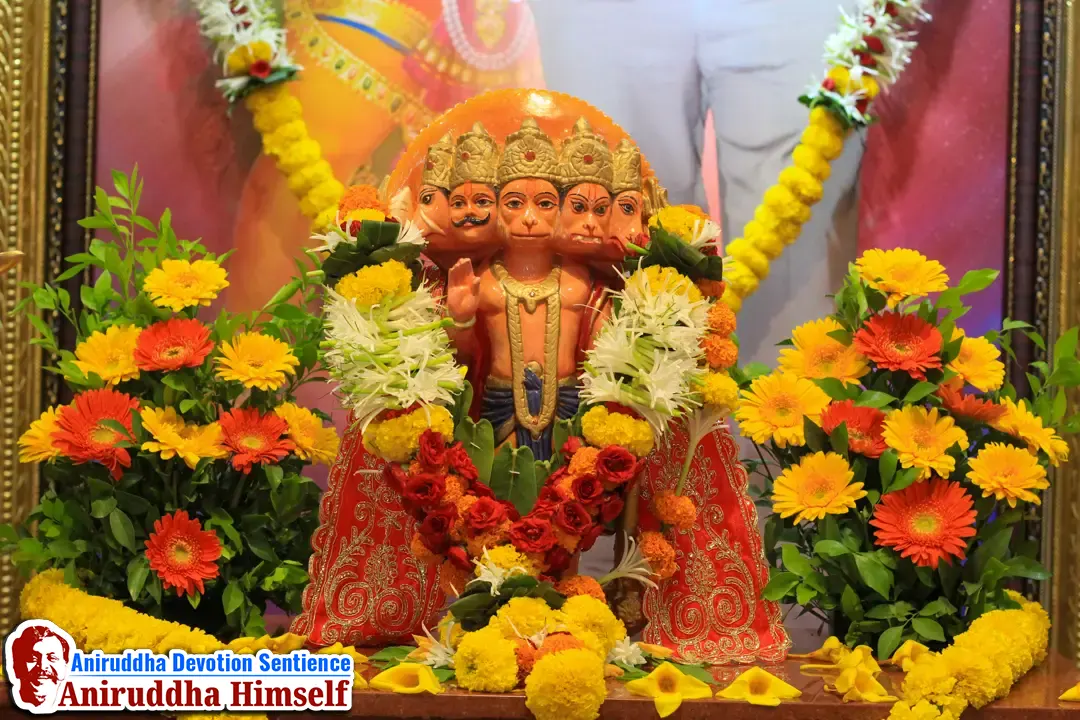
At the heart of this sacred shrine stands the magnificent idol of Panchmukhi Hanuman. The five-faced form of Hanuman embodies immense spiritual power, divine protection, unwavering devotion, courage, wisdom, and strength. Devotees who visit this holy place and offer their prayers at the lotus feet of Panchmukhi Hanuman experience a deep sense of courage, confidence and fearlessness.
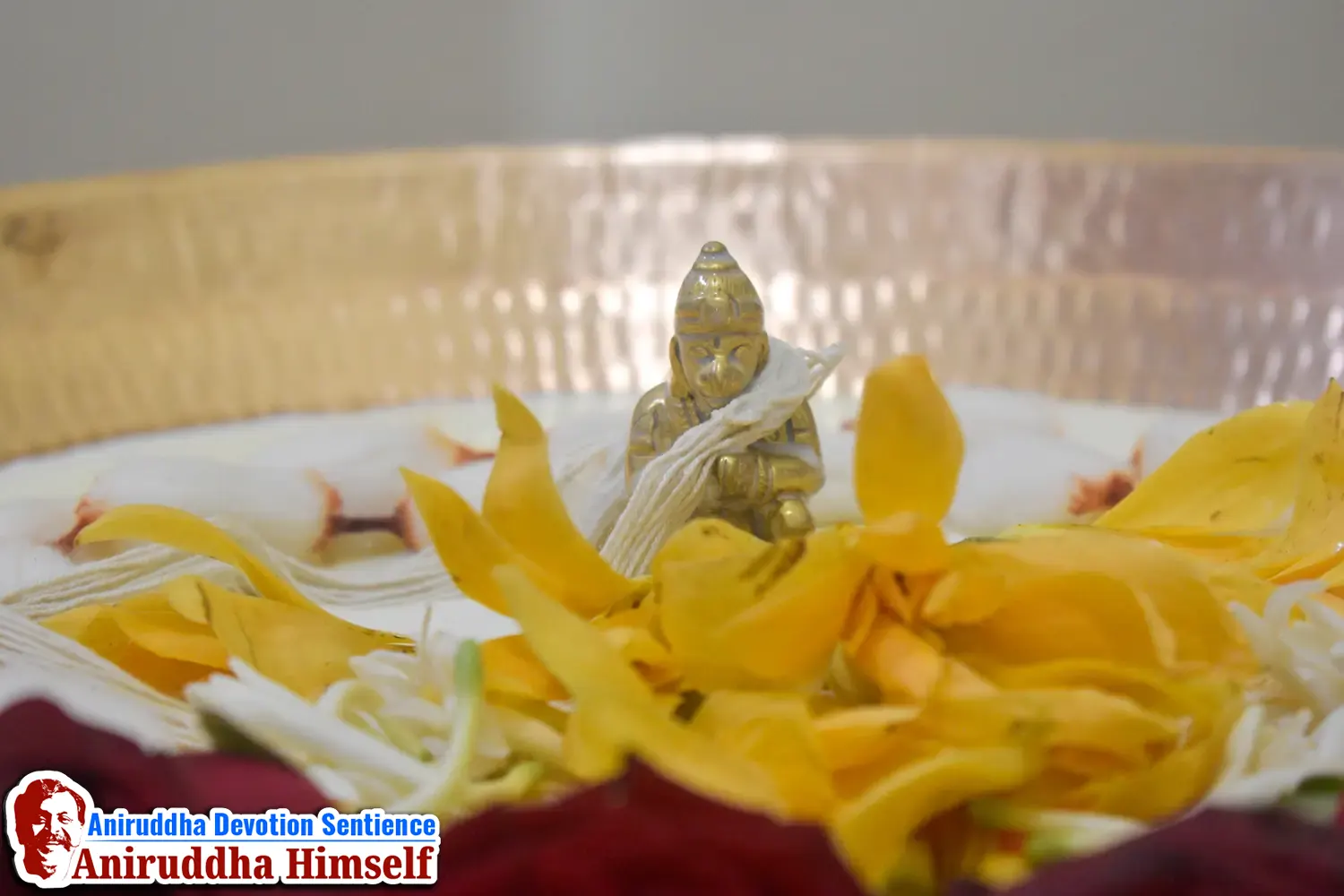
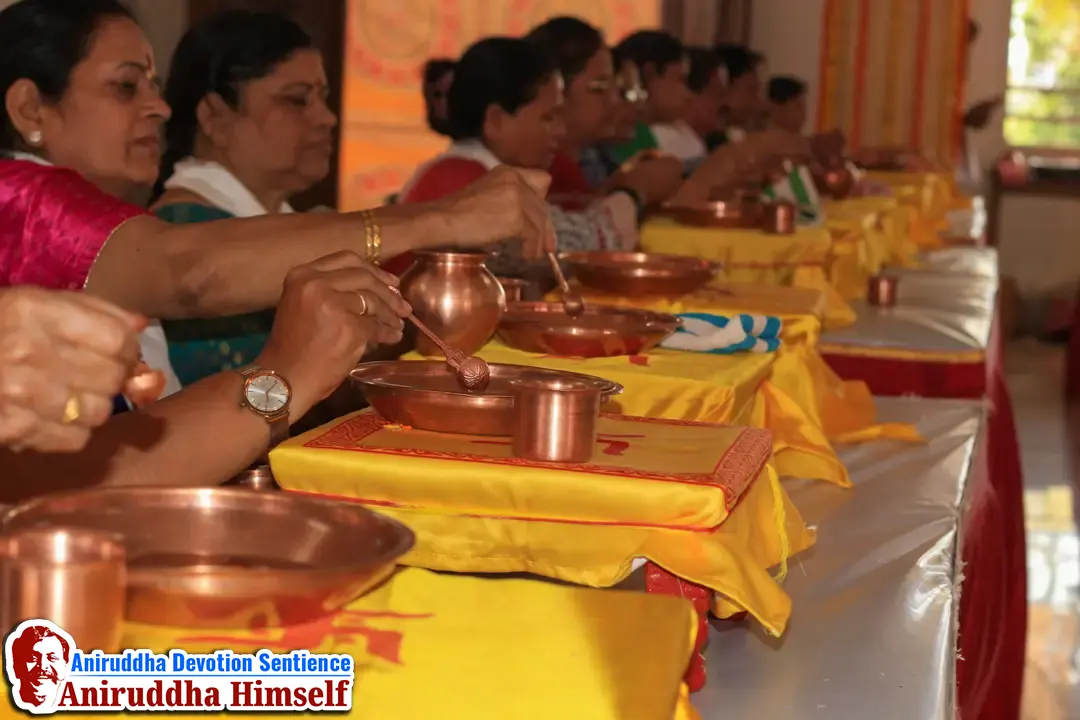
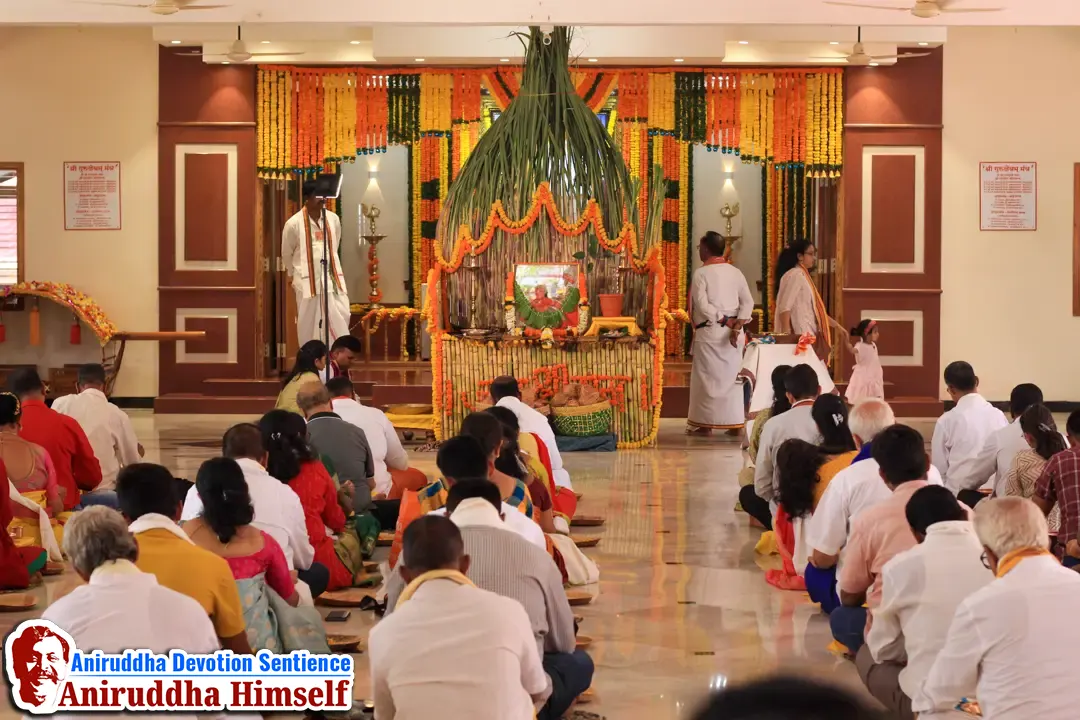
Here, the Hanuman Pournima Utsav begins with the traditional worship, involving the sixteen prescribed procedures, or the ‘Shodashopachara Poojan’, of the unique idol of Shree Hanumant. This sacred idol of Panchmukhi Hanuman worshipped at Atulitbaladham is the very same idol that was in the pooja room (Devghar) at Sadguru Aniruddha Bapu’s residence.
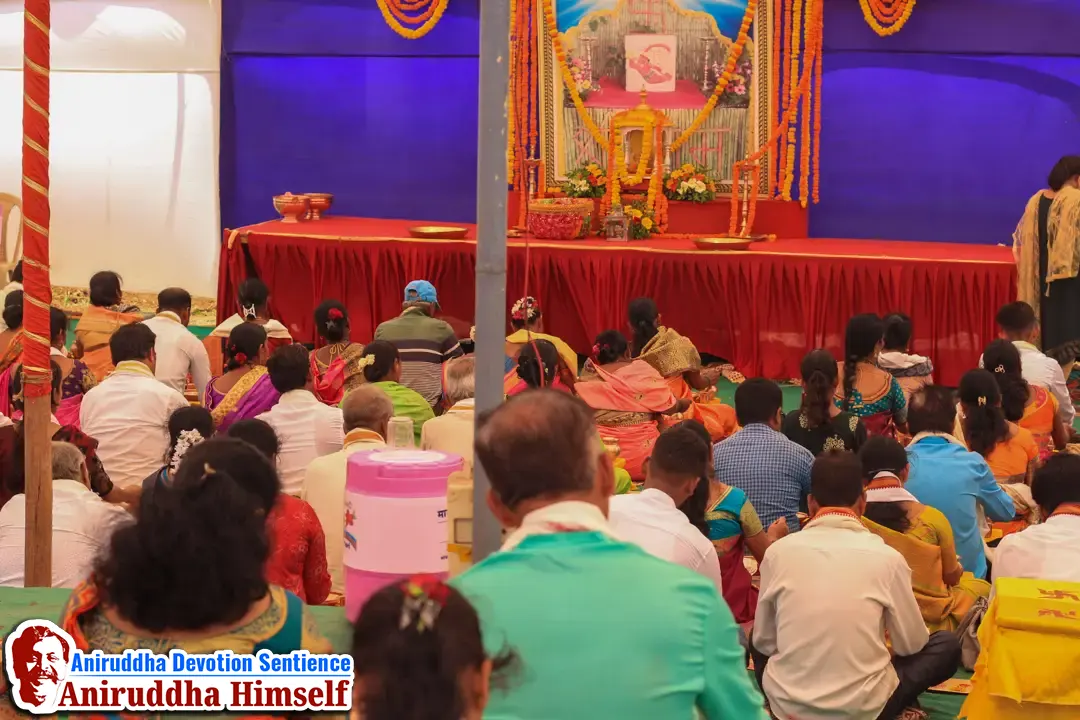
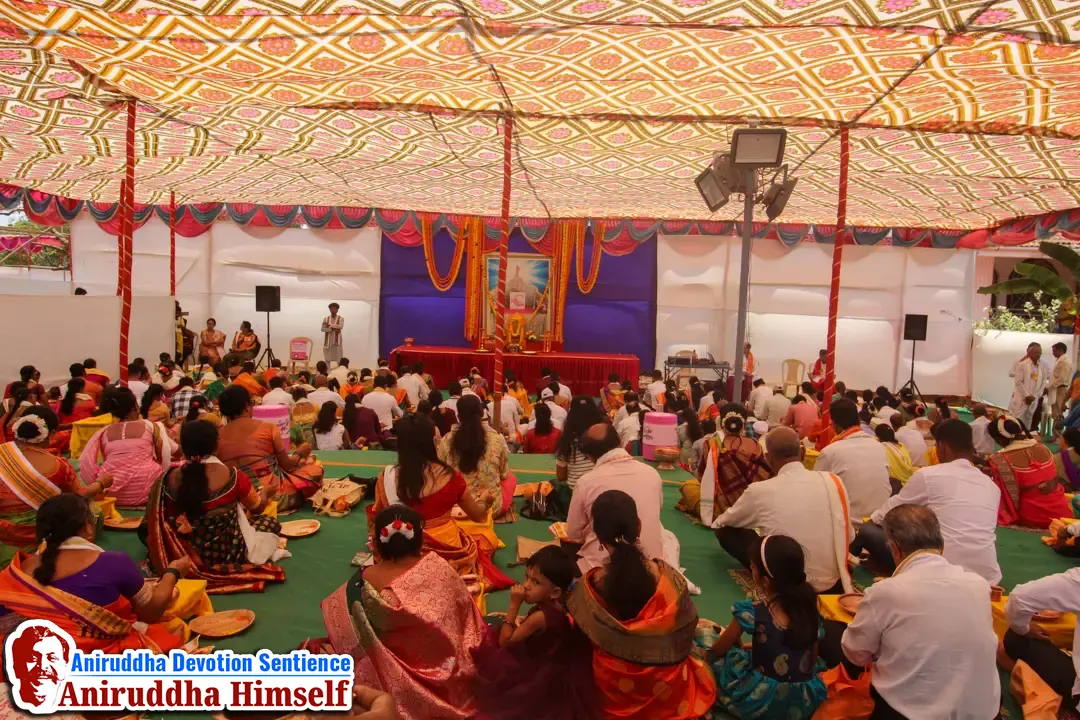
Every year on Chaitra Shuddha Pournima, the Shree Hanuman Pournima Utsav is celebrated at Atulitbaladham in a deeply devotional atmosphere. Along with the above idol, the moorti of Shree Hanumanta, sculpted by Sadguru Shree Aniruddha himself, is specially brought from Gurukul (Juinagar). This moorti is also worshipped specially by Shraddhavans in the month of Shravan during the Ashwattha Maruti poojan at Gurukul, Juinagar.
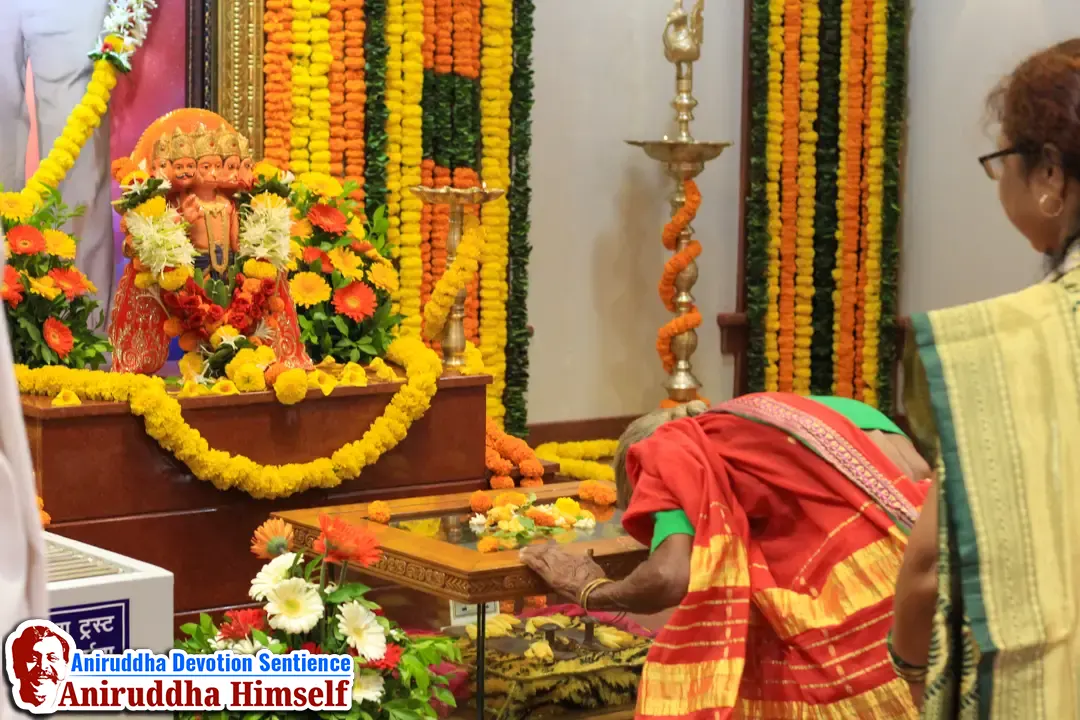
Shendur (Sindoor) offering to Hanumanji
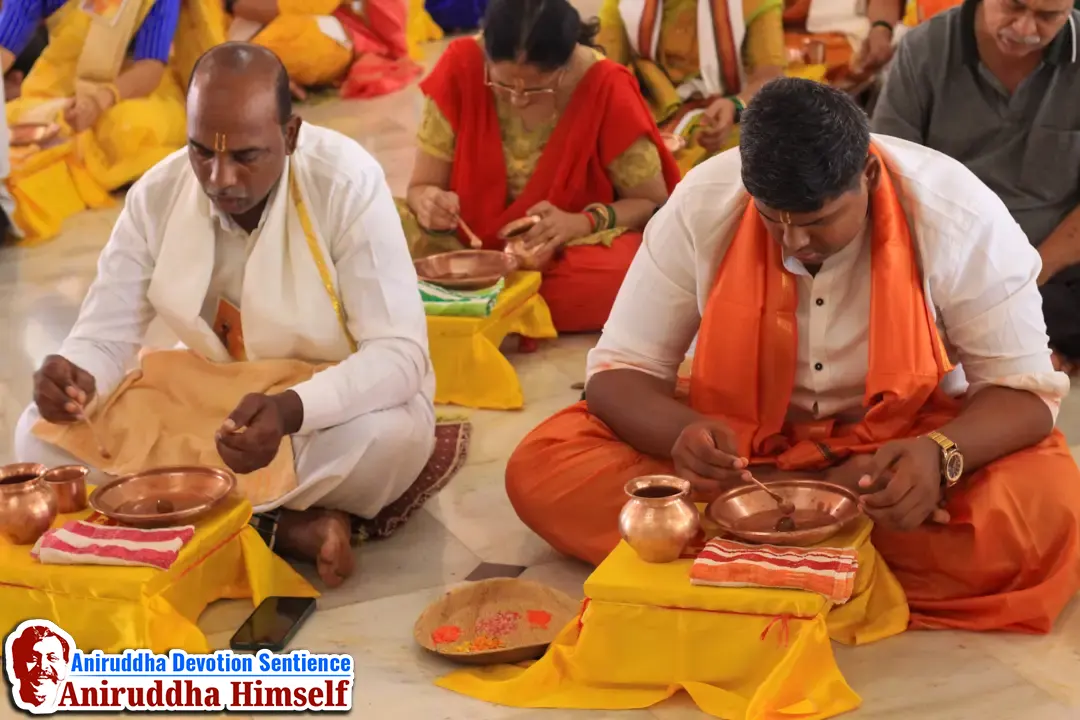
Following the poojan, the idol is ceremoniously anointed with shendur. Every Shraddhavan devotee visiting the Utsav is blessed with the opportunity to receive the darshan of this very moorti of Shree Hanuman and to offer shendur to it.
Dudhabhishek and Chanting
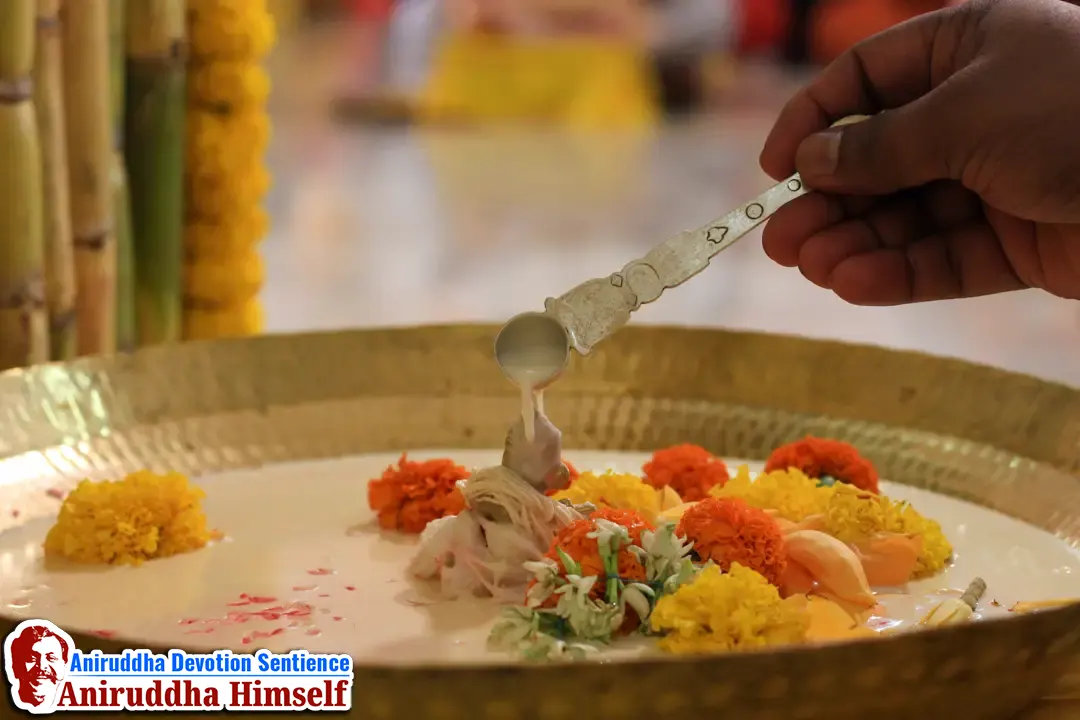
Throughout the day, the idol of Shree Hanumant is anointed with a continuous Dudhabhishek (milk offering). During this ritual, Shree Panchamukha Hanumant Kavach and Sankatmochan Shree Hanuman Stotra are chanted.
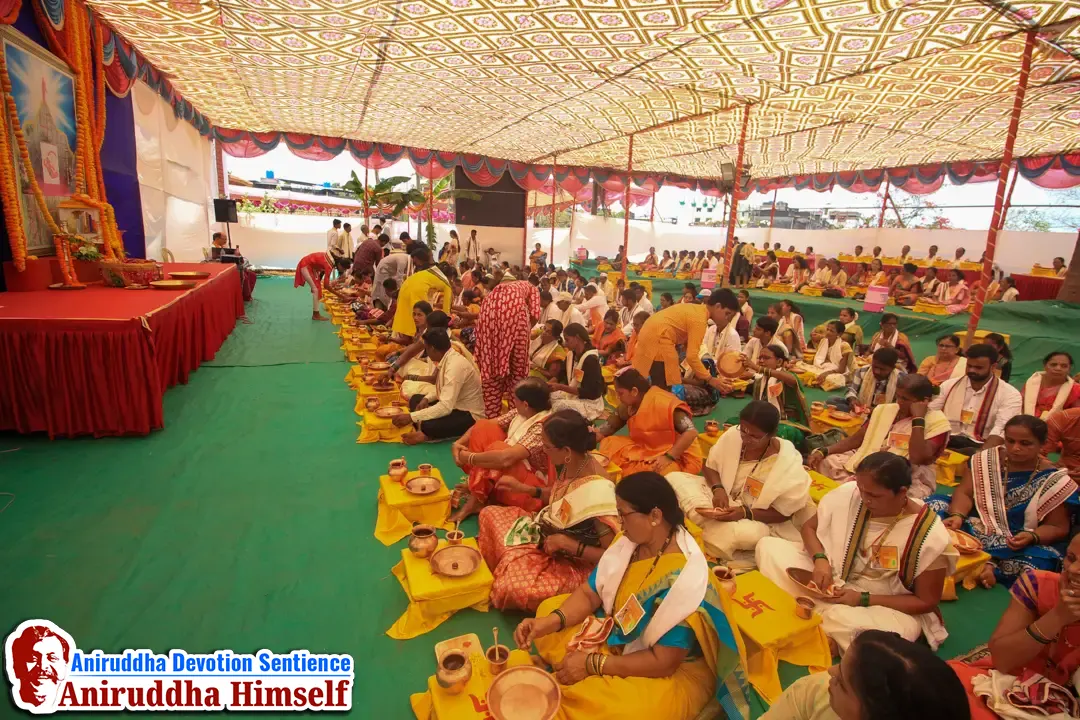
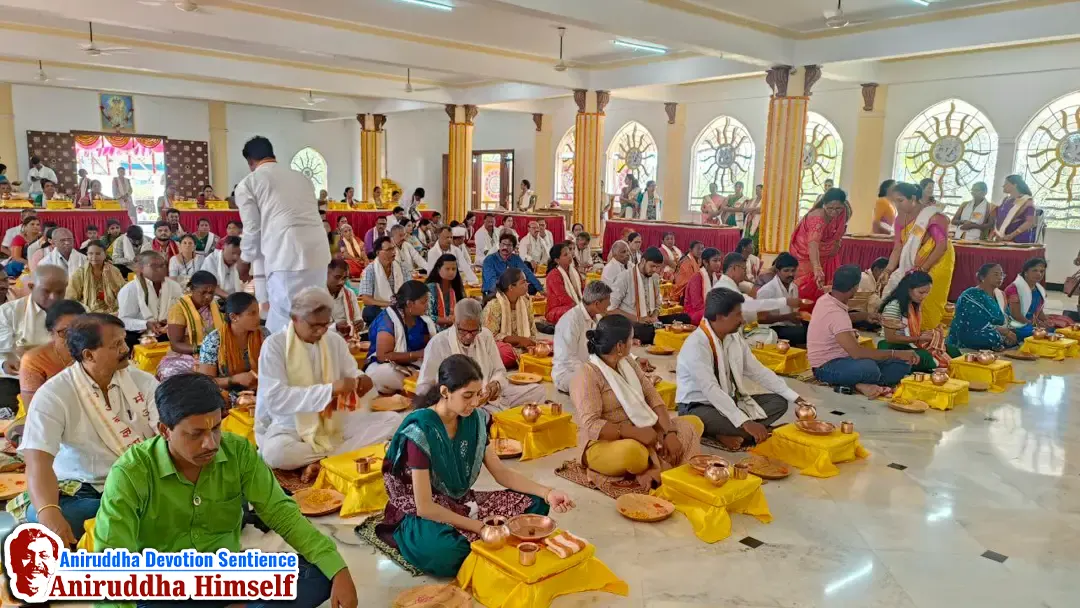
Along with these two hymns, the Shreemad Hanumant Mantra Japa: “Om Shree Ramadutaya Hanumantaya Mahapranaya Mahabalaya Namo Namah” is recited in the set of 54 repetitions. Devotees present at the venue willingly and joyfully join this collective chanting and directly partake in the sacred Archana ritual.
Shree Panchakumbhabhishek
The Shree Panchmukh Hanumat Kavach, which is chanted during the Hanuman Pournima Utsav, is revered as a supreme shield, protecting devotees at every level — physical, mental and pranic. Whatever the crisis may be, however great or subtle it may appear, the living faith of the people remains unwavering: Shree Hanuman removes every adversity and grants His unfailing protection. Therefore, for the one who longs to earn the grace of this Sankatmochan Hanuman, there is truly no day more sacred than Hanuman Pournima.