Importance of Guru Pournima
The tradition of this festival in India traces back to a sacred story.
Even after composing the eighteen Puranas and the great epic Mahabharata, Brahmarshi Vedavyasa was neither content nor fulfilled. His mind remained restless and unsettled. At such a time, his Guru, Narad Muni, appeared before him and instructed him to compose a scripture that would glorify and sing the divine qualities of Shree Krishna. Brahmarshi Vedavyasa accepted this command with utmost reverence and followed it exactly as instructed. Through this, he experienced the extraordinary grace of obeying his Guru's words.
This story teaches us a profound lesson: true peace, fulfilment, and contentment are attained only by following the Guru's command. When one accepts the Guru's command as one's own resolve and lives accordingly, only then does human life attain its true purpose. It is said that the tradition of celebrating Guru Pournima throughout India began as an expression of gratitude towards Brahmarshi Vedavyasa.
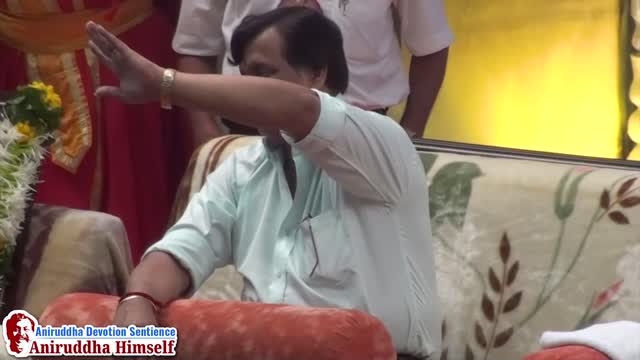
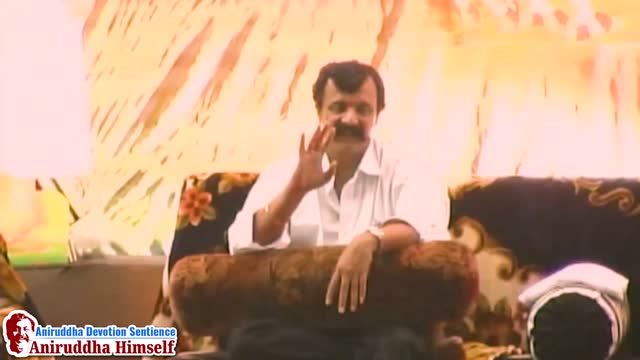
For us Shraddhavans, Gurupournima is not merely a ritualistic observance; it is a deeply emotional and spiritual occasion. It is a day when hearts overflow with gratitude towards Sadguru Aniruddha Bapu, whose boundless love, guidance, and grace continue to shape our lives in countless ways. Through His discourses, teachings, and compassionate presence, Bapu has shown us how to lead a life rooted in faith, responsibility, and inner strength. On the day of Gurupournima, Shraddhavans gather with immense devotion to offer their heartfelt prayers at the lotus feet of their Sadguru.
Guru Pournima Utsav
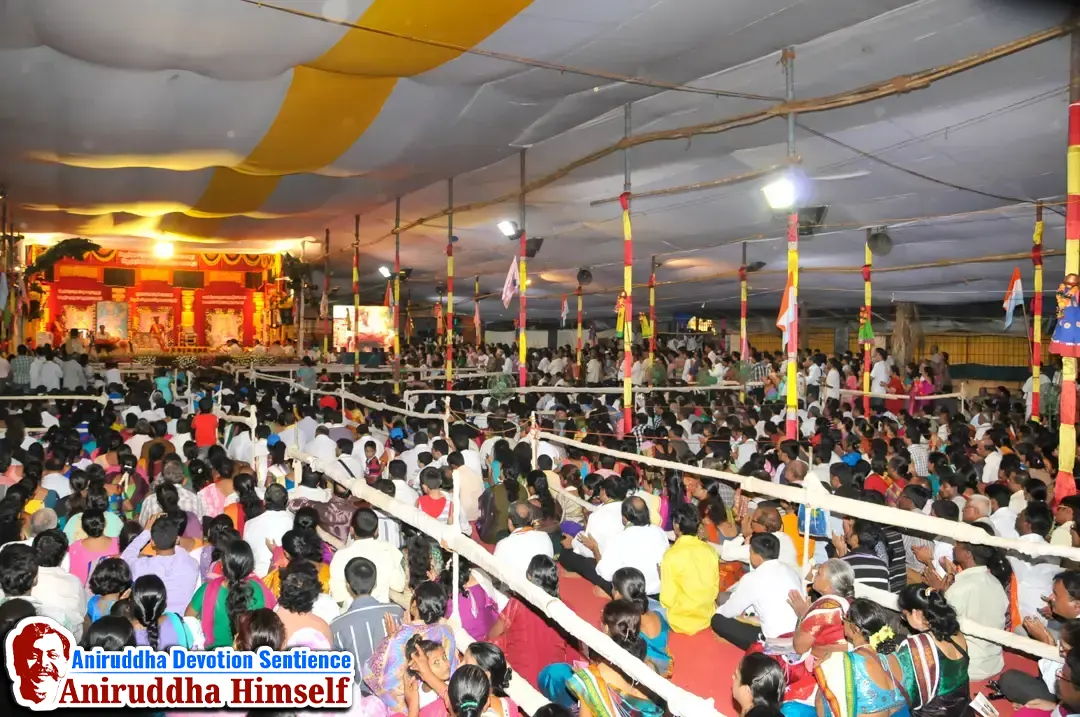
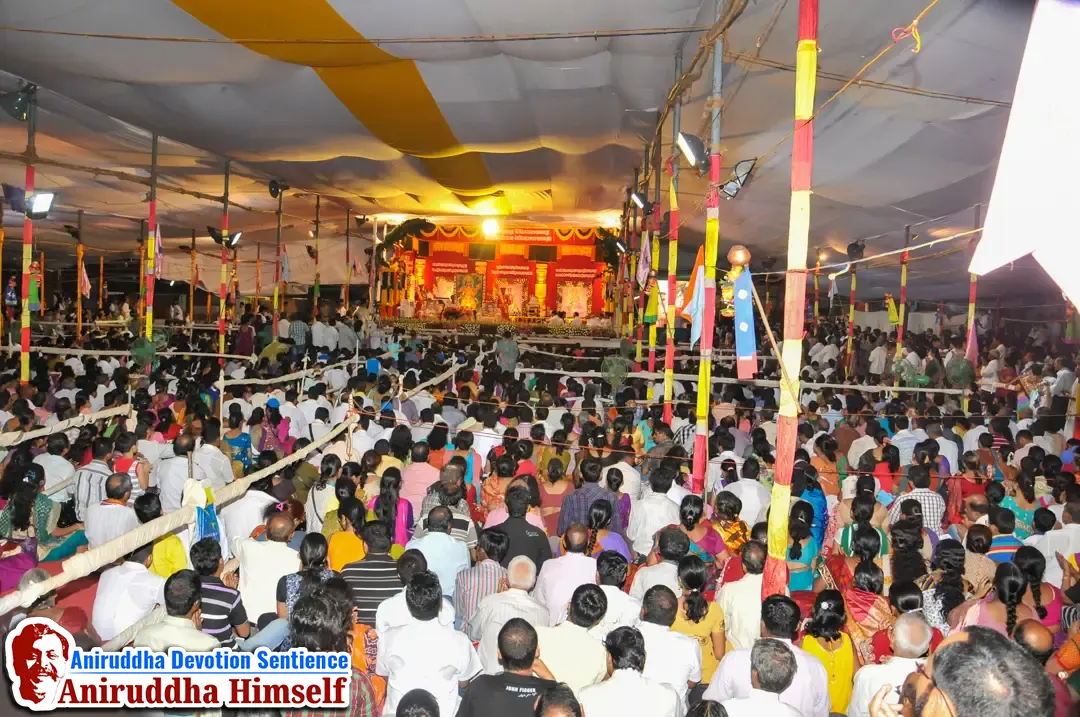
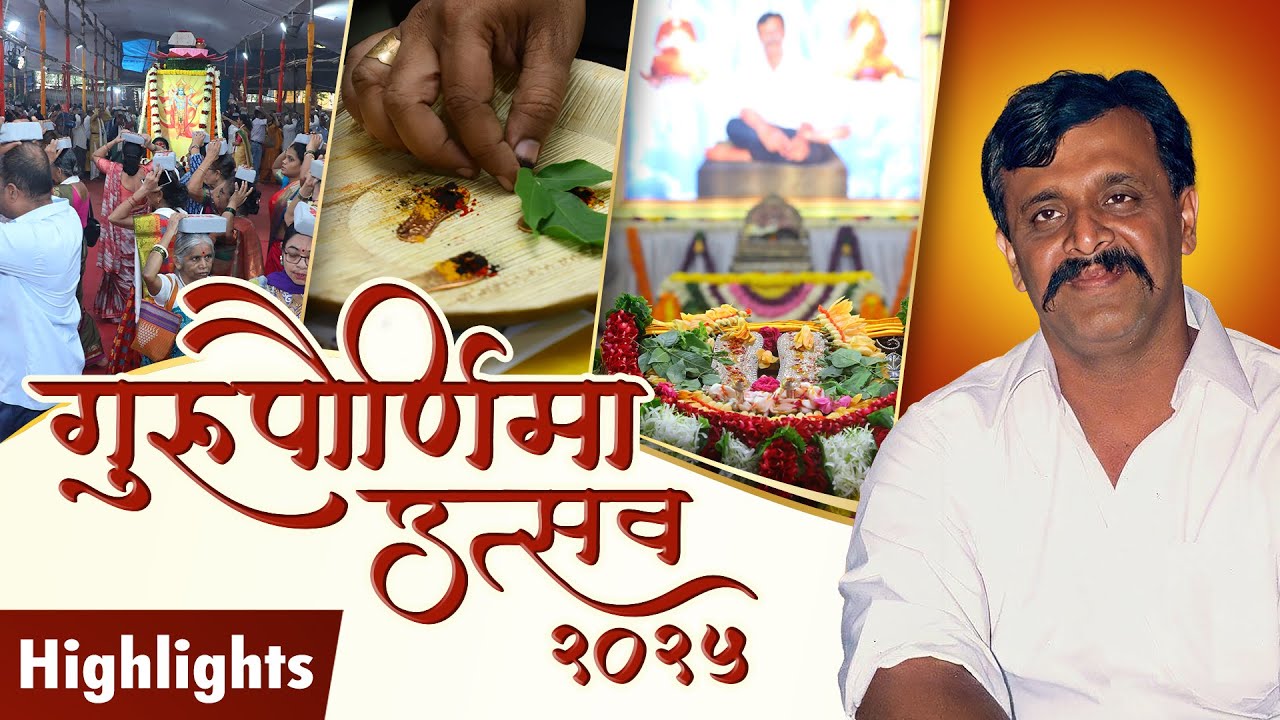
Every year, Guru Pournima is celebrated with great enthusiasm by Sadguru Shree Aniruddha Upasana Trust, Shree Aniruddha Upasana Foundation, and their affiliated organisations. Lakhs of Shraddhavans participate in this grand celebration. The first Guru Pournima Utsav organised by the Sanstha was celebrated with great fervour in Dadar in 1996, and since then, the festival has been celebrated every year, drawing an ever-growing number of devotees who gather to express their gratitude, devotion, and reverence towards Sadguru Aniruddha Bapu.
Arrival of the Guru Padukas and Shree Guru Dattatreya Idol
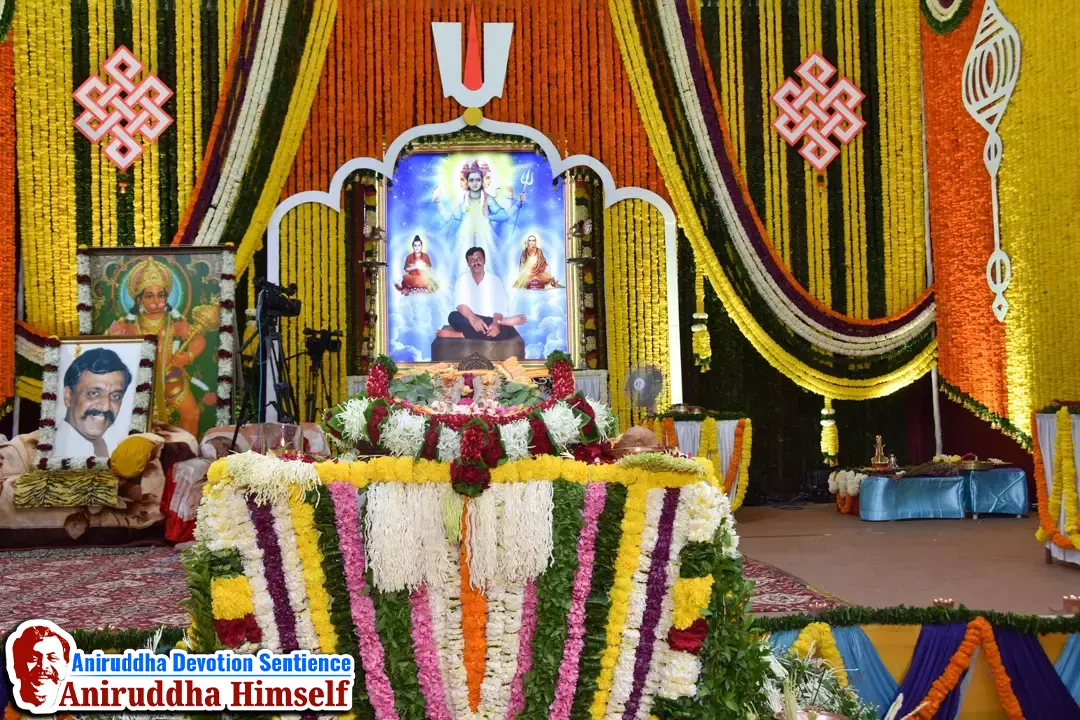
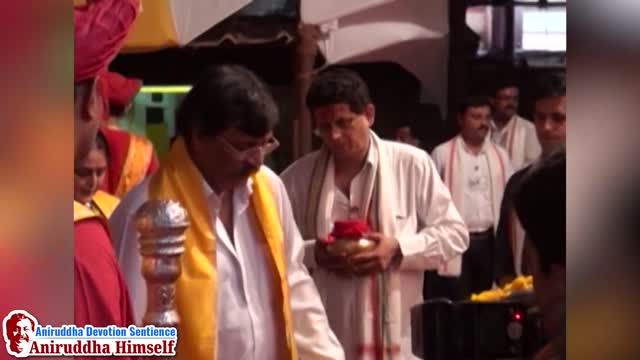
The Guru Pournima Utsav begins with the ceremonial arrival of the sacred Guru Padukas from the residence of Sadguru Shree Aniruddha (Bapu). These Padukas are revered as the Padukas of Dattavatar Shree Nrusimha Saraswati. Along with them, the idol of Shree Gurudattatreya from Sadguru Shree Aniruddha's household shrine is also brought to the festival venue.
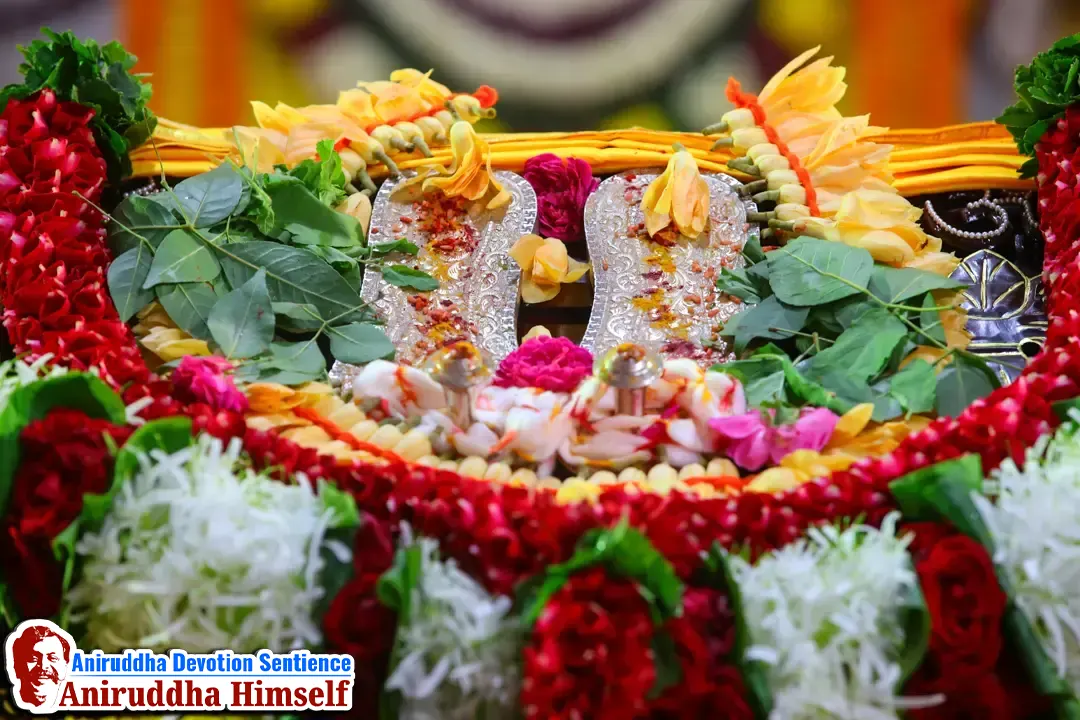
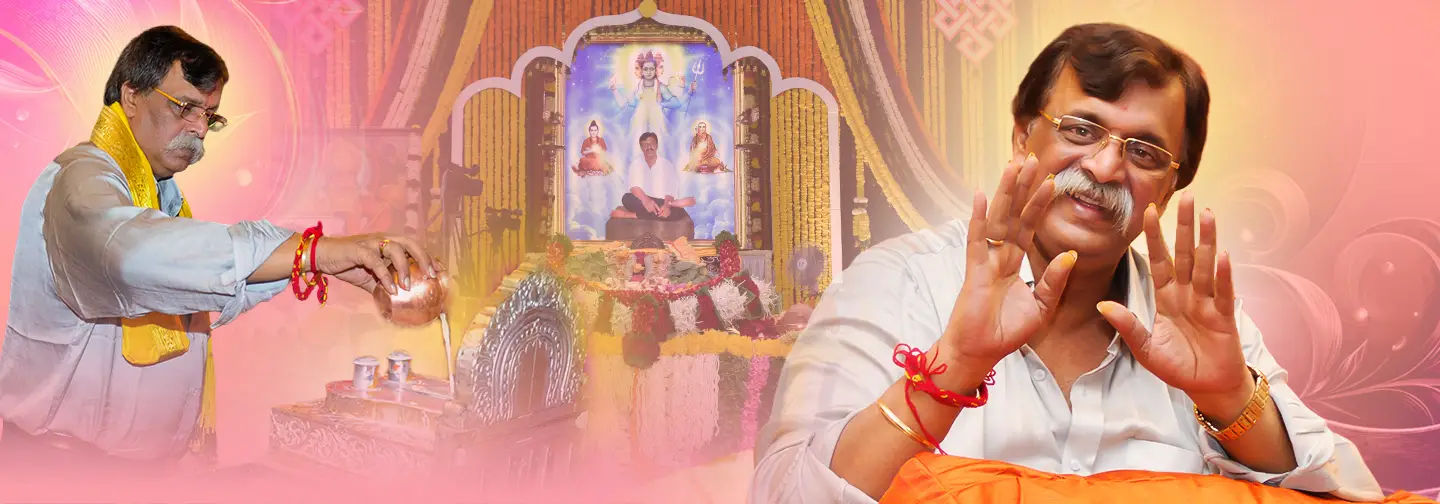
At the venue, the Padukas of Shree Nrusimha Saraswati are worshipped through the traditional Shodashopachara Pujan (sixteenfold ritual worship), followed by a Jalabhishek. Thereafter, Shraddhavans are blessed with the opportunity to have darshan of these sacred Padukas.
The Guru Gita mentions that the lotus feet of the Sadguru embody all sacred pilgrimages and holy places. Therefore, the water used in the Jalabhishek of Shree Nrusimha Saraswati's Padukas is later distributed to the Shraddhavans as Teertha (sacred water).
Simultaneously, an uninterrupted chanting of the mantra "Om Draam Dattatreyaya Namah" (‘ॐ द्रां दत्तात्रेयाय नम:।’) takes place before the idol of Shree Gurudattatreya. Draam is the Beej Mantra of Shree Gurudattatreya and is mentioned in the Datta Mala Mantra. This continuous recitation fills the entire atmosphere with devotion and the divine vibrations of Shree Gurudattatreya.
Krupachaitanya Padukas
On the sacred occasion of Guru Pournima, Shraddhavans are blessed with the darshan of the Krupachaitanya Padukas at the Utsav venue. These Padukas are not merely sacred footwear; they are Sadguru Shree Aniruddha Bapu Himself. They embody His very soul and living presence.
Speaking about the Krupachaitanya Padukas, Bapu lovingly explained: "These Padukas are the complete Aniruddha (with all the potencies and all the energies). By the blessings and grace of Aai Jagadamba and Sadguru Dattatreya, all powers, all energies and all capacities have been enshrined in these Padukas."
On this sacred day, Shree Trivikram, the original embodiment of the Principle that is the Sadguru (Sadgurutattva) is worshipped at the Utsav, making Guru Pournima a unique celebration of the Sadguru's living presence and boundless grace.
The Importance of Trivikram Poojan
On the day of Guru Pournima Utsav, Shraddhavans perform ‘Shree Trivikram Poojan’ as per the resolve of Sadguru Shree Aniruddha Bapu.
In part 1483 of the editorial series, based on the 'Sundarkand' published in daily Pratyaksha, titled Tulsipatra, Sadguru Shree Aniruddha writes: “Indeed, when a person's intellect, mind, or body is touched by Trivikram even once, and that person accepts that divine touch through devotion, repentance, or by correcting their mistakes, the life of that devotee becomes a veritable mine of beauty.”
In Tulsipatra editorial series, Part 1464, Bapu writes about Trivikram, the Original Sadgurutattva: "During times of crisis in a Shraddhavan’s life, the Original Sadgurutattva, namely Trivikram, keeps the Shraddhavan bound to Himself and protects a true devotee from every adversity. A Shraddhavan can never fully comprehend the ways in which Trivikram comes to his aid."
Further, in Tulsipatra Part 520, Bapu writes: “The worship, upasana, and devotion of any kind offered to Shree Trivikram is a certain and auspicious path for Shraddhavans to overcome every form of lack, poverty, deprivation, and weakness at any level, because Trivikram Himself is Saguna and is abundantly filled with Nav-ankur-aishwarya (Nine-budding-divine wealths). This very Trivikram continually grants His devotees rewards fourfold greater than the faith and trust they place in Him. This very Trivikram is the threefold support that exists solely for the Shraddhavans in this three-dimensional world."
It is this Swayambhagwan Trivikram whose worship Shraddhavans are blessed with the opportunity to perform during this festival.
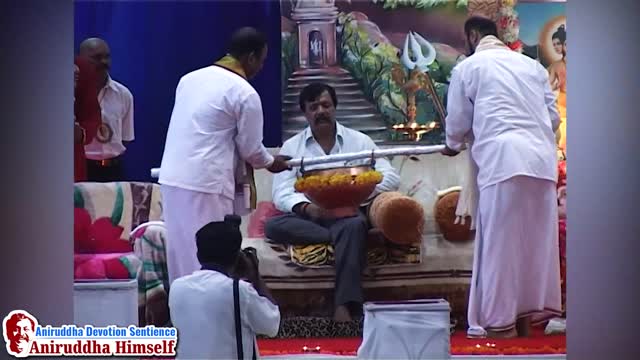
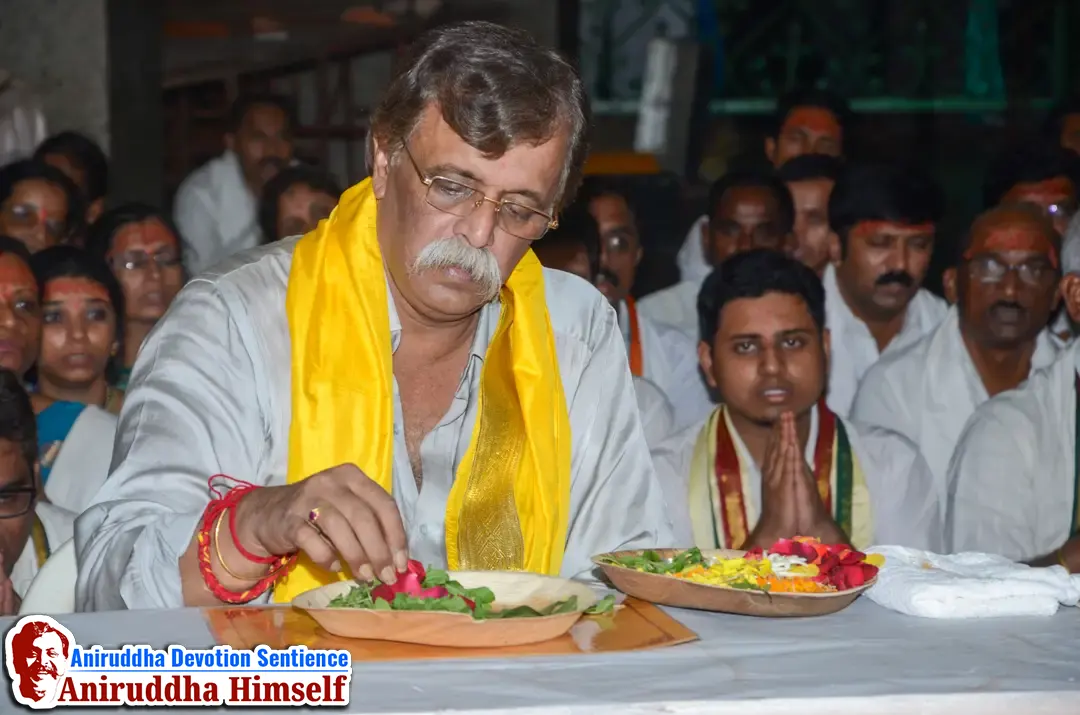
The worship of Trivikram is not merely the prayer and worship of a "form" or a sacred image. Rather, it is the worship of the holiest and sublime Saguna principle, the worship of divine attributes themselves. At the festival venue, a Trivikram Linga is placed at the centre of the worship area, while each participating Shraddhavan is provided with a tabak (platter) containing three footprints symbolising the three steps of Bhagwan Shree Trivikram.
These three footsteps of Trivikram represent true and pure compassion, forgiveness, and the acceptance of bhakti. Through these very three steps, Trivikram continually destroys the adverse destiny in the life of a Shraddhavan and fills it with joy and auspiciousness. The worship of these three footsteps is, in essence, a prayer by the Shraddhavan that Trivikram may encompass and permeate their entire life through these divine qualities, transforming it with His grace.
Circumambulation around the Bhaktistambha (The Pillar of Faith)
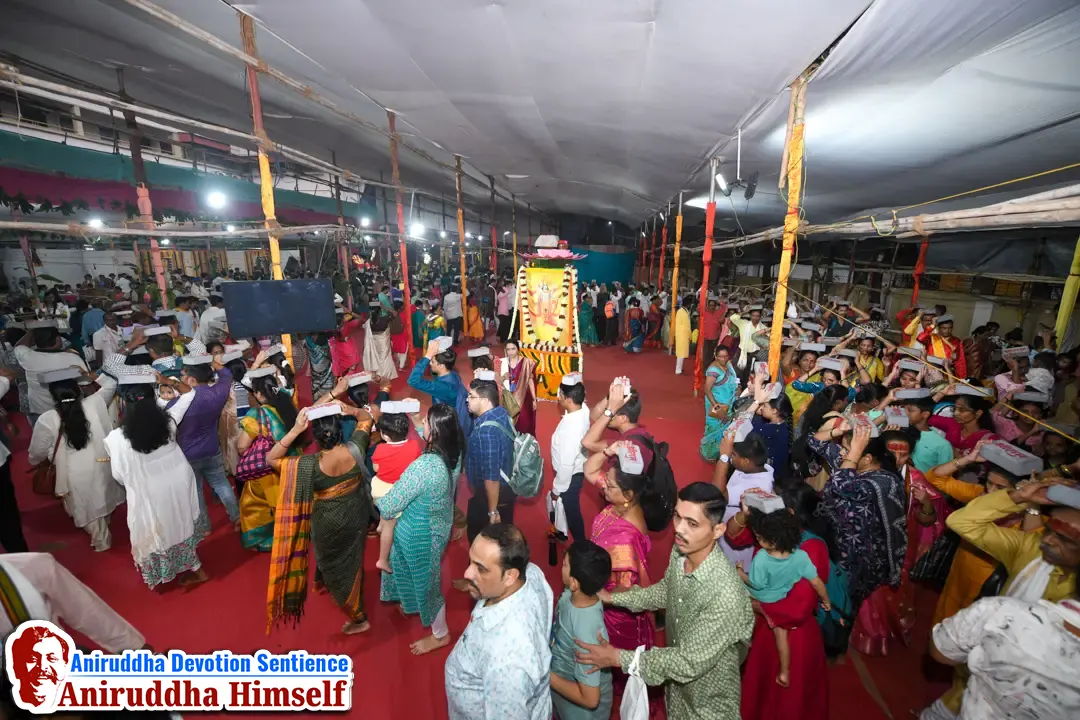
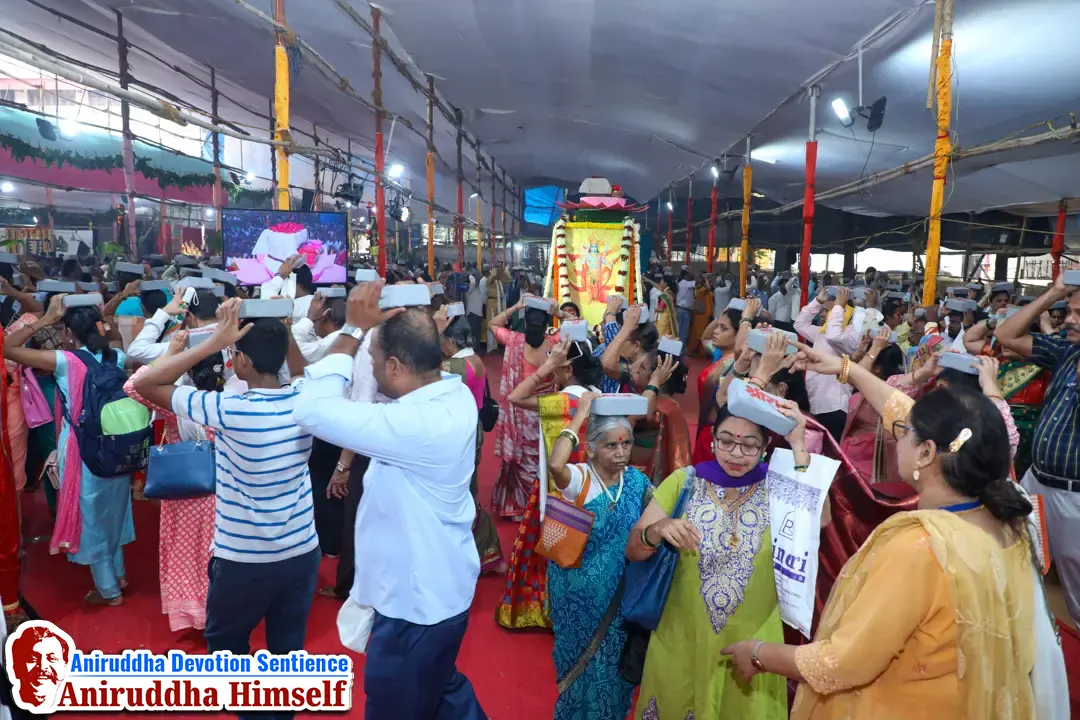
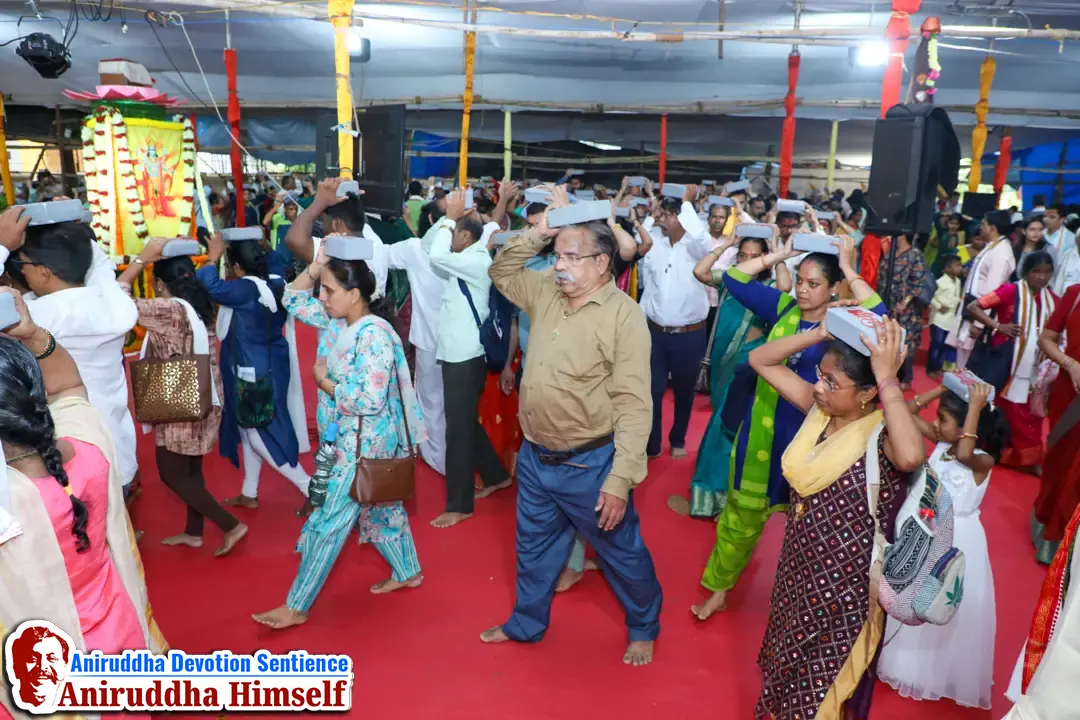
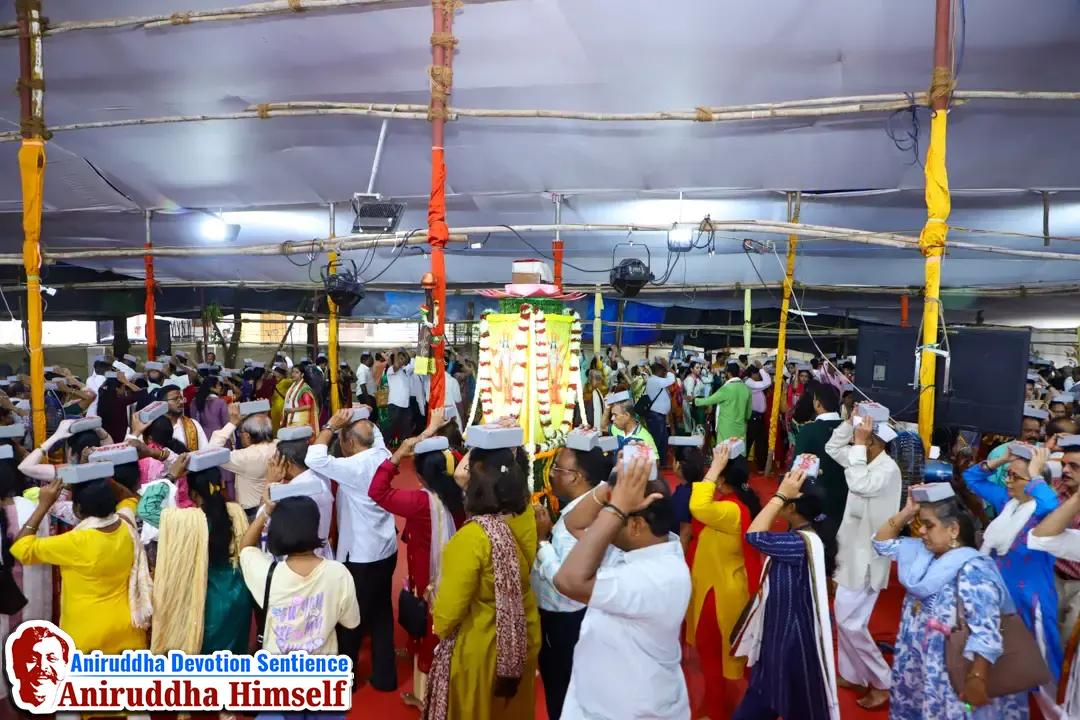
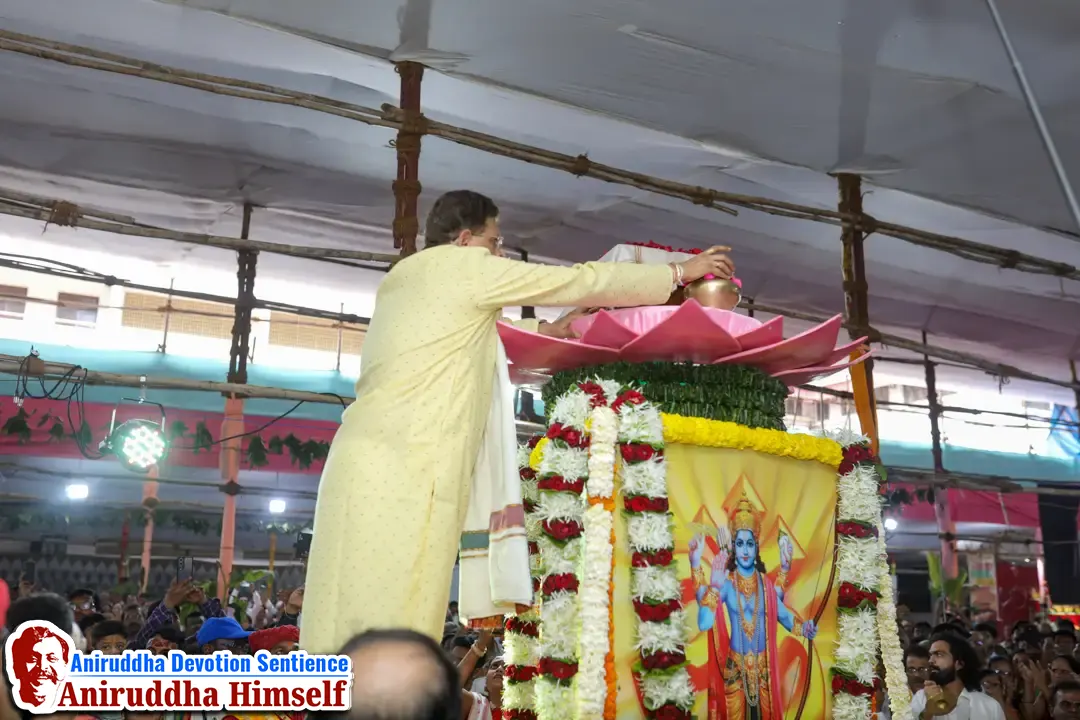
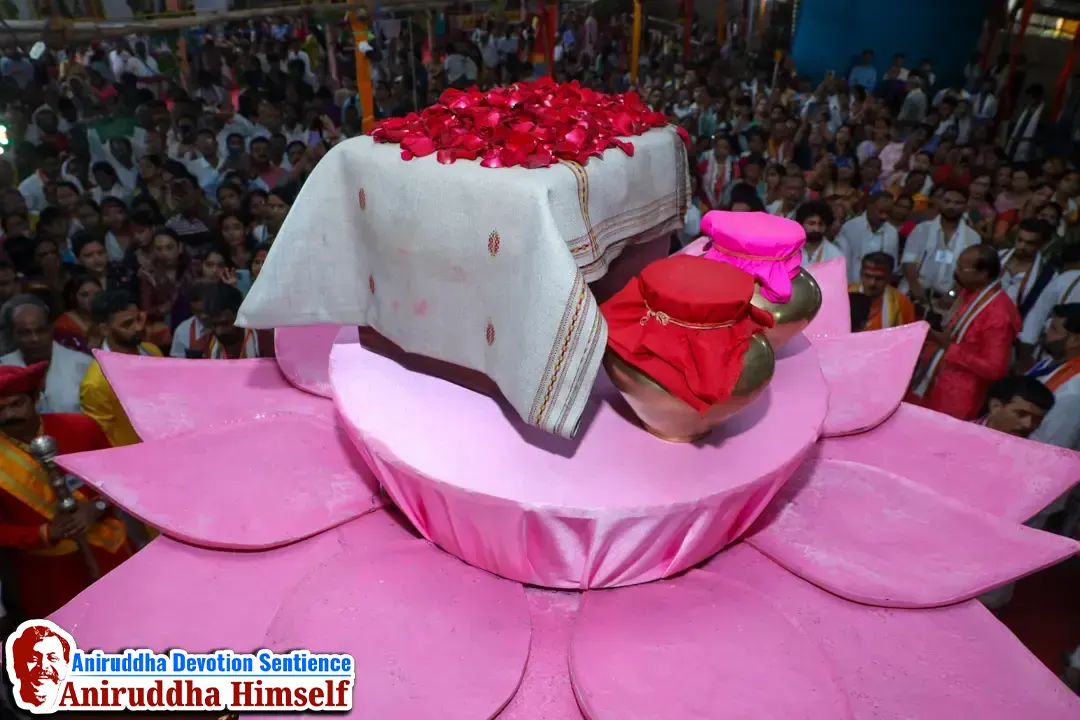
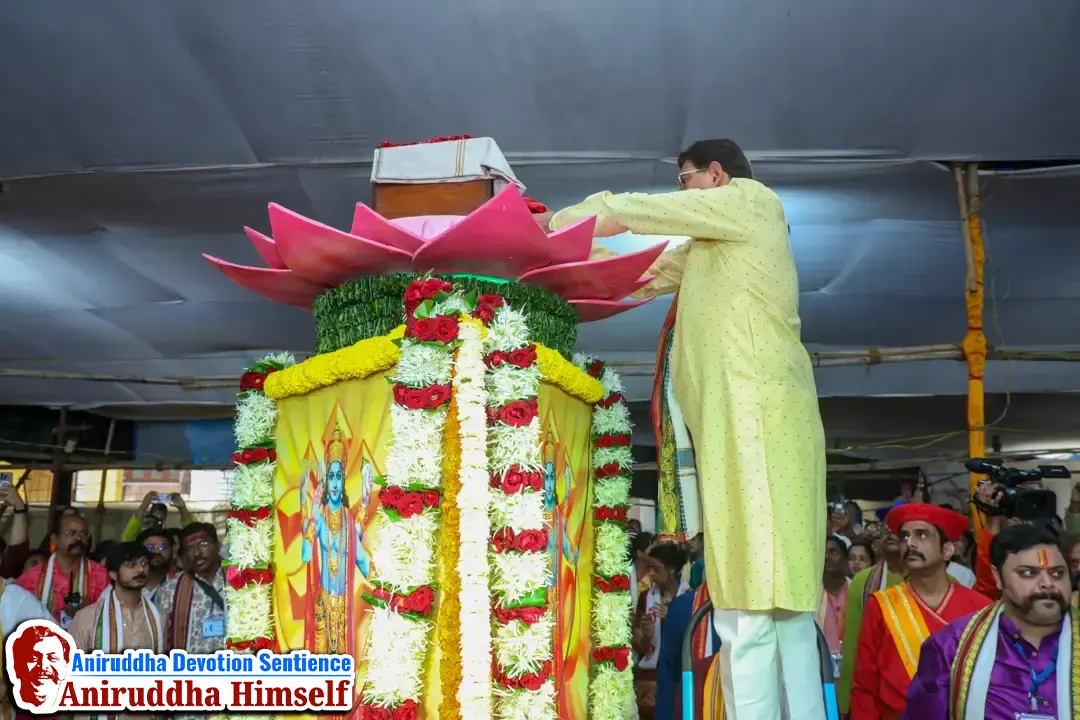
One of the key moments of the Guru Pournima Utsav is the circumambulation around the Bhaktistambha, the pillar of bhakti.
The Padukas of Sadguru Shree Aniruddha’s Nityaguru are placed atop this Bhaktistambha, which is erected at the centre of the venue. Along with them, the two Avdhoot Kumbhas from the Avdhoot Chintan Utsav are also placed there.
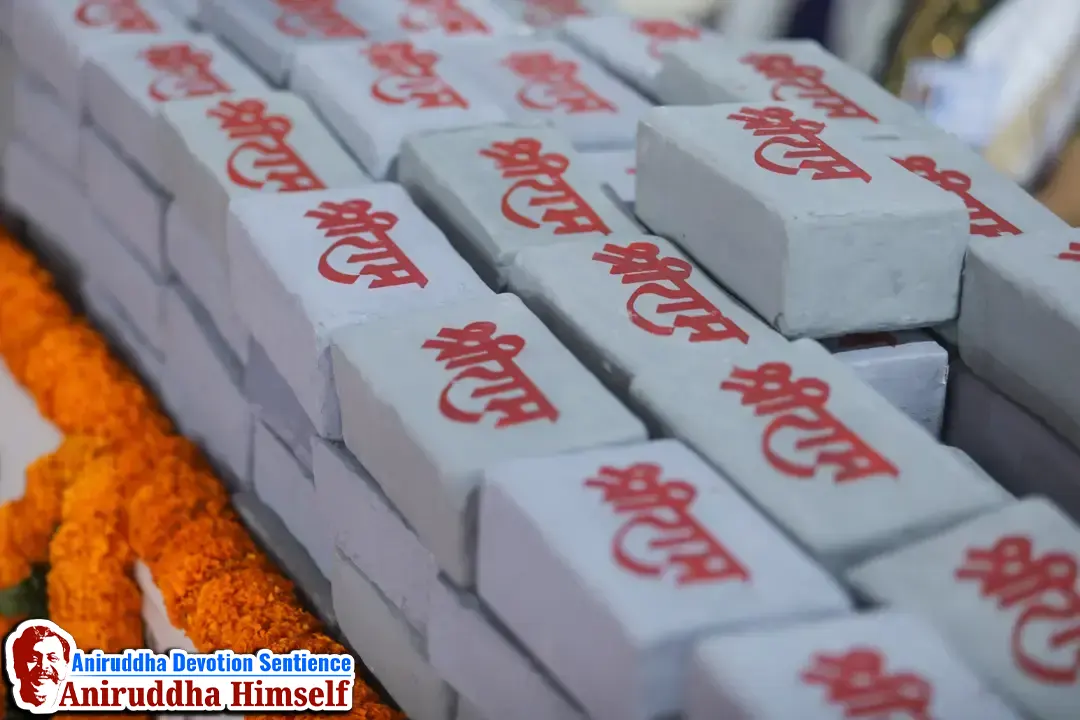
Shraddhavans are given the opportunity to carry the Ramnaam Ishtika, a brick made from the paper pulp of Ramnaam books and perform pradakshina (circumambulation) around the Bhaktistambha to the rhythm of gajar. In this divine atmosphere, Shraddhavans truly experience the sacred vibrations that pervade the surroundings.
The sentiment in every Shraddhavan’s heart while performing this pradakshina is: “My Sadguru Mauli stands upon this Ishtika, which symbolises my faith in the Sadguru. As I carry this Ishtika upon my head and perform the Sadguru Pradakshina, my Sadguru’s lotus feet become etched in my heart forever.
‘कीजै नाथ हृदय महँ डेरा’
(Kijey Naath Hriday Mah Dera).”
Dindi - The Palanquin of Grace
Another auspicious event of this Utsav is the Dindi, wherein a palanquin carrying the Pada-chinha of Sadguru Shree Aniruddha Bapu, i.e. the sacred impressions of His lotus feet, is taken in procession around the venue, accompanied by devotional chants, music, and joyous acclamations. This palanquin procession moves throughout the festival venue.
Every shraddhavan is blessed with the opportunity to place their forehead on Bapu’s sacred feet impressions and take darshan. It is the unwavering belief of the Shraddhavans that placing their heads upon these sacred footprints is no different from bowing at the very lotus feet of their beloved Sadguru.
Agnihotra, Aniruddha Chalisa Pathan and Udi Prasad
Throughout Guru Pournima, an Agnihotra remains continuously lit at the festival venue. All Shraddhavans are given the opportunity to offer uud into the sacred fire and pray for their welfare, protection, and overall well-being.
Every hour, the Shree Aniruddha Chalisa, with which Shraddhavans share a deep and cherished bond, is lovingly recited.
On this sacred day, Udi that has been personally blessed by the touch of the hands of Sadguru Shree Aniruddha is distributed to the Shraddhavans as Prasad.
The Utsav concludes at approximately 9:30 p.m. with the Maha Aarti.
The Sadguru’s Simplicity and the Essence of Guru Pournima
Sadguru Shree Aniruddha never accepts any form of Gurudakshina, gifts, greeting cards, fruits, garlands, sweets, money, or any other offerings from Shraddhavans. Bapu says: If you wish to give me something, then give me half of your sins, so that your burden may become lighter. And give me the recitations and chanting you have performed throughout the year, so that they may be used for your own benefit at the appropriate time.
Guru Pournima is a day to experience the joy of the Guru's grace and Guru Bhakti. It is a day to express heartfelt gratitude and unwavering faith towards the Sadguru. To lovingly offer their gratitude to Sadguru Shree Aniruddha, Shraddhavans celebrate Guru Pournima in the sacred presence of their beloved Sadguru.
Guru Pournima thus becomes an occasion for every Shraddhavan to express the heartfelt emotion embodied in the Rundnyapak Stotra—“Aniruddha! Tujha Me Kiti Runi Zhaalo” (Aniruddha! How indebted I am to You!) and to continue steadfastly on the path of devotion under the grace of the Sadguru.